

I finished the Monogatari anime in 2019 and thought I understood the series. Then I read Bakemonogatari and realized SHAFT had been showing me the highlight reel.
That sounds like a criticism of the anime. It isn’t. The Monogatari anime is phenomenal. But reading the light novels felt like discovering an entire layer of the story that the adaptation physically couldn’t fit. Interior monologue that runs for pages. Banter that the anime trims to keep episodes under 25 minutes. The full weight of NisiOisin’s prose, which doesn’t compress well into any visual medium.
This review covers what it’s like to actually read the Monogatari light novels in English. What the experience adds. Where the translation falls short. Whether the novels are still worth it when the anime already exists.
TL;DR
The Monogatari light novels are the most literary LN series available in English. Full stop. NisiOisin’s prose is dense, funny, and psychologically sharp in ways the anime can only gesture toward. MAL scores the first season LN at 8.94 (#21 all-time). The catch: pacing is slower than the already-slow anime, English releases stalled after Final Season (Off Season and Monster Season aren’t officially translated), and the wordplay that powers NisiOisin’s style partially dies in translation. Read the anime first. Then read the novels to understand why fans call them the complete experience.
What Makes the Monogatari Light Novels Different?
The obvious answer is NisiOisin’s writing style. But “writing style” undersells what’s happening on the page.
Every Monogatari novel is built on Araragi’s internal monologue. Not the abbreviated version the anime squeezes into flashing text cards. The full version. Pages of it. He argues with himself. Contradicts himself. Goes on tangents about tangents that loop back into genuine emotional insight buried inside what looked like a throwaway joke three paragraphs ago.
The anime’s text cards are a gesture toward this. They flash too fast to read because they’re acknowledgments of what exists in the source material, not actual adaptations of it. The slower, deliberate pace of the novel’s interior voice gives you something the anime can’t replicate no matter how creative SHAFT gets with visual metaphors.
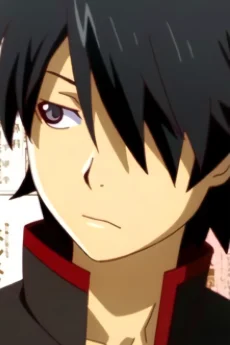
Then there’s the banter. Araragi and Kanbaru’s dialogue is consistently funnier in the novels than the anime has time to show. The anime cherry-picks the best exchanges. The novels give you the full conversation, and the parts that get cut are where the relationship actually develops. Senjougahara, Hanekawa, everyone. NisiOisin writes dialogue like he’s being paid by the word, and somehow it works every time.
How Does the LN Compare to the Anime?
The community has a consistent take on this, and I agree with it: the anime shows you the best, most exciting parts of each arc. The novels give you everything between those moments that makes them land harder.
Hanekawa’s arc in Nekomonogatari: White is the clearest example. The anime gives you her story through Araragi’s perspective. The novel puts you inside Hanekawa’s head, and having full access to her thought process transforms her character. You understand her denial, her self-deception, the way she constructs the version of herself that everyone else sees. The anime conveys this visually. The novel explains exactly how it functions, and it’s devastating.
Nadeko’s story benefits even more from the novel format. Reading her POV is genuinely unsettling in ways the anime can only approximate. You realize how skewed her perception is because you’re trapped inside it. The anime shows you she’s unreliable. The novel makes you experience the unreliability firsthand. Uncomfortable. Effective.
The adaptation is surprisingly faithful given how wordy the source material is. Readers who go from anime to LN arc-by-arc are consistently surprised by how close SHAFT got. But NisiOisin writes so much that even a close adaptation has to leave material out. The LN isn’t a replacement for the anime. It’s the other half of a story that was always too big for one medium to contain on its own, and reading both back-to-back is when you finally see the complete picture that NisiOisin originally wrote.
Which Arcs Hit Hardest in the Novels?
Not every arc benefits equally from reading the source material. Some improve dramatically. Others are close enough to the anime that the gap is small.
Kizumonogatari is the single biggest upgrade. The movie trilogy is gorgeous, but they’re action-focused in a way the novel isn’t. The novel is Araragi processing what happened to him over spring break. His relationship with Kiss-Shot develops entirely through internal reflection, not just through the fight sequences SHAFT built their trilogy around. The philosophical weight of the ending, where Araragi and Kiss-Shot reach their compromise, has pages of reasoning that the movies compress into a few minutes of dialogue.

Nekomonogatari: White through Kabukimonogatari is where Second Season earns its reputation. Hanekawa’s POV chapters alone justify reading the novels. Her voice is so different from Araragi’s that switching narrators feels like reading a different series for a few hundred pages.
Owarimonogatari builds to a payoff that lands harder on the page than on screen. Ougi’s mystery has layers of misdirection that work because you’re spending more time inside Araragi’s suspicion. The anime compresses weeks of psychological tension into episodes. The novel lets it breathe until it suffocates you.
The arcs that improve least: Nisemonogatari and parts of early Bakemonogatari (Mayoi Snail specifically). Nisemonogatari’s fanservice reads worse on the page than it looks on screen because NisiOisin’s prose makes the discomfort more explicit. Mayoi Snail is a rough early stretch no matter the format.
Is NisiOisin’s Prose Style Worth It in English?
Complicated question. Short answer: yes. Long answer: with caveats.
The translation (by Ko Ransom, published through Vertical/Kodansha) is skilled work. NisiOisin’s prose survives the transition better than you’d expect for writing this language-dependent. The humor lands. The character voices stay distinct. The narrative structure reads naturally.
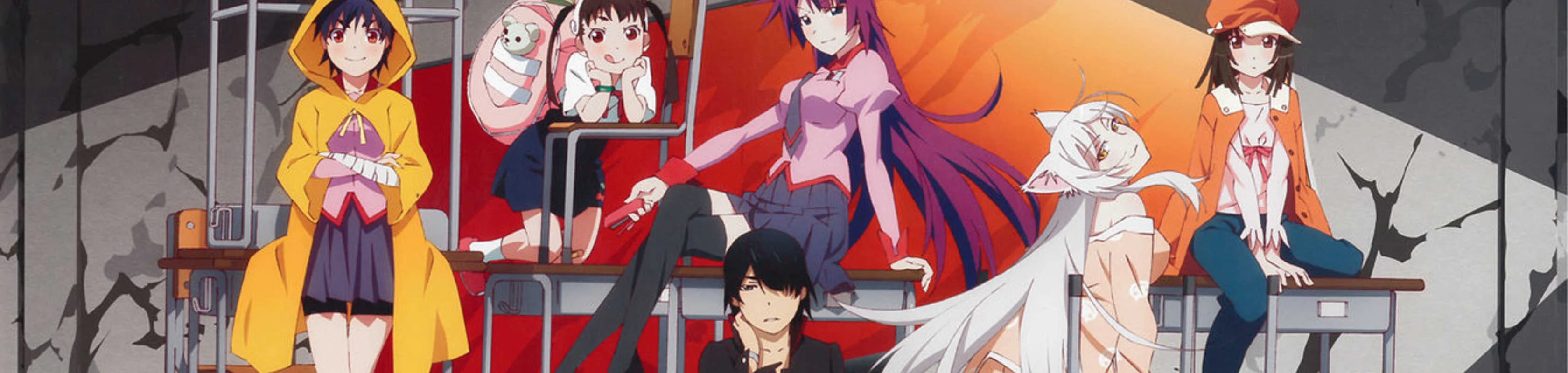
What doesn’t fully survive? Wordplay. NisiOisin builds entire scenes around Japanese linguistic play. Character names that are puns. Chapter titles with double meanings. Jokes that require kanji to parse. The translator handles these as well as anyone could, but some of the texture is Japan-specific. The story works. The experience changes.
One reader described the English Monogatari novels as “pretty great as LNs go” while noting the anime’s visual direction helps compensate for wordplay that doesn’t land in translation. That’s fair. The English novels are excellent light novels. In Japanese, they’re literature. The gap exists and being honest about it matters.
For readers who’ve only experienced LNs in English, the Monogatari novels will read as unusually dense and literary. For Japanese readers, the translation is a step down from the original. Both things are true. The English version is still excellent.
What Are the Weak Spots?
Pacing is the main barrier. The anime is already considered slow by mainstream standards. The novels are slower. Much slower. If the anime’s conversational scenes tested your patience, the novels will break it. NisiOisin doesn’t trim. He doubles down, spiraling deeper into every character’s psychology until you’re twenty pages into what started as a conversation about homework and somehow ended up as an existential crisis about whether Araragi’s desire to help people is genuine altruism or pathological self-destruction disguised as heroism.
Arc quality is uneven. Bakemonogatari and Kizumonogatari are consistently praised. Mayoi Snail is a rough early read that some fans had to force themselves through despite enjoying the rest of the series. The anime’s production quality smooths over weaker arcs in ways the novels can’t.
Cultural reference density is high. NisiOisin assumes a Japanese audience familiar with specific cultural touchpoints. Some of these get footnoted. Many don’t. Non-Japanese readers will miss jokes and references that Japanese readers catch effortlessly.
The English release situation creates a real problem. Kodansha USA absorbed Vertical and stalled new releases. Everything through Zoku Owarimonogatari (the end of Final Season, roughly 18–20 volumes) is available in English. Off Season and Monster Season are not. Fan translations exist and the community maintains them actively, but the official pipeline is dead for now. The content anime-only fans most want to read (post-anime story) is exactly what’s missing.
How Do the Physical Books Look?
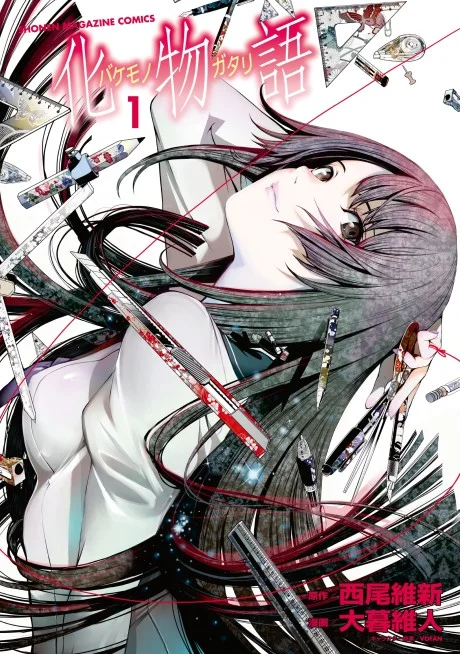
The Vertical/Kodansha printings are clean. Standard light novel dimensions, readable font, VOFAN’s cover art reproduced well. The color illustrations that open each volume are included, which matters because VOFAN’s art is half the experience of cracking open a new Monogatari book.
Digital versions through BookWalker and Kindle work fine. No formatting issues. The Kindle versions have a slight edge on portability for a series this long since carrying 18+ physical volumes gets impractical fast. I read most of mine on Kindle and switched to physical for Kizumonogatari because the cover art deserved shelf space.
Pricing is standard for the genre. Physical volumes run $13-15 each. Digital is usually a few dollars cheaper. BookWalker runs coin-back campaigns that drop the effective price further if you time purchases around their sales.
Who Should Read This?
You should read the Monogatari LNs if the anime’s conversations were the parts you enjoyed most. If you watched the show for action or visual spectacle, the novels won’t work for you. Every fight resolves through psychological confrontation, not combat. The supernatural oddities are mechanisms for character introspection, not opponents to defeat.
Start with the anime. Every Monogatari fan and community thread agrees on this. The anime is more approachable, SHAFT’s visual direction adds things the novels can’t replicate, and the adaptation is faithful enough that watching first doesn’t diminish the reading experience.
Then read the novels arc-by-arc alongside rewatching. Or read them straight through after finishing the anime. Both work. Many fans describe reading the LN version of an arc they already watched as discovering a layer of the story they didn’t know existed. The anime becomes better retroactively. Scenes you thought you understood gain layers you didn’t know were there, and that retroactive enrichment is the single best argument for reading the source material of any series I’ve covered on this site.
An audiobook option exists on Audible for at least Bakemonogatari. It’s produced like a radio play with multiple voice actors, and fans describe it as possibly the best format for the English version. Worth trying if you’re unsure whether NisiOisin’s prose style will work for you on the page.
Frequently Asked Questions
Is the Monogatari light novel worth reading after watching the anime?
Yes. The novels add extensive internal monologue and full POV access for arcs like Nekomonogatari: White and Nadeko Medusa that the anime can only approximate. Fans consistently describe the LN as the complete experience. Start with the anime, then read for the full picture.
How does NisiOisin's writing translate to English?
The translation by Ko Ransom is strong. Humor and character voices survive well. Narrative structure reads naturally. Japanese wordplay (puns, kanji jokes, double meanings) partially dies in translation. The English version reads as an excellent LN. The Japanese version reads as literature. The gap is real, but the English version is still worth it.
Are all the Monogatari light novels available in English?
Through Zoku Owarimonogatari (end of Final Season), yes. Off Season and Monster Season are not officially translated. Kodansha USA absorbed Vertical and has not released new LN volumes. Fan translations for the unadapted content are maintained by the r/araragi community.
What order should I read the Monogatari light novels?
Publication order. Bakemonogatari through Zoku Owarimonogatari. See our full Monogatari reading order guide for the complete volume-by-volume breakdown.
Is the Monogatari light novel better than the anime?
Different, not better. The anime has SHAFT's visual direction, music, and abstract compositions that the novels can't replicate. The novels have uncut interior monologue and psychological depth the anime has to trim. Fans who experience both describe the combination as the definitive way to understand the series.
How many Monogatari light novel volumes are there?
29 volumes in Japan (ongoing). Around 18-20 are available in English through Kodansha/Vertical, covering Bakemonogatari through Zoku Owarimonogatari. NisiOisin is still writing new entries.