

Most romance light novels make you wait. They tease the confession for eight volumes, add a rival love interest every arc, and then rush the actual relationship into a two-chapter epilogue that functions more like a prize than a story. The Angel Next Door Spoils Me Rotten refuses that formula. The main couple confesses. They get together. The series keeps going.
I came in skeptical. I’d read too many “wholesome romance” series that introduced a harem the second the main girl started showing real feelings. Volume 4 cured that skepticism permanently. Here’s my honest take on whether this series earns its reputation.
TL;DR: The Angel Next Door Spoils Me Rotten is a genuinely satisfying romance light novel where the main couple gets together early and the story continues past that point. No harem, no endless will-they-won’t-they, and the established-relationship content is better than most series’ entire romance arcs. Worth reading, especially before Season 2 gets deep into the material.

What Is The Angel Next Door Spoils Me Rotten Actually About?
Amane Fujimiya lives alone in an apartment. He’s a high school student, and he eats terribly — convenience store food, skipped meals, the lifestyle of someone who never learned to cook and doesn’t particularly care. Mahiru Shiina lives next door. She’s the school’s “angel”: top grades, naturally beautiful, effortlessly kind in public, and kept at a careful distance by everyone who admires her.
The two meet during a rainstorm when Mahiru lends Amane an umbrella. He’s the first person she’s encountered who treats her like a normal person rather than an idol on a pedestal. She starts cooking for him. He lets her. Awkwardly, gradually, something builds between them.
The premise sounds like it’s setting up 100 volumes of slow teasing. Saeki-san delivers something shorter and more honest. The series accelerates past the premise much faster than you’d expect, and it uses that acceleration to build what the genre almost never gives you: a look at what the relationship actually looks like after the confession.
The setting is deliberately contained. Most of the significant scenes happen in one of their two apartments, on the shared balcony, or in quiet moments at school. The domestic scale is intentional. Saeki-san is writing about closeness, and closeness happens in small spaces. If you come in expecting grand gestures and external plot machinery, you’re reading the wrong series.
Does the Slow-Burn Romance Actually Pay Off?
Yes. And I want to be specific about how, because the structure here is genuinely different from what “slow-burn romance” signals in most series.
Volume 1 reads more like slice-of-life than romance. Amane and Mahiru are figuring out what they are to each other. The meals, the evenings spent in quiet parallel activity, the gradual loosening of the walls Mahiru keeps up around everyone — none of it is framed as romantic progress in any explicit way. It’s just two people learning each other. But Saeki-san is doing real work underneath, establishing why these two people specifically fit together rather than just that they’re both available and attractive.
Volume 2 is where the emotional texture deepens. Mahiru’s home situation gets referenced in ways that make her careful behavior — the self-sufficiency, the performance of perfection, the inability to just relax. That context makes her suddenly coherent. Amane’s specific consideration for her, his refusal to demand anything from her, reads differently once you have that context behind it.
Volume 4 is the payoff. The confession doesn’t feel rushed because the series spent three full volumes building toward it through actual character development. It’s handled with the same quiet sincerity that defines everything else in the series — no dramatic gesture, no explosive moment, just two people who’ve been circling something finally saying it out loud.
Volume 5 is where the series does something rare. The relationship has started, and now both characters have to figure out how to actually be in one. Amane and Mahiru are awkward in entirely new ways — the uncertainty of early dating after years of being guarded, the small negotiations about how much space to take up in each other’s lives. Watching people learn how to be vulnerable with someone they love is harder to write than a confession scene, and Saeki-san pulls it off. Volume 5 is my personal peak for the series.

Why Mahiru Works When Similar Characters Don’t
The “school idol who’s secretly lonely” type shows up in light novels constantly. Mahiru works where similar characters fail because she’s not performing depth. Her layers emerge naturally from who she’s been forced to become.
She’s competent by necessity, not by nature. Every skill she has was acquired because she needed it. The cooking, the academics, the social grace — none of it came from confidence or ease. It came from having to manage her own life at an age when most people are still being managed. When Amane first eats her food and reacts like a normal person rather than someone stunned by her talent, she doesn’t know what to do with that. Admiration she knows how to deflect. Simple human normalcy throws her completely.
Her character arc across the series isn’t a transformation. She doesn’t shed a mask or reveal a hidden “true self” that’s been waiting to emerge. She becomes more herself. Her dry humor develops. Her willingness to be playful around Amane grows. The competence stays, but it stops being armor.
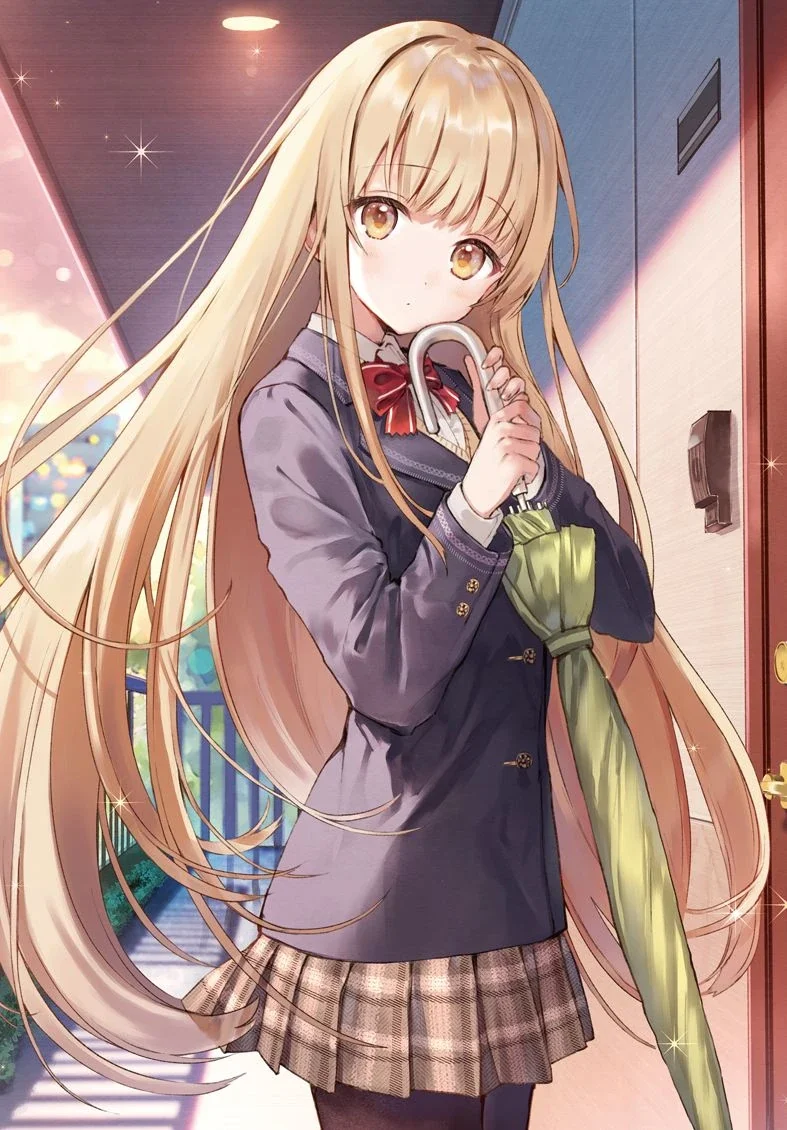
Volumes 5 and 6 give her more room to exist outside the Amane-centered domestic setting. The way she navigates friendships, her relationships with the classmates who’ve always put her on a pedestal, her own reckoning with what she wants from her future. These sections do the kind of character work that separates a series with an interesting concept from a series that’s actually about something. If you bounce off Mahiru in volume 1, give it through volume 2. The context changes her significantly.
Are There Real Flaws Worth Knowing About?
There are, and I’d rather be upfront about them.
The supporting cast is functional but not particularly memorable. Itsuki and Chitose — Amane’s friends, an established couple — serve as contrast and comic relief. They’re enjoyable in small doses and provide some of the series’ best comedic moments. But they don’t carry independent weight as characters. If you’re looking for a series where the side cast has arcs that matter on their own terms, this isn’t that.
Amane himself can feel passive in the early volumes. He’s reactive. Mahiru takes most of the emotional initiative through volumes 1 and 2, and his careful consideration reads, charitably, as patience, and less charitably as inertia. Volume 3 is where he finally starts meeting her energy and the dynamic shifts into something more mutual. Before that shift, your patience with him as a protagonist will depend heavily on your tolerance for the “considerate but passive male lead” type.
The domestic tone is also the series’ primary limitation if you’re not fully invested in the characters. There’s no external conflict. No villain, no competition, no stakes beyond the interpersonal. Every arc operates at human scale: a misunderstanding, a moment of vulnerability, a small adjustment between two people learning each other. Saeki-san executes this deliberately and well. But around volumes 5-6, if the characters haven’t fully grabbed you, the low-conflict structure starts to feel repetitive.
One genuine strength worth noting: Hanekoto’s illustrations are excellent. The character designs are immediately recognizable, and the chapter art captures the warmth of the writing without overselling it. Volume 4 in particular has some illustrations that do real emotional work.
How Does the Light Novel Compare to the Season 1 Anime?

The Winter 2023 anime adaptation covered volumes 1 through roughly 3 with reasonable faithfulness. The pacing worked for a 12-episode run, the tone was preserved, and the visual side of the series — Mahiru specifically — was handled well by the animation team.
What the anime trims, as always with this type of series, is interiority. Amane’s internal monologue in the early volumes does real work. His self-deprecation, his specific reasoning for not worshipping Mahiru like everyone else, the way he notices his own feelings long before he’s willing to admit them — all of that creates the emotional texture that makes the confession in volume 4 land with real weight. The anime conveys the surface of the relationship accurately. The light novel gives you the full picture of what’s happening underneath.
Season 2 is currently airing as of April 2026, picking up from volume 4 onward. The material it’s adapting — the established-relationship content — is where the series genuinely hits its stride. If you want to read ahead of the anime, now is the time. Volume 4 especially is worth experiencing before the adaptation condenses it.
Should You Read The Angel Next Door Light Novel in 2026?
If you watched Season 1 and wanted more: yes, without hesitation. The light novel goes further and deeper, and the volumes Season 2 is currently adapting are the best the series has to offer.
If you haven’t touched the anime and are curious: volume 1 will tell you everything you need to know about whether the vibe works for you. The series is consistent in a way that’s both a strength and a limitation. What you get in chapter 1 is what you get in volume 6, just with more emotional history and better character development behind every moment. It doesn’t reinvent itself. It deepens.
If you specifically want a romance where the couple gets together early and the series continues past that point: The Angel Next Door is the best current example of that in English-licensed light novels. The market for that specific thing is surprisingly thin, and this series fills the gap well. Most competitors either drag out the confession indefinitely or end the series immediately after it.
Yen Press has maintained a solid release pace. Physical copies are available if that’s your format; the digital editions on BookWalker and Kindle are the faster route if you want to catch up before Season 2 covers the best material. You can find the full series on Amazon here.
Frequently Asked Questions
Is The Angel Next Door Spoils Me Rotten light novel worth reading?
Yes. The series delivers a slow-burn romance where the main couple actually gets together early — around volume 4 — and the story continues past that point into established-relationship territory. The established-relationship content in volumes 4 through 6 is some of the best in the genre.
When do Amane and Mahiru get together in the light novel?
Amane and Mahiru confess and begin their relationship in volume 3. This is unusually early for the romance genre, and the volumes that follow focus on what it actually looks like to navigate a new relationship when you’re both deeply guarded people.
How many volumes of The Angel Next Door are there in English?
Yen Press has licensed approximately 9 volumes in English as of 2026. The series is ongoing in Japan under Media Factory.
Does The Angel Next Door light novel have a harem?
No. The series focuses exclusively on Amane and Mahiru throughout. There are no rival love interests introduced and no harem elements. If that’s your primary concern with romance light novels, this series specifically avoids it.
Is The Angel Next Door Season 2 anime based on the light novel?
Yes. Both seasons adapt the light novel directly. Season 1 (Winter 2023, 12 episodes) covered volumes 1-3. Season 2 (Spring 2026, currently airing) picks up from volume 4 onward, adapting the established-relationship content.