

Tanya von Degurechaff is not a character you’re supposed to like. That’s the point, and it’s the thing the anime gets right. What it doesn’t get right is why she’s compelling. Studio NUT’s adaptation gives you the spectacle of a sociopathic child soldier blowing things up with a prayer to a god she despises. The light novel gives you the ruthless calculus behind every single decision she makes. Those are different experiences, and the gap between them widens with every volume the anime hasn’t touched.
I watched Season 1 when it aired in 2017, thought it was solid dark comedy isekai, then forgot about it for years. Picked up the light novel after the movie because someone on Reddit said “the LN goes places the anime never will.” They weren’t exaggerating. Carlo Zen writes military fiction that happens to have isekai framing, and the anime can only gesture at the depth of it. Fourteen volumes in, the series has covered territory the anime won’t reach for years. If it ever does.
TL;DR
- The anime covers Volumes 1-3. The LN is at Volume 14 with 10+ volumes of unadapted content.
- Military strategy, Tanya’s internal calculus, and the Being X philosophical conflict are significantly deeper in the LN.
- Season 2 (July 2026) will cover Volume 4 onward but can’t catch up to the LN’s scope.
- Read the LN from Volume 1 if you want the full experience. Start at Volume 4 if you just want to go past the anime.
How Faithful Is the Anime to the Light Novel?
More faithful than most isekai adaptations. Less faithful than you’d think from watching it.
Season 1 (12 episodes, 2017) adapts Volumes 1 and 2 of the light novel. The plot beats are mostly there. Tanya’s reincarnation, her clash with Being X, the Rhine Front campaigns, the Dacia slaughter. Studio NUT preserved the structure. Where they cut is internal. Tanya’s narration in the LN is dense with economic theory, military doctrine, and corporate logic applied to warfare. She doesn’t just make tactical decisions. She explains them in the language of a Japanese salaryman who read too much management theory. The anime can’t do that without voiceover drowning the action, so it condenses her reasoning into brief asides or cuts it entirely.
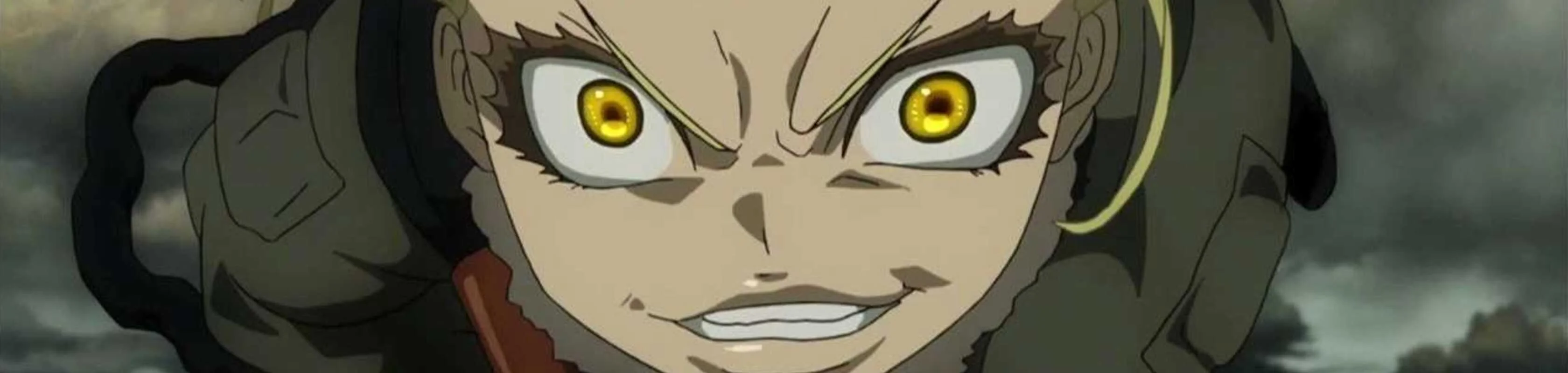
The movie (2019) covers Volume 3 and is probably the most faithful piece of the adaptation. The Francois Republic campaign translates well to film because it’s a sustained military operation with a clear arc. Mary Sioux as Tanya’s foil works in both formats. The action choreography in the movie is the high point of the animated franchise.
Season 2, announced in 2021 and arriving July 2026, picks up from Volume 4. That five-year gap between announcement and release became a meme in the community. One thread with 768 upvotes was titled “genuinely convinced I imagined it.” The Season 2 key visual dropped in July 2026 and pulled 7,548 upvotes, with the top comment pointing out “9 years since season 1 and 7 years since the movie.” That wait alone tells you something about the pace of adaptation versus the pace of Carlo Zen’s writing.
What Does the Light Novel Add That the Anime Can’t Show?
Three things. And they’re all load-bearing.
Tanya’s internal monologue. This is the big one. Anime Tanya is a ruthless child prodigy who wins battles through sheer tactical brilliance. LN Tanya is a former HR manager applying corporate optimization theory to trench warfare. Her narration reads like someone writing quarterly performance reviews about artillery placement. She doesn’t think in terms of valor or glory. She thinks in terms of cost efficiency, resource allocation, and career advancement. Every battle is a spreadsheet. Every subordinate is an asset with a depreciation curve.
Volume 2 has a section where Tanya analyzes whether letting a specific unit take casualties would improve her division’s overall operational efficiency. Not as a moral dilemma. As math. The anime can’t convey that without stopping the action for an internal lecture, so it shows Tanya being brilliant without showing why she’s brilliant. You get the results without the terrifying process that produces them.
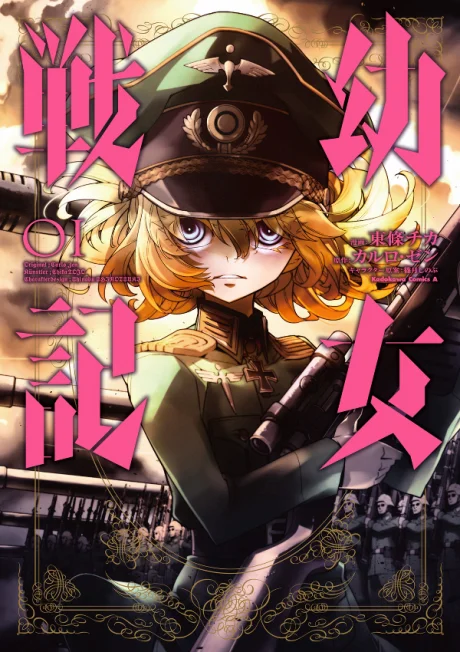
The Being X confrontation. In the anime, Being X is a weird god who keeps messing with Tanya out of spite. In the LN, the relationship is genuinely philosophical. Being X isn’t petty. Being X is making an argument about faith, and Tanya is making a counter-argument about rational self-interest, and neither of them is clearly wrong. Carlo Zen studied political science and it shows. The theological debates between Tanya and Being X in Volumes 4 through 7 read like someone who’s actually thought about the problem of faith versus rationalism, not someone who needed a villain for an isekai.
The anime reduces this to “angry god tortures atheist child.” That’s technically what’s happening. But it strips out the intellectual content that makes the conflict interesting rather than just dramatic.
Military strategy complexity. Carlo Zen writes military fiction. Not fantasy with military elements. Actual military fiction with isekai window dressing. The logistics chapters in Volumes 5 and 6 cover supply chain management, force projection across multiple fronts, and the political constraints that prevent optimal military deployment. If that sounds dry, it sometimes is. But it’s also the thing that separates Tanya from every other isekai protagonist. She doesn’t win because she’s overpowered. She wins because she understands systems better than anyone around her, and the LN shows you every step of that understanding.
The anime condenses entire strategic campaigns into montage sequences. Season 1, Episode 7 covers ground that takes the LN two chapters of detailed operational planning. You can follow the plot without that detail. You can’t appreciate what Tanya is actually doing without it.
Where Will Season 2 Pick Up and Where Might It End?
Season 2 starts at Volume 4 of the light novel. This is where the series shifts. Volumes 1-3 are essentially prologue. Tanya establishing herself, proving her competence, fighting on the Rhine and in the Francois Republic. Volume 4 onward is where the geopolitical scope expands and the series becomes something the anime hasn’t shown yet.
The Rus Federation campaign begins in Volume 4. If you know your alternate-history mapping, this is the Eastern Front analog, and Carlo Zen treats it with appropriate gravity. The logistical nightmare of fighting across frozen territory while managing supply lines from the Empire’s industrial base is the kind of thing Zen writes exceptionally well. It’s also the kind of thing that’s almost impossible to adapt into anime without losing the tactical depth.
Based on Season 1’s pacing (2 volumes across 12 episodes), Season 2 will probably cover Volumes 4 and 5, maybe reaching into Volume 6. That’s generous. The material is denser than the early volumes because Zen starts layering political plotlines alongside the military campaigns. The Empire’s internal politics become a factor. Tanya’s superiors start making decisions she disagrees with but can’t override. The tension between tactical competence and institutional stupidity is the engine of Volumes 4 through 8, and it’s the most compelling stretch of the series.
Even if Season 2 covers three volumes, that leaves Volumes 7 through 14 unadapted. Eight volumes of content. At the current pace of one season every five to nine years, the anime will never catch the LN. That’s not pessimism. That’s arithmetic.
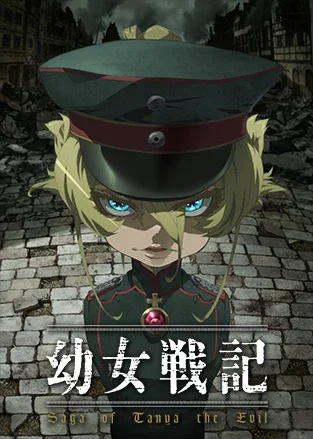
What Are Volumes 5-14 About, and Why Should Anime Fans Care?
Without spoiling specifics: the series escalates from a talented officer gaming a military career into a story about whether one person’s rational self-interest can survive contact with the irrational forces of history. Tanya keeps trying to engineer a comfortable rear-line posting. The world keeps refusing to let her have one. Being X keeps raising the stakes. And the political machinery of the Empire keeps grinding forward in ways she can predict but not prevent.
Volumes 7 and 8 are where the series peaked for me. The political maneuvering between military factions within the Empire reaches a complexity that reminds me more of Legend of the Galactic Heroes than anything in modern isekai. Tanya understands exactly what’s going wrong with the Empire’s grand strategy. She writes reports explaining it. Nobody listens. And she can’t leave because Being X has tied her survival to continued military service. That’s a genuinely tragic setup, and it’s one the anime hasn’t come close to reaching.
Volumes 10 through 14 continue that trajectory. The war expands to multiple fronts. New nations enter the conflict. Tanya’s unit gets deployed to theaters that test her tactical flexibility in ways the Rhine campaigns never did. If you liked the military aspects of the anime but wanted more substance behind the explosions, this is where the substance lives.
Fair warning: Volumes 12 and 13 slow down. Carlo Zen’s prose can get repetitive when he’s setting up a new theater of war. The strategic analysis sometimes reads more like a military textbook than a novel. I pushed through it because I was invested, but I understand why some readers stall in that stretch. Volumes 7-8 and 14 are the high points.
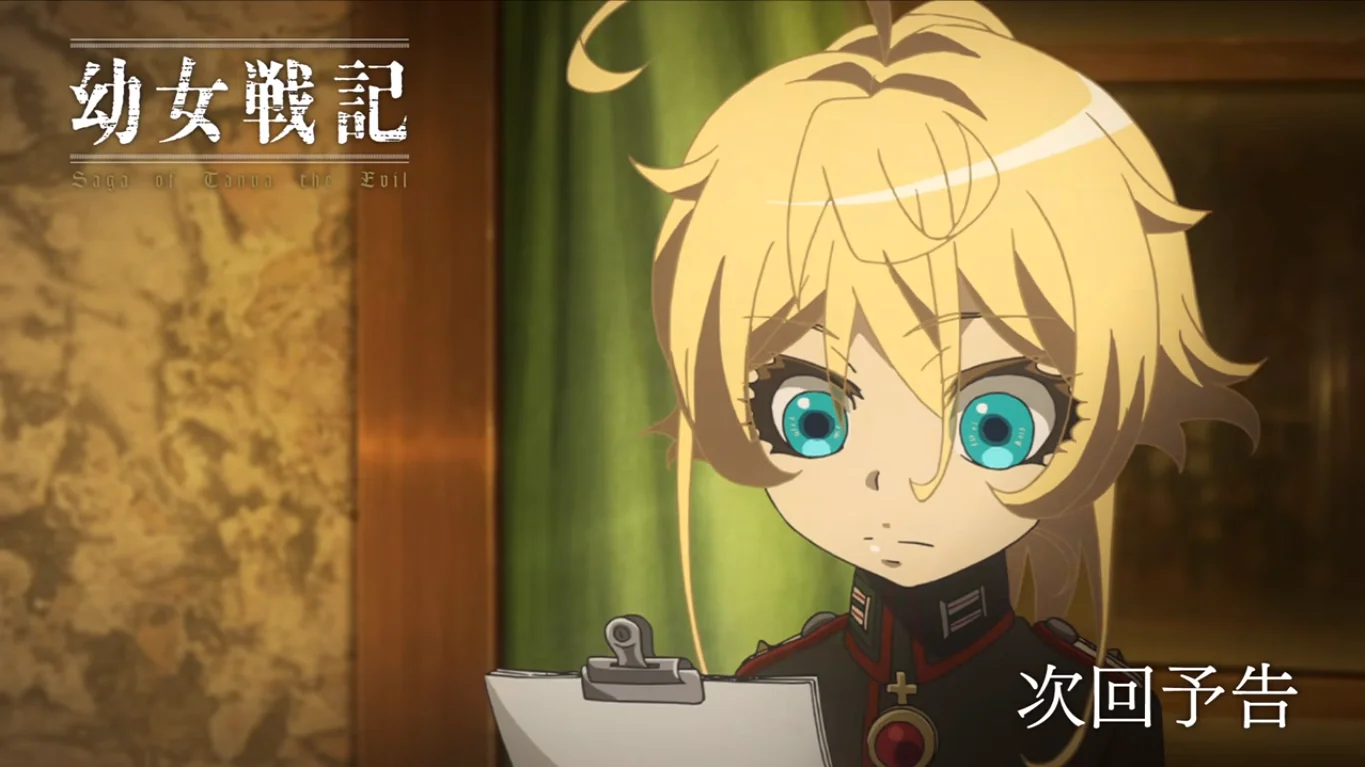
Is Tanya the Villain or the Protagonist?
Both. And the LN makes this ambiguity sharper than the anime does.
The community debates this constantly. A highly upvoted comment with 18 upvotes puts it well: “Not sure if there is a definitive good guy. That is what sucks about war. But Tanya and her Fatherland are definitely the bad guys.” That framing is closer to the LN’s position than the anime’s. The anime leans into Tanya as an antihero you root for. The LN is more willing to let you sit with the fact that she’s genuinely causing suffering on a massive scale and her justification is corporate efficiency logic.
The “evil” in the title isn’t ironic in the LN the way it sometimes feels in the anime. Tanya isn’t cartoonishly evil. She’s systemically evil. She optimizes for outcomes that benefit her career and survival without moral weight given to the human cost. That’s a harder character to spend 14 volumes with than a cackling anime villain, and it’s a more interesting one.
This is where Carlo Zen’s political science background earns its keep. He’s writing about the banality of institutional violence through the lens of someone who treats war as an HR problem. The anime gets the dark humor of that premise. The LN gets the horror underneath the humor.
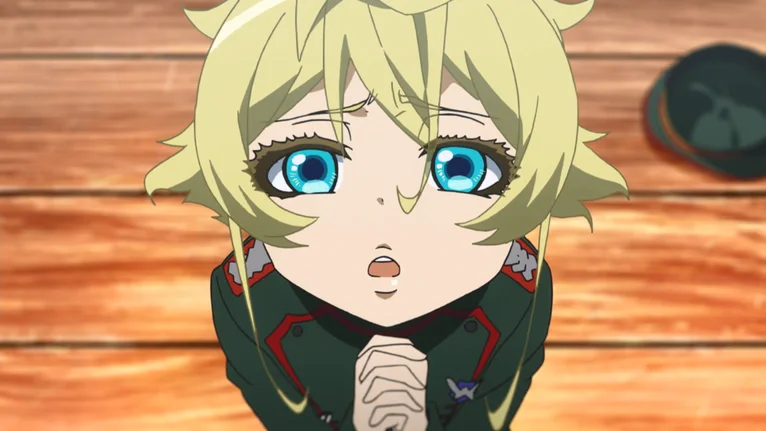
Is It Worth Reading Ahead of Season 2?
Yes. Unambiguously yes.
Here’s the practical case: Season 2 arrives July 2026 and will cover maybe two or three volumes. The LN has fourteen volumes published in English by Yen Press. Even after Season 2 airs, you’ll be eight to ten volumes ahead. At the adaptation pace this series has established, you are looking at years before the anime catches up. If it ever does. A third season isn’t confirmed.
Here’s the less practical but more honest case: the LN version of Tanya is better. Not better in the way that source material fans always claim theirs is better. Better in a specific, identifiable way. The internal monologue transforms Tanya from a cool action character into a genuinely unsettling study of rationalism taken to its logical extreme. If that premise interests you, the anime is the trailer. The LN is the film.
Start from Volume 1 even if you’ve watched Season 1 and the movie. The anime is faithful enough that you won’t be lost starting at Volume 4, but Volumes 1 and 2 read differently when you have Tanya’s full internal voice. The Dacia operation in Volume 1 is a different scene entirely when you understand the spreadsheet running through Tanya’s head as she orders the attack.
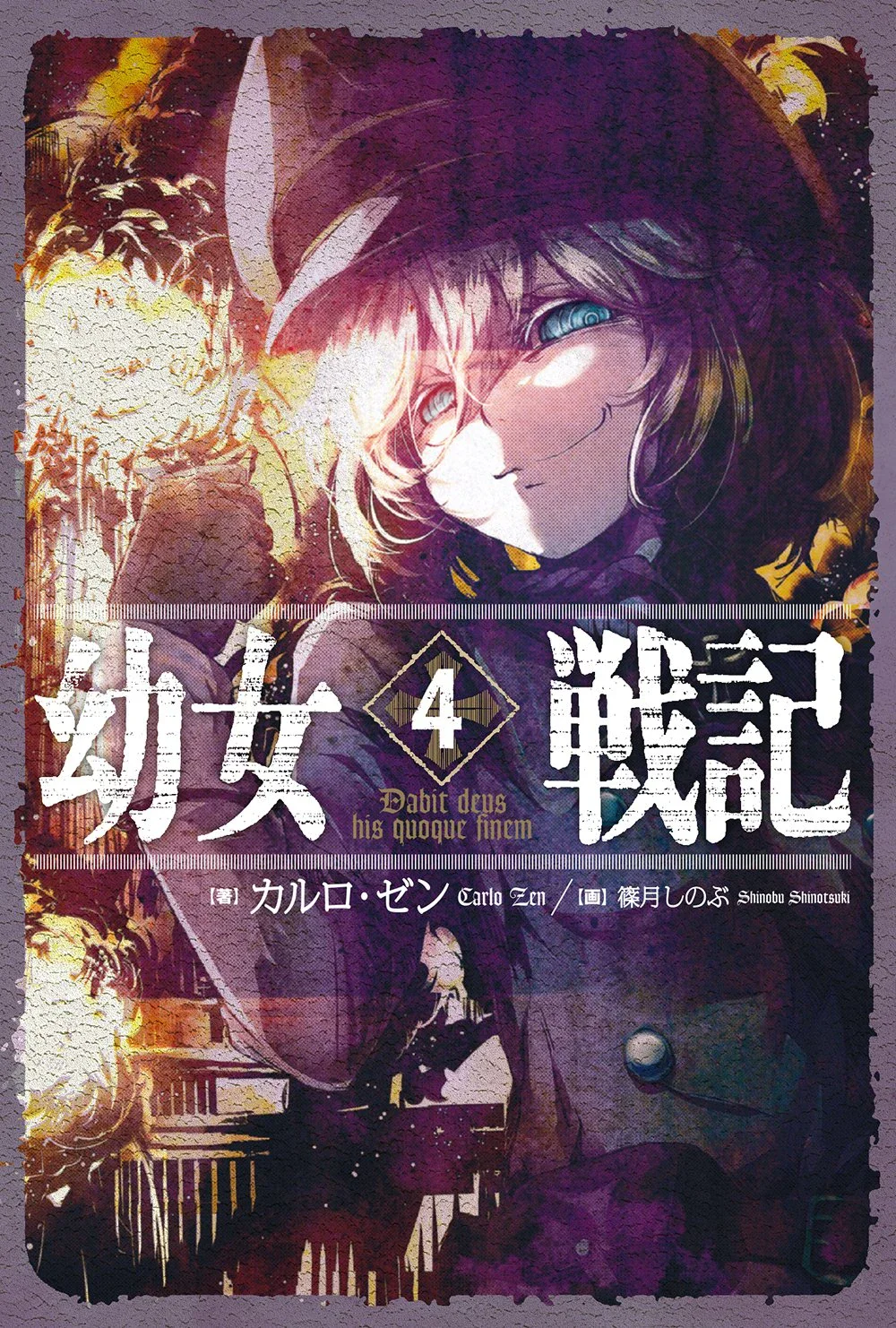
The community waited nine years for more animated Tanya content. One thread about the Season 2 announcement hit 20,470 upvotes with 921 comments. The top comment, at 3,751 upvotes: “My happiness is immeasurable and my day has been made.” That enthusiasm exists because the source material earned it. The anime introduced people to the concept. The LN delivered on the promise.
If you want the full version of why Tanya matters as a character, you need the books. The anime showed you the war. The LN shows you the mind running it.
FAQ
Is the Saga of Tanya the Evil light novel better than the anime?
For character depth, military strategy, and the Being X philosophical conflict, yes. The LN’s internal monologue transforms Tanya from a cool action protagonist into a genuinely complex character study. The anime is better for action choreography and the movie’s pacing is excellent. Both are worth experiencing, but the LN is the complete version.
How much of the light novel has the anime covered?
Season 1 covers Volumes 1-2 and the movie covers Volume 3. That’s 3 of 14 published volumes. Season 2 (July 2026) will adapt Volume 4 onward, likely covering 2-3 more volumes. Over 10 volumes of content remain unadapted.
Where should I start reading the Tanya light novel after the anime?
Start from Volume 1 for the full experience with Tanya’s internal monologue. If you want to skip ahead, Volume 4 picks up after the movie and is where Season 2 begins. The anime is faithful enough that you won’t be lost either way.
When does Tanya Season 2 come out?
Season 2 premieres in July 2026 (Summer 2026 anime season). It was announced in 2021, making it a five-year wait. The season picks up from Volume 4 of the light novel, covering the Eastern Front campaigns.
Is the Saga of Tanya the Evil light novel finished?
No. The series is ongoing with 14 volumes published as of 2026. Carlo Zen has not announced an end date. The English translation by Yen Press is current with the Japanese releases.