

This article contains affiliate links. If you buy through these links, we earn a small commission at no extra cost to you.
Fourteen volumes. That’s the current English count for The Saga of Tanya the Evil, with more still coming from Carlo Zen. If you’re standing at volume 1 wondering whether to commit, you want a real answer — not a hype post, not a three-episode take dressed up as a series opinion. Here’s mine after reading all of them.
The series earns it. Not because of the spectacle, which is real. Because Carlo Zen is actually building a coherent philosophical argument across fourteen volumes and never losing the thread.
TL;DR
- The Saga of Tanya the Evil is a military isekai that prioritizes strategy, political manipulation, and philosophical conflict over power fantasy tropes
- Tanya vs. Being X (god) is the real hook, not the battlefield stuff
- 14 volumes out, anime only covers vols 1-3, and Season 2 arrives July 2026
- AniList 83/100, MAL 8.48 — the scores are earned

What Is The Saga of Tanya the Evil Actually About?
The elevator pitch is simple. A ruthless Japanese salaryman gets killed, mouths off to God (called “Being X” here because Tanya refuses to dignify it with a proper name), and gets reincarnated as a girl in an alternate-history European empire on the brink of a massive war. The catch? Being X wants faith. Tanya wants a quiet desk job behind the front lines. These two goals are fundamentally incompatible, and the entire series is built on that tension.
But reduce it to that pitch and you’re missing what makes it work. Carlo Zen has a genuine fascination with military history, geopolitics, and institutional behavior. The Empire isn’t just “fantasy Germany.” It operates with recognizable bureaucratic logic. Supply chains matter. Political factions within the military have competing agendas. Tanya’s biggest enemy in volumes 4 through 8 isn’t the opposing army. It’s her own General Staff’s inability to agree on strategic priorities. If you’ve ever worked in a dysfunctional corporation, you’ll feel a dark recognition reading Tanya navigate military politics.
The worldbuilding runs parallel to real WWI and interwar Europe without being a direct copy. The Francois Republic, the Russy Federation, the Allied Kingdom. You can map the nations, but Zen takes enough liberties that the alternate history feels alive rather than paint-by-numbers. By volume 6, the geopolitical situation has diverged from our timeline enough that I genuinely couldn’t predict where the war was heading.
Who Is Tanya Degurechaff, and Why Should You Care?
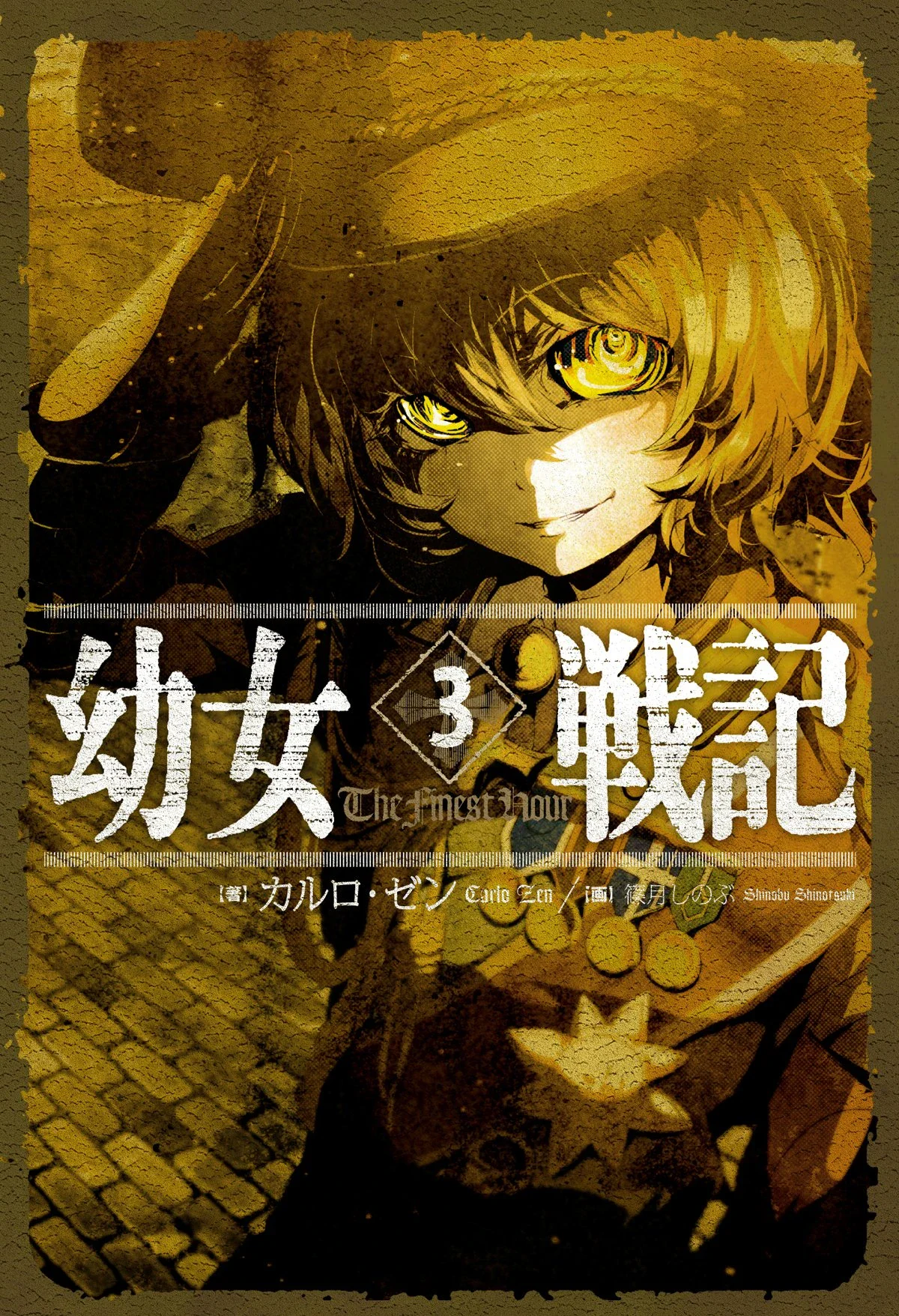
Tanya is not a hero. Let me be clear about that upfront. She’s a former salaryman who valued efficiency above all else. Human resources? Just resources. Ethical concerns? Obstacles to quarterly targets. This personality doesn’t soften after reincarnation. It sharpens. Now she has magic, military authority, and a survival instinct that makes her terrifying on the battlefield.
The genius of the character is that you understand her logic even when it’s monstrous. Tanya doesn’t commit atrocities for fun. She commits them because they’re tactically optimal and technically legal under the laws of war (she checks, every time). There’s a running joke in the community: “It’s not a war crime the first time.” That line got over 1,200 upvotes on Reddit, and it captures the series’ dark comedy perfectly. You laugh, then you think about it, then you feel uncomfortable that you laughed.
What keeps Tanya from being a one-note sociopath is her relationship with Being X. She’s an atheist trapped in a world where God is objectively real and personally invested in making her life miserable. Every time Tanya finds a rational path forward, Being X introduces a new complication. It’s not just a power struggle. It’s a philosophical argument about free will, faith, and whether a universe with an interventionist deity can still have meaningful individual agency. Volume 4 has a sequence where Tanya realizes her most effective weapon is a prayer-powered rifle, and the internal monologue about what that means for her worldview is genuinely brilliant writing.

Does the Being X Conflict Actually Hold Up?
Yes. And I’ll argue it’s the single element that elevates Tanya above every other military isekai I’ve read.
Most isekai give their protagonist a god who hands out cheat skills and waves them off. Being X does the opposite. This is a god who is actively hostile, petty, and operating on cosmic timescales while Tanya is just trying to survive the next quarter. The dynamic isn’t good versus evil. It’s corporate rationalism versus divine authoritarianism. Being X doesn’t want Tanya dead. Being X wants Tanya to pray sincerely, which for a character built entirely on self-reliance and logical thinking, is a fate worse than death.
The anime touches on this but keeps it mostly as background flavor. The light novel puts it front and center. In volumes 7 and 8, the conflict becomes explicitly about determinism. If Being X can manipulate global events to funnel Tanya into impossible situations, does her “rational choice” under duress even count as free will? Zen doesn’t hand you an answer. He lets the question sit there and rot, which is exactly what good philosophical fiction should do.
I’ve read a lot of isekai that tries to be smart. Most of it is just characters explaining game mechanics with extra steps. Tanya is one of the rare series where the intellectual ambition matches the execution.
Is the Dark Comedy Tone Too Much for Some Readers?
Probably. And I respect that.
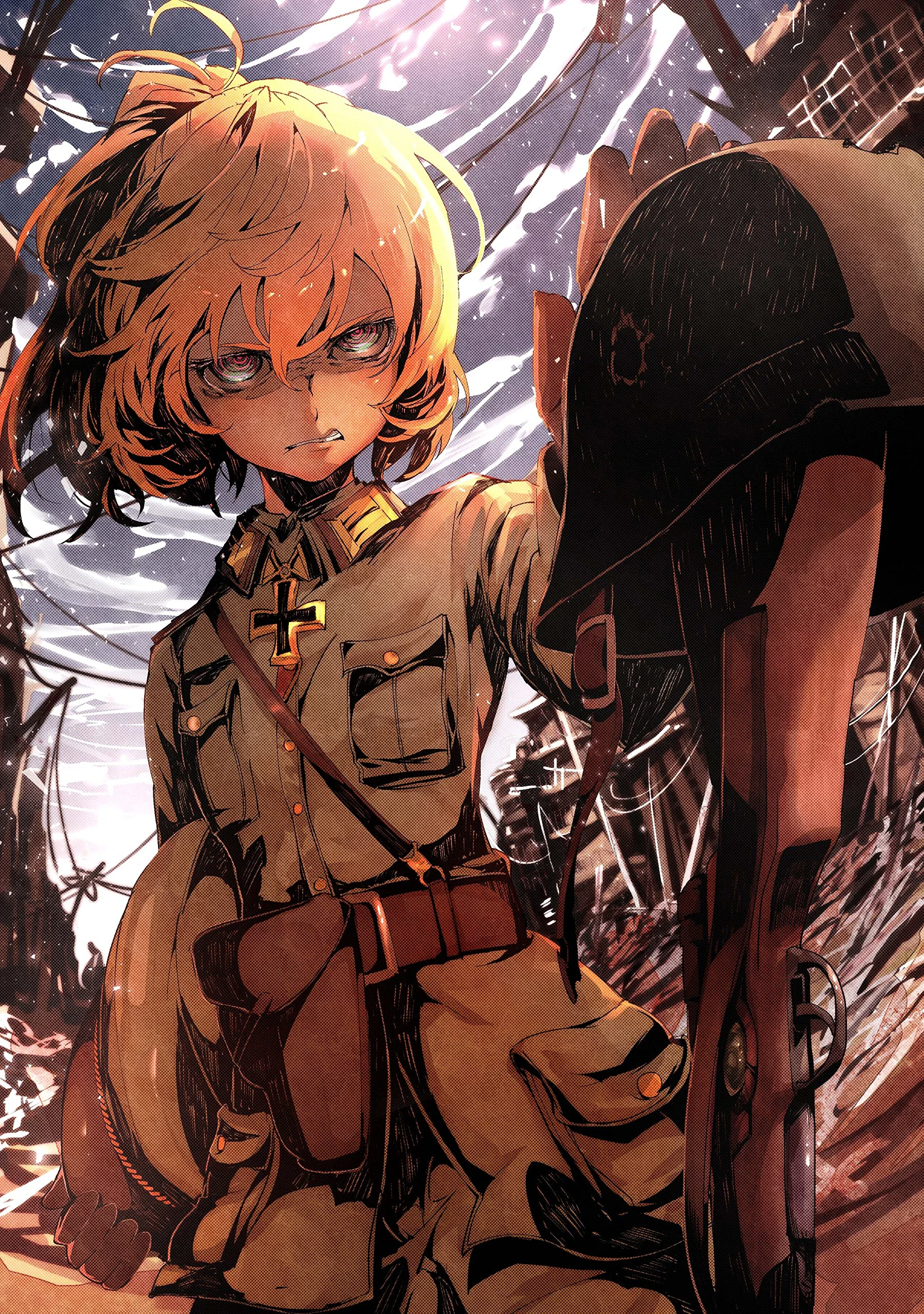
Tanya operates in a space where you’re laughing at things that, in any realistic context, would be horrifying. Children dying in artillery barrages. Civilian infrastructure targeted for strategic advantage. Tanya herself is physically a child, and the series never lets you forget that even as she orders battalion-level offensives. There’s a reason the community debates whether Tanya is a villain protagonist or just a protagonist in a world with no heroes. One commenter put it well: “Not sure if there is a definitive good guy. That is what sucks about war. But Tanya and her Fatherland are definitely the bad guys.”
For me, the darkness works because Zen commits to it. This isn’t “edgy” in the way that, say, early Shield Hero tries to be edgy. There’s no winking at the camera. The comedy comes from the gap between Tanya’s mundane corporate mindset and the extreme situations she’s in. She evaluates troop morale the way a middle manager evaluates employee engagement scores. The horror of war filtered through spreadsheet thinking. That’s the joke, and it never stops being funny in a deeply unsettling way.
If you bounced off Overlord because Ainz’s villain moments felt weightless, Tanya might actually work better for you. The consequences here feel real. Soldiers die and stay dead. Campaigns fail. The Empire’s strategic position deteriorates across the series in ways that Tanya can see coming but can’t prevent. There’s genuine tragedy underneath the black comedy, and that’s what gives the humor its edge.
Should You Read the Light Novel or Watch the Anime First?
Watch the anime first. Season 1 (12 episodes, 2017) covers volumes 1 and 2, and it’s a fantastic adaptation. Studio NUT did incredible work with the action sequences, and Aoi Yuuki’s performance as Tanya in the Japanese dub is legitimately iconic. The movie (2019) covers volume 3 and the Russy Federation arc. Both are worth watching before you touch the books.
Then read from volume 1 anyway.
I know that sounds contradictory, but hear me out. The anime compresses heavily. Military strategy that takes 30 pages of setup and payoff in the novel gets reduced to a single battle scene. You lose Tanya’s internal monologue almost entirely, which is where 60% of the character work happens. The anime gives you spectacle. The novel gives you the thinking behind the spectacle, and that thinking is where Tanya goes from “cool character” to “one of the best-written isekai protagonists period.”
Here’s where it gets exciting. Season 2 arrives in July 2026, picking up from volume 4 onward. That means there are roughly 10 to 12 volumes of completely unadapted content sitting in the light novel right now. The Rus campaign, the Francois invasion, the political machinations that reshape the entire war. None of that has been animated yet. If you start reading now, you’ll be ahead of the anime-only crowd by years worth of story.
How Does the Writing Hold Up Across 14 Volumes?
Here’s my honest assessment: the first two volumes are good but slightly uneven. Zen is still finding the balance between military exposition and character work, and some passages read like a history textbook with magic bolted on. By volume 3, he’s hit his stride. The Russy Federation arc is where the series clicks into place and doesn’t let go.
Volumes 4 through 9 are the peak. The war expands, the political landscape shifts, and Tanya’s position becomes increasingly untenable. She’s winning battles and losing the war in slow motion, and watching her try to game a system that’s being manipulated by a literal god is impossible to put down. The military strategy gets more complex here, and Zen earns the detail. Every supply line problem, every diplomatic failure, every miscommunication between field commanders and the General Staff feels like it matters.
Volumes 10 onward maintain quality, but the focus shifts somewhat. The scope gets wider, pulling back from Tanya’s immediate battlefield experience to encompass the Empire’s broader strategic collapse. Some readers find this less engaging because you spend more time with secondary characters and political figures. I think it works. War stories that stay locked to one perspective eventually feel claustrophobic, and Zen’s willingness to zoom out keeps the series from repeating itself.
The Yen Press translation is solid. Not the fastest release schedule (J-Novel Club has spoiled me there), but the quality is consistent. Emily Balistrieri handles the military terminology well without making it impenetrable for readers who aren’t history buffs.

Why Do the Scores Back Up the Hype?
AniList has Tanya at 83/100, ranking it #30 among the most popular light novels on the platform. MAL gives it 8.48 out of 10 with over 27,000 members. These are serious numbers for a light novel that doesn’t lean on romance, power fantasy, or wish fulfillment.
The community engagement tells an even bigger story. When Season 2 was announced, the Reddit post hit 20,470 upvotes with 921 comments. The top comment? “My happiness is immeasurable and my day has been made” with 3,751 upvotes. For context, the gap between Season 1 and the movie was 2 years. The gap between the movie and the Season 2 announcement was another 2 years. And then the actual wait stretched to 9 years after Season 1 first aired. One commenter said they were “genuinely convinced I imagined it” after waiting that long, and that post pulled 768 upvotes. This is a fanbase that waited nearly a decade and came back stronger. That kind of loyalty doesn’t happen for mediocre series.
What the scores don’t capture is the specific audience this series attracts. Tanya fans tend to also be deep into Re:Zero, Overlord, and KonoSuba. Not the casual isekai crowd. These are readers who want their genre fiction to actually interrogate its own premises. If you’re in that camp, Tanya belongs on your shelf.
Should You Read The Saga of Tanya the Evil in 2026?
Absolutely, and the timing couldn’t be better.
Season 2 drops in July 2026. The light novel is at 14 volumes with roughly 10–12 volumes of completely unadapted material. The series is still ongoing, which means you’re not walking into a completed story with a potentially disappointing ending. You’re joining a war still in progress, and the community is more active now than it’s been since 2017.
If you want isekai that doesn’t insult your intelligence, that treats war as something more complex than power levels and boss fights, and that has a protagonist who is simultaneously the funniest and most disturbing character in the genre, read Tanya. Start with the anime if you want the visual spectacle. Start with volume 1 if you want the full experience. Either way, you’ll end up reading all 14 volumes because once Tanya gets her hooks in you, Being X isn’t the only one who can’t look away.
You can grab the light novels from Amazon or digitally through BookWalker. At 14 volumes, it’s a serious commitment, but the pacing keeps every volume earning its page count. I’ve reread volumes 4 through 7 twice now and found new details each time. That’s the mark of a series that rewards attention.
Frequently Asked Questions
Is The Saga of Tanya the Evil light novel finished?
No. The series is ongoing with 14 volumes published as of 2026. Carlo Zen continues to write new volumes, and the story has not reached its conclusion yet.
How many volumes does the anime cover?
Season 1 covers volumes 1-2 and the movie adapts volume 3. Season 2, arriving July 2026, picks up from volume 4. That leaves roughly 10–12 volumes of unadapted content in the light novel.
Is Tanya a villain or a hero?
Tanya is a villain protagonist. She fights for her own survival using morally questionable tactics that happen to be tactically brilliant. The series doesn’t frame her as heroic, but her perspective makes you understand (and sometimes root for) her logic.
Do I need to know military history to enjoy the light novel?
No. Carlo Zen explains enough context within the story. Familiarity with WWI-era history enhances the experience because you can spot the parallels, but it’s not required to follow the plot or enjoy the characters.
Who publishes the English translation?
Yen Press publishes the official English translation of The Saga of Tanya the Evil light novel. The translation quality is consistent and handles the military terminology well.