

Ichinose Honami shouldn’t work as a character. Not in this series. Classroom of the Elite runs on manipulation, hidden agendas, and the assumption that kindness is either a mask or a weakness. Every major player in the Advanced Nurturing High School operates under that logic. Ryuuen uses fear. Sakayanagi uses intellect and cruelty. Ayanokoji uses everyone. And then there’s Ichinose, leading Class B with genuine empathy and open communication — refusing to treat people as disposable pieces. The COTE fandom has spent years calling her naive, boring, too soft for this story. They’re wrong. And by the end of Year 2, the light novel makes the case for why they’re wrong in ways that are easy to miss if you’re only paying attention to Ayanokoji.
TL;DR
Ichinose Honami is the most misread character in Classroom of the Elite. She leads Class B through genuine trust and cooperation in a school designed to punish that approach. Her Volume 7 backstory and Year 2 struggles — along with her refusal to become another manipulator — make her essential to understanding what COTE is actually about beneath Ayanokoji’s shadow.

Why Does Ichinose Get So Much Hate From the COTE Fandom?
Ichinose Honami is Class B’s leader in Classroom of the Elite, and the fandom consistently ranks her below Ryuuen, Sakayanagi, Horikita, and even minor characters like Koenji. The criticism boils down to one accusation: she’s too nice for a series built on psychological warfare. But this misreads both her character and the role she plays in the story’s thematic structure.
Browse any COTE discussion thread on Reddit or MyAnimeList and you’ll find the same complaints. “Ichinose is boring.” “She doesn’t do anything.” “Class B is just her carrying dead weight.” Some of this landed differently before Year 2 gave her more page time, but even in Year 1, the criticism misses the point.
The Advanced Nurturing High School is built to reward ruthlessness. The class point system, the special exams, the expulsion mechanics. Everything pushes students toward treating each other as resources. Ryuuen understood this immediately and built a dictatorship. Sakayanagi understood it from birth and plays the school like a chess board. Ayanokoji understood it better than all of them and uses people so efficiently they sometimes don’t realize they’ve been used until volumes later.
Ichinose’s refusal to operate this way isn’t naivete. It’s a deliberate choice. She knows what the school rewards. She watched Ryuuen terrorize Class C. She’s aware that Sakayanagi has been studying her weaknesses since enrollment. And she still chooses trust. Still chooses transparency with her classmates. Still chooses to protect the weakest members of her class rather than sacrificing them for point advantages.
The fandom calls this soft. Kinugasa is writing it as a thesis statement. In a series where every other leader optimizes for victory, Ichinose optimizes for people. And the question the narrative keeps asking is whether that’s sustainable.
What Makes Ichinose’s Leadership Style Different From Every Other Class Leader?
While Ryuuen rules through intimidation and Sakayanagi through intellectual dominance, Horikita grows through personal effort into competence, Ichinose leads Class B through democratic decision-making and resource sharing, with genuine care for her classmates. She’s the only leader who has never deliberately sacrificed a student for strategic advantage.
Class B under Ichinose operates like no other class in the school. She pooled private points early, creating a shared fund that kept struggling students afloat. She ran strategy meetings where everyone had input, not just the top performers. When exams threatened expulsion, she focused on lifting the bottom rather than amplifying the top.
Compare that to what’s happening in the other three classes. Ryuuen in Class C ran a protection racket. You either followed orders or got crushed. His strategy worked through fear and occasional brilliance, but it collapsed the moment someone stronger showed up (Ayanokoji, Volume 7). Sakayanagi in Class A treats exams like puzzles designed for her entertainment. Her classmates are pieces. Useful pieces, but pieces. Horikita in Class D starts the series unable to lead at all and spends 15+ volumes learning how to do what Ichinose does naturally.
That last point gets overlooked constantly. Horikita’s entire Year 1 arc is about learning to trust classmates and delegate responsibility — valuing people beyond their utility. The series frames this as growth. But Ichinose walked in on day one already doing all of that. Horikita’s destination is Ichinose’s starting point.

The catch is that the school doesn’t reward this. Class B stays in second place through Year 1. Not because Ichinose is incompetent, but because the exam system is designed to reward the kind of ruthless optimization she won’t do. She won’t expel weak students for points. She won’t betray allies for temporary advantage. She won’t sacrifice long-term cohesion for short-term wins. And the school punishes that restraint.
I wrote about this dynamic in my Classroom of the Elite light novel review. The series is fundamentally about what happens when genuine human connection meets a system designed to exploit it. Ichinose is the purest test case for that question.
What Does Volume 7 Reveal About Ichinose’s Past?
Year 1 Volume 7 is Ichinose’s spotlight volume. It reveals that she was expelled from her previous school after being caught shoplifting, a crime she committed to help a friend in financial trouble. This backstory reframes everything about her character, explaining both her moral absolutism and her vulnerability to blackmail that Sakayanagi later exploits.

Volume 7 hits different from most COTE character reveals. Ryuuen’s backstory is about violence and dominance. Sakayanagi’s is about genius and privilege. Ayanokoji’s White Room origin is about being engineered as a weapon. Ichinose’s secret is that she shoplifted. Once. For someone else.
The smallness of it is the point. In a series full of larger-than-life psychological warfare, Ichinose’s deepest shame is a minor crime committed out of empathy. She stole because a friend couldn’t afford something essential, got caught, took the full blame, and was expelled. She carries that guilt like it defines her. And when she arrives at the Advanced Nurturing High School, she builds her entire leadership philosophy around making sure nobody in her class ever feels desperate enough to do what she did.
This is where Sakayanagi enters. She discovers Ichinose’s past and threatens to reveal it. The blackmail arc across Volumes 7 through 9 is one of the more underrated sequences in Year 1. Not because of the blackmail itself, which is fairly standard manipulation fare, but because of what it does to Ichinose psychologically. She’s paralyzed. Not by the threat to her reputation, but by the fear that her classmates will see her differently. That the trust she built will crack.
Ayanokoji’s intervention here is fascinating. He doesn’t solve the problem through manipulation or force. He essentially tells Ichinose that her past doesn’t diminish her present. It’s one of his rare moments of something that reads almost like genuine empathy. Almost. With Ayanokoji you can never be fully sure. But the scene works because it reveals that even the series’ most calculating character recognizes something valuable in Ichinose’s approach. She’s not naive. She’s principled. And the distinction matters.
How Does Year 2 Challenge Everything Ichinose Built?
Year 2 of Classroom of the Elite systematically dismantles Class B’s stability. New students, harder exams, and Ayanokoji’s transfer to a different role all pressure Ichinose’s cooperative leadership model. By Y2V12, the community is split on whether her character development represents realistic struggle or frustrating stagnation.
Year 2 is harder on Ichinose than on any other class leader. And the fandom’s patience with her wore thin because of it. But here’s what I think people miss: Year 2 isn’t breaking Ichinose because she’s weak. It’s breaking her because the system finally escalated beyond what cooperation alone can handle.
The new first-year students introduce chaos. The exam difficulty spikes. Class B loses members. Points drain. And for the first time, Ichinose’s strategy of protecting everyone starts producing measurably worse results than the cutthroat approaches of other classes. She’s not failing because her principles are wrong. She’s failing because the school is specifically designed to punish them at scale.
The community reaction to Y2V12 was mixed, and honestly, I get both sides. Some readers wanted Ichinose to evolve, to adopt harder tactics, to become a more “interesting” character by the fandom’s definition. Others appreciated that Kinugasa kept her consistent. She doesn’t suddenly become Ryuuen. She doesn’t adopt Ayanokoji’s manipulation toolkit. She struggles, she doubts herself, she questions whether kindness has a place in this school. But she doesn’t abandon it.
That’s a harder arc to write than a power-up. And it’s a harder arc to appreciate as a reader, because we’ve been trained by shounen and isekai and a hundred other LN genres to expect characters to level up when they face adversity. Ichinose’s Year 2 arc is about facing adversity and not leveling up. About holding onto your values when the results keep telling you they’re costing you.
Is it frustrating? Sometimes. Especially when you’re reading monthly and Class B keeps falling. But zoom out and look at what Kinugasa is constructing. In a series where every other character’s growth involves becoming more strategic, more ruthless, more willing to sacrifice, Ichinose’s arc asks: what happens to the person who won’t? That’s not boring writing. That’s the most ambitious character question in the entire series.
What Is Ichinose’s Relationship With Ayanokoji Really About?
Ichinose’s feelings for Ayanokoji are one of the most debated relationship dynamics in COTE. She develops genuine romantic interest, but Ayanokoji’s response is characteristically ambiguous. Their dynamic works best as a mirror: Ichinose is what Ayanokoji might be if he chose connection over control, and his treatment of her reveals the limits of his emotional capacity.

Let’s get the shipping discourse out of the way. Yes, Ichinose has feelings for Ayanokoji. No, he does not reciprocate in any conventional sense. The Kiyokei ship (Ayanokoji x Kei) is canon. If you’re reading for romance resolution with Ichinose, the light novel has made its position clear. But reducing Ichinose’s connection to Ayanokoji to a failed romance subplot misses the entire function of their dynamic.
Ayanokoji treats people as tools. That’s not fan exaggeration. He says it himself. He engineers situations and manages relationships for strategic outcomes, treating emotional attachment as a variable to control. But with Ichinose, something different happens. He respects her. Not the way he respects Sakayanagi’s intellect or Ryuuen’s intensity. He respects her refusal to play the game on the school’s terms.
The Volume 7 scene where he talks her through the blackmail crisis. The moments in Year 2 where he checks on her class’s morale not because he needs something from her, but because he seems genuinely curious about whether her approach can survive. These aren’t romantic gestures. They’re something rarer in this series: acknowledgment that her way of operating has value, even from someone who would never choose it himself.
Ichinose functions as a moral mirror for Ayanokoji. She shows what he could be if the White Room hadn’t stripped his capacity for unconditional trust. And he functions as a reality check for her. His existence in the story proves that the school’s system can be beaten through manipulation more efficiently than through cooperation. She knows this. She watches him operate. And she still chooses her way.
That mutual awareness makes their scenes together more interesting than most of the actual romantic dynamics in COTE. The love triangle with Kei gets the attention, but the philosophical tension between Ichinose and Ayanokoji is the real relationship worth analyzing. I touched on similar character dynamics in my piece on the COTE light novel vs anime differences, where the anime strips away exactly this kind of nuance.
How Does the Anime Handle Ichinose Compared to the Light Novel?
The Classroom of the Elite anime reduces Ichinose to a background character. Her Volume 7 backstory is compressed, her leadership moments are cut. The psychological depth that makes her interesting in the light novel barely survives adaptation. The anime keeps roughly 30% of the source material, and Ichinose’s characterization suffers disproportionately.
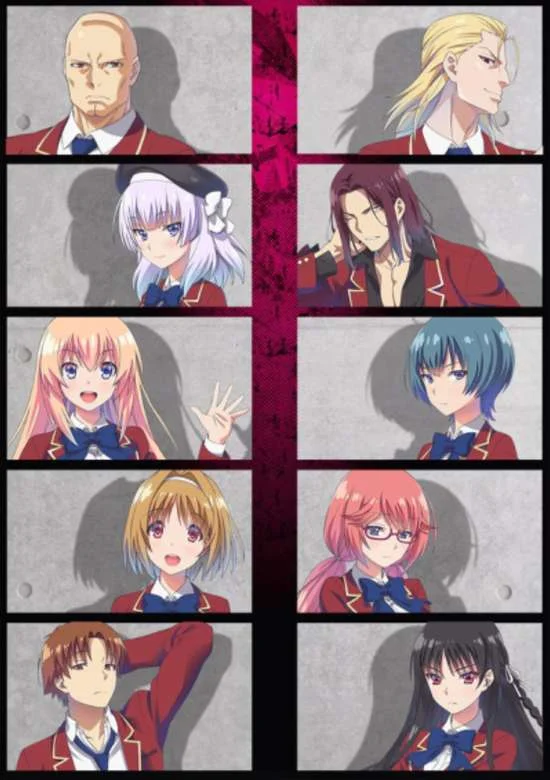
If you only know Ichinose from the anime, you know almost nothing about her. That’s not hyperbole. The anime treats her as a pleasant side character who occasionally appears to be nice and then exits the scene. Her inner conflict, her backstory’s emotional weight, her strategic thinking during exams. Gone. Compressed into fragments that don’t communicate why she matters.
The anime’s 30% retention rate (a number the community uses frequently, and having read the source, I think it’s generous) hits characters like Ichinose hardest. Ayanokoji survives the cuts because the anime restructured itself around his cool-genius aesthetic. Horikita survives because the anime actively expanded her role. Ryuuen survives because his scenes are dramatic and visual. But Ichinose’s character runs on internal monologue, quiet leadership decisions, and slow trust-building across multiple volumes. None of that translates to a 12-episode season that needs to move fast.
Season 4 is confirmed for April 2026, and if past patterns hold, Ichinose will continue to get the short end of the adaptation. The anime has never prioritized her character, and three seasons in, that’s not going to change. If you’ve watched the anime and wondered why COTE readers care about Ichinose, this is why. You haven’t seen her character. You’ve seen the outline of her character with the substance removed.
Should You Read the Classroom of the Elite Light Novel for Ichinose’s Character?
If Ichinose’s premise interests you, you should read the Classroom of the Elite light novel from Volume 1. Her character doesn’t exist in isolation. The full experience — the school system, class dynamics, and how Ayanokoji sees her — is what makes her compelling. Seven Seas publishes the English translation, with Year 1 complete and Year 2 ongoing.
Don’t skip to Volume 7 for the backstory reveal. It won’t land. Ichinose’s character works because you spend six volumes watching her hold Class B together through exams that are designed to tear classes apart. You see her pooling resources, mediating disputes, making strategic concessions that other leaders would never make. By the time Volume 7 drops her secret, you’ve already formed an opinion about who she is. The reveal recontextualizes rather than defines.
Start from Volume 1. Yes, Volumes 1 and 2 are slow. The community agrees on this and so do I. But the setup matters. The .5 volumes (4.5, 7.5, 11.5) are NOT optional. They contain character development and relationship beats that the main volumes build on. Read them in order.
Seven Seas Entertainment publishes the English translation. Year 1 is fully available. Year 2 is ongoing. Year 3 has no English release date yet. You can grab Volume 1 on Amazon to start. Fair warning: the Volume 1 translation has some rough spots. Seven Seas cleaned things up in later volumes, but the early translation quality is a known issue. Push through it. The story earns your patience by Volume 3.
For readers who want more in this genre after catching up, I put together a list of light novels like Classroom of the Elite that scratch similar itches.
Where Does Ichinose Rank Among COTE’s Character Roster?
Ichinose Honami ranks below Ayanokoji, Kei, and Ryuuen in most fan polls, but above Horikita and Sakayanagi in terms of thematic importance to the series. She’s not the most entertaining character. She’s the most important one the series could lose without the fandom noticing, which says more about the fandom than about her.
Fan polls are a terrible metric for character quality in COTE. They reward spectacle and power moments. Ship appeal is a bonus.. Ryuuen ranks high because his confrontation with Ayanokoji in Volume 7 is one of the best scenes in the series. Kei ranks high because the romance with Ayanokoji gives her a clear emotional arc with payoff. Sakayanagi ranks high because genius-villain characters always rank high. These are all legitimate reasons to enjoy those characters. But ranking systems favor characters who DO things in dramatic, visible ways.

Ichinose’s impact is structural, not spectacular. She holds a class together. She maintains morale during impossible exams. She refuses to sacrifice people. These don’t make for clip-worthy moments or satisfying power reveals. But remove Ichinose from the story and the entire thematic architecture collapses. Without a character who genuinely believes in cooperation, COTE is just a manipulation Olympics with no counterargument. Ayanokoji’s worldview goes unchallenged. The school’s system goes unquestioned. Ryuuen’s violence and Sakayanagi’s cruelty have no foil.
Ichinose is the conscience of a story full of characters who’ve abandoned theirs. And the fact that she keeps losing ground to characters who play dirtier is the point. The series isn’t arguing that kindness wins. It’s showing you the cost of kindness in a system built against it, and asking whether that cost makes it worthless. Through 30+ volumes, Kinugasa has never given a definitive answer. That ambiguity is only possible because Ichinose exists.
My take: she’s a top-five COTE character, and the gap between her fan ranking and her narrative importance is the largest in the series.
What Could Year 3 Mean for Ichinose’s Future?
Year 3 of Classroom of the Elite is the final arc, and Ichinose’s character is positioned for either a definitive vindication or a tragic conclusion. With Ayanokoji’s role shifting and the exam stakes higher than ever, how Kinugasa resolves Ichinose’s cooperative philosophy will determine whether COTE’s ending earns its thematic ambitions.
I’m not going to predict what Kinugasa will do. Year 2 taught me that predicting this series is a losing game. But I can flag what the setup suggests.
Ichinose enters Year 3 with a weakened class and a tested but intact philosophy — plus the knowledge that the school’s system does not favor her approach. Everything Year 2 built toward this question: can she adapt without compromising? Not “will she become ruthless” because that’s not adaptation, that’s just becoming another Ryuuen. The real question is whether she can find a version of her cooperative leadership that works at the school’s highest difficulty level.
Year 3 has no English release date yet, so most Western readers are working from Japanese summaries and translations of varying quality. What I’ve gathered suggests that Ichinose continues to play a meaningful role. Whether “meaningful” means resolution or continued struggle depends on which fan translations you trust.
Here’s what I want from Year 3 for her character: not a power-up. Not a sudden strategic awakening where she becomes a master manipulator. That would betray everything the series built with her. I want Kinugasa to show what happens when principled leadership meets the final exam. Win, lose, or somewhere in between, her arc needs an answer to the question the series has been asking since Volume 1. Is there room in this school for someone who won’t sacrifice people?
Thirty volumes of setup for that question. The answer better be worth it.
Frequently Asked Questions
Is Ichinose Honami a main character in Classroom of the Elite?
Ichinose is a major supporting character and the leader of Class B. She isn’t the protagonist (that’s Ayanokoji), but she has dedicated character arcs in Year 1 Volume 7 and multiple Year 2 volumes — playing a significant thematic role throughout the series. Her screen time increases substantially in the light novel compared to the anime.
Does Ichinose end up with Ayanokoji in the light novel?
No. Ichinose develops feelings for Ayanokoji, but his canonical romantic relationship is with Kei Karuizawa. Ichinose’s connection with Ayanokoji is better understood as a philosophical dynamic rather than a romantic one. He respects her principles even though he would never adopt them himself.
What is Ichinose’s secret in Classroom of the Elite Volume 7?
Volume 7 reveals that Ichinose was expelled from her previous school for shoplifting. She committed the crime to help a friend who was in financial trouble. This secret becomes a blackmail weapon that Sakayanagi uses against her, and its resolution involves one of Ayanokoji’s rare moments of apparent genuine concern for another person.
Why do COTE fans dislike Ichinose?
The most common criticism is that she’s “too nice” for a series built on psychological manipulation. Fans who prefer the strategic mind games of characters like Ayanokoji, Ryuuen, and Sakayanagi find Ichinose’s cooperative leadership boring. Her Year 2 struggles, where Class B’s performance declines, reinforced the perception that her approach doesn’t work. However, this reading overlooks her thematic importance as the story’s moral counterweight.
Who publishes the Classroom of the Elite light novel in English?
Seven Seas Entertainment publishes the English translation. Year 1 (including all .5 volumes) is fully available. Year 2 is ongoing with regular releases. Year 3, the final arc, does not have an English release date yet as of April 2026.