

This article contains affiliate links. If you buy through these links, we earn a small commission at no extra cost to you.
Thirty-two volumes. That’s how long Tsutomu Satou spent building a world where magic operates like engineering and the protagonist everyone dismisses as boring is quietly the most dangerous person alive. The Irregular at Magic High School ran from 2011 to 2020 and sold over 25 million copies. Three anime seasons aired, with a fourth movie dropping May 2026.
And most people in the English-speaking LN community either wrote it off after the anime or never picked it up at all.
Fair enough. The anime makes Tatsuya Shiba look like another emotionless OP protagonist in a magic school setting. Watch six episodes, and you’ll think you’ve seen this before. Same. Then I read Volume 8, the Reminiscence Arc, and realized the anime had been lying to me about what this series actually is.
Here’s the thing: The Irregular at Magic High School is not a magic high school story. It’s a military-political thriller that happens to start in a classroom. And the light novel is the only version that makes that clear.
TL;DR
- The Irregular at Magic High School is a 32-volume completed military sci-fi series disguised as a magic school story
- Tatsuya Shiba’s emotional suppression is an in-universe magic seal, not lazy writing
- The anime covers 16 of 32 volumes — Volumes 17-32 transform into geopolitical fiction about great powers maneuvering around Japan’s magicians as strategic weapons
- 25 million copies sold. The Yotsuba Succession Arc movie hits May 2026, and everything after that is LN-only territory
What Is The Irregular at Magic High School Actually About?
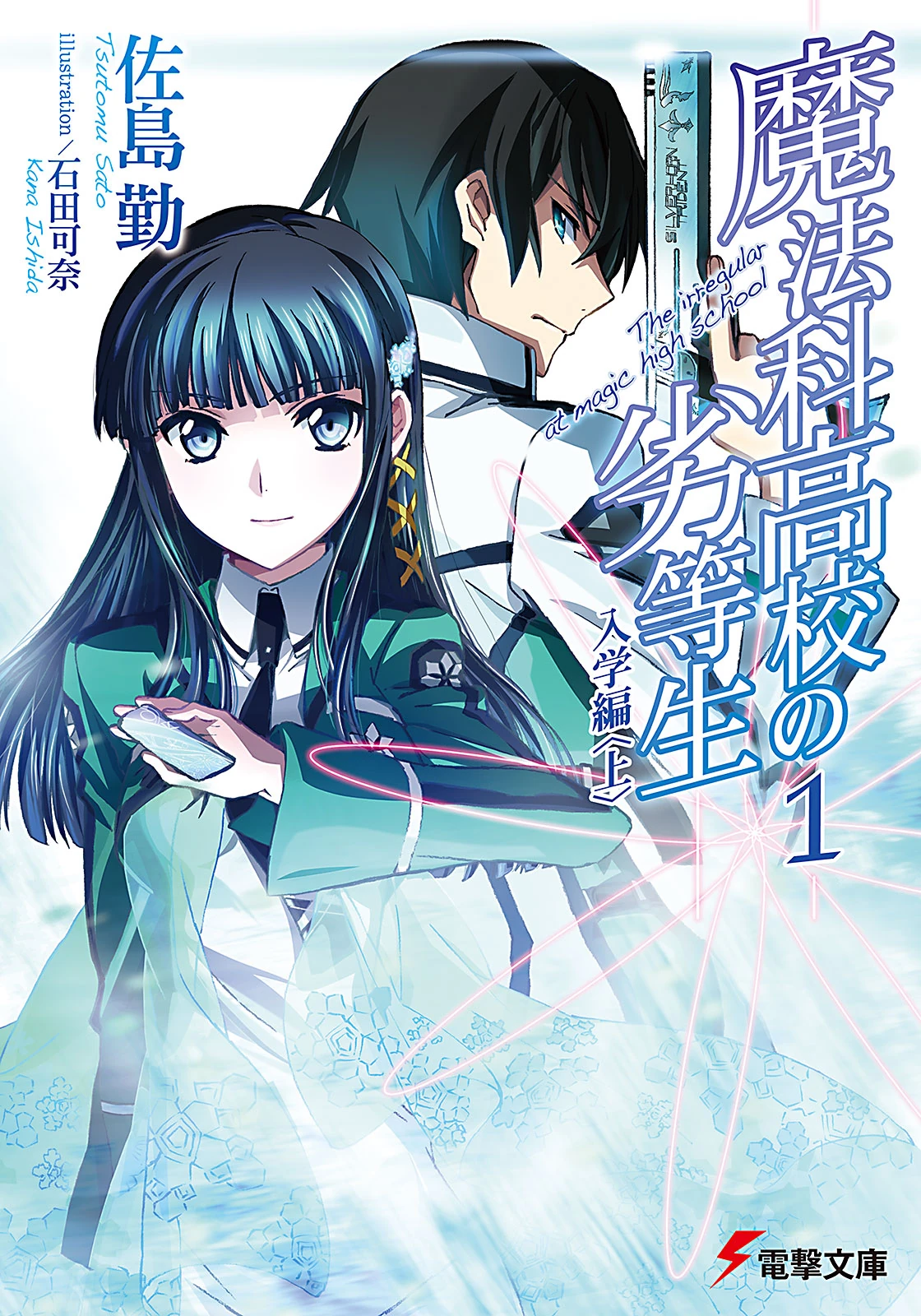
The surface-level pitch: Tatsuya and Miyuki Shiba enroll at First High School, a magic academy that sorts students into Course 1 (talented) and Course 2 (everyone else). Tatsuya lands in Course 2 despite being the most capable magician in the school. The series explores why, and that answer drives the entire 32-volume run.
But surface-level is where the anime leaves most viewers. The LN goes deeper immediately. Magic in this world isn’t fantasy. It’s formalized engineering. Activation sequences, psion manipulation, casting-assistance devices, information-body theory. Satou built a magic system that reads closer to a physics textbook than a spell list. Characters don’t just cast magic. They debug it. Tatsuya’s reputation as an “irregular” comes from his ability to read and rewrite magic at the foundational level, like a developer with root access to reality’s source code.
That framing matters because it changes what the conflicts are about. The fights in Mahouka aren’t about raw power levels (though Tatsuya has those too). They’re about information asymmetry and institutional gatekeeping. What happens when a system designed to classify people encounters someone it can’t classify? Course 1 versus Course 2 isn’t just an academic ranking. It’s a caste system enforced by the magic-industrial complex, and the series spends its first seven volumes methodically dismantling the logic that holds it up.
By Volume 12, the school setting starts receding. By Volume 17, it’s gone entirely. What replaces it is a geopolitical thriller about nation-states treating magicians as strategic military assets. The Great Asian Alliance wants Japan’s magic technology. The USNA sends covert operatives to neutralize threats. The Yotsuba clan operates as a shadow government. And Tatsuya sits at the center of all of it, not because he chose to, but because his abilities make him a weapon that every faction needs to either control or destroy.

Who Is Tatsuya Shiba, and Why Do People Get Him Wrong?
The most common complaint about Tatsuya: he’s boring. No emotions, no struggles, just a blank overpowered protagonist who wins every fight without breaking a sweat.
Wrong. But I understand where it comes from, because the anime actively creates that impression by stripping out everything that makes Tatsuya function as a character on the page.
Here’s what the LN gives you that the anime strips out. Tatsuya’s emotional suppression isn’t a character design choice. It’s an in-universe magical procedure called the Pledge. When he was a child, the Yotsuba clan modified his brain to suppress all emotions except his love for Miyuki. This isn’t backstory flavor. It’s the central tragedy of the series. Tatsuya can analyze any situation with perfect rationality because he was surgically denied the ability to feel fear, anger, joy, or attachment to anyone besides his sister.
Volume 8 lays this out in devastating detail. It’s a dual-timeline story set partially in 2092, showing exactly what the Yotsuba did to him and why. You see the moment it happens. You see what Tatsuya was like before. And then you understand every scene in the first seven volumes differently. His flat affect isn’t laziness. It’s damage. His detachment in combat isn’t because stakes don’t exist. It’s because a fundamental part of his humanity was removed to turn him into a more effective weapon.
The anime adapted Volume 8 as a single special episode. One episode for the arc that recontextualizes the entire series. It doesn’t work. You need the internal monologue. You need the pages where Tatsuya processes his own condition with clinical precision, recognizing intellectually what was taken from him without being able to feel the loss. That gap between knowledge and emotion is what makes him interesting, and prose is the only medium that can convey it properly.
Reddit’s r/mahouka community puts it well. One user describes how Satou’s “decision not having bystanders constantly yapping about his power” is actually a mature choice compared to standard isekai. Tatsuya doesn’t need validation from supporting characters because the narration gives you direct access to his thought process. The cost is that anime, which can’t reproduce internal monologue at that density, makes him look hollow.

What Makes the Magic System Worth the Technical Detail?
I’ll be honest. Volumes 1 through 3 almost lost me on the magic system descriptions alone. Satou front-loads a lot of terminology. Activation sequences, magic calculation areas, casting-assistance devices, psion information bodies. It reads like a user manual for the first hundred pages.
But here’s why it pays off: every major conflict in the series is resolved through the system’s internal logic. When Tatsuya wins, it’s not because he has the biggest fireball. It’s because he understood the mechanics better than his opponent. The Nine Schools Competition arc (Volumes 3-4) is essentially a sports tournament where the real tension is Tatsuya reverse-engineering opponents’ magic sequences in real time and building counter-measures. It’s more heist movie than battle manga.
And the system gets more interesting as the stakes rise. By the time you hit the Visitor Arc (Volumes 9-11), magic has become a national security issue. Parasites from a black hole experiment are infecting magicians. The USNA sends Angelina Kudou Shields, a Stars operative, to Japan to investigate and potentially assassinate Tatsuya. The technical framework that felt dry in Volume 1 now drives espionage sequences where the difference between a casting delay of 0.2 seconds and 0.15 seconds is literally the difference between life and death.

The Yokohama Disturbance Arc (Volumes 6-7) is where the system fully justifies itself. The Great Asian Alliance launches a military attack on Yokohama, and Tatsuya deploys Material Burst, a strategic-class magic that converts matter directly into energy. The physics are internally consistent with everything Satou established earlier. It’s not a deus ex machina. It’s a logical extension of the rules the series spent five volumes teaching you. That’s satisfying in a way that most isekai power reveals never manage.
Is the Miyuki Situation as Bad as People Say?
I’m not going to pretend the Tatsuya-Miyuki dynamic isn’t an issue for some readers. Their relationship is the series’ most polarizing element, and the Volume 16 reveal makes it more complicated, not less.
The anime reduces Miyuki to “the sister who’s obsessed with her brother.” Every scene emphasizes her devotion with no context. The LN does something more difficult. Volume 16, the Yotsuba Succession Arc (adapted as the upcoming May 2026 movie), reveals the truth about their origins. They share genetic material. Miyuki was engineered by the Yotsuba as a biological limiter for Tatsuya’s power. Their entire relationship has been orchestrated by the clan from birth.
The LN opens Volume 16 with Miyuki staring at herself in a mirror, thinking about a future she despises: becoming head of the Yotsuba while Tatsuya is freed from the clan but separated from her forever. That scene doesn’t exist in any anime adaptation. It’s where Miyuki stops being a trope and becomes a person trapped by institutional decisions made before she was born.
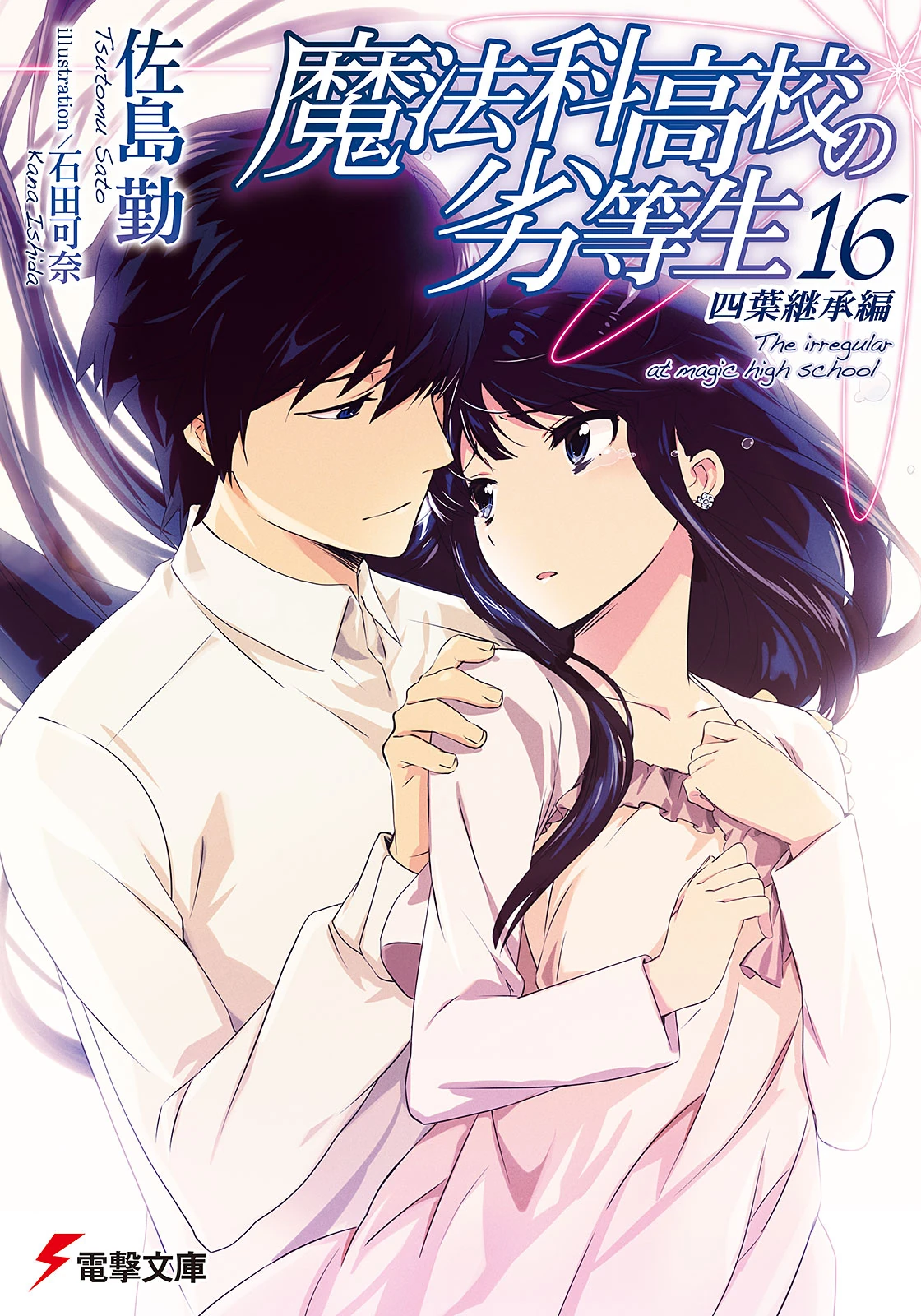
Comfortable? No. Satou knows that. But he’s not playing it for titillation. He’s writing about what happens when a powerful family treats people as breeding assets. The Yotsuba aren’t romantic matchmakers. They’re eugenicists. The discomfort is the point.
I know some readers will bounce off this regardless, and that’s a legitimate reaction. But if you dismiss Miyuki based on the anime’s portrayal alone, you’re missing the version of the character that actually has an inner life.
Where Does the Series Transform After the School Setting?
Volume 12 is the turning point. The Double Seven Arc is the last arc that takes place primarily at First High. After that, Mahouka becomes something else entirely.
Volumes 17-19 (the Master Clans Council Arc) deal with the political fallout of Tatsuya and Miyuki’s engagement announcement. The master clans convene. A crime boss named Jiedo Heigu bombs the clans to discredit magicians globally, triggering worldwide hate crimes against mages. The USNA intervenes with its own agenda. This is Tom Clancy territory filtered through a light novel framework.
Volumes 20 through 22 push further. The Great Asian Alliance rebels try to destroy Japan’s artificial Okinawa island. Brazil’s strategic magician triggers a global cold-war scare. The USNA and a coalition called the NSU plan to neutralize Tatsuya as a strategic threat. Multiple nations are running parallel black operations, and Tatsuya’s role shifts from student to something closer to a stateless nuclear deterrent.

One Reddit user nailed it: “The entire series is broken down into 2 parts. The first half is the ‘High School’ part.” The second half is a completely different genre. If you’ve been reading for the school drama and magic tournaments, the post-Volume 16 shift will either thrill you or alienate you. For me, it’s where the series reaches its potential. Satou clearly always wanted to write about magicians as weapons of mass destruction operating within geopolitical power structures. The school was the on-ramp.
None of this has been animated. Not a single episode. Volumes 17 through 32 are LN-only, and the upcoming movie only covers Volume 16. Everything after that? Uncharted territory for anime-only fans, and it stays that way for the foreseeable future given the pace of adaptations.
How Is the English Translation?
Complicated. The Yen Press translation is polarizing within the community, and I have to be upfront about it because it affects whether you buy official or go fan-translated.
Multiple r/mahouka readers are blunt about it. One user from April 2026 wrote: “Fan translations are better through V19. The official translations made me actually question the series.” That’s not an isolated opinion. The technical terminology that makes Mahouka’s magic system work requires precise, consistent language, and several readers feel the official translation muddles it.
Yen Press has 27 volumes licensed, with Volume 27 scheduled for September 8, 2026. Volumes 28 through 32 have no English release date announced. That means the final five volumes of the main series are currently only available through fan translations.
My take: the official translation is competent but not exceptional. It handles the basics well enough. But if you’re the kind of reader who cares about technical precision in magic system descriptions (and if you’re reading Mahouka, you probably are), the fan translations through the mid-teens are genuinely smoother. Start with the official release, switch if it frustrates you.
The sequel series, Magian Company, follows Tatsuya in a post-graduation professional setting. Ten volumes published in Japan, ongoing, and not licensed for English release as of April 2026.
Should You Read The Irregular at Magic High School in 2026?
Yes. The timing is perfect.
The Yotsuba Succession Arc movie drops in May 2026. That movie covers Volume 16, the most pivotal single volume in the series. After it airs, every anime-only viewer is going to hit a wall: 16 more volumes of story with no adaptation announced. The LN readers will be the only ones who know what happens next.
Start from Volume 1. I know the anime covered Volumes 1 through 15, but the internal monologue changes the experience so fundamentally that rereading adapted content is worth it. If you absolutely can’t commit to that, start from Volume 9 (the Visitor Arc). The anime’s S2 adaptation of this arc cut enough that the LN version feels substantially different.
The complete package is 32 volumes of main story plus 10 (and counting) of sequel. That’s a commitment. But Mahouka rewards that commitment in a way that few light novel series can match. The magic system is internally consistent across three decades of in-universe time. Character decisions in Volume 3 have consequences in Volume 28. The political alliances established in the school arcs shape the geopolitical alignments in the later volumes. This is a series that was planned, not improvised, and the architecture shows.
If you want a light novel that respects your intelligence, doesn’t shy away from technical complexity, and transforms from a school story into something genuinely ambitious over its runtime, Mahouka belongs on your list. Just go in knowing that the first few volumes are foundation-laying, and the payoff starts around Volume 6 and never stops escalating.
You can grab the light novels from Amazon or digitally through BookWalker. At 32 volumes (27 in English), it’s the longest commitment on my shelf. But the series that anime fans dismiss as “boring OP protagonist at magic school” is hiding a structurally ambitious light novel run that I haven’t seen matched in the genre.
Frequently Asked Questions
Is The Irregular at Magic High School light novel finished?
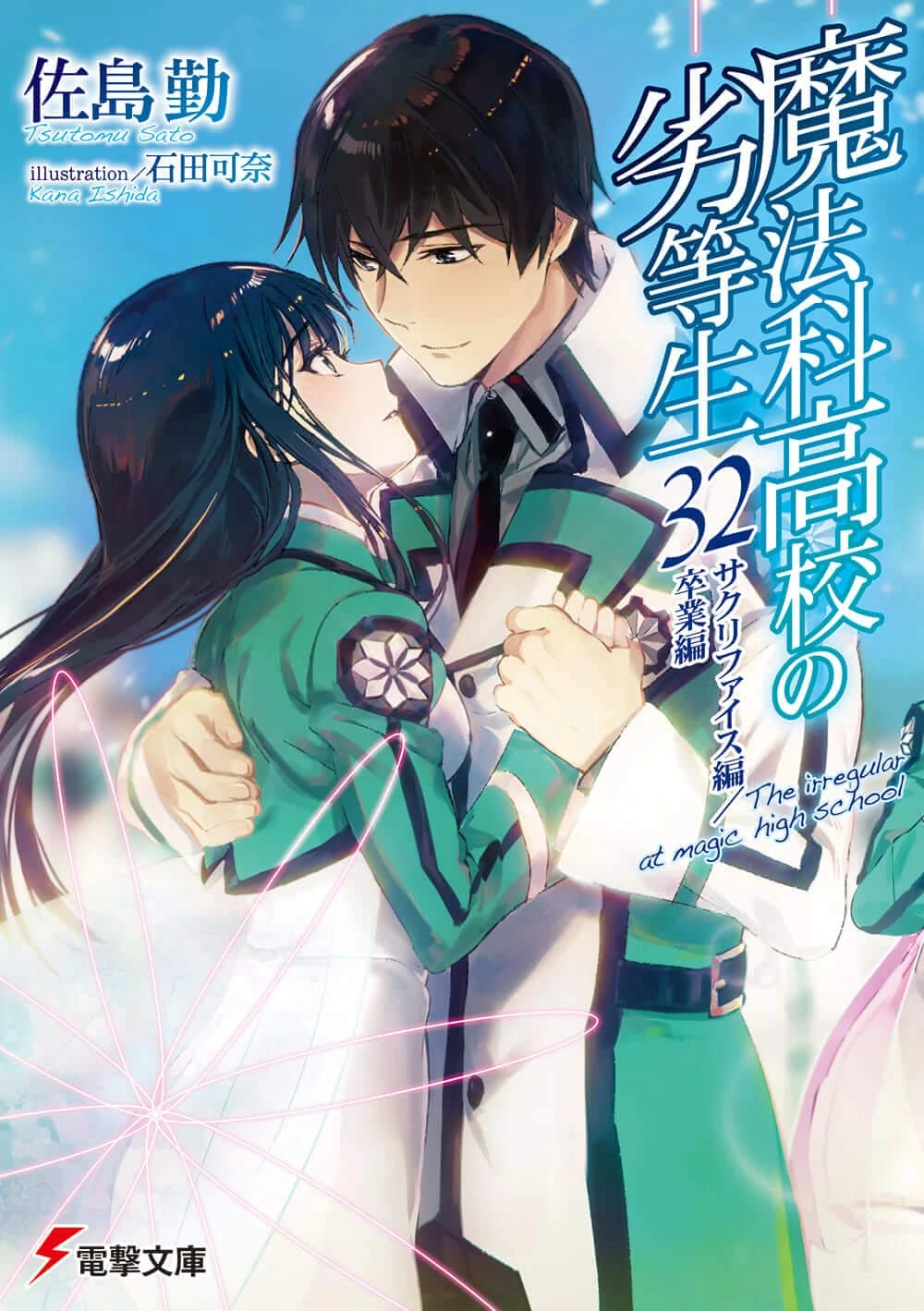
Yes. The main series completed at 32 volumes in September 2020. A sequel series, Magian Company, is ongoing at 10 volumes in Japan. The English translation from Yen Press covers through Volume 27 (releasing September 2026), with Volumes 28-32 not yet licensed. For the full breakdown, see my guide on whether the Irregular at Magic High School light novel is finished.
How many volumes of Irregular at Magic High School are there?
32 volumes for the main series, plus a movie tie-in volume (11.5). The sequel Magian Company adds 10 more and counting. In English, Yen Press has licensed 27 volumes of the main series.
Is Tatsuya Shiba overpowered?
Yes, but the series handles it differently than you’d expect. Tatsuya’s power isn’t a fantasy. It’s a burden imposed on him through magical body modification as a child. The cost is the suppression of nearly all his emotions. The LN spends significant time on the political and personal consequences of having that much power in a world where nations treat magicians as strategic weapons.
What order should I read The Irregular at Magic High School?
Publication order, Volume 1 through 32. The series is designed to be read sequentially, and later revelations depend on information introduced in earlier volumes. For a complete breakdown including side stories and the sequel, check my Irregular at Magic High School reading order guide.
Where does the anime leave off in the light novel?
Season 3 covers through Volume 15. The upcoming Yotsuba Succession Arc movie (May 2026) will adapt Volume 16. Everything from Volume 17 onward is currently unadapted. For a detailed comparison of what each season covers, see my Irregular at Magic High School LN vs anime breakdown.