

The Yotsuba Succession Arc movie hits in May 2026, and anime-only viewers are about to see the most significant reveal in the series — Miyuki named Yotsuba heir, her true backstory exposed, the engagement announced. It’s a major moment. And it’ll still leave them missing more than half of what makes this series worth caring about.
Not because the movie will be bad. Because the light novel and the anime are telling different versions of the same story, and they’ve been doing that since Season 1.
I’ve read the LN. I’ve rewatched the anime. The gap between them is wider than most adaptations, and it’s not just a matter of cut scenes. The characterization of two of the main cast is fundamentally different depending on which version you’ve experienced. One cut from Season 2 is so significant I’d argue the anime version of Mahouka has an incomplete story. And there are sixteen volumes of content (half the completed series) that no adaptation has touched.
Here’s the full breakdown.
TL;DR
- Miyuki's inner life is almost completely cut from the anime — in the LN, she's a complex character who despises her own future; on screen she's one-dimensional
- Honoka Mitsui confesses to Tatsuya in Volume 9: cut entirely from S2, her character arc doesn't exist in the anime
- Tatsuya's inner monologue is a constant in the LN, clinical and cold in ways that reframe every scene
- The Pledge (the magic procedure that altered his emotional capacity) is hinted at in the anime but fully explained in the LN. The difference changes how you read the entire series
- The anime covers Volumes 1–16 across S1/S2/S3/movies. Volumes 17–32 are LN-only
- Yen Press translation is contested through Volume 19. The community debate is legitimate
The Short Version: Are They Actually Different Stories?
Yes, genuinely. Not in a “the book had more” way — in a “the characterization of Miyuki Shiba is opposite” way.
The anime presents Miyuki as devoted to her brother, borderline obsessively so, and leaves the emotional motivation vague beyond what’s obvious. It leans into the surface reading and doesn’t push back against it. The light novel opens Volume 16 with Miyuki staring at herself in a mirror, hating what she sees. Not because of Tatsuya. Because she’s about to be named heir to the Yotsuba clan — the most powerful magical family in Japan. Everything she’s about to inherit is a future she doesn’t want. The engagement she’s being pushed toward. The role she didn’t choose. The price of being a Yotsuba.
That chapter doesn’t exist in any adaptation. The movie will compress or cut it. Without it, viewers get the announcement but not the internal stakes.
That’s the single biggest difference. But it’s not the only one.
Miyuki Shiba's Inner Life
The community consensus after S2 and S3 is blunt: the anime turned Miyuki into a one-dimensional character whose purpose is to revolve around her brother. One well-upvoted Reddit comment put it directly: “The anime painted Miyuki as a one dimensional FMC who’s sole purpose is to be horny around her brother. The light novel is completely different.”
That’s a harsh read, but it’s not unfair to the adaptation.
In the LN, Miyuki has a consistent internal voice throughout. She’s afraid of herself. She knows exactly why she feels the way she feels about Tatsuya — the Yotsuba Pledge, a magical modification that bound her emotional capacity in a specific way — and part of her characterization is the horror of understanding the mechanism of her own feelings without being able to escape them. Not naive. Just trapped, and fully aware of it.
Volume 16 is where this becomes unavoidable. The chapter that opens the volume, told entirely from her perspective, is about a girl standing at the edge of the life she’s been assigned. It sets up the engagement announcement as something she’s mourning even as she accepts it, which completely changes the emotional register of the arc. The movie will show you the announcement. It won’t show you her standing in front of that mirror.
The anime’s version of Miyuki is simpler, warmer, and easier to like on a surface level. The LN’s version is more interesting, darker, and harder to process. They’re not the same character.
Honoka Mitsui — The Cut That Creates a Missing Arc
This one bothers me more than it should, because it’s not a truncated scene. It’s an excision.
In Volume 9 of the light novel (the Visitor Arc, which Season 2 adapted), Honoka Mitsui confesses to Tatsuya. The scene exists, it has weight, and what Tatsuya says in response to it tells you something specific about his emotional state that the adaptation doesn’t convey any other way.
Season 2 cut it entirely.
Not shortened. Cut. The confession doesn’t happen in the anime. Which means Honoka’s feelings for Tatsuya, her struggle with them across subsequent volumes, the arc of what she does with them when she realizes they’re not going to be reciprocated — none of that exists for anime viewers. She’s a side character with a visible crush and no further development. In the LN, that confession creates a thread that runs through the rest of the high school arc.
This is the kind of cut that doesn’t show up on a comparison list. You don’t notice what you never saw. But if you read Volumes 9 onward, Honoka’s internal story is there, quiet and persistent, and it changes how her presence in later arcs reads. The anime version of her is a supporting character. The LN version is a character who made a choice and lives with it.
Tatsuya's Inner Monologue
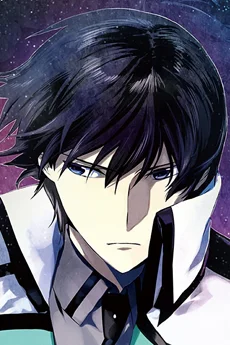
Tatsuya Shiba is a polarizing protagonist. The community argument runs in circles: he’s overpowered and emotionally flat, or he’s deliberately written that way for reasons the story earns. Both things can be true. But the version of Tatsuya you get in the anime is substantially thinner than the one in the LN, because the inner monologue is where most of his characterization lives.
The LN gives you access to a mind that processes human interaction as a series of inputs and calculated responses. Not because Tatsuya is cold by nature, but because he literally cannot respond the way a normal person would. His capacity for most emotions was modified. What he feels instead is a highly calibrated awareness of systems, motivations, and threat levels. He notices everything. He evaluates everything. Almost none of it translates to action.
Reading this in prose is different from watching it on screen. Animation can show you a blank face. It can’t show you the density of calculation behind it. When Tatsuya makes a decision that looks cruel or indifferent from outside, the LN lets you follow the exact reasoning. The anime asks you to trust that the cold protagonist knows what he’s doing. The LN shows you the mechanism.
Some readers find even the LN version exhausting. That’s a valid response. But characterizing it as bad writing misses what Tsutomu Satou is actually doing — and the LN makes that clearer than the anime can.
The Pledge — Why the Emotional Flatness Is Horror, Not Convenience
The anime hints at this. The LN unpacks it across multiple volumes.
Tatsuya’s emotional suppression has a cause. The Pledge is a magic procedure performed on him in childhood, one that altered his emotional architecture in a specific and permanent way. The procedure transferred his capacity for emotions relating to anything outside Miyuki — leaving him functionally incapable of feeling affection, fear, jealousy, or love toward anyone but her. What remained was tactical intelligence and an ability to process information without emotional interference.
This is not a convenient writing decision. It’s a horror premise.
The LN treats it as one. The scenes where Tatsuya reflects on his own emotional landscape, aware of what’s absent, are some of the most unsettling in the series. He knows he should feel something in moments when other people are breaking down. The gap is there, acknowledged. The calculation runs: what the appropriate response would be, how to perform it correctly. The performance is nearly indistinguishable from the real thing, which is its own kind of disturbing.
The anime’s Tatsuya is “a cold, competent protagonist.” The LN’s Tatsuya is a person who had a significant piece of his humanity removed and has been operating without it for years. The stories that person is living are fundamentally different even when the events are the same.
By Volume 8 (Reminiscence Arc), the LN gives you enough of the Pledge’s history to understand the full scope of it. The anime’s special adaptation of that arc hints at it. The full explanation takes longer and hits harder.
What the Anime Gets Wrong About the Magic System
The magic system is one of the most detailed in the isekai genre, and the anime compresses it significantly.
The anime explains Tatsuya’s Course 2 status as: he can’t use magic well. He lacks ability in conventional casting. This is accurate as far as it goes. The LN explains the actual technical reason — his magic activation speed is measured by a standard that doesn’t apply to his specific magic type. His psion output is not below standard. The measurement standard is wrong. He’s been classified as deficient by a metric that was never designed to measure what he can do.
This changes every scene in which he’s dismissed or looked down on by Course 1 students. The anime frames this as an underdog narrative — the underestimated student who turns out to be surprisingly capable. The LN frames it as an institutional failure — a classification system that cannot correctly categorize something it wasn’t built to recognize. That’s a different story. The social politics of First High School read differently when you understand it’s not “Tatsuya is actually good” but “the measurement is broken.”
The magic system itself is more software engineering than fantasy spellcasting. Psion manipulation through activation sequences, magic programs that can be modified and countered. Tatsuya’s work as an engineer in the Nine Schools Competition (Volumes 3–4) only makes full sense in the LN because the technical framework is explained in enough detail to follow what he’s actually doing. The anime shows impressive results. The LN explains the process.
Material Burst, Tatsuya’s most significant ability, is treated in the anime as a dramatic reveal. The LN gives you the underlying mechanism: the ability to physically decompose matter by reading its Eidos and severing its information structure. When he uses it to destroy the entire GAA naval harbor in Volume 7, the anime shows you the scale of the destruction. The LN gives you the physics of how it works and why it’s classified as a strategic-level weapon. The difference is between watching an explosion and understanding what kind of weapon is being fired.

Volume 5 — The Part the Anime Skipped
Volume 5 is the Summer Vacation Arc. Vignettes, character downtime, Azusa’s student council election arc. The anime condensed and largely skipped it.
Worth mentioning because it’s the most slice-of-life the series ever gets. If you watched S1 and thought the ensemble cast was underused, Volume 5 is where that time happens. It’s not structurally essential. But between Volume 4’s Nine Schools intensity and Volume 6’s Yokohama Disturbance, it’s the breathing room the story gives you before things start escalating.
If you’re reading the LN after the anime, don’t skip it entirely. But don’t go in expecting the pacing of Volumes 3–4.
Volumes 17–32 — Half the Series Has Never Been Adapted
The anime covers Volumes 1–16 across Season 1, Season 2, Season 3, the Reminiscence special, and the upcoming May 2026 movie. That’s ten years of animation for the first half of the series.
Volumes 17–32 have never been animated and have no announced adaptation. That’s sixteen volumes of completed story that anime viewers haven’t seen.
What’s in them is different in kind from the high school material. The story transforms at Volume 17. The high school framing disappears. Tatsuya stops operating as a student playing soldier and operates as a full agent of the Yotsuba clan. The geopolitical scope expands to cover national governments, strategic magical assets, and great-power maneuvering around Japan’s magical capabilities. The Master Clans Council arc (17–19) opens with hate crimes against magicians, a bombing campaign designed to destabilize Japan’s entire magical establishment, and a USNA intelligence operation that reshapes the political map.
This is closer to spy thriller than high school magic drama. Characters who were side players in the first half become central. The magic system’s strategic implications — things the anime gestures at in the Yokohama arc — get explored at full scale.
Volume 32 wraps the main story. It’s a complete ending. The series is finished. The Magian Company sequel picks up Tatsuya afterward in a corporate professional context that explicitly addresses what the Pledge’s modification left behind emotionally.
Sixteen volumes of this exists. None of it has been animated. If you watched S3, you’ve seen the pivot point coming. Volume 17 is what comes after.
The Translation Question
Yen Press holds the official English license through Volume 27, with Volume 27 due September 2026. Volumes 28–32 are available only through fan translations as of 2026.
Here’s the thing the official product pages won’t tell you: a vocal and longstanding portion of the English LN community considers the Yen Press translations through Volume 19 to be inferior to earlier fan translations in characterization and word choice. This isn’t gatekeeping. One reader’s summary in April 2026: “fan translations are better through V19. The official translations made me actually question the series.”
The specific criticism centers on phrasing choices in dialogue and internal monologue that long-time readers found jarring — places where the official translation softened or rewrote character voice in ways that didn’t match the tone established in the fan versions. Whether this is meaningful or quibbling is something you can only judge by reading both.
The practical reality: if you want the official, legal path, Yen Press has Volumes 1–27. If you want the version the hardcore community prefers for the early material, fan translations exist. For Volumes 28–32, fan translations are the only option regardless of your preferences.
I’d read Yen Press. The differences are real but probably not as character-destroying as the most vocal critics claim. For a series this long, reading in whatever version gets you through it is the right call.
Should You Read the LN After Watching the Anime?
Depends on where you are.
If you watched S3 and you want to know what happens next — the answer is: yes, start at Volume 17, the story transforms, it’s worth it. Volume 16 is being covered by the May movie. Volume 17 is the clean entry into unadapted territory.
If you watched S3 and you want to understand the Miyuki characterization that the anime has been giving you a flattened version of — go back to Volume 9, read the Visitor Arc, find the scene with Honoka. The anime’s version of events from that arc is missing a piece you’ll feel once you’ve read it.
If you watched S1 and found Tatsuya cold and unconvincing — the LN version of S1 probably won’t win you over entirely, but it gives you the inner monologue that explains why. The anime version asks you to accept his competence. The LN version shows you the cost of how he got there. Some readers find that worse, not better. It’s a fair response. But it’s a more complete picture.
If you watched everything, and you’re just done — the Yotsuba movie will give you the engagement announcement and you can decide then. But if the movie works the way it should, you’ll want Volume 17 within a week.
The Irregular at Magic High School is a completed light novel in the action and romance genre. It holds 79/100 on AniList across 7,780 tracked users and 8.2/10 on MyAnimeList (ranked #520, 32K members).
Frequently Asked Questions
What does the Irregular at Magic High School light novel have that the anime doesn't?
The most significant differences are Miyuki’s inner characterization (including a pivotal Volume 16 chapter cut from the adaptation), Honoka Mitsui’s confession to Tatsuya (cut entirely from S2), Tatsuya’s inner monologue throughout the high school arc, and the full explanation of the Pledge. Beyond that, Volumes 17–32 — sixteen complete volumes — have never been animated and include a complete spy thriller arc that transforms the series entirely.
Does the Mahouka anime cover the whole light novel?
No. The anime (S1 through S3 plus the May 2026 movie) covers Volumes 1–16. Volumes 17–32 are LN-only, covering the Master Clans Council arc through the series finale. The main story is complete at 32 volumes.
Is Honoka's confession in the Mahouka anime?
No. Honoka Mitsui’s confession to Tatsuya, which occurs in Volume 9 of the light novel (the Visitor Arc), was cut entirely from Season 2. Her feelings for Tatsuya and what she does with them across later volumes is a character arc that doesn’t exist in the anime version.
Should I read Mahouka from the beginning or start where the anime ends?
If your main goal is new story, start at Volume 17 after the May 2026 movie. If you want the full characterization — especially Miyuki’s inner voice and Tatsuya’s inner monologue — go back to Volume 1. The anime is faithful to events, but the character experience in the LN is meaningfully different from the start.
How different is Miyuki in the light novel vs the anime?
Substantially. The anime presents her as devoted to Tatsuya, largely without complicating that. The LN gives her an internal life centered on dread — she understands the mechanism of her own feelings, despises the future she’s been assigned as a Yotsuba heir, and is a significantly more complicated character than the adaptation conveys. Volume 16’s opening chapter, told from her perspective, is one of the best examples.