

The Second Prettiest Girl anime started airing in April 2026 and immediately split its audience into two camps: people who thought it was a pleasant romcom, and people who read the light novel and kept muttering “but in the book he was thinking—” at their screens. Both groups are right. The anime is a pleasant romcom. The light novel is that same romcom with the protagonist’s entire internal experience restored to the frame.
Season 1 covers roughly volumes 1 through 3 of an eleven-volume series. The adaptation is faithful in the way that matters most for plot. It’s unfaithful in the way that matters most for this specific story. Because Second Prettiest Girl isn’t a series where things happen. It’s a series where things happen inside someone’s head while almost nothing happens externally. And the anime, by nature of being a visual medium, can only show you half of that equation.
TL;DR
The anime faithfully adapts the plot of volumes 1-3. What it necessarily reduces is Maki’s internal monologue, which is the entire selling point of the light novel. The anime shows you two people becoming friends and maybe something more. The novels let you live inside the head of a person for whom “becoming friends” is the most terrifying and exhilarating thing that’s ever happened to him. If the anime made you feel something, the novels will make you understand why you felt it. Start at volume 4 to continue after the anime, or volume 1 for the full experience.
How Faithful Is the Adaptation?
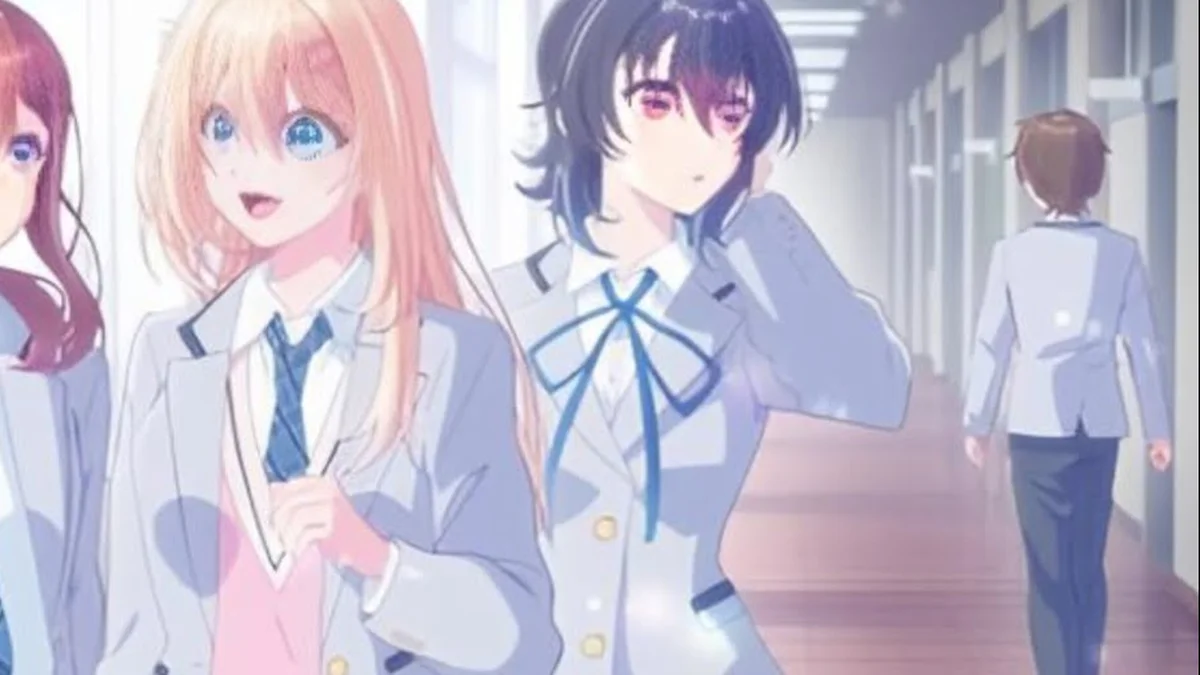
Plot-faithful. Scene-for-scene, the anime hits every major beat from volumes 1 through 3. Maki meeting Umi outside of school. Their friendship moving into the classroom. The supporting cast expanding. The first real test of their dynamic. All present. All in order. No rearranged arcs, no cut characters, no invented storylines.
The pacing is reasonable. Three volumes across 12 episodes gives each volume about four episodes. For a character-driven romcom that doesn’t have action sequences to pad runtime, that’s a solid ratio. Scenes don’t feel critically rushed. The quiet moments that define the Maki-Umi dynamic get screen time.
Where the anime makes its tradeoff is predictable and unavoidable. Internal monologue gets reduced. Maki’s thoughts, which in the novel run continuously as a second narrative layer underneath every conversation, become occasional reaction shots and facial expressions. The anime trusts visual storytelling to imply what the novels state. Sometimes that works beautifully. Sometimes you can feel the gap.
What the Anime Adds
Voice acting is the big one. Hearing Umi’s tone shift between her public persona and her private conversations with Maki adds a dimension the novels can only describe. The way she sounds with him versus the way she sounds in class is a performance choice that communicates character depth instantly. The novels tell you she’s different around Maki. The anime lets you hear exactly how different.
The school environment gains visual life. Classrooms, hallways, the specific geography of where Maki sits relative to Umi and the rest of the class. Romcoms live on spatial dynamics — who’s close to whom, who notices whom, where private conversations happen in public spaces. The anime renders this naturally. The novels have to describe it.
Background characters exist in the anime in ways the novels can’t easily replicate. The class as a living social environment, with people reacting to Maki and Umi’s evolving dynamic in real time through glances and whispers, creates ambient social pressure that the novels build through Maki’s awareness of being watched. Different technique. Similar effect. The anime’s version is more immediate.
What the Novels Add
Maki’s Internal Catastrophizing
This is the article. Everything else is supplementary.
Maki Maehara processes every social interaction through a filter of anxiety that the novels render in real time. Not summarized. Not implied. Real time. You read every spiraling thought as he has it. Should I text her back now or will that seem desperate? She said “see you tomorrow” — was that a promise or just a thing people say? If I wave at her in the hallway and she doesn’t see me, did I just wave at nothing in front of thirty people?
The anime shows Maki hesitating. Looking nervous. Fumbling a response. The novels show you the seventeen rejected responses he cycled through before landing on the one he fumbled. They show you his post-mortem analysis of the conversation, running it back in his head for the next hour, identifying the moment he thinks he messed up, and then the specific relief or dread when the next interaction either confirms or denies his catastrophic prediction.
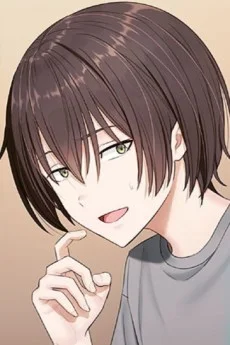
This isn’t a small difference. It’s the difference between watching a romcom and living inside one. Maki’s internal voice is funny, specific, and painfully recognizable to anyone who’s ever overthought a text message. The anime version of Maki is endearing. The novel version of Maki is someone you’ve been.
Umi’s Perspective (In Glimpses)
The novels occasionally break from Maki’s perspective to show you what Umi is thinking. These moments are strategic. They’re placed where the gap between what Maki assumes she’s feeling and what she’s actually feeling is widest. The dramatic irony is gentle and effective — you know something Maki doesn’t, and watching him misread the situation while you hold the answer is simultaneously frustrating and endearing.
The anime can’t do this without voice-over, which it mostly avoids. So Umi’s internal state stays opaque. You read her through expressions and actions. That works for the anime’s tone, but it means you miss the moments where the novel lets you in on her side of the equation.
The Slow Moments Between Plot Beats
The anime keeps the scenes that move the relationship forward. The novels keep those scenes plus the ones where nothing moves forward but the characters feel real. Walking home in silence. Browsing a store without talking. Sitting in a room together where the fact that they’re comfortable enough to not talk is itself the development. These scenes are the connective tissue that makes the plot-relevant moments land harder.
The anime’s pacing doesn’t have room for all of them. When it includes them, they work. When it skips them, you feel the absence as a slight thinness in the relationship’s texture. The emotions are right. The accumulation is shorter.
The “Second Prettiest” Question
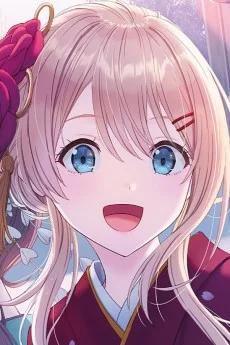
Both versions handle Yuu Amami (the “prettiest girl”) differently in emphasis. The anime introduces her as a visual presence early — she’s on screen, the audience sees immediately that she’s the conventional center of attention in the class. The novel introduces her more gradually through Maki’s awareness, which means the comparison between Yuu and Umi develops as a thematic thread rather than a visual contrast.
The title’s real point is that Maki doesn’t care about rankings. Umi being “second” is everyone else’s framework. His framework is that she’s the person who actually talks to him. The novels make this distinction through internal monologue. The anime makes it through behavior. Both arrive at the same place. The novels get there with more explicit self-awareness on Maki’s part.
Which Should You Experience First?
The anime is a faster entry point. Twelve episodes. You’ll know within three whether this story resonates. If it does, the novels are waiting with the full version of everything you liked.
Starting with the novels means you get Maki’s complete internal experience from page one. Then watching the anime adds voices, visual charm, and the ambient social world of the classroom. You’ll catch things in the anime that are subtle callbacks to internal moments you read. It’s a different kind of rewatch experience.
Either order works. There is no wrong entry point here. The anime doesn’t spoil the novel experience because most of the novel experience is internal. The novel doesn’t reduce the anime because the anime adds visual and audio dimensions that prose can’t touch. They’re complementary in a way that not all adaptations manage. Most romcom adaptations make the source material redundant. This one makes it essential.
FAQ
Q: Does the anime skip important scenes?
A: No major plot points are cut. The reductions are in Maki’s internal monologue and quiet character moments between plot-relevant scenes.
Q: Can I start the light novel at volume 4 after the anime?
A: Yes. The adaptation is faithful enough. Volumes 1-3 are worth reading eventually for Maki’s internal experience, but you won’t be lost jumping to volume 4.
Q: Is the anime worth watching if I’ve read the novels?
A: Yes. The voice acting, visual school environment, and soundtrack add dimensions the novels can’t replicate. Hearing Umi’s voice shifts is worth it alone.
Q: How much content is ahead of the anime?
A: Eight volumes (4-11). The anime adapted roughly a quarter of the published material.
Q: Will there be a Season 2?
A: Not announced yet. The anime’s reception and the abundance of source material make it possible, but nothing is confirmed.