

Picking your first light novel is weirdly stressful. There are hundreds of series in English now, most of them 10+ volumes deep, and every recommendation list just throws the same five isekai titles at you. Half the time those series are great but terrible starting points — you don’t hand someone Re:Zero volume 1 and say “welcome to light novels, here’s 37 volumes of psychological suffering.”
This article contains affiliate links. If you buy through these links, we earn a small commission at no extra cost to you.
TL;DR
- Toradora is the best first light novel. Short, complete, emotionally satisfying, and doesn’t require any anime/manga context.
- 15 beginner-friendly picks. These are series I’d actually hand to someone who’s never read a light novel — not just “good” series but good starting points.
- You don’t hand someone Re:Zero Volume 1 and say “welcome to light novels.” Half the usual recommendation lists are terrible starting points. This one isn’t.
I’ve been reading LNs since 2015 and I’ve converted a lot of friends. Some of them are now deeper into this hobby than I am. The series on this list aren’t just good — they’re specifically good first light novels. Short enough to not feel like a commitment. You don’t need anime context to enjoy any of them. And every one is good enough to make you want a second series immediately.
TL;DR — The Full List
| Rank | Series | Volumes | Best For |
|---|---|---|---|
| 1 | Toradora! | 10 | The perfect gateway — romance, comedy, depth |
| 2 | The Devil Is a Part-Timer! | 21 | Funny, easy to read, great hook |
| 3 | I Want to Eat Your Pancreas | 1 | Single-volume devastation |
| 4 | Konosuba | 17 | Funniest LN series ever written |
| 5 | Violet Evergarden | 4 | Beautiful, short, complete |
| 6 | Classroom of the Elite | 30+ | Psychological thriller page-turner |
| 7 | Three Days of Happiness | 1 | Life-changing in 200 pages |
| 8 | Baccano! | 22 | Non-linear storytelling genius |
| 9 | The Apothecary Diaries | 12+ | Mystery + slow-burn romance |
| 10 | Sword Art Online | 27+ | The classic gateway (for a reason) |
| 11 | Grimoire of Zero | 11 | Fantasy comfort food |
| 12 | Durarara!! | 13 | Urban fantasy with a massive cast |
| 13 | Rokka: Braves of the Six Flowers | 6 | Mystery-fantasy locked room thriller |
| 14 | Spice and Wolf | 23+ | Economics + romance slow burn |
| 15 | The Empty Box and Zeroth Maria | 7 | Mind-bending time loops |
What Makes a Good Beginner Light Novel?
Before the list — here’s what I look for in a first LN recommendation:
- Standalone or short. 1-10 volumes is ideal. Nobody’s first LN should be volume 1 of a 30-volume saga.
- No anime required. The series should work on its own without watching the adaptation first.
- Fast hook. Volume 1 needs to sell the experience. “It gets good in volume 4” doesn’t work for a first-timer.
- Clear genre appeal. You should know from the premise whether this is for you.
- Good translation. A bad translation ruins a first impression permanently.
Not sure what light novels even are? Check out our complete guide to the light novel format first.
The List
#1 — Toradora!
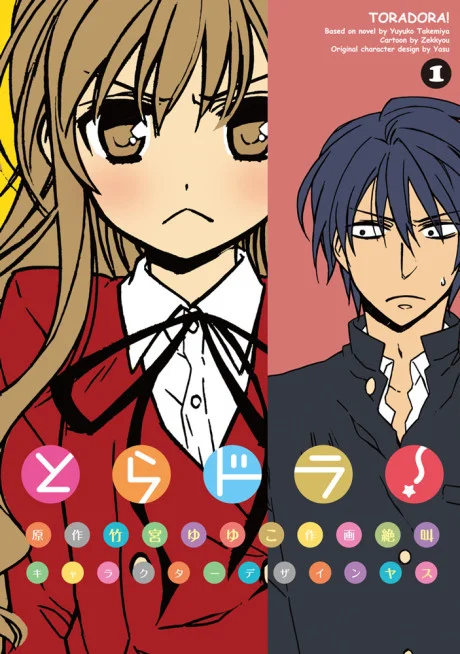
10 volumes | Complete | Seven Seas
Toradora is the single best first light novel you can read. Not because it’s the best LN ever written (though it’s close) — because it’s the perfect introduction to what the medium does differently from anime and manga.
The premise is simple: Ryuuji and Taiga agree to help each other confess to their respective crushes. You know where this is going. Takemiya knows you know where this is going. She spends ten volumes making the journey there so emotionally devastating that knowing the destination doesn’t matter.
What makes it a perfect starter: the prose is clean and readable, the volumes are short, there’s a definitive ending, and you’ll immediately understand why light novels exist as a medium. The internal monologue — Ryuuji slowly, painfully realizing his own feelings while constructing elaborate justifications for why his chest hurts when Taiga cries — is something no anime adaptation can fully capture.
Start here if: You want the safest possible recommendation. This works for literally everyone.
More light novel guides
- fantasy light novels
- best magic light novels
- best game-themed light novels
- light novels with illustrations
- dark fantasy light novels
#2 — The Devil Is a Part-Timer!
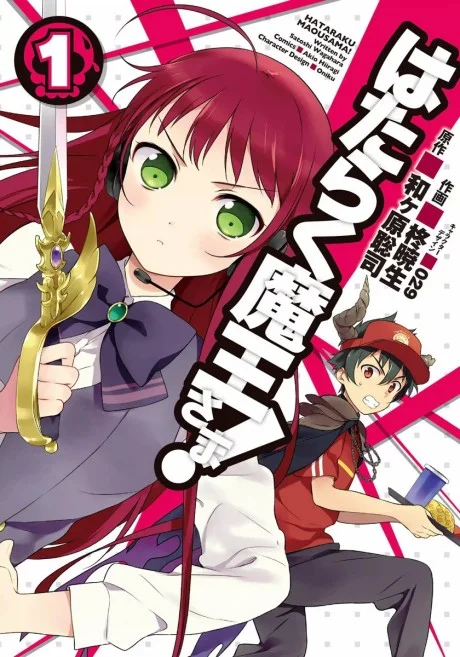
21 volumes | Complete | Yen Press
The hook sells itself: Satan, the Demon Lord, gets stranded in modern Tokyo and has to work at a McDonald’s knockoff to pay rent. That’s it. That’s the premise. And it’s hilarious from page one.
Satoshi Wagahara writes comedy that comes from character, not gags. Satan taking his part-time job seriously — genuinely caring about customer satisfaction scores while also being the literal lord of darkness — never stops being funny across 21 volumes. The supporting cast is excellent too. Emi the Hero hunting Satan down, only to find him mopping floors and stressing about utility bills, creates a dynamic that carries the entire series.
It’s an ideal second-or-third LN if Toradora is your first, because it shows you a completely different tone while staying accessible. The volumes are quick reads, the premise requires zero background knowledge, and the humor translates perfectly from Japanese.
Start here if: You want something light, funny, and immediately engaging.
#3 — I Want to Eat Your Pancreas
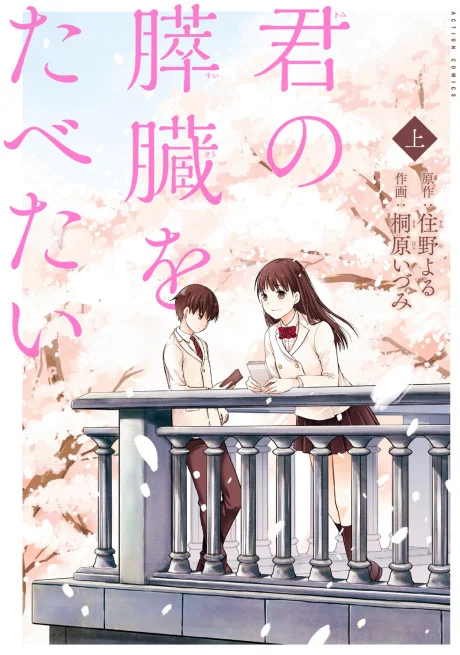
1 volume | Complete | Seven Seas
One volume. One sitting. Complete emotional destruction.
Yoru Sumino’s debut novel is about a socially withdrawn boy who discovers his classmate Sakura is terminally ill. She’s not sad about it. She’s aggressively, annoyingly alive — dragging him to restaurants, making him watch movies, forcing him to have experiences he’d never seek on his own. The title sounds shocking out of context. In context, it’ll make you cry.
This is on the list because it’s the ultimate zero-commitment entry point. One book, 200-something pages, a few hours of your time. If you’ve never read a light novel and want to test whether the format works for you — this is the trial. The anime and live-action films are both good, but the novel’s first-person narration adds a layer of emotional distance that makes the ending hit differently.
Start here if: You want a single-volume experience that proves light novels can punch above their weight.
#4 — Konosuba: God’s Blessing on This Wonderful World!
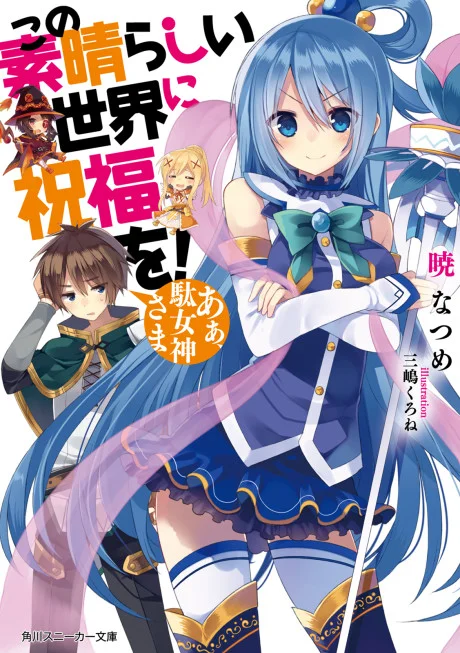
17 volumes (main) | Complete | Yen Press
The funniest light novel series ever written. Kazuma dies, gets isekai’d to a fantasy world, and assembles the most dysfunctional party in fiction: an explosion-obsessed mage who can only cast one spell per day, a masochistic crusader who can’t hit anything, and a useless goddess who caused the whole mess. It’s a sitcom in fantasy clothing.
For beginners, Konosuba works because it requires zero knowledge of isekai or light novel conventions. The humor is universal. But if you DO know the tropes it’s parodying, it’s even funnier. Kazuma’s first-person narration — his deadpan commentary on how insane his party is — adds an entire comedic layer the anime can’t fully replicate.
Fair warning: there are 17 volumes plus side stories. You don’t need to read all of them. Volumes 1-5 are peak Konosuba and work as a satisfying chunk. But you probably will read all of them because Akatsuki somehow keeps the humor fresh across the entire run.
Start here if: You want to laugh out loud. Literally. On the train. People will stare. For our full review, see Best Isekai Light Novels.
More light novel guides
- fantasy light novels
- best magic light novels
- best game-themed light novels
- light novels with illustrations
- dark fantasy light novels
#5 — Violet Evergarden
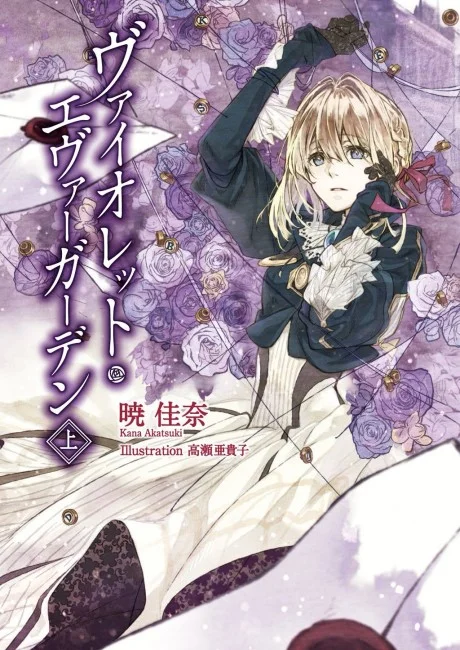
4 volumes (main) | Complete | Yen Press
Kana Akatsuki’s novel about a former child soldier learning to understand human emotions through writing letters is devastatingly beautiful. Four volumes. Complete story. Each chapter is essentially a standalone episode — Violet takes a letter-writing request, connects with a client, and in the process uncovers another piece of what it means to feel.
The KyoAni anime is one of the most visually stunning shows ever made. The light novel is a fundamentally different experience. Less visual spectacle, more interiority — you’re inside Violet’s head as she processes emotions she literally doesn’t have words for. The prose is gentle, deliberate, and occasionally devastating.
For beginners: four volumes is nothing. You can finish the entire series in a week of casual reading. And the episodic structure means each chapter feels complete — you’re never stuck mid-arc wondering when the payoff comes.
Start here if: You want something beautiful and short. Also perfect if you’ve already seen the anime — the LN is different enough to feel fresh.
#6 — Classroom of the Elite
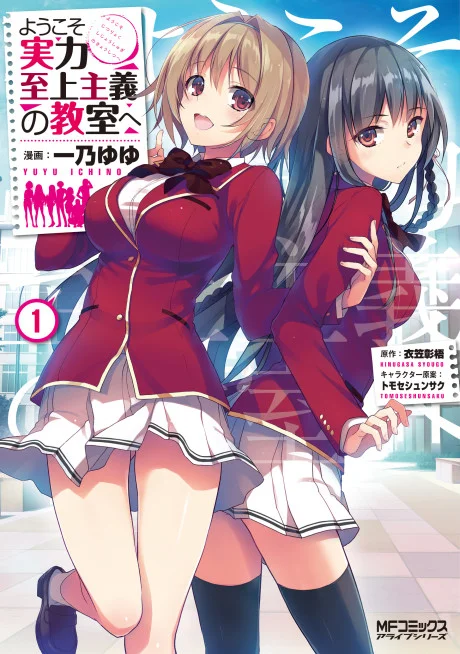
30+ volumes | Ongoing | Seven Seas
Ayanokōji Kiyotaka is the most deceptive protagonist in light novel history. He presents himself as average. He is anything but. Classroom of the Elite drops you into a prestigious school where students are ranked by class, resources are earned through exams and competitions, and everything is a chess match.
The reason this works for beginners: it’s a page-turner. Kinugasa Shougo writes psychological thriller that reads like a dark Death Note-style chess game set in a school. Each volume is a self-contained exam or challenge, so you get resolution and setup in the same book. The first-person narration hides Ayanokōji’s true nature — you’re inside his head but he’s lying to you, and figuring out when gets addictive.
The catch: this is 30+ volumes and ongoing. But volumes 1-3 form a perfect entry arc. If you’re not hooked by the end of volume 3, you know it’s not for you. If you are — well, there’s a lot more waiting.
Start here if: You like psychological thrillers, Death Note-style mind games, or unreliable narrators.
#7 — Three Days of Happiness
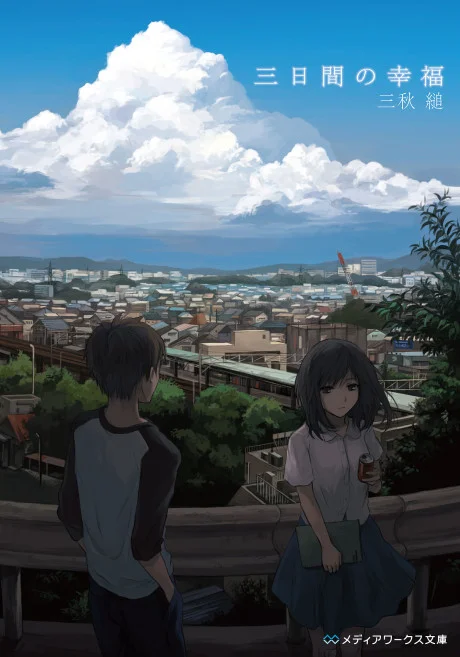
1 volume | Complete | Yen Press
A twenty-year-old with no prospects sells the remaining years of his life for cash. He gets almost nothing — turns out the market has decided his future isn’t worth much. He’s left with three months to live and a quiet observer assigned to watch him die.
Sugaru Miaki (also known as Fafoo) writes the kind of melancholy fiction that Japan does better than anywhere else. Three Days of Happiness is 200 pages about what makes a life worth living, written with a light touch that never turns preachy. The ending is one of the most emotionally perfect conclusions I’ve ever read in any medium.
Like Pancreas, this is a one-volume experience. Zero commitment. But where Pancreas is warm and tear-jerking, Three Days of Happiness is quieter — it sits with you. I recommend reading both and comparing how two different authors handle mortality in a single volume.
Start here if: You want something literary and introspective. This is the LN you give to someone who “doesn’t read light novels.”
#8 — Baccano!
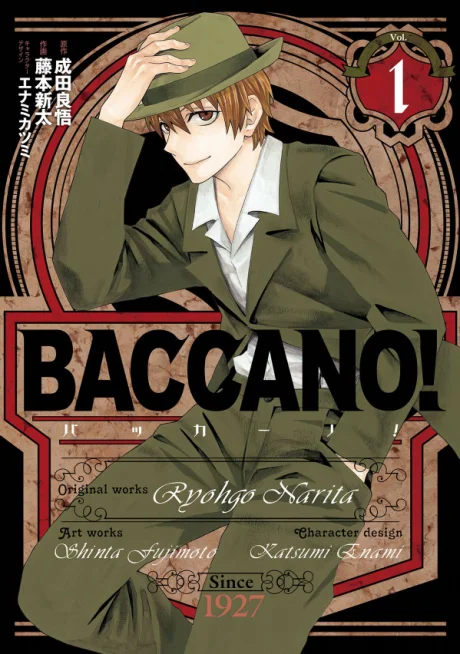
22 volumes | Complete | Yen Press
Ryohgo Narita writes like a jazz musician — multiple storylines running simultaneously across different time periods, smashing into each other at unexpected moments. Baccano takes place in 1930s Prohibition-era America (yes, really) and follows immortal alchemists, Mafia families, a pair of eccentric thieves, and a train robbery that goes sideways in every possible direction.
The non-linear structure sounds intimidating. It isn’t. Narita juggles a dozen characters across three timelines and somehow makes it all feel effortless. By volume 3, you’ll realize the “confusion” was the point — the pieces snap together in ways that reward attention.
This is on the beginner list specifically because it shows the range of what light novels can be. Not every LN is set in a Japanese high school or a fantasy world. Baccano is Prohibition-era American crime fiction. It just happens to be written by a Japanese author and published as a light novel.
Start here if: You like Guy Ritchie films, Tarantino-style non-linear storytelling, or want proof that LNs aren’t just “anime books.”
#9 — The Apothecary Diaries
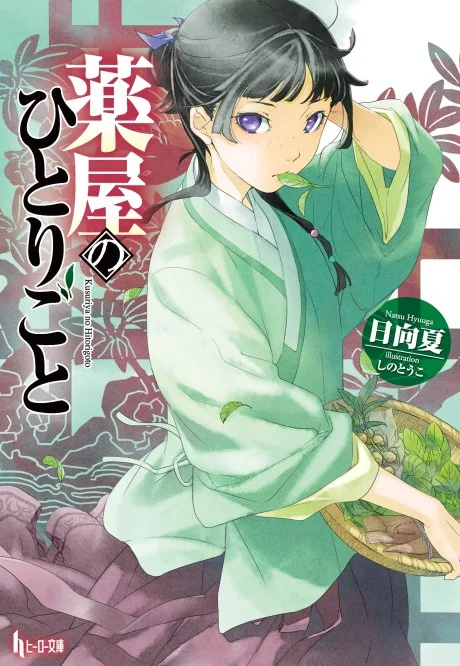
12+ volumes | Ongoing | J-Novel Club
Maomao is a pharmacist’s daughter serving as a lady-in-waiting in the imperial court. She doesn’t want to be there. She doesn’t care about court politics. She just wants to experiment with poisons and medicines. But she keeps accidentally solving mysteries because her medical knowledge makes her the only person who can explain why the emperor’s consorts keep getting sick.
The Apothecary Diaries is currently LitRetreat’s most-viewed content for a reason — it’s the rare series that appeals to people who don’t normally read light novels. The mysteries are clever, Maomao’s personality is magnetic, and the slow-burn romance with Jinshi unfolds at exactly the right pace. For a deeper look, check our Apothecary Diaries: LN vs Manga comparison.
Start here if: You like mysteries, historical settings, or protagonists who are smarter than everyone around them.
More light novel guides
- fantasy light novels
- best magic light novels
- best game-themed light novels
- light novels with illustrations
- dark fantasy light novels
#10 — Sword Art Online
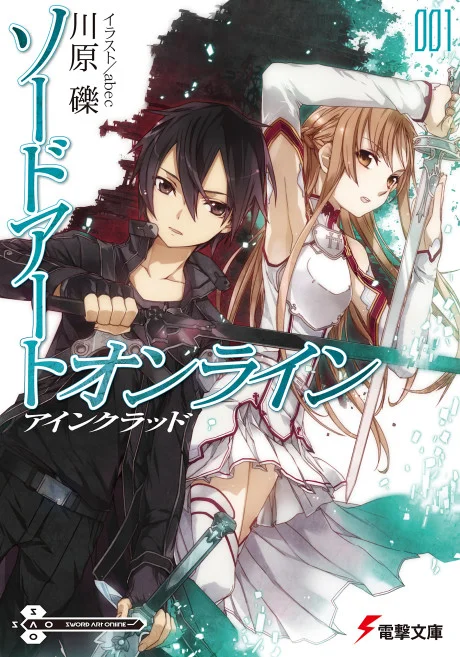
27+ volumes | Ongoing | Yen Press
I’ll be honest: SAO is where I started, and I have complicated feelings about it. The Aincrad arc (volumes 1-2) is genuinely a great concept — players trapped in a VR death game, die in the game and you die for real. The writing is straightforward, the pacing is fast, and it’s the reason most of us got into light novels in the first place.
The series gets polarizing after Aincrad. Fairy Dance (volumes 3-4) has real problems. But here’s the thing — Alicization (volumes 9-18) is legitimately excellent. Kawahara grew as a writer, and those ten volumes are complex, ambitious sci-fi that the anime can only approximate.
SAO is on this list because it’s the gateway drug. It’s accessible, the concept is immediately compelling, and the first two volumes read quickly. Just know that if it hooks you, the best content is further in.
Start here if: You like gaming, VR, or action-adventure. Read volumes 1-2 as a trial run.
More light novel guides
- fantasy light novels
- best magic light novels
- best game-themed light novels
- light novels with illustrations
- dark fantasy light novels
#11 — Grimoire of Zero
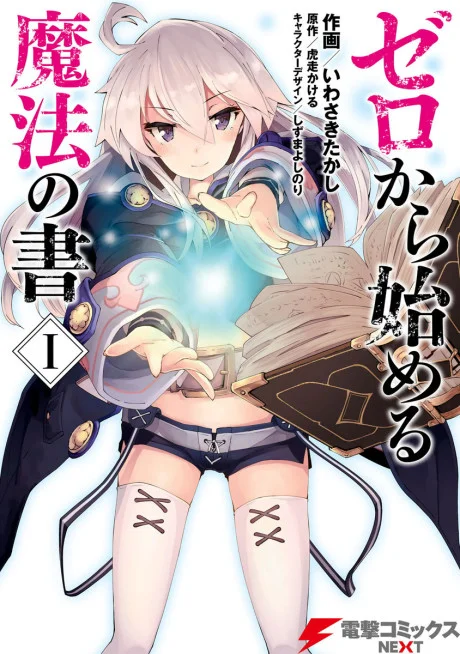
11 volumes | Complete | Yen Press
A beastfallen mercenary (half-man, half-tiger, hated by everyone) teams up with a witch named Zero who’s searching for a stolen grimoire. It’s a classic fantasy buddy dynamic — the brute and the brain — executed with charm and solid worldbuilding.
Grimoire of Zero flies under the radar, which is a shame. Kobashiri Kakeru builds a magic system that’s genuinely interesting (the distinction between magic and sorcery matters to the plot), and the relationship between the Mercenary and Zero evolves naturally across 11 volumes. It’s comfort-food fantasy with enough substance to keep you engaged.
Start here if: You want traditional fantasy with good characters. No isekai, no school setting, no gaming mechanics — just a quest.
#12 — Durarara!!
13 volumes | Complete | Yen Press
Same author as Baccano — Ryohgo Narita. Same non-linear, multi-character storytelling. But set in modern-day Ikebukuro (a real neighborhood in Tokyo) instead of 1930s America. A headless rider on a motorcycle. An information broker who loves manipulating people. A bartender who can throw vending machines. A color gang war spiraling out of control. All connected.
Durarara is urban fantasy at its best. The cast is massive — you’ll keep a mental map of who’s connected to whom — but Narita makes every character feel essential. If Baccano proved LNs can do American crime fiction, Durarara proves they can do modern supernatural thriller.
Start here if: You liked Baccano’s style but want a modern setting. Or if you’ve seen the anime — the LN goes deeper into every character’s perspective.
#13 — Rokka: Braves of the Six Flowers
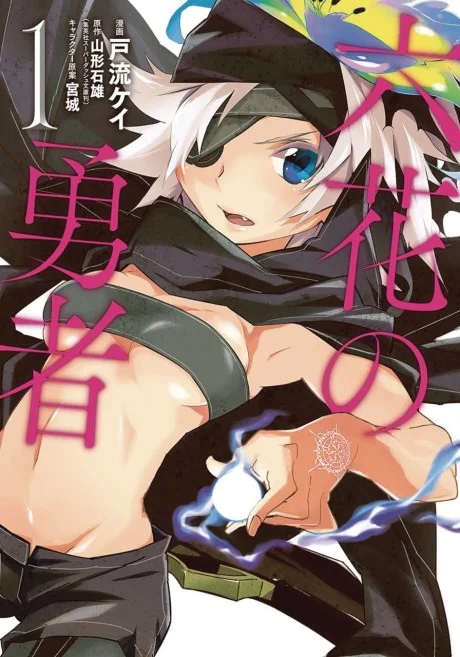
6 volumes | Complete | Yen Press
Six heroes are chosen to defeat the Demon God. Seven show up. One of them is a fake. Nobody knows who.
That’s the entire hook and it’s brilliant. Rokka is a locked-room mystery disguised as a fantasy adventure. Yamagata Ishio builds an Aztec/Mayan-inspired fantasy world (refreshingly not European) and then traps his characters in a situation where trust is impossible and deduction is the only weapon. Each volume peels back another layer of who’s lying and why.
At 6 volumes, it’s a tight, focused read. The mystery-fantasy combo is unusual enough to feel fresh even if you’ve read dozens of LNs. And the ending genuinely surprised me — something that doesn’t happen often in this medium.
Start here if: You like mysteries, Agatha Christie-style whodunits, or want fantasy that doesn’t follow the usual template.
#14 — Spice and Wolf
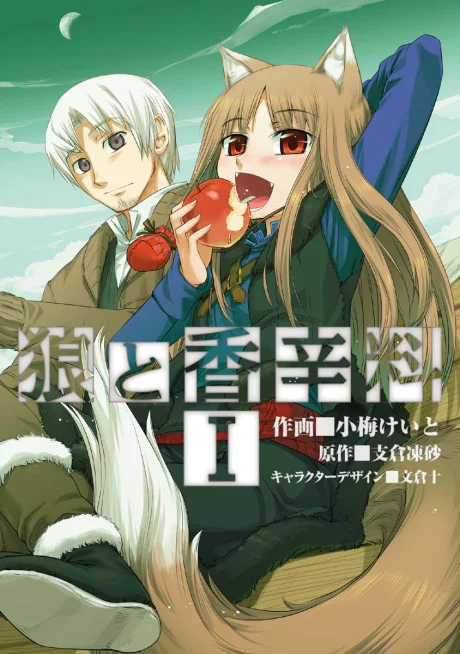
23+ volumes | Main story complete (sequel ongoing) | Yen Press
A traveling merchant and a wolf goddess walk into a medieval town. The merchant wants profit. The wolf wants to go home. Together they navigate trade deals, currency manipulation, and church politics while slowly falling for each other across 17 volumes of the main story.
Spice and Wolf is a slow burn. The “action” is Kraft Lawrence negotiating commodity futures. The “romance” is Lawrence and Holo trading barbs and gradually dropping their guards over thousands of pages. If that sounds boring, this isn’t for you. If it sounds like exactly the kind of character-driven fiction you’ve been looking for — welcome, you’re going to love this. The banter between Lawrence and Holo is the best character dynamic in light novels. For a full review, see Best Romance Light Novels.
Start here if: You want character-driven romance with actual substance. Patience required.
#15 — The Empty Box and Zeroth Maria
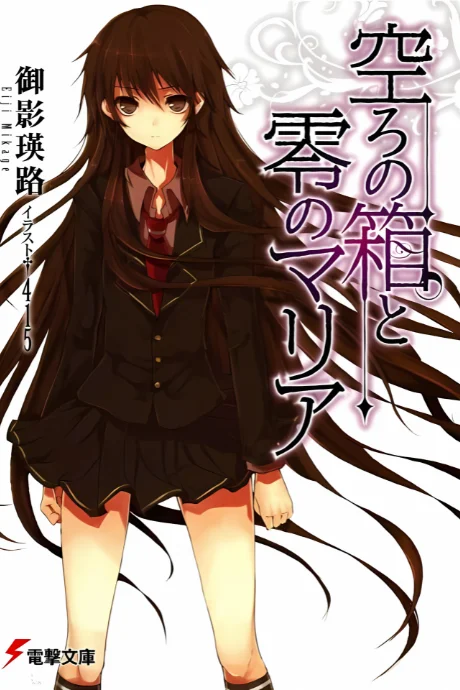
7 volumes | Complete | Yen Press
Kazuki Hoshino is living the same day over and over. He doesn’t know why. Then a transfer student named Aya Otonashi shows up, looks him in the eye, and says: “I’m here to break you.”
The Empty Box and Zeroth Maria (HakoMari to fans) is the most ambitious series on this list. Eiji Mikage writes supernatural psychological fiction that bends structure and reliability in ways that make you question what’s actually happening. The time loop of volume 1 is just the beginning — each subsequent volume introduces a different “box” with different rules, and the overarching mystery of why connects them all.
I’m putting it last because it’s the hardest series here to start. Volume 1’s structure is deliberately disorienting. But at 7 volumes total, it’s a complete experience that rewards rereading — you’ll catch things the second time that recontextualize everything.
Start here if: You’ve read a few LNs already and want something that pushes the medium’s boundaries. Not recommended as a literal first LN — but absolutely recommended as an early one.
FAQ
What’s the easiest light novel to start with?
Toradora. Ten volumes, complete story, clean translation, universally appealing. It teaches you what light novels do well without requiring any background knowledge. If romance isn’t your thing, The Devil Is a Part-Timer (comedy) or Classroom of the Elite (thriller) are equally accessible.
Should I watch the anime first or read the light novel first?
Either works. Watching the anime first gives you visual context for characters and settings, which makes the transition to prose easier. Reading the LN first gives you the “full” version — anime adaptations always cut content. There’s no wrong order. Just don’t skip the LN entirely because you’ve seen the anime — they’re different experiences.
Are light novels expensive?
Physical volumes run $8–$15 each. Digital editions are $5–$10. J-Novel Club’s subscription ($5/month) is the cheapest way to read — you get access to new chapters weekly. For casual reading, grabbing digital volumes on sale is the most cost-effective approach. BookWalker and Kindle regularly run 50% off sales.
How long does it take to read a light novel?
3–5 hours per volume at a comfortable pace. Faster readers can finish in 2 hours. A single-volume novel like I Want to Eat Your Pancreas or Three Days of Happiness is a one-sitting read. A 10-volume series like Toradora is roughly 30–50 hours total — about the same as a season of a long-running TV show.
What if I don’t like anime — will I still enjoy light novels?
Probably. Light novels are prose fiction — you’re reading words, not watching animation. Series like Three Days of Happiness, Baccano, and Spice and Wolf are compelling novels that happen to be published in the light novel format. The anime-style illustrations are minimal (6–12 per volume). If you enjoy Japanese fiction, mystery novels, or fantasy, you’ll find light novels that fit your taste.
Want more recommendations? Check out Best Isekai Light Novels, Best Romance Light Novels, and our complete guide to the light novel format.