

This article contains affiliate links. If you buy through these links, we earn a small commission at no extra cost to you.
I watched the anime first. Came away thinking Chiramune was a solid rom-com with a likable cast and a protagonist who felt like he had more going on under the surface. Then I read the LN and realized that “more going on” wasn’t just a vibe — it was literally half the text that didn’t make it to screen.
feel.’s adaptation is competent. Clean animation, good comedic timing, the cast looks right. Nobody watching Part 1 would call it a bad show. But going from the anime to volume 1 felt like finding the director’s cut of a movie I’d already seen, except the director’s cut is twice as long and the added scenes are the reason the story works.
TL;DR
- feel.’s 13-episode Part 1 (Fall 2025) adapts volumes 1-3 faithfully. The social dynamics and comedy translate well. What gets lost: Saku’s internal monologue, Hiromu’s prose quality, and the psychological depth behind Saku’s social calculations. The anime shows you what Saku does. The LN shows you why he does it and what it costs him. Part 2 premieres October 2026. Start at volume 1 if you want the full experience.
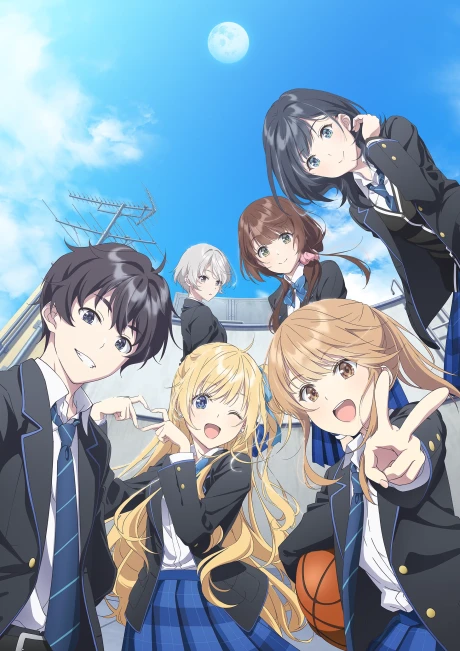
What feel. Got Right
The comedy. Chiramune’s humor is built on the friend group’s dynamic — rapid banter, inside jokes, characters cutting each other down with affection. feel. nailed the timing on this. The voice cast bounces off each other naturally, and the comedic beats that carry the LN’s lighter chapters land just as well in animation. I laughed at the same moments I laughed at in print, which doesn’t always happen with adaptations.
The character designs are faithful to raemz’s illustrations without being slavish copies. Saku looks the part. Confident, put-together, the kind of guy whose visual presence explains why the school treats him as the social center of gravity. The supporting cast reads clearly in group scenes, which matters when you have this many characters sharing screen time. I could always tell who was talking even in crowded shots, which is more than some ensemble anime manage.
The window scene. Saku showing up at Kenta’s house with a bat, smashing the window, dragging him outside. In print it’s a great opening. In animation it’s an instant hook — the sheer absurdity of a handsome popular kid committing property damage as a rehabilitation strategy just works visually. Prose has to build up to that impact. feel. played it for maximum impact and it was the right call. That scene sold the show to a lot of people who’d never heard of the LN.
What Didn’t Survive the Adaptation
Saku’s internal voice. This is the same problem I keep running into with LN-to-anime adaptations and I’m starting to wonder if the medium just can’t solve it. In the novel, Saku narrates constantly. Not just what he’s doing but why. Which social lever he’s pulling, which response he’s engineering, whether the version of himself he’s presenting is the real one or the one he built for the room. You’re inside the machinery of his popularity, watching the gears turn.
The anime shows you the output. Saku says the right thing. People react well. The scene moves forward. What you don’t get is the calculation behind the right thing. The moment where he considered three different responses, weighed them against what this specific person needs to hear, and selected the one most likely to produce the outcome he wants. That process is maybe 40% of the reading experience. The anime had no way to include it without drowning every scene in voiceover.
I noticed it most in the Kenta arc. In the anime, Saku’s approach to rehabilitating Kenta looks like raw charisma. He overwhelms the kid with social energy until Kenta gives in. In the LN, you see that every move is calculated. Saku breaks the window because he’s assessed that Kenta’s shut-in state is past the point of gentle intervention. The bat isn’t impulse. It’s triage. That distinction changes everything about how you read Saku as a character, and the anime can only gesture at it.
Hiromu’s prose. This is harder to pin down because prose quality is inherently untranslatable to screen. But readers who love Chiramune consistently point to the writing itself as the series’ standout feature. The way Hiromu structures dialogue so that what characters say and what they mean operate on different layers. The rhythm of Saku and Yuzuki’s banter where every exchange carries subtext about what they’re not willing to admit. That’s prose craft. It exists in the word choices, the sentence rhythm, the gaps between lines. Animation captures the plot of those conversations but the texture is something you have to read to feel.
What the Anime Does Better
Group dynamics in motion. Reading a scene with six characters in a room, you track who’s talking through dialogue tags and context. Watching the same scene animated, you get body language, spatial positioning, eyeline reactions. feel. is good at staging group conversations — characters react in the background, side glances happen during other people’s lines, the physical space of the friend group feels lived in. The LN’s group scenes are strong, but animation adds a layer of social geometry that prose can’t replicate.
The music and atmosphere during emotional peaks. There’s a scene late in Part 1 — I won’t spoil which — where the soundtrack does something the novel couldn’t. The LN handles the emotional beat through prose. The anime handles it through a combination of voice acting, scoring, and a held shot that lets the moment breathe. I read the scene first and it hit hard. I watched it later and it hit differently. Not harder necessarily, just from a different angle. Both versions earned the moment. I’m not sure I could pick a winner.
Should You Read After Watching?
Yes. Volume 1, not volume 4.
I’ve said this in the reading order and I’ll say it again: three volumes is maybe two days of reading. You already know the plot. What you don’t know is what Saku is thinking during every scene you’ve already watched, and that context turns a likable protagonist into a genuinely complex one. The review goes deeper into why the prose is worth your time.
Part 2 premieres October 2026, picking up where Part 1 left off. If feel. maintains the same adaptation quality, expect the same tradeoff — good comedy, good character visuals. The internal monologue will get compressed again because there’s no clean way to animate it. The LN will remain the fuller version. I’ve accepted that at this point.