

The problem with recommending series after Spice and Wolf: most of what makes it work doesn’t show up in other light novels. The economics aren’t window dressing. The romance doesn’t rush. The protagonist is a regular guy whose power is knowing how currency works. And Holo is Holo. There is no second Holo.
This article contains affiliate links. If you buy through these links, we earn a small commission at no extra cost to you.
TL;DR
- Most of what makes Spice and Wolf work doesn’t show up in other LNs. The economics aren’t window dressing. The romance doesn’t rush. The protagonist’s power is knowing how currency works. And there is no second Holo.
- These recommendations focus on: slow-burn romance, intelligent dialogue, travel narratives, and protagonists who solve problems with their brains.
- None of these are Spice and Wolf. But each captures something about what makes it special.
So instead of pretending any of these are “Spice and Wolf but again,” I’m splitting this by what specifically hooked you. The banter and slow-burn romance? The medieval trade setting? The smart protagonist who wins through knowledge instead of combat? The cozy road-trip energy? Different series scratch different parts of that itch. Here’s what I’ve found after a lot of looking.
More about Spice and Wolf
1. Ascendance of a Bookworm
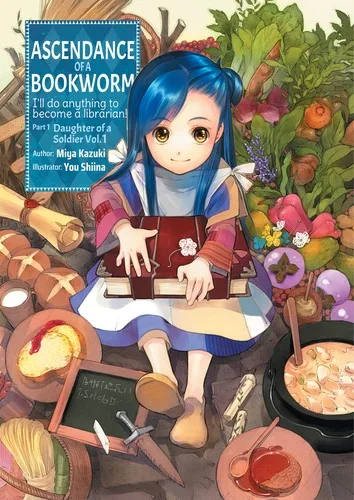
This is my top recommendation and it isn’t close. Ascendance of a Bookworm is about a modern librarian reincarnated as a sickly peasant girl in a medieval world with no printing press. She wants books. There are no books. So she has to invent the entire printing industry from scratch, starting with papyrus and working up through guild politics and church hierarchies while navigating noble power structures.
The Spice and Wolf overlap is specific: a protagonist who wins through economics, craft, and negotiation rather than combat. Myne doesn’t fight. She negotiates her way through guild politics and invents what she needs when nobody will sell it to her. The medieval worldbuilding is just as detailed as Hasekura’s, except Kazuki builds it from the ground up across 25+ volumes instead of threading it through trade arcs.
The honest gap: no Holo. Myne doesn’t have a single relationship that mirrors the Lawrence-Holo dynamic. What she has is a deep, complicated web of relationships across multiple social strata, each with its own power balance. Ferdinand (her mentor) is the closest equivalent, and that dynamic is brilliant but completely different in tone.
Bookworm is longer, slower to start, and more reward-the-patient than Spice and Wolf. If you liked the economics and the worldbuilding, this is the best thing in light novels right now. I’ve said this before and I’ll keep saying it: it’s in my top three. 33 volumes in English via J-Novel Club, complete.
2. Wolf and Parchment

The direct sequel. Col (introduced in Spice and Wolf Volume 7) travels with Myuri, Lawrence and Holo’s daughter. Col wants to reform the church. Myuri has inherited her mother’s wolf ears and her father’s tendency to get in over his head. Lawrence and Holo show up as secondary characters, settled and happy.
It’s lighter than the main series. The economics are less central. The Col-Myuri dynamic is warmer and more straightforward than Lawrence-Holo. If you finished the main 17 volumes and wanted more time in that world, this is the obvious next read. If you specifically loved the tension and the slow burn of two people not saying what they feel, this won’t replicate that. The romantic tension here is gentler.
9 volumes in English via Yen Press, ongoing in Japan. Read this after the main series and Spring Log.
3. The Apothecary Diaries
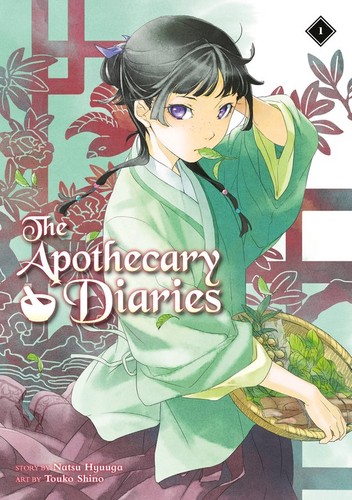
Maomao is a pharmacist’s daughter working as a servant in the imperial rear palace. She solves mysteries using medicine and chemistry while navigating court politics. The hook: she’s genuinely brilliant, pragmatic, and uninterested in the power games around her. She just wants to do pharmacology. Everyone else keeps dragging her into intrigue.
The Spice and Wolf connection: a smart protagonist solving problems through specialized knowledge in a historical setting, a slow-developing relationship with someone from a completely different social class, and prose that trusts the reader to follow the reasoning. The Maomao-Jinshi dynamic has the same quality as Lawrence-Holo: two smart people circling each other, neither willing to be the first one to be direct.
The setting is Chinese imperial court instead of medieval European trade routes. If that’s a dealbreaker for you, fair enough. But the structural DNA is similar. 12 volumes in English via J-Novel Club, ongoing. The anime adaptation (2023) is excellent and covers the first few volumes.
4. Maoyuu Maou Yuusha (Archenemy and Hero)
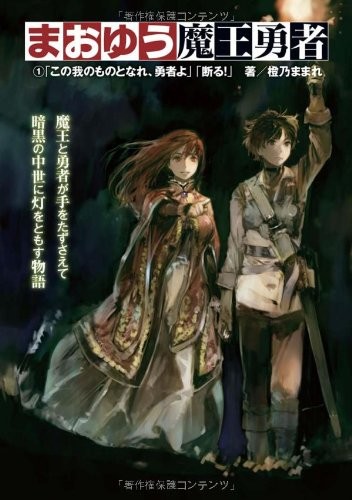
The Hero goes to defeat the Demon King. The Demon King turns out to be an economist. She convinces the Hero that the human-demon war is propping up both economies, and ending it through violence would crash the entire world into famine. Instead, they team up to end the war through agricultural reform, trade agreements, and education.
If you read that premise and thought “that’s exactly what I want,” Maoyuu is for you. It’s the most direct Spice and Wolf comparison on this list. The romance is slow-burn. The economics are the plot. The female lead is brilliant and uses knowledge as her weapon. Characters are named by their roles (Hero, Demon King, Knight) rather than personal names, which is either a charming stylistic choice or a barrier to entry depending on your taste.
The caveat: the LN is only available in Japanese. The manga adaptation (5 volumes, Yen Press) is the accessible English version. There’s also an anime (2013, 12 episodes) that covers the core material. I’m recommending the manga here since the LN isn’t licensed. If you can handle manga format instead of prose, this is the closest tonal match to Spice and Wolf that exists.
5. How a Realist Hero Rebuilt the Kingdom

Souma Kazuya gets isekaied into a failing kingdom and immediately starts fixing it through public policy. Infrastructure, food distribution, military reform, diplomatic marriages. No fighting. No dungeon crawling. He sits in meetings and reads reports. He makes decisions. The appeal is watching competent governance play out in a fantasy setting.
The Spice and Wolf angle: economics and politics driving the story instead of combat. Souma is a Lawrence type in that his power is knowledge and decision-making, not a sword. The worldbuilding focuses on trade, agriculture, and institutional reform.
Where it falls short: the romance is harem. Multiple love interests, all of them eventually marry Souma. If the Lawrence-Holo exclusivity was part of what made S&W work for you, this will irritate you. The writing is also lighter. Hasekura’s prose has weight. Realist Hero reads more like a competent web novel (which it was). It’s fun, it scratches the economics itch, and I’ve read all of it. But it’s not in the same league as S&W for character writing. 19 volumes in English via J-Novel Club, complete.
6. The Saint’s Magic Power Is Omnipotent

Sei, a 20-something office worker, gets summoned to a fantasy world as a saint. She’s not interested in being a saint. She wants to make potions and tend an herb garden. The kingdom keeps pulling her into saint duties. She keeps trying to go back to her plants.
The overlap with Spice and Wolf: an adult female lead, a slow-burn romance that builds through shared work rather than dramatic events, and a protagonist whose expertise (herbalism, potion-making) is the foundation of every arc. The Sei-Hawke dynamic is quiet and respectful in a way that echoes Lawrence-Holo’s mutual regard. Neither series rushes the confession.
It’s gentler than S&W. Lower stakes. The economics aren’t there. If you came to S&W for the tension of high-stakes trading deals, this won’t scratch that itch. But if the cozy, slow-developing relationship between two competent adults is what you miss, Saint’s Magic does that well. 9 volumes in English via Seven Seas, ongoing. Anime adaptation (2 seasons) is a decent preview.
7. Torture Princess: Fremd Torturchen
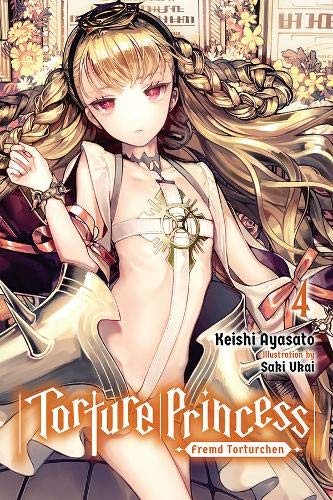
This is the wildcard. Kaito is summoned to a dark fantasy world as the butler of Elisabeth Le Fanu, the “Torture Princess” tasked with executing fourteen demons. It’s gothic, violent, and the prose style is nothing like Hasekura’s measured trading dialogue. So why is it here?
Because the core dynamic works the same way. Elisabeth and Kaito are two people who shouldn’t trust each other, forced into proximity by circumstance, slowly building genuine regard through shared experience. The power imbalance (she’s a godlike executioner, he’s a butler) echoes the Holo-Lawrence gap where one party is fundamentally more powerful than the other. The relationship develops through action, not confession. The banter is sharp. The emotional payoff in the later volumes is earned.
The tone is the opposite of cozy. If you loved S&W’s warmth, Torture Princess will not feel the same at all. But if the character dynamic is what you’re chasing, this is a surprisingly strong match. 8 volumes in English via Yen Press, complete. Quick read. I burned through it in a week.

More about Spice and Wolf
FAQ
What light novel is most similar to Spice and Wolf?
Ascendance of a Bookworm for the economics and medieval worldbuilding. Maoyuu Maou Yuusha for the closest tonal match (economics as the plot, slow-burn romance between two smart leads). Wolf and Parchment if you want to stay in the same world.
Are there light novels with economics like Spice and Wolf?
Ascendance of a Bookworm builds an entire economy from scratch across 33 volumes. How a Realist Hero Rebuilt the Kingdom focuses on governance and trade policy. Maoyuu uses agricultural economics to end a fantasy war. These three are the best options for the economics angle.
What should I read after Spice and Wolf?
Spring Log (short stories continuing Lawrence and Holo’s story) and Wolf and Parchment (sequel following their daughter) are the direct continuations. After that, Ascendance of a Bookworm is the strongest standalone recommendation.
Is there anything like Spice and Wolf with a similar romance?
The slow-burn, mutual-respect dynamic between two smart adults is rare in LNs. The Apothecary Diaries has the closest equivalent (Maomao and Jinshi). The Saint’s Magic Power is Omnipotent is gentler but does the slow-developing adult romance well. Nothing fully replicates the Lawrence-Holo dynamic.
Is Wolf and Parchment worth reading?
If you finished all 17 volumes and Spring Log and want more time in the world, yes. It’s lighter in tone than the main series. Lawrence and Holo appear as secondary characters. The Col-Myuri dynamic is warmer and less tense than Lawrence-Holo. Go in with adjusted expectations.