

The elevator pitch sounds like a gimmick. Magical girls in a battle royale. Madoka Magica meets Hunger Games. Cute character designs hiding a body count that would make a slasher film blush. I went in expecting shock value dressed up in frills.
What I got instead was a franchise that reinvents itself every 2-3 volumes, cycles through enough genre territory to keep you off balance for 18 books, and quietly builds one of the better long-term character transformations in light novels through a protagonist most people write off after the first arc. Asari Endō wrote something sneakier than the premise suggests.
TL;DR
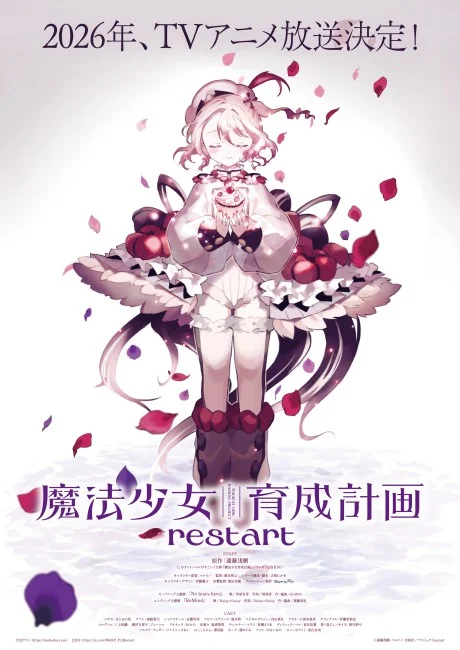
- Magical Girl Raising Project is a dark magical girl survival thriller across 18 volumes (ongoing). Each 2-3 volume arc has a new cast, a new scenario, and a different genre feel. Volume 1 is the weakest entry. The series finds its identity in the Restart and Limited arcs and peaks at Jokers. Snow White’s evolution from naive idealist to “John Wick Snow White” is the long-term hook. Not as depressing as it sounds — reads more like a thriller than a tragedy. Published by Yen Press (all 18 volumes in English). Season 2 (Restart arc) premieres October 2026.
Volume 1 Is Not the Series
I need to say this upfront because it’s the most important thing about reading MGRP. Volume 1 — the one the anime adapted, the one most people’s impression of the franchise is based on — is the weakest entry in the series.
It’s a battle royale with 16 magical girls. Elimination format. High death count. A suspicious mascot character named Fav who’s giving strong Kyubey energy. The Madoka comparison writes itself, and for volume 1, it’s mostly accurate. You’re watching cute characters die in increasingly brutal ways while questioning whether the story has anything to say beyond “magical girls suffer.”
Volume 1 has something to say. It just takes until volume 2 to prove it. The original arc is Snow White’s origin story — the traumatic event that shapes everything she becomes later. Read on its own, it’s a decent but unremarkable survival thriller. Read as the prologue to an 18-volume series, it’s essential.
If you watched the anime in 2016 and bounced off, I’m asking you to give the novels one more arc. Restart (volumes 2-3) is where Endō figures out what this franchise actually is, and it’s a different animal from volume 1.
What Makes Each Arc Work
The rotating structure is the series’ greatest strength and the reason I kept reading past volume 3.
Every 2-3 volumes, you get a new cast of magical girls with different powers, different personalities, and a different survival scenario. Restart is a serial killer mystery in a virtual game world. Limited is three-faction political warfare. Jokers is claustrophobic bunker survival with one terrifyingly competent antagonist in control. Each arc borrows from a different genre while keeping the magical girl framework and the “anyone can die” stakes.
This means you never know what you’re walking into. You finish a mystery arc and the next one is a political thriller. The tonal whiplash could be disorienting, but Endō handles the transitions by anchoring everything to returning characters whose development carries across arcs. You’re meeting new faces every time, but familiar ones show up at key moments to remind you this is all one story.
The community on r/LightNovels compared it to Fate, and that comparison is more accurate than the Madoka one. “Every volume is basically a Battle Royale between different factions with complex relationships. Think more like Fate Series.” The rotating casts, the power system matchups, the tactical thinking — it scratches a similar itch.
Snow White’s Evolution
This is the throughline that elevates the series from “fun survival thriller” to something more substantial.
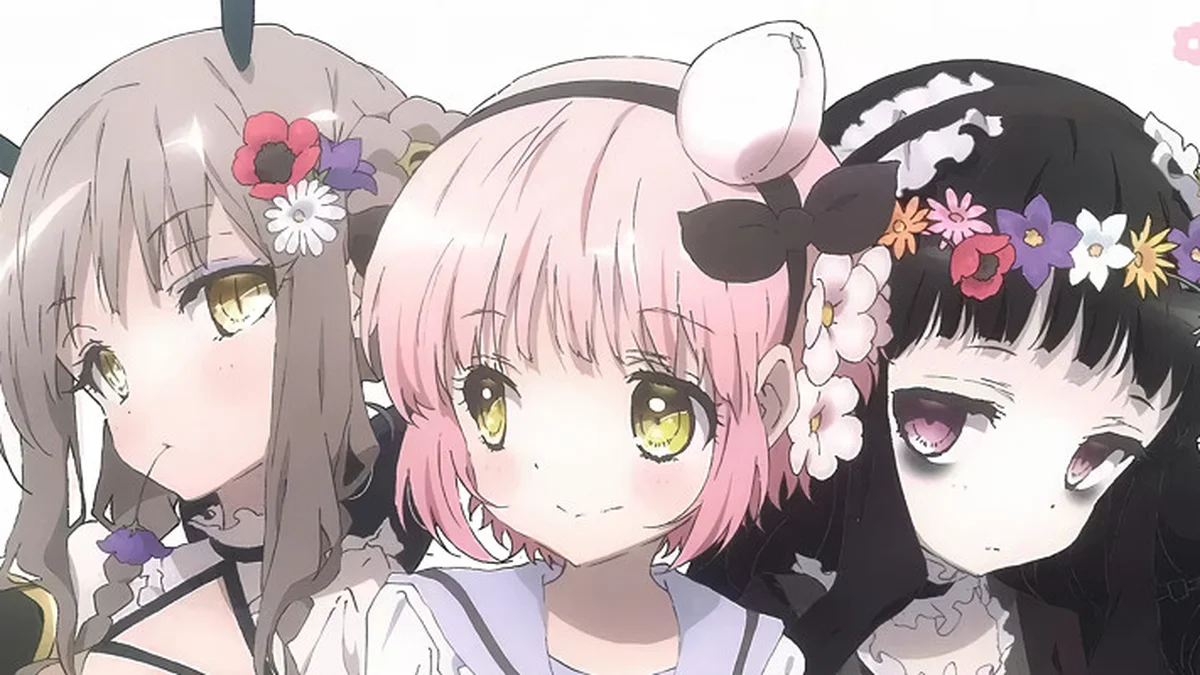
Snow White starts volume 1 as an idealistic girl named Koyuki who just wants to be a real magical girl — help people, spread kindness, the whole package. By the end of the first arc, she’s been through something that breaks that idealism in specific, irreversible ways. By the later arcs, the fan community calls her “John Wick Snow White,” which should tell you everything about the distance she travels.
The transformation doesn’t happen in a single dramatic moment. It accumulates across arcs. Each survival scenario adds weight. Each death she witnesses or causes shifts her further from the girl she was in volume 1. Endō handles this with restraint — Snow White doesn’t become an edgelord anti-hero. She becomes someone who’s pragmatic about violence because the alternative is death, and who carries the cost of that pragmatism quietly.
What makes it work is that you can trace the exact moments where her worldview shifted. Volume 1 broke her idealism. Restart showed her what survival actually requires. Limited taught her about factions and politics. By Jokers, she’s operating in a mode that volume 1 Koyuki wouldn’t recognize. It’s earned character development across a long series, and it’s the reason returning to Snow White after each arc’s new cast feels like checking in on someone you’ve been watching grow for years.
The Death Count Question
People ask whether the series is depressing to read. Fair question — the body count across 18 volumes is substantial.
The answer is no, mostly. Readers on r/LightNovels describe it as a thriller rather than a tragedy. “I’ve viewed them more as thrillers, since there’s the suspense of not knowing who could die,” one reader explained. The rotating cast actually helps here. Because you’re meeting new characters every arc, the grief doesn’t accumulate the way it would in a single-cast story where you’ve spent 20 volumes with the same people.
Some deaths hit hard. Endō isn’t above making you care about a character across two volumes and then killing them. But the pacing is fast enough that you’re processing loss while simultaneously dealing with the next threat. It reads more like a tense action movie than a meditation on grief.
The caveat: if character death in fiction genuinely upsets you regardless of context, this series will test your limits repeatedly. The body count is the franchise’s identity. It’s not going to stop.
The Honest Negatives
The rotating cast makes it hard to get deeply attached to anyone except Snow White and a handful of recurring characters. You spend 2-3 volumes with a group, lose half of them, and move on. Some readers find this exhausting. I found it kept the stakes genuine — you can’t assume anyone is safe, which makes the survival tension real instead of performative.
Volume 1 is a real barrier to entry. The anime adaptation didn’t help (MAL 6.95 — polarizing). If the 2016 anime is your only exposure, your impression of the series is based on its weakest material adapted by a studio that did a decent but not exceptional job.
The prose is functional. Endō writes clearly and keeps the pacing tight, but the writing itself isn’t going to make you stop and admire a sentence. This is plot-driven fiction. The craft is in the structure and the character arcs, not the language.
The AniList LN score of 75 and MU Bayesian of 6.51 feel low to me, but the small voter sample sizes explain it. This is a niche series with a dedicated fanbase, not a mainstream hit. The people who read all 18 volumes tend to love it. The people who stopped at volume 1 tend to rate it based on the weakest arc.
Who Should Read This
Read it if:
- Dark magical girl content appeals to you beyond Madoka
- You like survival thrillers with tactical power matchups
- Rotating casts and genre-shifting arcs sound exciting rather than exhausting
- You want a protagonist with genuine long-term character development
- The Fate comparison (faction warfare, rotating masters/servants, tactical combat) speaks to you
Skip it if:
- Character death in fiction genuinely upsets you
- You need to follow one cast for a whole series
- Volume 1’s battle royale premise already turned you off and you’re not willing to push through
- You want romance or slice-of-life content