

The Apothecary Diaries has a light novel, two manga adaptations, and an anime — and they’re all telling the same story differently. Here’s which format to read, what each version does best, and how they compare.
This article contains affiliate links. If you buy through these links, we earn a small commission at no extra cost to you.
Quick Answer
Read the light novel if: you want Maomao’s full inner monologue, detailed medical reasoning, and the deepest version of the story. It’s the original source and nothing is cut.
Read the manga if: you’re new to the series, prefer visual storytelling, or want a faster entry point. The Nekokurage adaptation (available in English) has expressive art, an emotionally rich tone, and stays close to the anime.
Both are worth it — they complement each other rather than compete. Most fans end up reading both.
Quick Questions
Is the Apothecary Diaries manga different from the light novels?
Yes, significantly. The light novel is the original source material and includes Maomao’s full internal monologue, detailed medical reasoning, and complex court intrigue that neither manga adaptation fully captures. The Nekokurage manga (Square Enix, the English version) is a faithful adaptation but leans harder into romance and visual character dynamics, and moves slower through the source material. There is also a second manga adaptation by Minoji Kurata (Shogakukan) that is closer in tone to the light novel but has never been licensed in English.
Is The Apothecary Diaries anime faithful to the light novel?
Mostly yes. The anime is based primarily on the Nekokurage manga adaptation, which itself closely follows the light novel. Key scenes are intact, but the anime condenses Maomao’s internal reasoning and cuts some of the detailed medical and political exposition. If you want the full version of every scene, the light novel is the only option.
Is The Apothecary Diaries light novel worth reading?
Yes, especially if you finished the anime and want more. The light novel adds depth that no other format can match. You get Maomao’s dry inner commentary, step-by-step medical deductions, and court politics the anime glosses over. It also covers significantly more story: as of early 2026, 11 volumes are available in English, well ahead of where the anime finished.
Is Apothecary Diaries caught up with the manga?
The light novel is ahead of both manga adaptations. The Nekokurage manga (the English-available version) covers roughly the first 4–5 light novel volumes. The Kurata adaptation (Japanese only) has covered more ground. The light novel has 17 volumes in Japanese and 11 in English, the furthest ahead of any format available to English readers.
The Light Novel
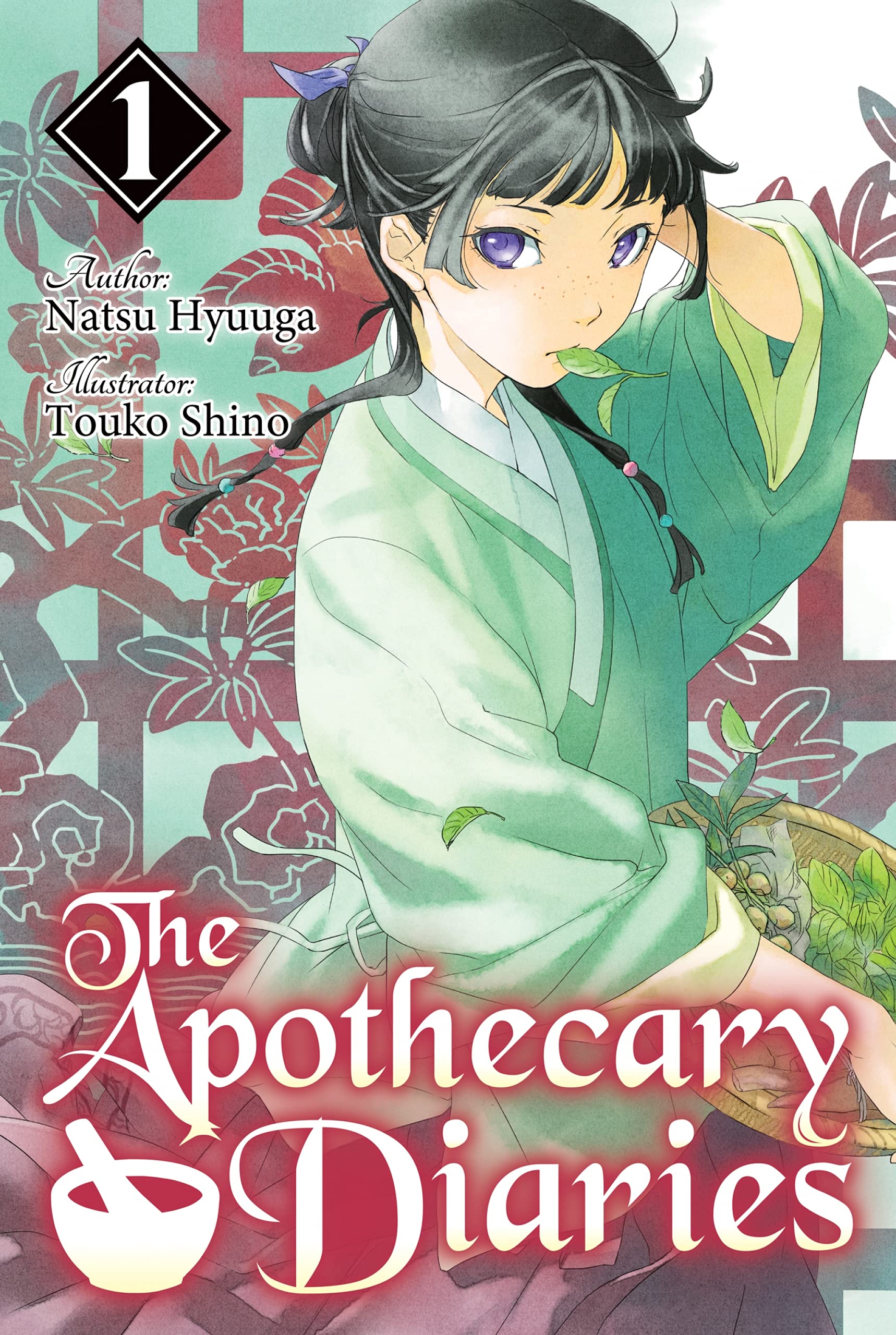
The light novel is where everything started. Natsu Hyuuga originally published it as a web novel on Shōsetsuka ni Narou back in 2011, and it got picked up as a physical light novel via Hero Bunko in 2012. As of early 2026, 17 volumes have been published in Japanese, with 11 available in English from Square Enix Manga.
What the Light Novel Does Better
Maomao’s head is the best place in fiction to spend time, and the light novel keeps you there. Her dry running commentary covers everything: mentally ranking poisons by lethality while making polite conversation, getting visibly excited about a new herbal compound while everyone around her is panicking. The narrative walks you through her medicinal logic step by step. You understand why she reaches each deduction, not just that she figured it out.
It also covers far more story. At 17 Japanese volumes, the light novel is significantly ahead of both manga adaptations. If you want to know what happens beyond what the anime covered, this is your only English-language option anywhere near current.
Best for: readers who enjoy internal monologue, detailed world-building, and want the most complete version of the story.
The Manga — Two Adaptations
The Apothecary Diaries doesn’t have one manga. It has two, running simultaneously. They differ in tone, pace, and availability.
Nekokurage Adaptation (Monthly Big Gangan — Square Enix)
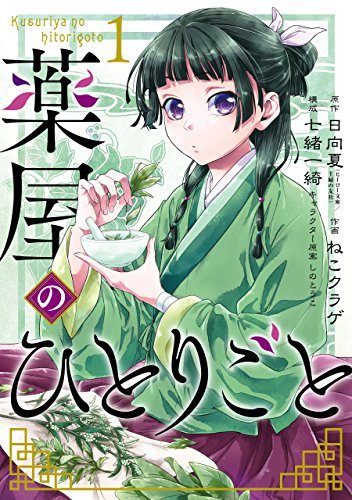
This is the version most Western readers know, and the only one officially available in English. It’s also what the anime is most closely based on. Nekokurage’s art is expressive and generous with emotion. Maomao’s deadpan reactions are a highlight, and the panels where Jinshi is visibly dying inside because Maomao just treated him like furniture land perfectly. The romantic tension has real visual force. At 16 English volumes it’s a substantial run.
The trade-off is that it moves slower through the source material, expanding scenes and leaning into the romance. If you came for Maomao methodically working through the honeybee poisoning case or the face powder mystery, this version can feel lighter on the procedural detail.
Best for: anime fans, new readers, anyone who wants the official English release.
Minoji Kurata Adaptation (Monthly Sunday Gene-X — Shogakukan)
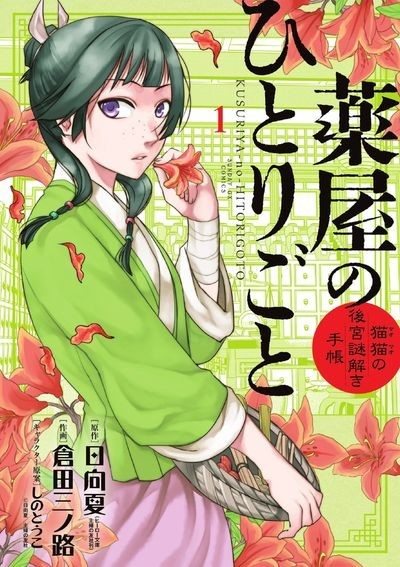
The Kurata adaptation is faster, denser, and closer in tone to the light novel. It leans harder into the mystery and court intrigue, with a cooler, more restrained art style. At 21 Japanese volumes it has actually covered more source material than the Nekokurage version.
The catch: it’s never been licensed for English. You’ll need to read Japanese.
Best for: Japanese readers who want more mystery, less romance.
Key Differences at a Glance
| Light Novel | Nekokurage Manga | Kurata Manga | |
|---|---|---|---|
| Language | English (11 vols) | English (16 vols) | Japanese only |
| Tone | Mystery-focused, internal | Emotional, romantic | Mystery-focused, restrained |
| Pacing | Slow, detailed | Medium | Fast |
| Maomao’s inner voice | Extensive | Condensed | Moderate |
| Story coverage | Most complete | Least (expands scenes) | More than Nekokurage |
| Anime basis | Source material | Yes | No |
What’s Different Between the Light Novel and Manga
Maomao’s characterization: In the light novel, you’re inside Maomao’s head constantly. Her sarcasm, her medical logic, her quiet observations (like noticing exactly which concubine switched perfumes and immediately cataloging what that might mean) are on every page. The manga conveys this through expression and action, but it gets compressed. You lose some of that running internal commentary that makes her so distinctive on the page.
World-building: The imperial court politics, the hierarchy of the rear palace, backstories for supporting characters like Gyokuyo and Lakan. The light novel has room for all of it. The manga streamlines for pacing, and some of the political maneuvering gets simplified as a result.
Romance pacing: The Nekokurage manga plays up the Maomao/Jinshi dynamic more than the light novel does at the same story beats. Jinshi’s frustrated expressions get entire panels. The manga honestly handles this better than the novel does.
Volume coverage: One light novel volume typically spans multiple manga volumes in the Nekokurage adaptation. You’ll cover more plot per volume in the light novel, sometimes dramatically more.
Which Should You Read First?
Start with whatever format you already enjoy. I went with the manga first and don’t regret it. The Nekokurage version is a great on-ramp if you watched the anime, since it shares that visual language and emotional tone. If you already read light novels regularly, just go straight to the source. You won’t be lost.
One thing though: don’t try reading both at the same time. Pick one, get through a solid chunk, then switch. The comparison is far more interesting when you’ve spent real time with one version first.
Frequently Asked Questions
Is the Apothecary Diaries light novel better than the manga? It’s the more complete experience. Maomao’s inner voice is what separates this series from other historical mysteries, and you get the richest version of it in the novels. That said, the Nekokurage manga stands on its own, particularly for the romantic elements. Watching Jinshi slowly lose his composure across several perfectly rendered panels is something the prose can’t replicate.
Should I read the light novel or manga first? Go with whichever format you’re already comfortable in. A manga volume takes under an hour, so the barrier to entry is lower. Starting with the light novel gives you the most thorough version from page one. You’re not spoiling anything either way. Both cover the same events, and the differences are about depth, not plot.
Does the manga follow the light novel? Yes, both adaptations follow the light novel’s story. Neither invents major new storylines. The Nekokurage version expands the romantic scenes and gives them more breathing room. The Kurata version stays closer to the mystery structure.
Was Apothecary Diaries a light novel first? Technically it started as a web novel. Natsu Hyuuga began publishing on Shōsetsuka ni Narou in 2011, and it became a physical light novel in 2012. Both manga adaptations launched in 2017.
How far is the manga compared to the light novel? As of early 2026: the light novel is at 17 Japanese volumes, the Nekokurage manga is at 16 English volumes (covering roughly the first 4 light novel volumes in depth — it really takes its time), and the Kurata manga is at 21 Japanese volumes. The light novel remains the only format anywhere near current with the full story.
Where to Buy:
Related Reading
- Apothecary Diaries Volume 1 Review: What Makes Maomao Unforgettable
- Apothecary Diaries Manga vs Anime: What the Show Actually Changed