

This post may contain affiliate links. If you buy something through one of those links, you won’t pay a penny more, but I’ll get a small commission that helps keep this site running.

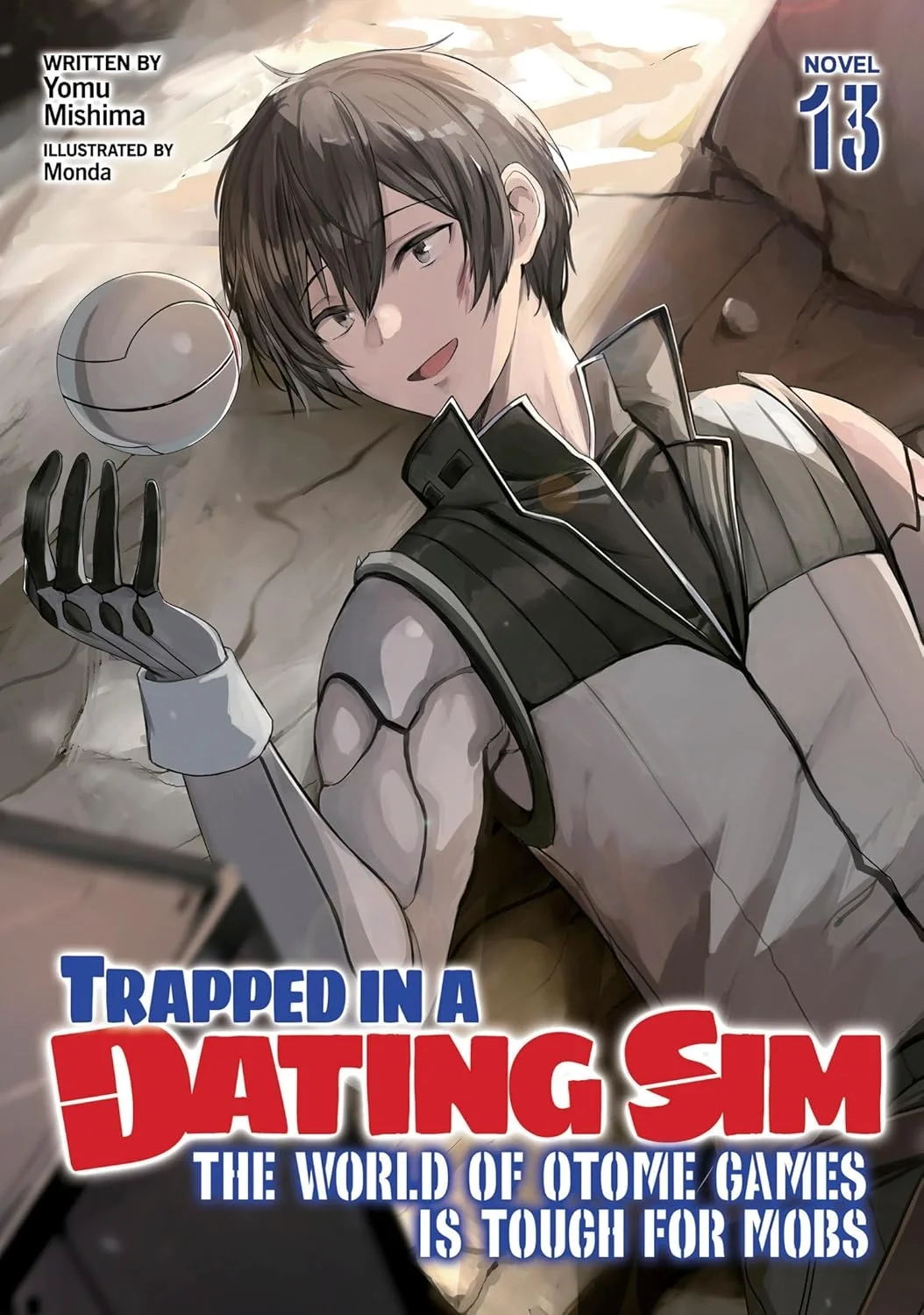
Thirteen volumes. One straight line. No spinoffs that slot between volumes 4 and 5. No “.5” side stories that are secretly important. Zero web novel chapters you need to read between official releases because the LN skipped them. Trapped in a Dating Sim is one of the cleanest reading orders in the isekai genre, and if all you need is the list, here it is: volumes 1 through 13, published by Seven Seas Entertainment, all available in English right now.
The reason this guide exists isn’t the order. It’s everything around it. Season 2 drops in July 2026, and if you’re coming from the anime, you need to know what Season 1 actually covered (less than you think), what Season 2 will probably cover (not much more), and where the real story lives (volumes the anime hasn’t touched and won’t reach for years). The reading order is simple. Knowing where to jump in is the useful part.
TL;DR
Trapped in a Dating Sim (Mobseka) has 13 light novel volumes, all available in English from Seven Seas. Read 1-13 in order. The anime Season 1 adapted only volumes 1-2. Season 2 (July 2026) will likely cover volumes 3-5. The web novel (176 chapters) is also complete but the LN is the definitive version with expanded content. There’s also a Marie Route side story (19 chapters, alternate timeline). The manga is ongoing and behind the LN. Start at volume 1 for the full experience or volume 3 if you watched Season 1 and want to skip ahead.
How Many Volumes Does Trapped in a Dating Sim Have?
Thirteen main volumes. First published May 2018 in Japan by Ichijinsha. Last volume March 2024. Six years, thirteen volumes. Done. Yomu Mishima kept a consistent pace with no multi-year gaps between releases. That alone puts Mobseka in rare company for the isekai genre.
Seven Seas Entertainment handles the English translation. All thirteen volumes are out. You can buy the complete series today and start reading tonight. No waiting for the next release. No “volume 12 comes out in September” anxiety. The whole story is sitting on the shelf, which in a market where isekai LNs routinely stall at volume eight with no conclusion in sight and publishers ghost their own release schedules is genuinely refreshing.
Beyond the main 13 volumes, there are two other versions of this story:
The web novel ran for 176 chapters and finished before the LN did. It’s the original draft. The LN expands on it significantly, adding scenes, restructuring arcs, and improving character dynamics that the web novel rushed through. If you’re choosing between them, the LN is the better version. The web novel is worth reading only if you’ve finished the LN and want more, or if you want to see how Mishima revised his own work.
The Marie Route is a side story running about 19 chapters. It follows an alternate timeline where Leon successfully stays in the background as a mob character and Marie takes on a more central role. Same cast, different trajectory. Treat it as bonus content after the main 13 volumes. Not required reading, but fun if you want a different angle on the characters.
What Did Season 1 of the Anime Cover?

Two volumes. That’s it. Two volumes. Season 1 (ENGI, 2022, 12 episodes) adapted volumes 1 and 2 out of 13. Roughly 15% of the full story.
The adaptation was divisive. The character designs became a community-wide joke the moment the trailer dropped. The eyes looked wrong on every character. Angelica and Olivia’s LN and manga designs are significantly better than what ENGI produced. The voice acting carried the show, particularly the Leon and Luxion dynamic, but visually it undersold the series at every turn.
If you watched Season 1 and thought “that was fine but nothing special,” the LN is where the story actually earns its reputation. The anime got through the school introduction and the first confrontation with the prince’s faction. That’s the tutorial. The real game starts at volume 3.
What Will Season 2 Cover?
Season 2 premieres July 2026. Based on standard pacing for 12-13 episode cours, it will likely adapt volumes 3 through 5, possibly reaching into volume 6 if they push the pace. The key visual shows new character designs, which the community has been requesting since 2022.
That still leaves volumes 6-13 (or 7-13) as LN-exclusive content for the foreseeable future. At the current rate of one season every four years covering two to three volumes each, the anime would need four more seasons to finish the story. You’d be waiting until the mid-2030s. Just read the LN.
The Complete Reading Order
All thirteen volumes, in order, with what happens in each and where the tone shifts.
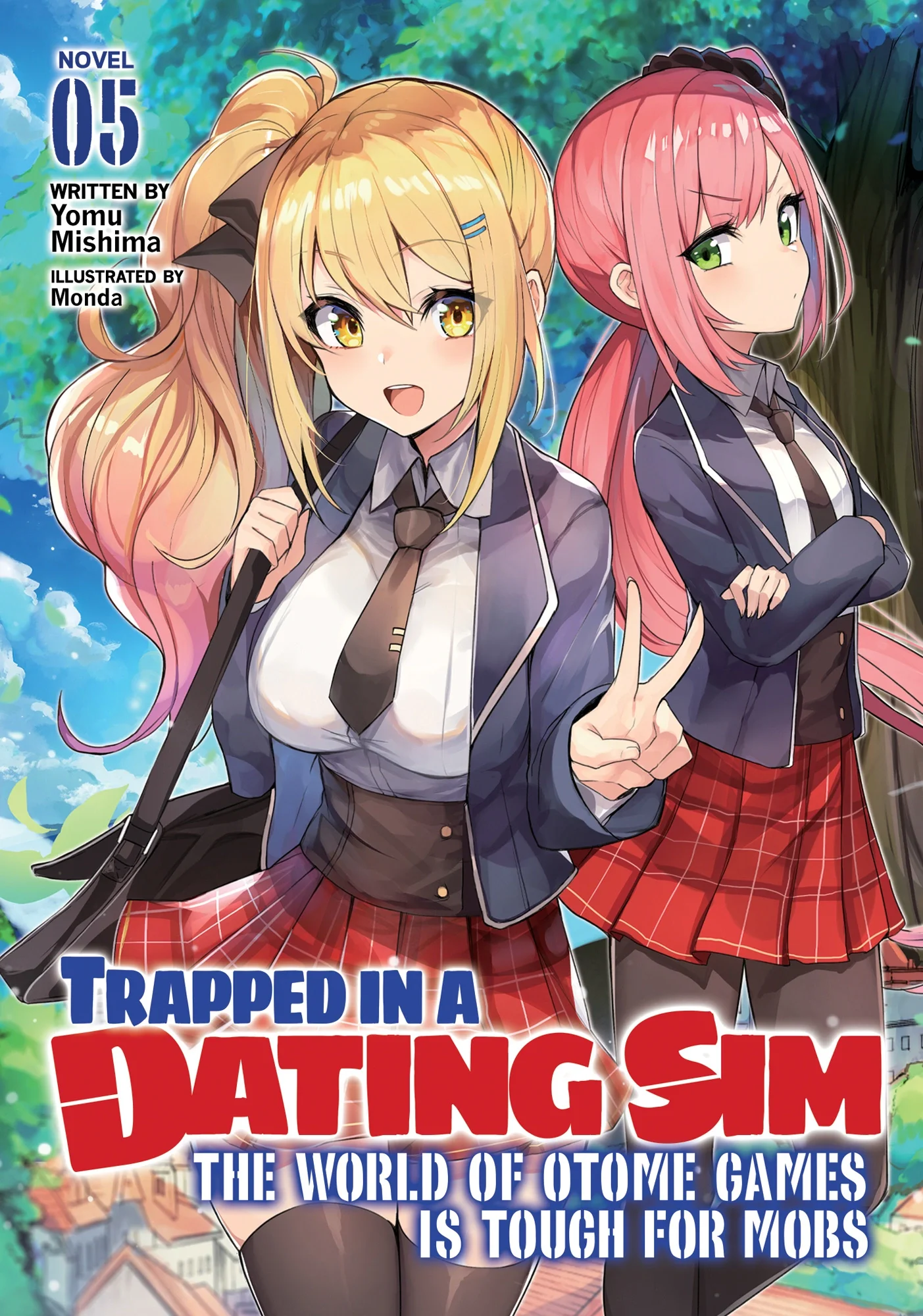
Volume 1 — The setup. Leon Bartfort gets reincarnated as a mob character in an otome game world. He knows the entire game’s walkthrough. He finds the ancient AI weapon Luxion and humiliates the prince’s faction in a duel. The comedy is sharp and Leon’s sarcastic narration establishes the voice that carries the entire series. This is anime Season 1 territory (episodes 1-6 roughly).
Volume 2 — The first escalation. The school festival arc. Leon’s “mob” cover starts cracking as he keeps getting dragged into events above his station. The Leon/Luxion dynamic finds its rhythm here. Also adapted in Season 1 (episodes 7-12).
Volume 3 — Where the anime ends and the real story begins. The kingdom’s political structure starts mattering. Leon gets pulled into conflicts that have nothing to do with the otome game’s original plot. The tone shifts from pure comedy toward something with actual consequences. This is likely where Season 2 starts.
Volume 4 — The scope expands. War enters the picture. Not metaphorical war. Actual military conflict with mech combat, naval battles, and political alliances. Leon stops being a student playing games and starts becoming a political piece on a much larger board. The otome game framework is still there, but the story is outgrowing it.

Volume 5 — The war arc peaks. Leon’s tactical abilities get their full showcase. Luxion’s capabilities scale up to match the threat level. The relationship dynamics between Leon, Angelica, and Olivia evolve past the comedy setup. This is where Mishima proves the series has real emotional weight beyond the isekai comedy premise.
Volume 6 — The Marie reveal. Major character revelations land here. The sibling dynamic between Leon and Marie (his sister from his previous life, also reincarnated) becomes central to the plot. This volume recontextualizes everything you thought you knew about Marie’s motivations. One of the strongest emotional beats in the series.

Volume 7 — The Republic arc begins. New setting, new characters, new political entity. Mishima introduces a second otome game’s world that intersects with the first. The scope expansion is ambitious. Some readers love this arc for its worldbuilding. Others find it slower because Leon shares screen time with a new cast. I fall somewhere in the middle. The ideas are strong even if the pacing loosens.
Volume 8 — Republic arc continues. The new characters find their footing. The political machinations between the Kingdom and Republic create genuine tension. Luxion’s role evolves as the stakes move beyond anything the original game prepared Leon for.
Volume 9 — The endgame approaches. The Republic arc feeds back into the main narrative. Threads from volumes 4-8 start converging. Leon’s growth from reluctant mob character to genuine power player in the world’s politics is fully visible by now. The series has come a long way from school comedy.
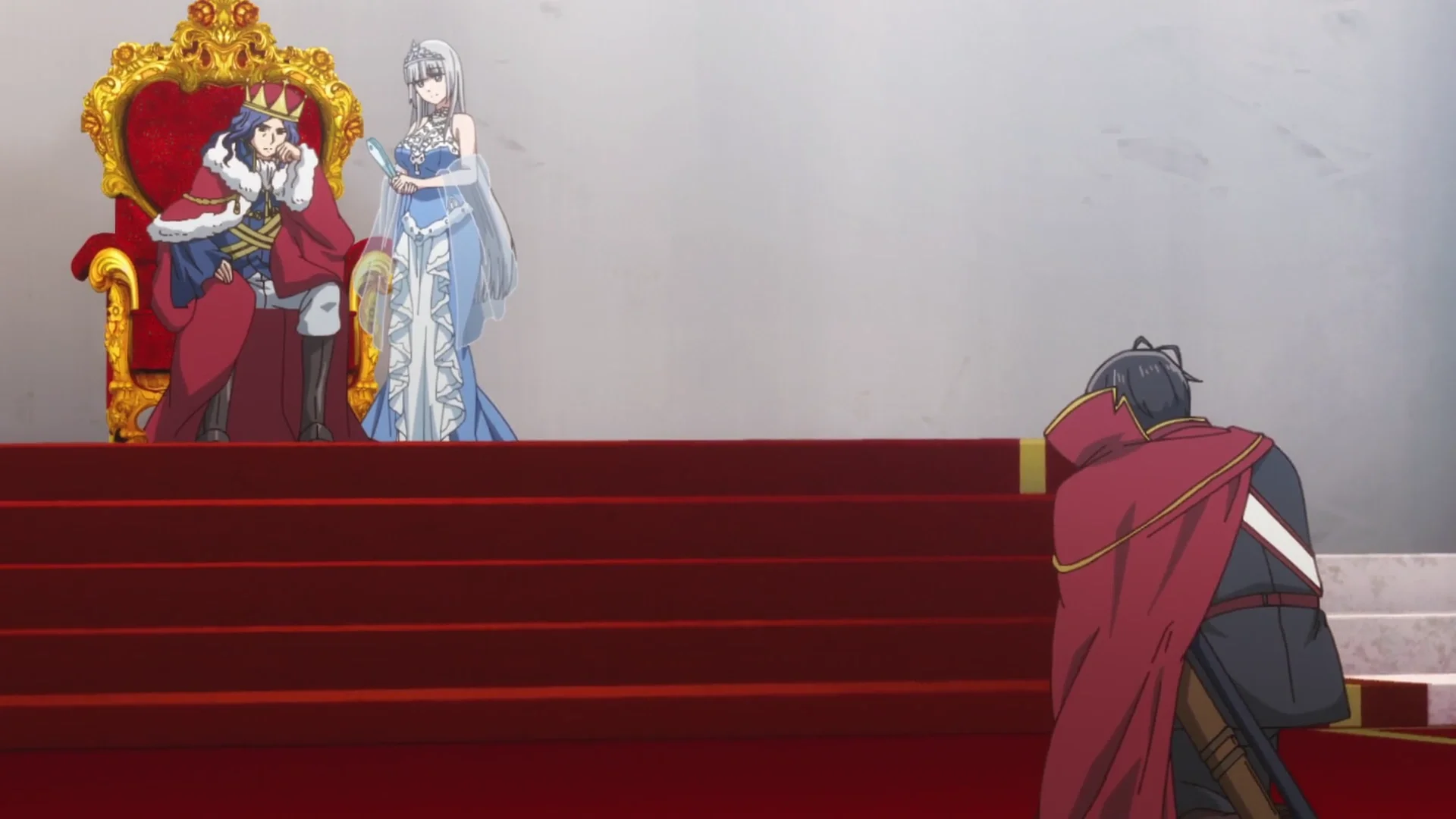
Volume 10 — Stakes hit maximum. The ancient civilizations behind both the Kingdom and Republic become relevant. Luxion’s own history comes into play in ways that reframe the entire AI companion dynamic. The revelations here give the reread value of the early volumes a massive boost.
Volume 11 — The final arc begins. Everything narrows toward the conclusion. Character relationships that have been building across ten volumes start reaching resolution points. The political and military conflicts merge into a single endgame.
Volume 12 — Compressed but essential. Mishima packs a lot of plot into this penultimate volume. The pacing tightens noticeably. Some threads that deserved full volumes get chapters. Fair criticism that volumes 12 and 13 needed more room to breathe. The story needed fifteen volumes. It got thirteen. Mishima made them work, but you can feel the compression in these last two entries where character arcs that had been building across ten volumes get their resolutions squeezed into a fraction of the space they earned.
Volume 13 — The ending. Leon’s arc concludes. The major conflicts resolve. Without spoiling specifics: the ending is satisfying for the political and action threads. The romantic resolution is present but compressed. If you want every harem thread tied up in detail, you’ll have some frustrations. If you want the story’s central question (can a mob character change the world he was never meant to matter in) answered completely, it delivers. Completely.
Where Should You Start?
After Season 1 only: Volume 3. Season 1 adapted volumes 1-2 faithfully enough that you won’t miss critical details. Volume 3 is entirely new content.
After Season 2 (July 2026): Depends on how far it gets. If it covers volumes 3-5, start at volume 6. If it reaches into volume 6, you could start at 7, but I’d recommend reading 6 yourself because the Marie reveal hits harder in prose.
Fresh start, no anime: Volume 1. Leon’s internal monologue is the core appeal, and it works better on the page. The anime gave you the plot. The LN gives you Leon’s actual thought process, which is funnier, sharper, and more emotionally layered than what the adaptation conveyed.
The Marie Route — When to Read It
After volume 13. The Marie Route is an alternate timeline that only works if you know how the main story plays out. Reading it first (or mid-series) would spoil major reveals while removing the contrast that makes it interesting. Finish the main 13 volumes, then read the Marie Route as a lighter companion piece.
Light Novel vs. Manga vs. Web Novel
The LN is the definitive version. Read this one.
The manga by Jun Shiosato adapts the same story with strong art. It’s still ongoing with a new Republic arc that started in 2025. The action sequences read well on the page. If you finish the LN and want a visual retelling, the manga is worth your time, but it won’t catch up to the LN for years.
The web novel is the rough draft. 176 chapters, complete. Read it only if you’ve finished the LN and want to see how Mishima revised the story. The LN is better in every measurable way.