

This article contains affiliate links. If you buy through these links, we earn a small commission at no extra cost to you.
This post may contain affiliate links. If you buy something through one of those links, you won’t pay a penny more, but I’ll get a small commission that helps keep this site running.
The Toaru franchise is one of the biggest light novel universes ever built, and figuring out the reading order is the number one thing that stops people from starting it. Three main series. A pile of side story volumes. Two major spinoffs with their own manga and anime. A publication history stretching back to 2004. It’s a lot.
But it’s not as complicated as people make it. The core reading order is straightforward: Old Testament, then New Testament, then Genesis Testament. Publication order. Done. Where it gets interesting is everything around that core. The SS volumes that the anime skipped. Where Railgun fits in the timeline. Whether you can skip ahead if you’ve already watched the show.
TL;DR
Read Old Testament volumes 1 through 22 in order, with SS1 after volume 13 and SS2 after volume 16. Then New Testament 1 through 23. Then Genesis Testament from volume 1 onward (ongoing, ~12 volumes). That’s the recommended reading order. If you’ve watched the anime, you can start at OT volume 1 anyway (the novels are significantly better) or jump to volume 14 where Season 3 starts butchering things. Railgun and Accelerator are optional spinoffs that run parallel to the OT timeline. Read them alongside OT or after finishing OT — either works.
The Three Main Series
Kamachi Kazuma wrote the Toaru Majutsu no Index light novels across three distinct series. Same universe, same characters, continuous story, but each series has its own title and numbering.
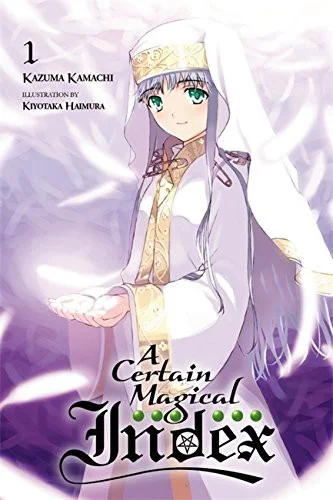
Old Testament (OT) ran from April 2004 to October 2010. Twenty-two main volumes plus two short story collections (SS1 and SS2) and one SP volume. This is where everything starts. Academy City, espers, magicians, Touma’s Imagine Breaker. The anime adapted this entire arc across three seasons, though Season 3 infamously compressed nine volumes into 26 episodes and destroyed most of the source material’s nuance in the process.
New Testament (NT) ran from March 2011 to July 2019. Twenty-three volumes. Picks up directly where OT left off and escalates everything. Fans rate it the highest of the three arcs at 8.72 on MAL. No anime adaptation exists for NT.
Genesis Testament (GT) started in February 2020 and is still publishing. Roughly twelve volumes in with no announced end date. Continues from NT. Also has no anime adaptation and no official English license.
Old Testament Reading Order (Volumes 1–22 + Side Stories)
This is where everyone starts. No exceptions. Even if you’ve watched all three anime seasons, I’d argue you should still read from volume 1 because the novels give you Touma’s internal monologue — the thing the anime strips out entirely and the thing that makes his character actually work.
Here’s the full OT reading order with side story placement:
Volumes 1–6 (Angel Fall Arc). Season 1 of the anime covers this stretch. Touma meets Index, discovers what Imagine Breaker actually does, and gets pulled into the war between Academy City’s espers and the magic side. Volume 2 introduces Misaka. Volume 4 is the Angel Fall arc where things get genuinely weird. And volume 6 closes out the first major arc. Even if you’ve seen Season 1, the novels add Touma’s internal monologue throughout, which reframes every decision he makes in ways the anime can’t convey.
Volumes 7–13 (God’s Right Seat Arc begins). Season 2 territory. The story expands from Academy City into a global conflict. The Roman Catholic Church. God’s Right Seat. Acqua of the Back. The scale jumps significantly. Volume 8 overlaps with the Railgun Sisters arc if you’re reading both.
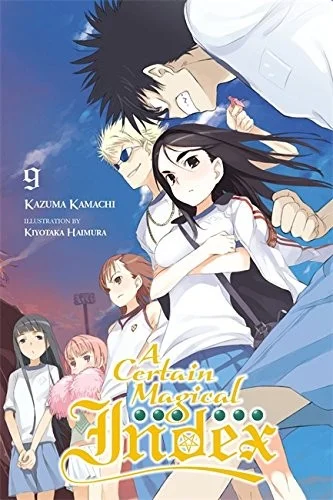
SS1. Read after volume 13. This is a collection of short stories that fills in gaps and gives you perspectives from characters the main volumes don’t focus on. The anime skipped this entirely. It’s not optional filler. Some of these stories set up plot threads that NT pays off later, and you’ll feel the gap if you skip them.
Volumes 14–16. Season 3 starts here, and this is where the anime adaptation falls apart. Volume 14 alone needed three or four episodes to work. The anime gave it maybe one and a half. If you’ve watched Season 3 and felt confused about anything, these volumes are why. Read them. They’re a completely different experience from what the anime delivered.
SS2. Read after volume 16. Same format as SS1. More short stories from side characters. The anime skipped it, and that was a mistake because SS2 is practically required reading before NT. Multiple Reddit threads specifically call out “read SS2 before starting New Testament” as mandatory. Don’t skip this one.

Volumes 17–22 (British Royal Family, World War III). The climax of Old Testament. Russia. World War III. Everything OT has been building toward detonates. Volume 20 is the British Royal Family arc, which the anime reduced to a blur. Volume 22 is where OT ends. It’s a proper conclusion, not a cliffhanger, but clearly not the final word either. The anime crammed these six volumes into the back half of Season 3. Six volumes. Half a season. The result was a widely panned rush job, entirely because the source material needed twice the episode count to function.
New Testament Reading Order (Volumes 1–23)
NT picks up where OT left off. No side story placement to worry about — just read 1 through 23 in order.
Volumes 1–6. The Gremlin arc. New faction. New threat structure. The story’s ambitions expand well beyond what OT ever attempted. If OT was about the conflict between science and magic, NT is about what happens when both sides realize they’ve been fighting the wrong war entirely.

Volume 9. I’m singling this one out because it comes up in every fan discussion about the series. NT9 is a character study of Touma that recontextualizes everything you thought you knew about him across thirty-plus volumes of reading. It’s the volume that converts casual readers into series evangelists. The fan translations set an incredibly high bar for this one, and it’s the volume longtime fans are most worried about Yen Press handling when the official release eventually reaches it. There’s a scene involving a recurring phrase that the fan community considers sacred. You’ll know it when you get there.
Volumes 10–18. The Magic God arc. Where Kamachi starts doing things with the power system that no other LN author would attempt. The ceiling keeps rising, but it feels earned rather than arbitrary because of how much groundwork OT laid over twenty-two volumes. Accelerator’s side arcs in this stretch rival the main plot in quality. He goes from villain to antihero to something more complicated than either label captures, and the novels give you every step of that journey in his own internal voice.
Volumes 19–23. The Coronzon arc and the climax of New Testament. By this point you’ve read over forty volumes and Kamachi is still finding ways to subvert your expectations about what this story is. Volume 22 Reverse is a fan favorite for reasons I won’t spoil. NT wraps up its major threads satisfyingly while leaving the door open for GT. If you stopped here and never read Genesis Testament, you’d still feel like you got a complete story.
Genesis Testament (Ongoing)
GT volume 1 picks up after NT. Read it after NT volume 23. Straightforward.
There’s no official English license for Genesis Testament. Fan translations are the only option for English readers, and they’re good quality. Reasonably current with Japanese releases. Kamachi is roughly twelve volumes in as of early 2025 with no announced end date. Given that OT ran six years and NT ran eight, GT has plenty of runway left.
GT also has two short story volumes (Souyaku SS) that released in May 2020. Read them after GT volume 1 if you want the extra context, though they’re less critical than OT’s SS volumes were.
One thing worth noting about GT: it represents a tonal shift. OT was building the world. NT was deconstructing the protagonist. GT is doing something else entirely with the franchise’s mythology, and readers who stuck through all forty-five preceding volumes tend to find that the payoff justifies the scale of the commitment. Whether GT will end up as long as its predecessors is anyone’s guess. Kamachi hasn’t slowed down.
Where Does A Certain Scientific Railgun Fit?
Railgun is a spinoff manga (21 volumes, completed March 2026) focusing on Mikoto Misaka and Academy City’s science side. It runs parallel to the OT timeline, not after it.
You have two options:
Option 1: Read Railgun alongside OT. The Sisters arc in the Railgun manga (volumes 4-7, adapted as Railgun S in the anime) overlaps with Index OT volumes 7-8. Reading them together gives you both perspectives on the same events. This is the fuller experience but requires juggling two series at once, which can get confusing on a first read.
Option 2: Read Railgun after finishing OT. Simpler. You already know the timeline and the Railgun content fills in gaps rather than running parallel. Most fans recommend this approach for first-time readers because OT is complicated enough on its own without adding a second series into the mix.
Either way, Railgun is not required to understand Index. It enriches the world, but the main story stands completely on its own. The Sisters arc in particular hits differently when you’ve read it from both Misaka’s perspective (Railgun) and Touma’s perspective (Index). On a second read-through, most fans do both simultaneously. For your first time through, pick whichever option feels less overwhelming.

Where Does A Certain Scientific Accelerator Fit?
Accelerator’s manga (12 volumes, completed July 2020) takes place during the late OT timeline, roughly around volumes 17-18. It got a 12-episode anime adaptation in 2019 that covered volumes 1-7.
Like Railgun, it’s optional. Accelerator gets plenty of development in the main Index novels, especially in NT where he becomes a co-protagonist. The spinoff manga adds depth to his early character arc rather than essential plot. Read it after OT if you want more Accelerator content before diving into NT, where his role becomes central. Don’t feel obligated to read it first, though. NT does its own work establishing who Accelerator has become.

Can I Skip Ahead After the Anime?
You can, but I’d push back on it. Here’s why.
The anime covered OT volumes 1-22 across three seasons. Season 1 (volumes 1-6) and Season 2 (volumes 7-13) are decent adaptations. Not great, but they get the job done. Season 3 (volumes 14-22) is where everything breaks. Nine volumes in 26 episodes. Key character arcs compressed into single scenes. Entire motivations cut. The World War III arc in volumes 19-22 loses most of its weight.
If you insist on skipping, here are your realistic entry points:
Volume 1. The best option. Touma’s internal monologue changes everything. The anime’s version of early Touma is a generic shounen protagonist who punches things. The novel’s version of Touma is a deeply conflicted person whose decision-making process you’re inside constantly. This is a different experience from the anime even for arcs the show handled reasonably well.
Volume 14. Where Season 3 starts. If you’re satisfied with Seasons 1 and 2, this is where you pick up and get the full story that Season 3 completely botched. Read SS1 (after vol 13) before jumping in.
SS2 then NT Volume 1. If you truly want to skip all of OT. You’ll miss enormous amounts of context and character depth, but NT does enough worldbuilding recap that you can follow the main plot. Read SS2 first because it sets up threads NT pays off in its opening volumes. This is the least recommended option, but it works in a pinch.

What About the Anime Watch Order?
If you’re mixing anime and LN, here’s the anime release order for reference:
| Series | Year | Episodes | Source Coverage |
|---|---|---|---|
| Index Season 1 | 2008 | 24 | OT Vol 1–6 |
| Railgun Season 1 | 2009 | 24 | Railgun manga Vol 1–3 |
| Index Season 2 | 2010 | 24 | OT Vol 7–13 |
| Railgun S | 2013 | 24 | Railgun manga Vol 4–7 |
| Index Movie: Endymion | 2013 | 1 film | Original story |
| Index Season 3 | 2018 | 26 | OT Vol 14–22 (rushed) |
| Accelerator | 2019 | 12 | Accel manga Vol 1–7 |
| Railgun T | 2020 | 25 | Railgun manga Vol 7–14 |
The anime watch order follows release order fine. Chronological order is a rabbit hole that isn’t worth the effort for a first watch. Just go release order. Save the chronological puzzle for a rewatch if you’re feeling ambitious.
The English Translation Situation
This matters for your reading order planning.
Old Testament is fully translated by Yen Press. All 22 volumes plus SS1 and SS2. Individual volumes went out of print but the omnibus edition ($250, collects everything) is available. Digital is easier — all volumes are on Kindle and BookWalker.
New Testament got licensed by Yen Press in July 2023. Releases are ongoing, but it’ll take years to catch up to all 23 volumes. Fan translations cover the full run if you don’t want to wait.
Genesis Testament has no English license. Fan translations only. They’re current and well-regarded.
For practical purposes: if you want official English only, you can read all of OT right now. NT will take patience. GT requires fan translations. If you’re comfortable with fan translations, the entire series is available in English today.

Quick Reference: Complete Reading Order
For those who just want the list without the commentary:
1. OT Volume 1–13 2. SS1 3. OT Volume 14–16 4. SS2 5. OT Volume 17–22 6. NT Volume 1–23 7. GT Volume 1 onward (ongoing)
Optional additions: – Railgun manga: read alongside OT or after OT – Accelerator manga: read after OT – SP volume: read after OT – Souyaku SS: read after GT volume 1 – Endymion novel: read after OT (ties into the movie)
That’s it. Print this list. Tape it to your wall. Start reading.