

This article contains affiliate links. If you buy through these links, we earn a small commission at no extra cost to you.
This post may contain affiliate links. If you buy something through one of those links, you won’t pay a penny more, but I’ll get a small commission that helps keep this site running.
The DxD anime is a highlight reel. The light novel is the full story. That’s the shortest version of this comparison, and it holds up across all four seasons.
Twenty-five main volumes plus four Shin DxD volumes. The anime adapted ten of them. If you’ve only watched the show, you’ve seen less than half the story, and the half you saw had a studio change, a botched season finale that required a do-over, and one of the longest gaps between seasons in modern anime. The light novel has none of those problems.
But this isn’t a “the source material is always better” lecture. The anime does some things well. The voice cast is excellent. Passione’s character redesigns in Season 4 are arguably an improvement over TNK’s originals. The fight choreography in Hero has moments the text can’t match. The question is what you lose by going anime-only, and the answer is: a lot.

TL;DR
High School DxD has 25 main LN volumes (complete) plus 4 Shin DxD sequel volumes (on hiatus). The anime adapted volumes 1-2 (S1), 3-4 (S2), 5-7 (S3 BorN), and 9-10 (S4 Hero). BorN’s anime-original ending in episodes 10-12 is the biggest divergence and was controversial enough that Hero had to redo it. The LN gives you deeper character work for Issei, Rias, and the full peerage, plus 15 unadapted volumes of escalating mythology. Ishibumi’s writing improves dramatically from volume 5 onward. Read the LN if you care about the story beyond the ecchi comedy.
What Does Each Season Adapt?
Season 1 (TNK, 2012, 12 episodes) adapts volumes 1-2. Issei’s introduction, his death and resurrection as a devil, Rias’s Rating Game against Riser. Faithful adaptation. The pacing works. Minor cuts to worldbuilding exposition, but nothing that changes the story.
Season 2 New (TNK, 2013, 12 episodes) adapts volumes 3-4. The Excalibur arc with Kiba’s backstory and Kokabiel, then the peace conference. Some trims to Kiba’s internal conflict, but the anime handles this arc well. Probably the most balanced adaptation across all four seasons.

Season 3 BorN (TNK, 2015, 12 episodes) adapts volumes 5-7. This is where things go wrong. Episodes 1-9 roughly follow the novels through Koneko’s nekomata arc and the start of the Loki confrontation. Then episodes 10-12 abandon the source material entirely. The anime invents an original ending that contradicts established power systems, skips Issei’s Juggernaut Drive resolution, and rushes through emotional beats that the novel spent chapters building. The community still argues about this one. It’s not subtle — the anime literally breaks its own rules for the sake of an action climax.
Season 4 Hero (Passione, 2018, 13 episodes) adapts volumes 9-10. New studio. New character designs. Episode 0 re-adapts the ending of the BorN arc to align with the novels. The first episode is essentially an apology for Season 3’s finale. Then it adapts the Kyoto arc (vol 9) and the Rating Game against Sairaorg (vol 10). This is widely considered the best season. Passione’s art is cleaner. The fights are better animated. The adaptation is faithful.
Volume 8 got skipped entirely. It’s a collection of short stories and side content between the BorN and Hero arcs. Not critical, but it has character moments the anime simply doesn’t have.
Where Does the Light Novel Pull Ahead?
Issei. The anime presents him as a lovable pervert who powers up through breast-related mechanics. That’s accurate but incomplete. The LN version of Issei has a genuine internal arc about self-worth that starts around volume 5 and pays off across the next twenty volumes. His conviction isn’t just comedy — it becomes the mechanism through which he processes trauma and earns power-ups that feel less absurd in context than they look from the outside.

The Rating Games are where the format advantage matters most. The anime can show you a fight. The novel can show you the strategy behind it. Issei’s tactical thinking during Rating Games — and the peerage’s coordinated approaches — reads like sports manga with devils. The Sairaorg fight in volume 10 (adapted in Hero) is good in both formats. The Bael Rating Game in volume 22 exists only in the novel, and it’s better.
Rias gets significantly more development in the novels. The anime tends to reduce her to reaction shots during Issei’s fights. The LN gives her interior perspective, political maneuvering within devil society, and a leadership arc that the anime barely gestures at. Same for Akeno, whose family trauma and subsequent growth spans multiple novels but gets compressed into single episodes.
The mythology escalation past volume 10 is where the anime simply doesn’t exist. Khaos Brigade. The ExE threat. Azazel’s machinations. Ajuka’s games. The scope goes from “high school devils fight fallen angels” to “multiversal conflict between pantheons” and the transition feels earned because Ishibumi builds it volume by volume. None of that has been animated.
What About the Ecchi Content?
Different handling. The anime foregrounds it — the censored/uncensored broadcast split was a marketing strategy. The LN integrates it differently. Issei’s Dress Break and other ecchi powers are part of the combat system and part of his character identity. They’re present, but the ratio of ecchi to plot shifts dramatically as the series progresses. By volume 15, the relationship dynamics are more romance than comedy, and by the Shin DxD volumes the harem dynamics have matured into something closer to a functioning polyamorous relationship with actual emotional negotiations between characters.
DxD stays ecchi throughout. The novels just give the relationships room to breathe in ways the anime can’t with twelve episodes per season.
Is There a Season 5?
No. Season 4 aired in 2018. That’s an eight-year gap with no announcement. The light novel finished its main run at 25 volumes. Shin DxD published four volumes between July 2018 and February 2020, then went on hiatus. Ishibumi has been working on other projects.
The gap since Season 4 means volumes 11-25 plus Shin DxD 1-4 are LN-exclusive. That’s nineteen volumes of unadapted content. If you’re waiting for the anime to continue the story, you’ll be waiting a long time — if it ever happens. The light novel is the only way to experience the complete story.
Should You Read From Volume 1 or Skip Ahead?
Start from volume 1. The anime is a decent adaptation for seasons 1-2, a flawed one for season 3, and a strong one for season 4. But even in the well-adapted seasons, Issei’s internal monologue adds context the anime can’t convey. His thought process during fights, his genuine insecurity beneath the bravado, his evolving relationships with each peerage member. All of it reads better with his narration intact.
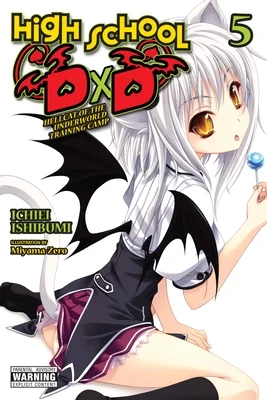
If you absolutely refuse to reread adapted content, start at volume 5 (where BorN begins) to get the correct version of the events the anime mangled. Do not start at volume 11 thinking Hero covered everything. Volume 8 was skipped entirely, and Hero’s adaptation of volumes 9-10, while good, still trims character moments that matter later. The short stories in volume 8 are where Ishibumi does some of his best character writing for Asia and Xenovia, and without them, their arcs in the later volumes lose context that the anime never provided and probably never will.
Frequently Asked Questions
Is the High School DxD light novel better than the anime?
Yes. The anime is a fun adaptation for seasons 1, 2, and 4, but BorN’s anime-original ending damaged the story. The LN provides deeper character work, complete Rating Game strategies, 19 volumes of unadapted content, and Issei’s internal monologue which is core to the experience.
What did BorN change from the light novel?
Episodes 10-12 replaced the novel’s Juggernaut Drive resolution with an anime-original ending. The anime broke established power system rules and skipped key character beats, creating continuity problems that Season 4 (Hero) had to fix with a re-adaptation in episode 0.
How much of the light novel has been adapted?
Volumes 1-7 and 9-10 out of 25 main volumes. Volume 8 was skipped. Shin DxD (4 sequel volumes) is also unadapted. Less than half the story has been animated.
Will there be a Season 5?
No announcement as of 2026. Season 4 aired in 2018 — the gap is now eight years. With Shin DxD also on hiatus and Ishibumi working on other projects, a Season 5 is unlikely in the near term.
Where should I start reading after the anime?
Volume 5 for the correct version of the BorN arc, or volume 1 for the full experience. Do not start at volume 11 — volume 8 was skipped by the anime and Hero still trimmed content from volumes 9-10.
How does the art style change between studios?
TNK (Seasons 1-3) used rounder, softer character designs. Passione (Season 4 Hero) shifted to sharper, more detailed designs closer to the LN illustrations by Miyama-Zero. Fan opinion is split but generally favors Passione’s approach for the action scenes and TNK’s for the comedy/slice-of-life moments.