

This article contains affiliate links. If you buy through these links, we earn a small commission at no extra cost to you.
No. The light novel is not finished. It’s ongoing at eleven volumes with no announced ending. And honestly, the series is in an interesting spot right now. The anime is currently airing (April through June 2026), the source material has enough volume to sustain multiple seasons, and the community response suggests this isn’t a one-season flash. The light novel readership is growing alongside the anime viewership in real time.
The title alone generated its own discourse. “I Made Friends with the Second Prettiest Girl in My Class” raises the obvious question that half the internet asked when the anime was announced: who’s the first? The answer matters less than you’d think. The series isn’t a ranking competition. It’s a story about two people who become friends when neither expected to. The slow realization that the friendship might be something else entirely.
TL;DR
Eleven volumes published, ongoing. The anime (airing April–June 2026) is adapting the early volumes. Licensed in English. The series is a school romcom with more emotional depth than the title suggests. No announced ending date, but the author is actively publishing and the anime’s commercial success makes continued support likely. If you’re watching the anime and want more, the light novel has years of content ahead of the adaptation.
How Many Volumes Are Out?
Eleven light novel volumes have been published in Japanese. The release pace has been steady, roughly three volumes per year since the series began. That’s a comfortable pace for a romcom LN. Fast enough to keep readers engaged, slow enough that each volume gets room to develop the relationship dynamics without rushing to manufactured drama.
There’s also a manga adaptation running alongside the light novel. The manga follows the same storyline and is ongoing. Between the LN, the manga, and now the anime, the franchise is active across three formats simultaneously.
What’s the English Translation Status?
The light novel is licensed for English publication. Volumes are being released on a standard schedule. The anime’s popularity is almost certainly accelerating the English release timeline. Publishers notice when a series is trending, and “breakout” is the word Google Trends uses for this one.
For English-only readers, you’re behind the Japanese release but catching up. Digital editions are available through the usual channels. The translation captures the series’ tone — the awkward humor, the quiet emotional moments, the internal monologue of a protagonist who overthinks every social interaction. Romcom LNs live or die on voice. This one preserves it.
How Far Is the Anime?
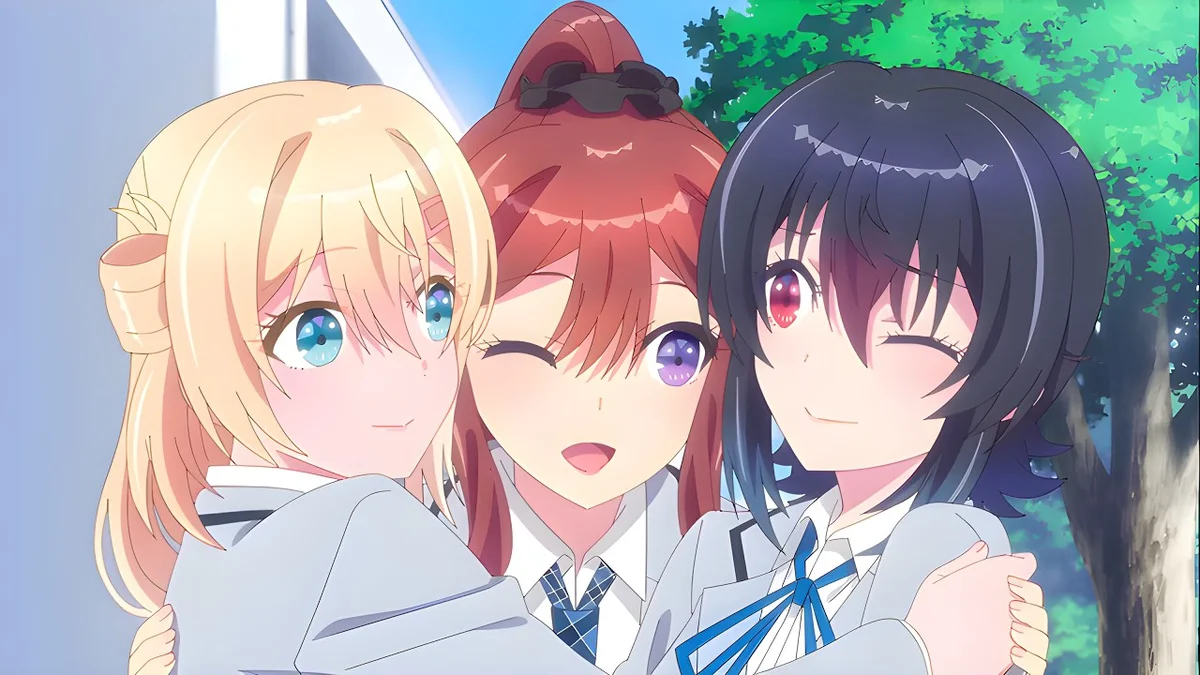
The anime began airing on April 7, 2026 and runs through June 23. It’s a single-cour season (12 episodes) adapting the early volumes. Based on the pacing so far, Season 1 will likely cover volumes 1 through 3, possibly touching volume 4. That leaves seven or eight volumes of unadapted material.
MAL has the anime at 7.94, which is solid for a romcom adaptation. The series isn’t trying to reinvent the genre — it’s executing the fundamentals well enough that the audience is engaged. Episode discussions have been active, and the “who’s the prettiest girl” meme has given the series free marketing that most anime would kill for.
What’s the Series Actually About?
Maki Maehara is a high school student who has managed to reach his current year without making a single friend. Not through bullying or social rejection — through pure avoidance. He’s not antisocial in a dramatic way. He just never figured out how to initiate the process of knowing someone, and at some point the gap between “hasn’t made friends yet” and “probably can’t make friends” became too wide to cross.

Then he starts spending time with Umi Asanagi. She’s the “second prettiest girl in class” per the title — attractive, approachable, but not the center of attention the way the class’s acknowledged beauty is. Their friendship starts outside of school, in casual settings where the pressure of classroom social dynamics doesn’t apply. The LN is strongest when it’s just the two of them figuring out what they are to each other without anyone else’s framework defining it.
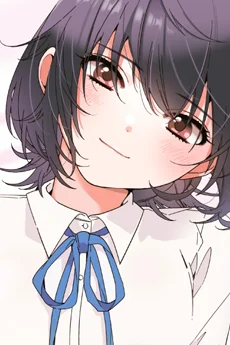
The “second prettiest” framing isn’t a ranking gimmick. It’s thematic. Umi isn’t the most noticed person in the room. Maki isn’t the most noticeable either. The series is about two people who exist slightly outside the spotlight finding each other. The romance builds slowly because neither character is the type to rush — Maki because he doesn’t have the social instincts for it, Umi because she has her own reasons for keeping certain distances.
How Does It Compare to Other Romcom Light Novels?
If you’ve read The Angel Next Door Spoils Me Rotten, you’re in the right neighborhood. Both series are slow-burn romcoms where the relationship development happens through quiet, everyday interactions rather than dramatic plot events. The difference is scope. Angel Next Door keeps its world very small — almost entirely two characters in adjacent apartments. Second Prettiest Girl expands gradually, introducing a supporting cast that pressures and complicates the central dynamic.
It’s less dramatic than Toradora, less comedic than Konosuba, and less melancholy than Oregairu. The tone sits in a specific register — warm, understated, occasionally funny in a way that comes from character behavior rather than jokes. The humor doesn’t try to make you laugh out loud. It tries to make you smile because you recognize the awkwardness.
Light Novel vs Manga — Which Should You Read?
Both exist. The manga adaptation is ongoing and follows the light novel’s storyline. If you’re a visual reader, the manga is perfectly fine. But the light novel has a significant advantage for this specific series: Maki’s internal monologue.
A huge part of the appeal is watching Maki overthink. He’s not a dramatic character externally. He doesn’t give speeches or have public breakdowns. His entire emotional landscape plays out in his head. Debating whether a text message is too casual. Wondering if asking someone to hang out counts as being needy. Analyzing a two-second interaction for hidden meanings that definitely aren’t there. Manga can show reactions. The light novel lets you live inside the reaction in real time. For a series built on the gap between what characters feel and what they show, prose is the better medium.
The manga also compresses scenes that the light novel gives room to breathe. The quiet moments — walking home, sitting in comfortable silence, the specific texture of two people learning to exist in each other’s space — are where this series is strongest. Those moments survive better in prose than in panels.
Will It Get a Proper Ending?
All signs point to yes, on its own timeline. Eleven volumes is a substantial run for a romcom light novel. The author is actively publishing. The anime’s success guarantees continued publisher investment. And romcom LNs tend to have natural endpoints — the relationship either becomes official or it doesn’t, and the story wraps around that resolution.
The series doesn’t feel like it’s dragging or stalling. Eleven volumes in, the central relationship has developed meaningfully, the supporting cast has expanded naturally, and the story has room to grow without feeling padded. If I had to guess, this is a 15-volume series. But the author hasn’t announced anything, and romcoms are notoriously hard to predict in terms of length because the pacing depends on character readiness rather than plot milestones.
Should You Start Reading Now?
If you’re watching the anime and enjoying it, yes. The light novel has nine volumes of content beyond what Season 1 will cover. You won’t run out of story anytime soon. Starting at volume 1 gives you the full internal experience — Maki’s overthinking is funnier and more relatable on the page than any adaptation can fully capture, because prose handles internal spiraling better than any visual medium.
If you haven’t watched the anime, the light novel works on its own. The series doesn’t need animation to land its emotional beats. The strength is in the character writing, which translates directly from the page. Start with volume 1 and give it through volume 3 before deciding. The first volume sets the premise. The second develops it. The third proves the series has more going on than a cute title and a comfortable formula.
FAQ
Q: Is the light novel finished?
A: No. It’s ongoing at 11 volumes with no announced ending date.
Q: How many volumes does the anime cover?
A: Season 1 (April–June 2026) likely covers volumes 1-3. Nine volumes remain unadapted.
Q: Is the light novel licensed in English?
A: Yes. Volumes are being released on an ongoing schedule.
Q: Who is the “prettiest girl” in the title?
A: The class’s acknowledged beauty, Yuu Amami. But the series focuses on Umi Asanagi — the second prettiest — and her friendship with Maki.
Q: Is this a harem series?
A: No. The focus is on Maki and Umi’s relationship. Other characters exist but the story doesn’t revolve around multiple love interests competing for the protagonist.