

This article contains affiliate links. If you buy through these links, we earn a small commission at no extra cost to you.
Every Monogatari discussion eventually becomes a reading order discussion. Someone asks which book to start with. Someone else says Bakemonogatari. A third person says actually Kizumonogatari came out first in English so start there. Then someone posts a flowchart with 47 nodes and the thread devolves into a philosophical argument about whether NisiOisin intended you to read the prequel first or not.
The light novel reading order is simpler than the anime watch order. I’m going to give it to you in one sentence: read in Japanese publication order, starting with Bakemonogatari. Done. Everything after that is details.
TL;DR: The Monogatari light novel has 29 volumes across six “seasons.” Read in Japanese publication order: First Season (Bake, Kizu, Nise, Neko:Kuro), Second Season (Neko:Shiro through Koi), Final Season (Tsuki through Zoku Owari), Off Season, Monster Season, Family Season. The English publisher released Kizumonogatari first, creating permanent confusion. Ignore that. Start with Bakemonogatari Volume 1. The “main” story concludes with Zoku Owarimonogatari (Volume 18), but NisiOisin keeps writing. 29 volumes and counting.

How Is the Monogatari Light Novel Series Structured?
NisiOisin published Bakemonogatari in November 2006 through Kodansha’s Mephisto magazine. Twenty years and 29 volumes later, the series is still going. The structure breaks into six “seasons,” each containing multiple story arcs published as individual volumes. Every arc title ends in “-monogatari” (Japanese for “story”), which is why you see names like Nisemonogatari and Koimonogatari floating around. They’re all part of the same series.
Here’s the season breakdown:
First Season (6 volumes, 2006-2010): Bakemonogatari (2 volumes), Kizumonogatari (1 volume), Nisemonogatari (2 volumes), Nekomonogatari: Kuro (1 volume). This is Koyomi Araragi’s introduction and his encounter with the vampire Kiss-Shot Acerola-Orion Heart-Under-Blade. The supernatural cases involving the girls who become the core cast start here. Bakemonogatari is the entry point. Kizu is the prequel showing how Araragi became a vampire. Nise focuses on his sisters. Neko:Kuro covers Hanekawa’s story during Golden Week.
Second Season (6 volumes, 2010-2011): Nekomonogatari: Shiro, Kabukimonogatari, Hanamonogatari, Otorimonogatari, Onimonogatari, Koimonogatari. The perspective shifts. Araragi stops being the sole narrator. You get full arcs from Hanekawa’s POV, Nadeko’s POV, and others. This is where the series goes from great to something else entirely. Nadeko’s arc in Otorimonogatari is the character turn everyone still argues about years later.
Final Season (6 volumes, 2012-2014): Tsukimonogatari, Koyomimonogatari, Owarimonogatari (2 volumes), Zoku Owarimonogatari. The resolution of Araragi’s story. Everything converges. All of it. Ougi Oshino’s identity reveal. Araragi’s graduation. Most fans consider Zoku Owarimonogatari the “ending” of the main narrative, even though NisiOisin kept writing.
Off Season (4 volumes, 2015-2017): Orokamonogatari, Wazamonogatari, Nademonogatari, Musubimonogatari. Side stories and aftermath. The community is divided on these. Some readers call them essential context for Monster Season. Others say they’re NisiOisin indulging himself with character vignettes that don’t move the story forward. I think they’re worth your time, but you’ll feel the pace change.
Monster Season (6 volumes, 2017-2021): Shinobumonogatari, Yoimonogatari, Amarimonogatari, Ougimonogatari, Shinomonogatari (2 volumes). The return to longer-form storytelling. Shinobu gets a full starring arc. The community rates Monster Season significantly higher than Off Season, with MAL scores bouncing back from 8.63 to 8.83.
Family Season (ongoing, 2024+): The newest season. NisiOisin recently started writing it. The premise involves Araragi and Senjougahara as a married couple with Shinobu effectively adopted into their family. Only a few volumes exist so far. Early days.
What Is the Full Monogatari Light Novel Reading Order?
Read in this order. No exceptions, no skipping, no jumping ahead.
- Bakemonogatari Volume 1 (First Season)
- Bakemonogatari Volume 2 (First Season)
- Kizumonogatari (First Season)
- Nisemonogatari Volume 1 (First Season)
- Nisemonogatari Volume 2 (First Season)
- Nekomonogatari: Kuro (First Season)
- Nekomonogatari: Shiro (Second Season)
- Kabukimonogatari (Second Season)
- Hanamonogatari (Second Season)
- Otorimonogatari (Second Season)
- Onimonogatari (Second Season)
- Koimonogatari (Second Season)
- Tsukimonogatari (Final Season)
- Koyomimonogatari (Final Season)
- Owarimonogatari Volume 1 (Final Season)
- Owarimonogatari Volume 2 (Final Season)
- Zoku Owarimonogatari (Final Season)
- Orokamonogatari (Off Season)
- Wazamonogatari (Off Season)
- Nademonogatari (Off Season)
- Musubimonogatari (Off Season)
- Shinobumonogatari (Monster Season)
- Yoimonogatari (Monster Season)
- Amarimonogatari (Monster Season)
- Ougimonogatari (Monster Season)
- Shinomonogatari Volume 1 (Monster Season)
- Shinomonogatari Volume 2 (Monster Season)
- Family Season volumes (ongoing)
This is Japanese publication order. NisiOisin wrote the books in this sequence. He expected readers to read them in this sequence. Trust that. The non-linear timeline is intentional. Kizumonogatari is set chronologically before Bakemonogatari, but it was published third because NisiOisin wrote Bake as the entry point.
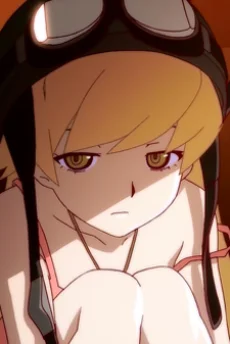
Should You Read Kizumonogatari Before or After Bakemonogatari?
After. Third in the order, exactly where NisiOisin put it.
This is the single most debated question in the Monogatari fandom, and it exists because of a publishing decision. Vertical (now Kodansha USA) released Kizumonogatari as the first English translation in December 2015. They wanted to capitalize on the Kizumonogatari film trilogy that was rolling out in Japan. Smart marketing. Terrible for reading order clarity, because now every English-speaking newcomer assumed Kizu was the starting point even though NisiOisin designed Bakemonogatari’s opening chapters to function as a reader’s first contact with the world.
A huge chunk of English readers ended up starting with Kizu. It works. The story is self-contained enough that you can follow it without context. NisiOisin himself has said both orders are fine. One prominent r/araragi poster summarized the situation: “The original publication order was Bake then Kizu, but if you start Kizu before Bake there isn’t really a huge problem.”
Here’s why I recommend Bake first anyway: Bakemonogatari is written as an introduction. It establishes Araragi’s voice, the supernatural rules, the tone. When you then read Kizumonogatari, you already know who Araragi becomes, and the prequel hits differently because of that dramatic irony. You know the quiet, self-deprecating narrator was once a kid who walked into the worst situation of his life and barely survived. Reading Kizu first gives you the chronological version. Reading Kizu third gives you the emotional version.
“Watching/reading Monogatari chronologically is like watching an edited linear version of Pulp Fiction. It’s dumb and takes away from the experience.” — r/araragi community member
Strong words, but the principle holds. The non-linear structure is part of the art.
How Does the Anime Map to the Light Novel?
SHAFT’s anime adaptation covers a significant portion of the series, but the mapping isn’t one-to-one:
Bakemonogatari anime (2009, 15 episodes): Covers Bakemonogatari Volumes 1-2 (LN #1-2). Faithful adaptation. SHAFT’s visual style adds enormously.
Nisemonogatari anime (2012, 11 episodes): Covers Nisemonogatari Volumes 1-2 (LN #4-5). The infamous toothbrush scene lives here.
Nekomonogatari: Kuro anime (2012, 4 episodes): Covers Nekomonogatari: Kuro (LN #6). Short and direct.
Monogatari Series Second Season anime (2013, 26 episodes): Covers all six Second Season volumes (LN #7-12). This is widely considered the peak of the anime adaptation.
Tsukimonogatari anime (2014, 4 episodes): Covers Tsukimonogatari (LN #13).
Owarimonogatari anime (2015-2017, 2 seasons): Covers Owarimonogatari and Zoku Owarimonogatari (LN #15-17). Note: Koyomimonogatari (LN #14) was adapted separately as short web episodes.
Kizumonogatari films (2016-2017, 3 films): Covers Kizumonogatari (LN #3). The films took a decade to produce and turned a single novel into a cinematic trilogy.
Off Season and Monster Season anime: Currently being adapted. This is the latest anime content.
The anime covers the First through Final Seasons almost completely, plus Kizu via the films. Off Season and Monster Season have ongoing anime adaptation. The biggest anime-exclusive addition is SHAFT’s visual language, the on-screen text flashes and the abstract architecture. The music too. None of that exists in the novels. They’re SHAFT’s interpretation, and it’s brilliant, but it’s additive rather than substitutive.

What Does the Light Novel Have That the Anime Doesn’t?
Araragi’s internal monologue. Full stop.
The Monogatari anime is famous for being dialogue-heavy. It’s a show where characters stand in rooms and talk for entire episodes. Somehow SHAFT made that visually riveting. Here’s the thing though: even with all that dialogue, the anime cuts enormous amounts of Araragi’s narration.
“It’s not really comparable. SHAFT did an amazing job with music and visuals, but some stuff had to be cut to fit into episodic format (mostly internal monologue). So do both.” — Reddit user (218 upvotes)
NisiOisin’s writing style is dense, digressive, and self-aware. Araragi’s narration wanders into philosophical tangents, circles back on itself, contradicts what it just said, then stops mid-thought to acknowledge that he’s an unreliable narrator. The anime can flash text on screen for half a second. The novels let you sit inside his head for pages. Huge difference.
The character arcs that benefit most from the LN format: Hanekawa’s Neko:Shiro arc, where her repressed emotions and carefully maintained facade get explored through internal narration that the anime can only imply through visuals. Nadeko’s Otorimonogatari, where the switch to her POV is far more disturbing in first person than it is on-screen. Kaiki’s Koimonogatari, where his unreliable narration creates a tone the anime captures well but the LN does even better.
Should you read the LN if you’ve watched the anime? The community says yes, unanimously. The consensus isn’t that one replaces the other. They’re complementary. Watch the anime for SHAFT’s visual interpretation. Read the novels for the complete text. Several fans describe reading the corresponding LN arc right after watching the anime episodes as the ideal experience.
How Far Behind Is the English Translation?
This is the painful part. Vertical (now Kodansha USA) has been translating the Monogatari novels since 2015. They’ve covered the First Season, Second Season, and most of the Final Season. Off Season and Monster Season translations are still in progress.
The English release pace is slow compared to the Japanese publication. NisiOisin published all 29 volumes between 2006 and 2024. The English translation has been running since 2015 and hasn’t caught up yet. For readers who want the complete experience in English, there’s a gap. A big one.
The r/araragi subreddit maintains a live tracking thread titled “State of progress of the translations of not-yet-animated arcs” with over 1,200 upvotes. It gets updated regularly. Fan translations exist for the gaps, but quality varies wildly — some are near-professional while others read like machine translation with a quick editing pass, so check the r/araragi community recommendations before committing to any unofficial version.
One honest take from the community: the English translation is “kinda meh” compared to reading in Japanese. NisiOisin’s writing leans heavily on Japanese wordplay, puns, and kanji jokes that don’t survive translation. That’s a legitimate criticism. The translations are competent, they convey the story and characters faithfully, but some of the linguistic playfulness that defines NisiOisin’s voice gets lost.
For most English readers, the official translations are the only practical option, and they work well enough. Start with Bakemonogatari Volume 1 from Kodansha USA on Amazon. Don’t hunt for fan translations unless you’ve exhausted the official releases and can’t wait.

Is the Monogatari Light Novel Series Finished?
The main story, yes. Zoku Owarimonogatari (Volume 17-18, Final Season) wraps Araragi’s arc from high school through graduation. Most fans treat this as the ending. Everything after that is post-story.
The series as a whole? No. NisiOisin is still writing. Off Season and Monster Season added 10 volumes of post-main-story content. Family Season just started. NisiOisin has explicitly said he doesn’t want Monogatari to end. One fan put it perfectly: “The Never-Ending Monogatari” — a play on “Owarimonogatari” meaning “End Story.”
For practical purposes: you can read through Zoku Owarimonogatari and have a complete experience. Off Season and Monster Season are supplementary. Excellent supplementary, actually — Monster Season in particular has strong arcs that justify the series continuing past what most authors would have called an ending. But if you want a clean stopping point, Volume 18 is it.
Frequently Asked Questions
What order should I read the Monogatari light novels?
Japanese publication order: Bakemonogatari (2 vols), Kizumonogatari, Nisemonogatari (2 vols), Nekomonogatari: Kuro, then Second Season, Final Season, Off Season, Monster Season, and Family Season. 29 volumes total.
Should I read Kizumonogatari first or after Bakemonogatari?
After. Kizu is the third book in publication order. The English publisher released it first for marketing reasons, but NisiOisin wrote Bakemonogatari as the entry point. Both orders work, but Bake-first gives you the intended narrative experience.
Can I read the Monogatari light novels without watching the anime?
Yes. The novels are the original source material. NisiOisin wrote them to be read, not watched. The anime is an adaptation that adds SHAFT’s visual interpretation. Many fans recommend watching the anime first for accessibility, but the novels stand completely on their own.
How many Monogatari light novels are there?
29 volumes as of 2026, across six seasons: First Season (6), Second Season (6), Final Season (6), Off Season (4), Monster Season (6), and the ongoing Family Season (1+).
Is the English translation of the Monogatari novels complete?
No. Kodansha USA has translated through most of the Final Season. Off Season and Monster Season translations are ongoing. The English release lags several years behind the Japanese publication.
Is the Monogatari light novel finished?
The main story (First through Final Season, 18 volumes) is complete. The series itself is ongoing. Off Season, Monster Season, and the new Family Season continue the world. NisiOisin has said he doesn’t plan to stop writing Monogatari.