

My Happy Marriage has a straightforward reading order. Ten volumes, numbered sequentially, no required side stories or spin-offs. Read Volume 1 through 10 in order. That’s the whole guide.
This article contains affiliate links. If you buy through these links, we earn a small commission at no extra cost to you.
TL;DR
- Volumes 1-10 in order. That’s it. No side stories, no spinoffs, no branching paths. Straightforward.
- After the anime: Season 1 covers roughly Vols 1-3. Pick up at Volume 4.
- The manga runs alongside but behind the LN. It covers less ground and moves slower. Read the LN for the complete story.
- Series is complete at 10 volumes. You can binge the whole thing right now.
But if you’re coming from the anime and trying to figure out where to pick up, or wondering whether the manga is worth your time alongside the novels, it gets slightly more complicated. Here’s the full breakdown.
More about My Happy Marriage
The Quick Version
Read Volumes 1 through 10 in publication order. Skip the manga unless you’ve finished both the anime and the LN and still want more. If you watched the anime first, start reading from Volume 1 anyway. The novels give you Miyo’s internal experience that the anime can’t replicate.
Complete Volume Guide
Volume 1: The Arrangement
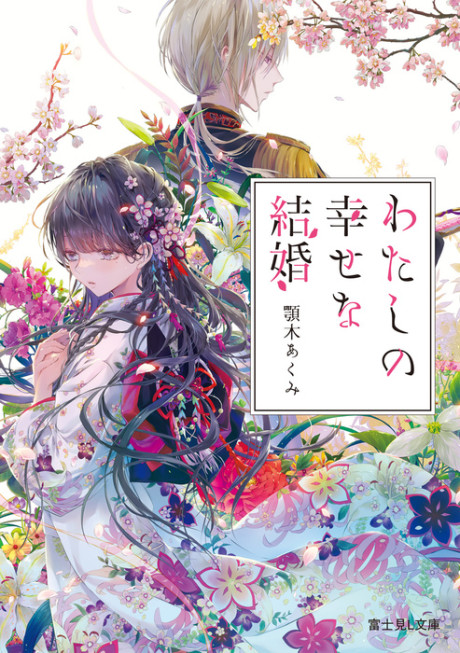
Miyo Saimori arrives at Kiyoka Kudou’s estate expecting to be thrown out within three days. Every previous fiancée fled. Instead, she finds the first safe home she’s ever had. This volume is almost entirely domestic. Miyo learning to eat at a table, cook a meal, sleep in a real bed. Kiyoka investigating what the Saimori family did to her. The villain (Minoru Tatsuishi) kidnaps Miyo to steal her Usuba bloodline. Kiyoka rescues her.
I know that sounds slow. It is. But the slowness is the point. Agitogi earns every small moment of trust between Miyo and Kiyoka by letting you sit inside Miyo’s anxiety. When she finally accepts that Kiyoka isn’t going to hurt her, it hits because you’ve been listening to her expect the worst for 150 pages.
Volume 2: The Awakening
The supernatural elements move from background detail to central plot. Hazuki (Kiyoka’s older sister) arrives as Miyo’s etiquette tutor. Arata Usuba appears and takes Miyo to her maternal family. Her grandfather Yoshirou explains that her mother Sumi sealed Miyo’s Dream-Sight ability to protect her from exploitation. Miyo uses Dream-Sight for the first time to save Kiyoka from a Grotesquerie attack. The Emperor is identified as the hidden villain.
This is where the series stops being a quiet domestic romance and becomes a political fantasy. Some readers prefer Volume 1’s intimacy. I think Volume 2 is where Agitogi proves she can do both. The relationship scenes between Miyo and Kiyoka are just as strong here, but now they’re anchored to real stakes.
Volume 3: The In-Laws
Miyo visits Kiyoka’s parents. Father Tadakiyo is welcoming. Mother Fuyu is hostile. I’ll be upfront: this was my least favorite volume. After two books of Miyo escaping one abusive household, watching her walk into another hostile authority figure felt repetitive. Fuyu’s arc resolves adequately, but the emotional beat of “woman in power mistreats Miyo” had already been played. Agitogi executes it well enough. I just wished she’d found a different conflict.
Volume 4: The Communion
Naoshi Usui and the Gifted Communion enter the picture. This is a setup volume. Usui’s opinokinesis (mental manipulation through physical touch) makes him the most dangerous antagonist the series has produced. He shares Usuba bloodline with Miyo, and his obsession with Miyo’s dead mother Sumi drives his villainy in a direction that’s personal rather than political. Kaoruko Jinnouchi also appears as Miyo’s bodyguard and Kiyoka’s ex-fiancée, creating exactly the tension you’d expect. Not much resolves here. It’s groundwork for Volumes 5-6. If you find it slow, push through. The payoff is coming.
Volumes 5-6: The Climax

Everything converges. Usui’s assault on the Imperial Palace. Miyo’s full Dream-Sight awakening. Arata shooting Kiyoka (claiming it’s for the Usuba family). Kiyoka confessing love before being captured. Miyo entering the dream world to rescue him. Sumi’s spirit appearing to reject Usui’s plan. These two volumes are the action climax of the first half.
Volume 6 ends with Usui’s death, Kiyoka’s retirement from the military, and his proposal. If you’re reading for the romance, this is where you’ll cry. I did.
Volume 7: The Wedding
Miyo and Kiyoka marry. Dark curses and family complications create tension around the ceremony, but nothing prevents it. Chapter titles include “Heart Flutter,” “Watched Over by Cherry Blossoms,” and “What Happiness Is.” This volume earns that last title. I’d have been fine if the series ended here. Every thread from the first six volumes pays off.
Volume 8: Intermission
Side stories and vignettes split into two halves. “When the Long Rains Abate” and “Proof of Love.” The OVA episode (anime Episode 13) adapts part of this volume. It’s pleasant character material. Skippable if you want to get to Volume 9, but the bonus perspective chapters (especially Kiyoka’s POV on the wedding preparation) add depth you won’t get elsewhere.
Volumes 9-10: The New Arc
Post-marriage territory. Volume 9 is the honeymoon arc with new conflicts. Eugene (a blond foreigner) tries to recruit Miyo for unclear purposes. The Miyakouji family harasses her. Volume 10 (released March 2026 in Japan) continues expanding into new settings and antagonists.
The tone shifts here. The series started as intimate domestic drama with supernatural elements. Now it’s becoming a broader political fantasy where Miyo’s Dream-Sight makes her a target on a national scale. I’m still invested but I miss the quieter moments from the early volumes. Whether these later books work for you depends on what drew you to the series in the first place. If it was the romance, you got your payoff in Volume 7. If it was the worldbuilding, Volumes 9-10 deliver more of it than anything before.
Where to Start After the Anime
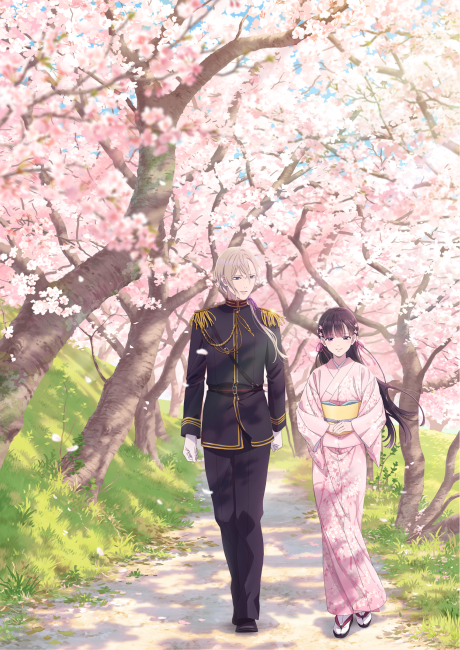
After Season 2 (covers Volumes 1-6): Start at Volume 7 for new material. But I’d recommend going back to Volume 1. The anime loses most of Miyo’s internal monologue, which is the strongest part of the writing. You’ll get the visual and musical context from the anime, then the psychological depth from the novels. Both layers together make the story richer than either alone.
After Season 1 only (covers Volumes 1-2): Start at Volume 3. Or go back to Volume 1 for the same reasons above. Season 1’s pacing is faithful enough that jumping to Volume 3 won’t leave you confused.
After the 2026 three-episode special (will cover Volume 7): Start at Volume 8. The wedding arc is self-contained enough that the special should adapt it cleanly.
What About the Manga?
The manga by Rito Kohsaka is serialized in Square Enix’s Gangan Online with 6+ volumes in English. It adapts the same story as the light novel at its own pace. My recommendation: skip it unless you’ve consumed both the LN and anime and want more. The manga relies heavily on text-box narration that reads awkwardly in panel format. The anime handles visual storytelling better. The novels handle internal storytelling better. The manga occupies an uncomfortable space between both.
What About the Live-Action Film?
The live-action film released March 2023 and debuted #1 at the Japanese box office, eventually earning ¥2.8 billion total. It covers roughly the same material as Volume 1, with a condensed version of Miyo’s arrival at the Kudou estate and the Tatsuishi kidnapping arc. It’s a separate adaptation from the anime. The casting is solid and the Taishō-era production design translates well to live action. Watch it as a standalone experience. Don’t treat it as part of the reading order. It won’t help you understand the novels or anime better, but it works on its own terms as a romantic period drama.
Anime-to-Volume Mapping
For quick reference:
Season 1 (12 episodes + OVA, Summer 2023): Volumes 1-2. Comfortable pacing, faithful adaptation.
Season 2 (13 episodes, Winter 2025): Volumes 3-6. Compressed pacing. Four volumes in one season means trimmed character development and faster political arcs. The full comparison covers what gets lost.
2026 Special (3 episodes, confirmed): Volume 7 (wedding arc).
Volumes 8-10: Unadapted. No anime announced beyond the 2026 special.
Is the Series Finished?
No. Ten volumes out, ongoing, no ending announced. For the full status breakdown, see our complete status guide. The short version: Volume 7 is a natural stopping point if you want closure. The post-marriage volumes are new territory that could run for several more books.
Frequently Asked Questions
What order should I read My Happy Marriage in?
Volumes 1 through 10 in publication order. No complicated interleaving or required side material.
How many My Happy Marriage volumes are there?
Ten in Japanese as of March 2026. Yen Press publishes the English translation, currently through Volume 8-9.
Where should I start reading after the anime?
After Season 2, start at Volume 7 for new content. I’d recommend going back to Volume 1 for Miyo’s internal monologue that the anime doesn’t capture.
Do I need to read the manga?
No. The manga adapts the same story as the LN. The light novel is the better version for character depth. The anime is the better version for visuals. The manga sits between both without excelling at either.
What volume does the wedding happen in?
Volume 7. The 2026 anime special will adapt this arc.
Is Volume 8 skippable?
Yes, if you want to jump straight to Volume 9’s new arc. Volume 8 is side stories and vignettes. They add character depth (especially Kiyoka’s perspective chapters) but don’t advance the main plot.