
My Happy Marriage became Netflix’s biggest anime sleeper hit in 2023. A quiet romance about an abused noblewoman and her supposedly cold fiancé, set in an alternate Taishō Japan where supernatural gifts run in noble families. It spent six consecutive weeks in the Netflix Global Top 10, won Romance Anime of the Year at the Anime Trending Awards, and somehow outsold flashier shows on a per-episode basis.
This article contains affiliate links. If you buy through these links, we earn a small commission at no extra cost to you.
TL;DR
- The anime was Netflix’s biggest sleeper hit of 2023. Six consecutive weeks in the Global Top 10. Won Romance Anime of the Year. Outsold flashier shows per episode.
- The light novel is deeper. Miyo’s internal recovery process and the Taisho-era supernatural politics get significantly more page time than the anime can give them.
- Season 1 covers roughly Vols 1-3. The LN is at 10 volumes and well ahead of the adaptation.
- The anime is a good hook. The LN is where you get the full emotional weight of Miyo and Kiyoka’s relationship.
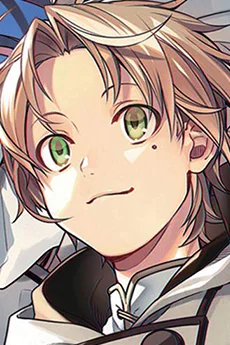
The anime is gorgeous. Evan Call’s score alone justifies watching it. But the light novels by Akumi Agitogi do something the anime can’t replicate: they put you inside Miyo’s head. And for a story built entirely on one woman’s psychological recovery from years of abuse, that internal access changes everything.
I watched Season 1 first, then read all the available novels, then watched Season 2. Here’s what the adaptation gets right, what it loses, and why both versions matter.
More about My Happy Marriage
- Is My Happy Marriage Light Novel Finished?
- My Happy Marriage Light Novel Reading Order
- Light Novels Like My Happy Marriage
The Source Material
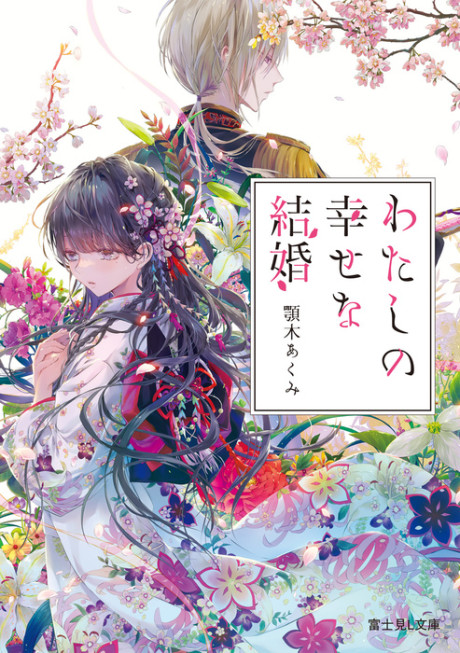
Agitogi started My Happy Marriage as a web novel on Shōsetsuka ni Narō. The light novel version launched in January 2019 under Kadokawa’s Fujimi L Bunko imprint. Yen Press publishes the English translation. Ten volumes are out in Japan as of March 2026, with the English release a few volumes behind. There’s also a manga adaptation (art by Rito Kohsaka, serialized in Gangan Online) and a live-action film that earned ¥2.8 billion at the Japanese box office in 2023.
The franchise has sold over 9 million copies across all formats. That number was already huge before the anime aired. The anime turned it into a global phenomenon.
What the Story Is Actually About
Miyo Saimori is the eldest daughter of a noble family known for their Spirit-Sight abilities. Her mother Sumi died when she was young. Her father Shinichi remarried his mistress, and from that point Miyo was treated as a servant in her own home. Stepmother Kanoko took her room, her possessions, her status. Half-sister Kaya took everything else, including Miyo’s childhood friend Kouji. In a society where supernatural Gifts determine your worth, Miyo appeared to have none. She was worthless.
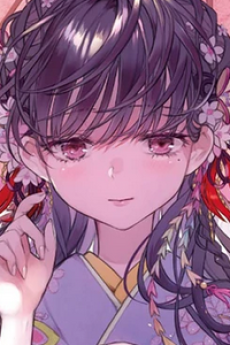
Then she’s arranged to marry Kiyoka Kudou, a military commander whose reputation is so cold that every previous fiancée fled within three days. The Saimori family sends Miyo as a throwaway. They expect her to fail and come crawling back humiliated. Instead, Kiyoka turns out to be fair and quietly kind. The “cold commander” reputation was just distance, not cruelty. And Miyo, for the first time in her life, finds someone who treats her like a person.

That’s the hook. But the story gets considerably more complex. Miyo isn’t actually Giftless. She possesses Dream-Sight, the rarest ability in the setting, inherited from her mother’s Usuba bloodline. Her dying mother sealed it to protect Miyo from being exploited by political factions who would use her as a weapon. The series gradually unfolds this revelation across multiple volumes while Miyo learns to stop flinching at kindness and start fighting for the life she’s building with Kiyoka.
How the Anime Covers the Novels
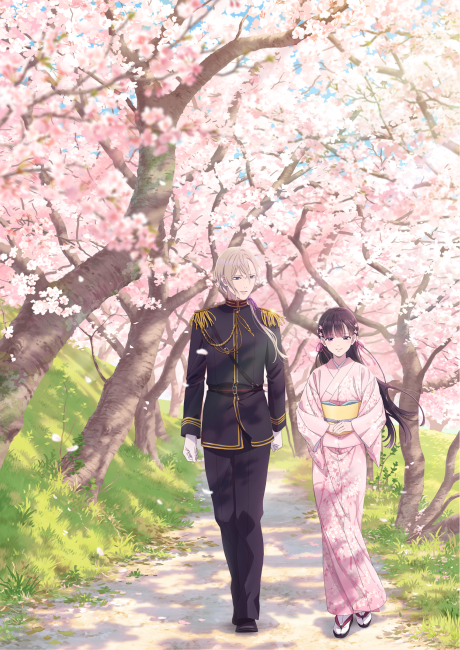
Season 1 (12 episodes + an OVA, Summer 2023) covers Volumes 1 and 2. Two books across thirteen episodes. That’s a comfortable pace. The anime has time to breathe. Emotional beats land. Nothing feels rushed.
Season 2 (13 episodes, Winter 2025) covers Volumes 3 through 6. Four books across thirteen episodes. That’s a problem. The pacing shift is obvious. Character beats get compressed. Political maneuvering gets trimmed. The Gifted Communion arc (the main conflict of Volumes 3-6) moves so fast that some emotional payoffs feel unearned on screen.
A three-episode special has been announced for 2026, expected to cover Volume 7 (the wedding arc). Volumes 8-10 remain unadapted.
What the Light Novel Does Better
Miyo’s Inner World
This is the big one. The novels are written in third-person limited, centered almost entirely on Miyo’s perspective. You hear every anxious thought, every flinch of self-doubt, every moment where she catches herself apologizing for existing and has to consciously stop. The anime shows Miyo being quiet and withdrawn. The novel tells you exactly why she’s quiet. What she’s afraid of in this specific moment. How years of emotional abuse shaped the way she thinks.
The difference is sharpest in the early chapters. Anime-Miyo accepts Kiyoka’s kindness with visible surprise. Novel-Miyo accepts his kindness while internally calculating whether it’s a trap. Whether she’s allowed to eat the food he’s offering. Whether sitting in a real chair instead of on the floor will get her punished later. That layer of constant threat assessment is Agitogi’s strongest writing. You can’t animate it without constant narration, and the anime wisely doesn’t try.
But what’s wise for the adaptation is a loss for the story. One reader on Reddit put it well: “The anime is almost what I would call a summary of the books. A lot of inner monologue and perspectives that are in the books are not shown in the anime.” That’s exactly right. The anime summarizes. The novels immerse.
Kiyoka’s Warmth
The anime plays Kiyoka as stoic. Handsome, protective, serious. The novels show a different side. He chuckles around Miyo. He loosens up visibly when they’re alone. His internal thoughts (available in bonus chapters at the end of each volume) reveal how quickly he recognized what the Saimori family had done to her and how carefully he’s calibrating his behavior to avoid triggering her trauma responses.
That calibration is invisible in the anime. On screen, Kiyoka is simply nice to Miyo. In the text, he’s specifically nice to Miyo in ways that account for her damage. He asks permission before touching her. He gives her choices instead of instructions. He never raises his voice in her presence. These details exist in the anime visually, but without the narration explaining why he’s doing it, the full weight of his thoughtfulness gets lost.
The Romance’s Pacing
Some anime viewers found Kiyoka’s feelings developed too quickly. “He falls too fast and too hard” was a common criticism from people who only watched the show. In the novels, his feelings develop over weeks of daily observation. He watches Miyo refuse to eat unless told she can. He sees her sleeping in the corner of her room because she’s not used to having a bed. Each small observation builds his understanding of what she’s been through, and his emotional response shifts. Pity first, then protectiveness, then something closer to genuine attraction.
The anime compresses this timeline because it has to. Twelve episodes for two volumes is reasonable, but even at that pace, the passage-of-time cues that make the romance feel natural in prose get flattened into what looks like a few days on screen. By Season 2, where four volumes become thirteen episodes, the compression is worse. Relationship milestones that had pages of buildup in the text happen between scene cuts in the anime.
The Political Worldbuilding
The supernatural Gift system and the political factions around it are more developed in the novels. The Emperor’s role as the hidden villain of the early arc, the Usuba family’s history with Dream-Sight, the Gifted Communion’s ideology. Agitogi gives these threads room to breathe across multiple volumes. Season 2 of the anime handles the Gifted Communion arc competently but quickly. You get the plot points without the atmospheric buildup.
Naoshi Usui, the main antagonist of the Gifted Communion arc, is more menacing in the novels. His backstory (childhood friend of Miyo’s mother Sumi, obsessed with her, his opinokinesis ability letting him mentally manipulate anyone he touches) gets more page time. His confrontations with Miyo carry more weight because the text establishes exactly how dangerous his particular Gift is and how personally he takes Miyo’s resemblance to her mother.
What the Anime Does Better
The Music
Evan Call scored this series. The same composer who did Violet Evergarden and Vinland Saga. His work on My Happy Marriage won the Tokyo Anime Award Festival 2025 Best Music prize, and it deserved it. The score turns quiet domestic scenes into something that aches. When Miyo cooks her first meal for Kiyoka, or when she finally lets herself cry in front of someone, the music carries an emotional weight that prose can only approximate.
This is the single biggest argument for the anime. Call’s compositions add a dimension the novels genuinely cannot provide. You can reread a paragraph. You can’t unhear a melody that made you feel something the first time.
The Taishō Aesthetic
Kinema Citrus went hard on the visual design. The Taishō-era architecture, the kimono patterns, the seasonal lighting changes (cherry blossoms in spring, snow in winter), the way firelight plays across wooden interiors during evening scenes. The setting feels lived-in. Agitogi describes these details in the text, but seeing them animated with this level of care is a different experience entirely.

The Action
Kiyoka commands the Special Anti-Grotesquerie Unit. He fights demons with electrokinesis and pyrokinesis. Three elements total, which is nearly unheard of in-universe. These combat sequences are functional in the novels but spectacular in animation. The dream-world sequences where Miyo uses her Dream-Sight to rescue Kiyoka also benefit enormously from visual treatment. Agitogi’s prose handles action adequately. Kinema Citrus makes it beautiful.
Season-by-Season Breakdown
Season 1 (Volumes 1-2): The Strong Start
Volume 1 establishes everything: Miyo’s abuse, the arranged marriage, Kiyoka’s hidden kindness. Yurie’s warmth as the household servant grounds the domestic scenes. The first arc’s villain (Minoru Tatsuishi, who kidnaps Miyo to steal her Usuba bloodline for his family). The anime adapts this faithfully. Very little is cut. The pacing feels natural because two volumes across twelve episodes gives every scene room.

Volume 2 introduces Hazuki (Kiyoka’s cheerful older sister) and reveals Miyo’s Usuba heritage. It climaxes with Miyo using Dream-Sight for the first time to save Kiyoka from a Grotesquerie attack. The Emperor is identified as the power behind the demon release. This volume is where the supernatural elements shift from background detail to central plot driver.
The anime handles both volumes well. If you only watch Season 1, you’re getting a faithful, emotionally satisfying adaptation. The losses are in texture, not substance.
Season 2 (Volumes 3-6): The Compression
This is where the adaptation strains. Volume 3 focuses on Miyo meeting Kiyoka’s parents. His father Tadakiyo is accepting. His mother Fuyu is hostile and borderline abusive. Some readers found this arc frustrating even in the novel because it rehashes the abusive authority figure dynamic too soon after Miyo escaped her first abusive household. In the anime, the compression actually helps here. Fuyu’s arc moves faster, which makes her eventual acceptance feel less drawn out.
Volume 4 introduces Naoshi Usui and the Gifted Communion threat. Kaoruko Jinnouchi appears as Miyo’s bodyguard (and Kiyoka’s ex-fiancée, which creates exactly the kind of tension you’d expect). This is a setup volume in the novel. It reads like one in the anime too, which is more of a problem on screen where viewers expect each episode to push the plot forward.
Volumes 5-6 are the payoff. The Gifted Communion’s assault on the Imperial Palace, Miyo’s full Dream-Sight awakening, Arata Usuba’s ambiguous role as both protector and threat, Kiyoka’s capture and Miyo’s rescue mission. The anime rushes through this. The community consensus mirrors what I felt: “They just squeezed too many light novels into too short episodes.” The emotional beats land, but they’d land harder with more breathing room.
Season 2 ends with Usui’s defeat and Kiyoka’s retirement from the military. He proposes to Miyo. The wedding itself hasn’t happened yet in the anime. That’s Volume 7, and a three-episode special is coming for it in 2026.
The Supporting Cast
The novels give more depth to characters who function as plot devices in the anime. Kouji Tatsuishi, Miyo’s childhood friend, has internal chapters where his guilt over abandoning her to marry Kaya is explored. In the anime, he’s just a sad boy in a couple of flashbacks. Arata Usuba’s motivations (protect the Usuba family’s interests while genuinely caring about Miyo) are more layered in the text. Even Kaya, Miyo’s awful half-sister, gets more shading in the novels.

The bonus chapters at the end of each novel volume are a particular highlight. They shift perspective to Kiyoka, Kouji, or other supporting characters. These don’t exist in the anime. If you want to understand what Kiyoka is thinking during the moments when he’s quietly watching Miyo learn to trust him, the bonus chapters are the only place to find it.
Which Should You Experience First?
Watch Season 1 first. The music and visuals create an emotional entry point that hooks you faster than the prose. Season 1 adapts the first two volumes faithfully enough that you won’t miss much.
Then read the novels from Volume 1. Yes, reread the material Season 1 covered. Miyo’s interiority in the opening chapters is the foundation of everything that follows, and the anime doesn’t capture it. You need to hear her thoughts to fully understand why each small step forward matters. Experiencing the anime first gives you the visual and musical context to enrich your reading. Experiencing the novels gives you the psychological depth the anime can’t provide.
For Season 2’s material (Volumes 3-6), read the novels first. The anime compresses too much. You’ll appreciate the adaptation more if you already know the full version of the Gifted Communion arc.
Skip the manga unless you’ve already consumed both other versions. It adapts the same story but relies heavily on text-box narration that reads awkwardly in comic panel format. The anime handles visual storytelling better. The novels handle internal storytelling better. The manga occupies an uncomfortable middle ground.
Why It Matters
My Happy Marriage isn’t doing anything structurally revolutionary. Cinderella meets Beauty and the Beast in historical Japan with supernatural elements. The premise is well-worn. What makes it work is execution. Agitogi writes trauma recovery with patience and specificity. Miyo doesn’t get better because a man loves her. She gets better because, for the first time, she’s in an environment where getting better is possible. Kiyoka provides safety. Miyo does the work.
That distinction gets diluted in the anime. On screen, the romance looks like “cold man warms up to sad girl.” In the text, it’s “traumatized woman slowly relearns that she’s allowed to want things, while a man who understands what happened to her creates space for that process without rushing it.” Same events. Different emotional architecture.
Read the books. Watch the anime. Do both. Just don’t assume one version tells you the whole story.
Frequently Asked Questions
How many My Happy Marriage light novel volumes are there?
Ten volumes in Japanese as of March 2026. Yen Press publishes the English translation, which is a few volumes behind. The series is ongoing.
What volumes does My Happy Marriage Season 1 cover?
Season 1 (12 episodes + 1 OVA) covers light novel Volumes 1 and 2. The pacing is comfortable, and the adaptation is faithful.
What volumes does My Happy Marriage Season 2 cover?
Season 2 (13 episodes) covers Volumes 3 through 6. Four volumes in one season means the pacing is noticeably faster, with some character development and political worldbuilding trimmed to fit.
Is the My Happy Marriage light novel better than the anime?
They complement each other. The light novel provides Miyo’s internal experience and better-paced romance. The anime provides Evan Call’s soundtrack and stunning visual design. For the romance and character work, the novels are better. For atmosphere and spectacle, the anime is better.
Does Miyo have supernatural powers?
Yes. She possesses Dream-Sight, the rarest supernatural Gift in the setting, inherited from her mother’s Usuba family. Her mother sealed the ability before dying to protect Miyo from being exploited. It manifests in Volume 2 and becomes central to the plot from that point forward.
Do Miyo and Kiyoka get married?
Yes. The wedding happens in Volume 7, which has not yet been adapted in the main anime. A three-episode special covering the wedding arc has been announced for 2026.