

This article contains affiliate links. If you buy through these links, we earn a small commission at no extra cost to you.
Mystery is the genre light novels do better than people expect. The format is built for it. First-person narration that lets you sit inside a detective’s reasoning process. Unreliable narrators that prose handles better than visual media. Internal monologue that can misdirect you for hundreds of pages before pulling the rug.
TL;DR
- Mystery is the genre light novels do better than people expect. First-person narration, unreliable narrators, internal monologue that misdirects for hundreds of pages — the format is built for it.
- Apothecary Diaries leads the list. Medical mystery with palace intrigue. Maomao’s deductive process is the best in LN mystery.
- 11 mystery series covered. From locked-room puzzles (Hyouka) to philosophical horror (Boogiepop) to survival mystery (Rokka).
I came to mystery LNs late. I was deep into isekai when someone on Reddit told me to read Zaregoto. A locked-room murder on a private island, written by the guy who did the Monogatari series. I finished it in two sittings and went looking for more. Turns out the genre is deeper than I realized.
Here are eleven mystery light novels worth your time. Some are pure detective fiction. Some blend mystery with fantasy or horror. All of them reward readers who pay attention.
The Apothecary Diaries
Author: Natsu Hyuuga | Publisher: Square Enix (JP), J-Novel Club (EN) | Volumes: 12+ (ongoing)
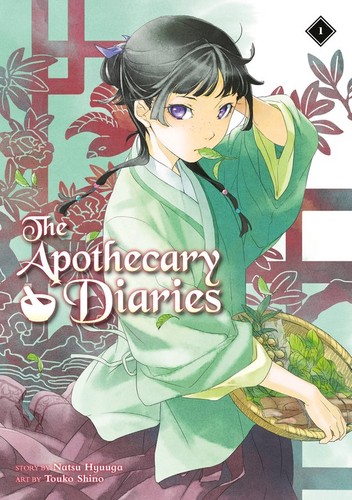
This is the series that made me realize mystery and historical fiction could share a page without either one suffering. Maomao is a pharmacist’s daughter working as a servant in the imperial court. She solves poisoning cases, medical mysteries, political conspiracies. All using knowledge of herbs, toxins, and human behavior.
The mysteries aren’t whodunits in the traditional sense. They’re howdunits and whydunits. Maomao already suspects who’s responsible. The fun is watching her figure out the mechanism and then navigate the court politics of whether to reveal what she knows. The slow-burn dynamic with Jinshi adds a romance layer that never takes over the mystery engine.
The anime adaptation is excellent. But the LN gives you Maomao’s full analytical process, which is where the mystery lives. For a deeper comparison, see our Apothecary Diaries LN vs manga breakdown.
Hyouka
Author: Honobu Yonezawa | Publisher: Kadokawa (JP), Yen Press (EN) | Volumes: 6 (ongoing, slow release)

Hyouka is what happens when you write a mystery series where nobody dies. Oreki Houtarou is a high schooler whose personal motto is “If I don’t have to do it, I won’t.” Then Eru Chitanda walks into the Classics Club with her wide eyes and her catchphrase (“I’m curious!”) and suddenly Oreki is solving the mystery of why the school anthology is named the way it is.
The mysteries are small-scale. A student film with a missing script. A stolen chocolate during a cultural festival. Why the school broadcasts a specific piece of music every year. Yonezawa treats these with the same structural rigor that other authors give to murder cases. The deductions are legitimate. The clue-planting is fair.
What makes Hyouka special is Oreki’s voice. He narrates like someone who resents being smart enough to notice things. Every deduction comes with an internal argument about whether it was worth the effort. KyoAni’s anime adaptation is gorgeous, but Oreki’s internal monologue is richer on the page. The anime shows you his conclusions. The LN shows you the reluctant process.
Boogiepop
Author: Kouhei Kadono | Publisher: Dengeki Bunko (JP), Seven Seas (EN) | Volumes: 23+ (ongoing)
Boogiepop is the reason modern light novels exist the way they do. Published in 1998, it basically invented the template. And it’s a mystery series at heart, even though it looks like urban fantasy on the surface.
The structure is the mystery. Each Boogiepop novel tells its story from multiple perspectives, out of chronological order. You get fragments from different characters who each witnessed part of an event. Your job as the reader is to assemble the timeline and figure out what actually happened. Boogiepop, the entity who appears when the world is in danger, is less a protagonist and more a force that the other characters orbit around.
“Boogiepop and Others” (Volume 1) is the best entry point I can recommend for anyone who wants to see what LN mystery looks like when the format itself is the puzzle. Don’t start with the anime. The 2019 adaptation assumed you’d read the books and didn’t bother orienting new viewers.
Gosick
Author: Kazuki Sakuraba | Publisher: Fujimi Shobo (JP), Tokyopop/Yen Press (EN) | Volumes: 10+ (main + sequel series)

Set in a fictional European country in the 1920s, Gosick follows Kazuya Kujo, a Japanese exchange student, and Victorique de Blois, a brilliant girl who lives in the school library and solves mysteries by reconstructing “fragments of chaos” into a coherent narrative.
Victorique is the draw. She’s a gothic lolita Sherlock Holmes with a tragic backstory and a sweet tooth. Her deductive method is theatrical. She listens to the facts, announces she’s bored, and then reconstructs events in a dramatic monologue. It’s fun every single time.
The mystery quality varies across volumes. Some cases are genuinely clever. Others rely on Victorique being smarter than the plot requires. But the historical setting and the growing relationship between Kazuya and Victorique carry the series even when individual mysteries don’t fully land. The anime covers the first arc well if you want a preview before committing to the novels.
The Decapitation Cycle (Zaregoto Series)
Author: NisiOisiN | Publisher: Kodansha (JP), Vertical/Del Rey (EN) | Volumes: 9
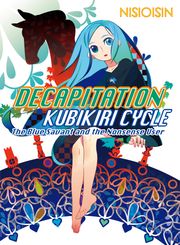
This is the book that got me into mystery LNs. NisiOisiN (yes, the Monogatari guy) wrote a locked-room mystery on a private island where a genius inventor invites seven brilliant specialists. Someone starts dying. The narrator, a self-described “non-specialist,” has to figure out who.
The first volume is a legitimate fair-play mystery. The clues are there. The solution is satisfying. But NisiOisiN being NisiOisiN, the narrator is deeply unreliable, the dialogue is full of wordplay and philosophical tangents, and the tone shifts between genuine tension and absurdist comedy without warning.
The later volumes move away from traditional mystery into more experimental territory. Volume 1 stands alone as a complete locked-room puzzle. If you like it, the rest of the series rewards patience. If you want pure mystery, Volume 1 is enough.
Another
Author: Yukito Ayatsuji | Publisher: Kadokawa (JP), Yen Press (EN) | Volumes: 1 (standalone, plus sequel)

Kouichi Sakakibara transfers to Yomiyama North Middle School and discovers his class carries a curse: every year, students and their family members die under mysterious circumstances. There’s an “extra” person in the class who shouldn’t be there. Nobody can figure out who.
Another is horror-mystery. The atmosphere is suffocating. Ayatsuji builds dread through mundane classroom scenes where you know something is wrong but can’t identify what. The mystery of who the “extra” person is drives the plot, but the real tension comes from the rules of the curse and how the class tries to prevent deaths through increasingly desperate measures.
It’s one volume. You can read it in a day. The anime adaptation is solid but leans harder into the horror-gore angle. The novel is more psychological. If you want a quick, self-contained mystery with genuine creep factor, this is the pick.
In/Spectre (Kyokou Suiri)
Author: Kyo Shirodaira | Publisher: Kodansha (JP), Kodansha USA (EN) | Volumes: 19 (ongoing)

In/Spectre flips the detective formula. Kotoko Iwanaga, the “Goddess of Wisdom” to supernatural beings, doesn’t solve mysteries. She fabricates convincing explanations. When a supernatural incident happens, Kotoko constructs a plausible mundane explanation to satisfy the public, even if the truth involves ghosts and yokai.
The first arc, about a ghost called Steel Lady Nanase, is the hook. Kotoko knows the truth. The mystery isn’t what happened. It’s whether she can construct a false narrative convincing enough to dissolve the ghost’s power, which grows stronger the more people believe in it. She’s building logic puzzles in reverse.
It’s a weird series. The romance subplot between Kotoko and Kuro is funny. The mysteries are more about rhetoric than deduction. If you’ve read enough traditional mystery and want something that plays with the genre’s assumptions, In/Spectre is that.
Rokka: Braves of the Six Flowers
Author: Ishio Yamagata | Publisher: Shueisha (JP), Yen Press (EN) | Volumes: 6
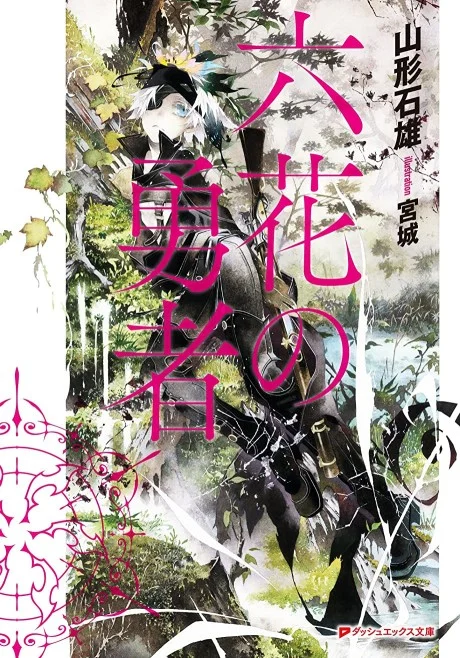
Fantasy mystery. Six heroes are chosen to fight the Demon God. Seven people show up at the meeting point. One of them is an impostor. Locked-room mystery, but the room is a magical barrier covering an entire region.
Volume 1 is one of the tightest mystery plots I’ve read in any LN. Adlet Mayer, the self-proclaimed “Strongest Man in the World,” has to figure out which of the seven is the fake while everyone suspects him. The clue structure is fair-play. You can solve it before Adlet does if you’re paying attention.
The series continues the “who is the seventh” concept across subsequent volumes with new twists. It’s unfortunately on hiatus with no clear return date. But Volume 1 works as a standalone mystery with a satisfying resolution. Read it for that alone.
Beautiful Bones: Sakurako’s Investigation
Author: Shiori Ota | Publisher: Kadokawa (JP), Seven Seas (EN) | Volumes: 17 (complete)

Sakurako Kujo is an osteologist (bone specialist) who solves crimes by examining skeletal remains. Shotaro Tatewaki, a high school student, gets dragged into her investigations. Together they stumble onto cold cases, suspicious deaths, archaeological puzzles.
The appeal is Sakurako herself. She’s socially disconnected, intensely focused on bones to the point of obsession, and casually brilliant in a way that makes the people around her uncomfortable. The forensic detail is specific enough to feel researched without drowning the narrative in jargon.
Seventeen volumes means there’s real plot development underneath the case-of-the-week format. An overarching antagonist emerges. Sakurako’s backstory gets layered in. It’s a slower burn than most mystery LNs but the payoff is there if you stick with it. The anime covered the early volumes well but was cancelled before the good stuff.
The Perfect Insider (Subete ga F ni Naru)
Author: Hiroshi Mori | Publisher: Kodansha (JP), Del Rey (EN) | Volumes: 1 (standalone)

Dr. Shiki Magata is a genius programmer who killed her parents at age fourteen and has lived in a sealed research facility for fifteen years. When visitors arrive, a murder occurs inside the facility’s locked rooms. The only computer system that could have opened the doors is Dr. Magata’s.
Mori writes like a computer scientist, which he is. The prose is precise. The mystery hinges on technical details about how the facility’s systems work. The solution is elegant in the mathematical sense. If you’ve read any of Mori’s S&M series (this is book one), you know his style: intellectual puzzles wrapped in philosophical dialogue.
It’s cerebral. The characters discuss mathematics, consciousness, and the nature of freedom while trying to figure out how someone committed murder in a sealed room. Not for everyone. But if you want a mystery that respects your intelligence, Mori delivers.
Danganronpa Zero
Author: Kazutaka Kodaka | Publisher: Seikaisha (JP), not officially translated (EN) | Volumes: 2

A prequel to the Danganronpa game series. Set before the Killing Game, following Ryoko Otonashi, a girl with severe memory loss, as she investigates the origins of “The Tragedy.” Junko Enoshima lurks in the background.
If you’ve played the games, this fills in critical lore gaps. If you haven’t, it still works as a standalone amnesiac-detective story. Ryoko can’t trust her own memories. Her diary contradicts what people tell her. The mystery of what actually happened at Hope’s Peak Academy unfolds through the gaps between what she forgets.
Not officially translated into English, which limits the audience. Fan translations exist and are decent. Two volumes, quick read. It’s the most accessible entry into Danganronpa’s extended fiction.
FAQ
What are the best mystery light novels?
The Apothecary Diaries, Hyouka, and the Zaregoto series (starting with The Decapitation Cycle) are strong starting points. For horror-mystery, Another. For fantasy-mystery, Rokka: Braves of the Six Flowers.
Are there detective light novels?
Yes. Hyouka, Gosick, and Beautiful Bones all feature detective-style protagonists solving cases. The Apothecary Diaries is a medical detective series set in an imperial court. In/Spectre features a supernatural detective who fabricates explanations rather than uncovering truth.
What mystery light novels have anime adaptations?
Most of the major ones: The Apothecary Diaries, Hyouka, Boogiepop, Gosick, Another, In/Spectre, Rokka, Beautiful Bones, The Perfect Insider, and Danganronpa all have anime adaptations of varying quality.
Is Hyouka a mystery series?
Yes. Despite its slice-of-life reputation, Hyouka is structured as a mystery series. The mysteries are everyday puzzles rather than crimes, but the deductive reasoning and clue structure are genuine fair-play mystery writing.
What is the best mystery light novel for beginners?
Another is one volume and reads in a day. Hyouka is gentle and approachable. The Apothecary Diaries is ongoing but each volume contains self-contained mysteries with an overarching plot. Any of these three work as entry points.