

I started with SAO. Most of us did. It was 2012, the anime was everywhere, and it was the series that got a generation of people into light novels in the first place. I’m not going to pretend I didn’t love it.
This article contains affiliate links. If you buy through these links, we earn a small commission at no extra cost to you.
TL;DR
- The anime is a highlights reel. The LN is the full game. Kawahara’s writing relies on being inside Kirito’s head — the adaptation can’t replicate that. The result is that anime-only viewers know the plot but not the character.
- Alicization is where the gap matters most. The Underworld arc is genuinely great in the LN — complex, philosophical, and emotionally brutal. The anime compresses it into a fraction of its actual weight.
- What you lose: Kirito’s extended internal reasoning, the mechanical detail that makes the game systems feel real, and the emotional context that turns “big fight scene” into “this matters.”
- I started with SAO. Most of us did. It’s the series that got a generation into light novels. The LN is the version that holds up.
But the anime and the light novel are doing different things, and the gap between them is bigger than most people realize. The anime is a highlights reel. The LN is the full game. And in SAO’s case specifically, the difference matters more than usual because Kawahara’s writing relies on interiority, on being inside Kirito’s head, in a way that visual adaptation fundamentally can’t replicate.
Here’s what you’re actually missing.
TL;DR
| Arc | LN Volumes | What Anime Cuts | Verdict |
|---|---|---|---|
| Aincrad | 1–2 | 74 of 100 floors, guild politics, floor-clearing texture | Anime = greatest hits only |
| Fairy Dance | 3–4 | Asuna’s POV chapters, Sugou depth | Anime serviceable, LN better |
| Phantom Bullet | 5–6 | Sinon + Kirito PTSD interiority | LN significantly better |
| Mother’s Rosario | 7 | Very little, faithful adaptation | Watch or read, both work |
| Alicization | 9–18 | Alice characterization, Eugeo depth, War of Underworld pacing | LN is genuinely great here |
| Progressive | 1–9 (ongoing) | N/A, separate rewrite, not adapted | Read if you want the real Aincrad |
Aincrad — The Floor Problem
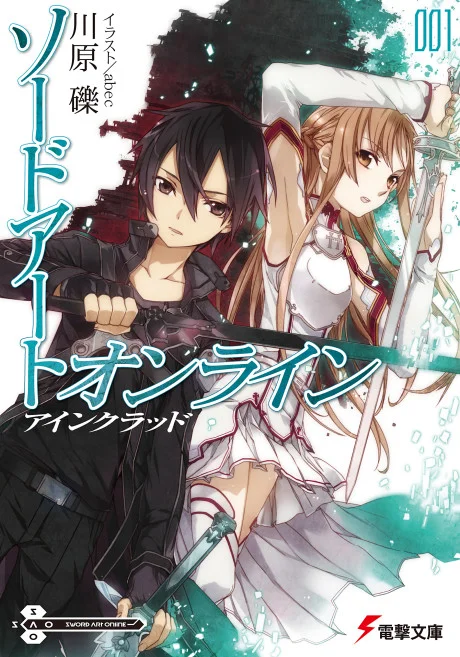
The original Aincrad arc covers two volumes and is adapted in 14 episodes. There are 100 floors in Aincrad. The anime shows you maybe eight of them in any meaningful way. The rest of the two-year game timeline gets compressed into montages and title cards.
What this means in practice: the anime Aincrad feels like a highlight reel. You get Kirito and Asuna falling in love, the Black Cats guild tragedy, Lisbeth’s smithy, Silica’s dragon, the boss fight. What you don’t get is any sense of how the game actually works at ground level, the floor-clearing politics, the guild tensions, the two years of survival that shape how these people think. The LN compresses this too, but at least it has Kirito’s internal narration running through it.
The Black Cats arc in particular, Kirito’s guild that gets wiped out, lands harder in the LN because you’ve been with his guilt for longer before the reveal. The anime version hits the beats but doesn’t have the weight behind it.
If you want the full Aincrad experience, that’s what Progressive is for. Kawahara has been rewriting Aincrad floor by floor since 2012, currently at 9 volumes. It’s a completely separate run of the story, different pacing, deeper Asuna POV, Kirito and Asuna building their relationship from first principles. The two Progressive films (Aria of a Starless Night, Scherzo of Deep Night) adapt the first two volumes and are excellent. But the books go much further.
Fairy Dance — The Most Criticized Arc

Fairy Dance (Vol. 3-4) is the most divisive arc in the series and the anime doesn’t help its case. Asuna is imprisoned for most of it while Kirito saves her, which reads poorly to a lot of people, and the anime leans into this framing without giving Asuna the interiority the LN provides.
In the LN, you spend time in Asuna’s perspective inside Alf heim’s birdcage. She’s not passive, she’s actively trying to escape, she figures out parts of the prison structure, she understands what’s happening to the other SAO survivors. The anime gives her almost none of this. She just waits. That’s a real characterization difference, not a minor cut.
Sugou is also more developed. The anime version of him is a straightforward villain. The LN version has more background, his history with Asuna’s family, his specific psychology, the way he uses legal structures to trap people. He’s still a bad character in the sense of being one-dimensional, but the LN at least explains the one dimension more clearly.
Fairy Dance is the weakest arc in both formats. The LN is a little better about it. Neither is something to defend strenuously.
Phantom Bullet — Where the Interiority Gap Costs Most

Phantom Bullet (Vol. 5-6, Gun Gale Online arc) is the best early SAO arc in the LN and it doesn’t fully land in the anime. The reason: Sinon.
Sinon’s PTSD — the childhood shooting incident, her fear of real guns, her use of GGO as exposure therapy, is the emotional core of the arc. The LN spends real time in her head, building the specific texture of how trauma works on her. You understand why she plays the game, what she gets from being someone terrifying in a virtual space, what it costs her when that identity gets complicated.
The anime covers this but the delivery is rushed. Her backstory gets the standard “flashback episode” treatment. The interiority that makes the arc actually work, the specific way she thinks about fear, the thing she’s trying to prove to herself, doesn’t survive compression.
Kirito’s own PTSD from Aincrad also gets more development here in the LN. His reaction to Death Gun, his complicated relationship with his time as a beater, the LN uses Phantom Bullet to do real character work on him that the anime handles more lightly. Kirito in the anime can read as a blank power fantasy protagonist. The LN version of him during Phantom Bullet is more specifically damaged.
Mother’s Rosario — The One That Works in Both
Mother’s Rosario (Vol. 7) is the exception. The anime adaptation of this arc is one of the best things A-1 Pictures has done with the franchise. Yuuki’s story, her terminal illness, her desire to leave something behind before she dies, the Sleeping Knights guild, is adapted faithfully and the execution is emotionally effective.
The LN version has slightly more time with the ALO guild politics and Yuuki’s backstory, but the anime doesn’t lose the essential things. If you’ve only watched the anime version of Mother’s Rosario and it hit you hard, the LN won’t add dramatically more, it’s already a good adaptation. This arc is the evidence that when the source material is strong enough and the adaptation team cares, the gap between LN and anime can close.
Alicization — The Genuinely Good Part
I know this is a controversial take, but SAO Alicization (Vol. 9-18) is when Kawahara actually became a good novelist. The Underworld setting, Alice and Eugeo as real characters, the systematic exploration of what it means for an AI to develop genuine consciousness. this is not the same writer who made Fairy Dance.
The anime adapts Alicization in two cours (Alicization + War of Underworld), and while it’s a competent adaptation, the LN is where this arc lives. Alice’s internal conflict, her loyalty to the Axiom Church, her growing awareness that something is wrong with the world she was raised in, her specific relationship with Kirito and what he represents to her, takes up real page space in the LN. The anime handles the plot but the character work gets abbreviated.
Eugeo is the bigger loss. He’s the co-protagonist of Alicization through most of the arc, and his development, his relationship with Alice going back to childhood, his reasons for fighting, his arc toward the ending, is more developed in the LN. The anime Eugeo is good. The LN Eugeo is the best character Kawahara has written.
War of Underworld specifically has pacing problems in the anime. The human empire vs dark territory war gets rushed, some of the returning characters feel shoehorned in, and the final confrontation loses context. Reading the LN version of War of Underworld after watching the anime is one of those experiences where you realize how much was cut and why the anime felt slightly off.
Progressive — The Real Aincrad You Haven’t Read
This deserves its own section because it’s not a continuation or a side story, it’s a complete rewrite of the Aincrad arc from the ground up.
Kawahara started Progressive in 2012, shortly after the original series took off, specifically to tell the Aincrad story he didn’t have time for in Vol. 1-2. Each volume of Progressive covers one or two floors in detail. Floor 1 alone gets a full novel. The relationships between Kirito and Asuna build from first interaction through genuine partnership over the course of floors, not in montage.
Progressive Asuna is a meaningfully different character from anime Asuna. She starts as someone who’s trying to survive and doesn’t particularly want a partner; her arc toward actually trusting Kirito is earned over hundreds of pages of shared danger. The original LN Aincrad compressed this badly. Progressive fixes it properly.
Currently at 9 volumes in Japanese, ongoing. The two Progressive films adapt Vol. 1 and the beginning of Vol. 2. Good entry point if you want to see what the project is before committing to the books, but the books cover far more ground than either film.
The Honest Verdict on SAO
SAO as a franchise is better in print than on screen, but with specific caveats. The original Aincrad arc is weak in both formats, the anime rushes it and the LN compresses it. Fairy Dance is bad in both. Mother’s Rosario is good in both.
The LN pulls ahead clearly in Phantom Bullet (Sinon interiority), Alicization (Eugeo, Alice depth, War of Underworld pacing), and, if you count it, Progressive as the definitive Aincrad story.
If you watched the anime and found it shallow, you were right about the early arcs and wrong about Alicization. If you bounced off the first few LN volumes, jump to Vol. 5 (Phantom Bullet) or Vol. 9 (Alicization), those are different books than Vol. 1.
And if you’ve never touched Progressive: that’s the version of SAO that earns the franchise’s reputation. Start there if you’re skeptical.
Where to Start in the Light Novels
- Watched the anime, want more of the same story: Vol. 5 (Phantom Bullet) or Vol. 9 (Alicization). Both pick up from anime endpoints and improve on what you’ve seen.
- Want the real Aincrad: SAO Progressive Vol. 1. Read it alongside or instead of the original Vol. 1-2.
- Never watched the anime, starting fresh: Either Progressive Vol. 1 or the original Vol. 1. Progressive is the better book but jumps into the game without much setup — Vol. 1 has the premise introduction.
- Only want the best arc: Vol. 9-18 (Alicization). You’ll miss some context but it reads as a fairly standalone story.
Frequently Asked Questions
Is the SAO light novel better than the anime?
For most arcs, yes. Phantom Bullet and Alicization are substantially better in the LN — Sinon’s PTSD interiority, Eugeo’s full characterization, and the War of Underworld pacing all benefit from prose. Mother’s Rosario is the exception: the anime adaptation is faithful enough that both formats work. The early Aincrad arc is weak in both, the LN compresses 100 floors into two volumes and the anime rushes it further.
What does the SAO anime leave out?
The anime cuts most of Aincrad’s floor-clearing detail (74 of 100 floors get no screen time), Asuna’s active escape attempts during Fairy Dance, Sinon’s full PTSD backstory in Phantom Bullet, Eugeo’s characterization depth throughout Alicization, and much of the War of Underworld’s political context. The anime also doesn’t adapt Progressive at all, that’s a separate 9-volume rewrite of Aincrad that’s only been partially covered by two films.
Should I read SAO Progressive or the original light novels?
Both, ideally. Progressive is a complete floor-by-floor rewrite of Aincrad and is the definitive version of that arc, better Asuna, better pacing, more time in the game world. The original Vol. 1-2 cover Aincrad in compressed form, then Vol. 3 onward continues the story Progressive doesn’t cover yet (Fairy Dance, Phantom Bullet, Alicization). For new readers who want to start with the best version of SAO: Progressive Vol. 1, then original Vol. 3 onward once Progressive runs out.
How many SAO light novels are there?
The main series has 28 volumes in Japanese (Yen Press English release is ongoing). SAO Progressive is at 9 volumes in Japanese and still publishing. There are also several spinoffs including GGO Alternative and Clover’s Regret. The main series is not yet complete — Unital Ring is the current arc in the main series.
Is SAO Alicization better in the light novel?
Yes, and it’s not close for Eugeo specifically. His characterization is the deepest writing in the series, his relationship with Alice from childhood, his reasons for fighting, his arc through to the ending, and the anime abbreviates most of it. Alice’s internal conflict and the War of Underworld’s political structure also read better in the LN. The anime is a competent adaptation but loses the character work that makes Alicization the best arc in the franchise.