

This article contains affiliate links. If you buy through these links, we earn a small commission at no extra cost to you.
Eleven volumes. One direction. Forward. No spinoffs, no side volumes, no “.5” entries hiding between main releases. I Made Friends with the Second Prettiest Girl in My Class has one of the simplest reading orders in light novel fiction right now. Volume 1 through 11, in order. Done.
The only complication is the anime. Season 1 is currently airing (April through June 2026), and if you watched it before picking up the light novel, you’ll want to know where to start reading. There’s also a manga adaptation running in parallel. This guide covers all of it, including why the light novel is the version worth your time even if you’ve already experienced the story in another format.
TL;DR
Read volumes 1 through 11 in order. No branching paths. If you watched the anime (Season 1, April-June 2026), start at volume 4. The manga follows the same story and adds nothing unique. The light novel is the definitive version because Maki’s internal monologue is the core experience, and prose handles that better than any other format.
The Complete Light Novel Reading Order
Every volume of I Made Friends with the Second Prettiest Girl in My Class, in publication order. The series follows Maki Maehara, a high school student who’s never had a friend, and Umi Asanagi, the girl who changes that.
Volume 1 — Maki and Umi meet outside of school. The friendship starts in a space free from classroom dynamics, where neither of them has to perform a social role, maintain an image, or worry about who’s watching them interact from across the hallway. This volume establishes Maki’s isolation not as dramatic backstory but as a quiet reality he’s lived with for years. You understand why making a single friend feels monumental for him. One person. That’s all he needs. And even that feels impossibly ambitious for someone who’s spent years perfecting the art of being invisible in a room full of people. Covered in the anime’s first three to four episodes, though the adaptation naturally compresses the internal monologue that makes Maki’s experience of this friendship feel like discovering oxygen after years of holding his breath without realizing he was doing it.
Volume 2 — The friendship moves into school territory. Maki and Umi navigating the gap between their private dynamic and their public personas becomes the central tension. Classmates notice. Questions start. The light novel handles this transition with more nuance than the anime has time for, particularly Maki’s internal panic about whether their friendship surviving outside of school means it can survive inside it.
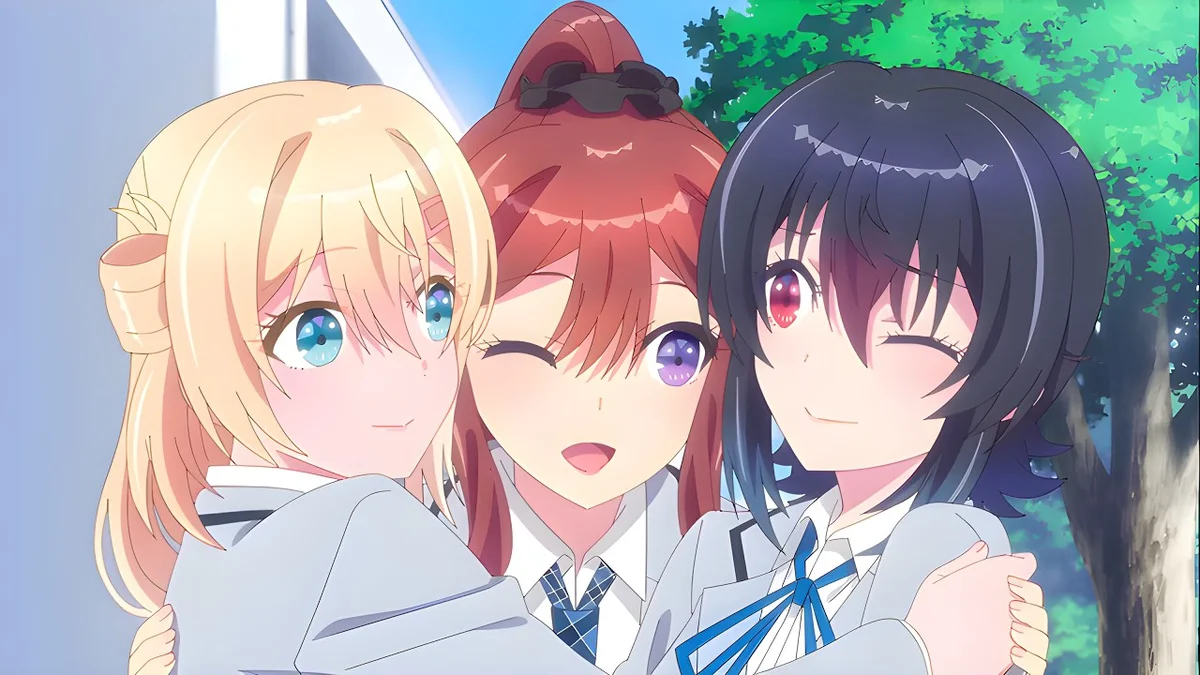
Volume 3 — The supporting cast expands. Yuu Amami (the “prettiest girl” referenced in the title) becomes a presence in the story. Other classmates develop beyond background roles. The series starts building the social ecosystem that pressures Maki and Umi’s relationship from the outside. This is likely where the anime’s first season wraps up.
Volume 4 — First unadapted content if you’re coming from the anime. The consequences of volumes 1-3 play out in new ways. Maki’s social world has expanded beyond just Umi, and navigating multiple relationships with zero experience is exactly as messy as it sounds. The light novel excels here because Maki’s overthinking of every new social situation is simultaneously funny and painfully relatable.
Volume 5 — The Maki-Umi dynamic faces its first real test. External pressures create distance that neither of them knows how to handle because neither has enough relationship experience to recognize what’s happening. The series proves it can do emotional weight without melodrama. No love triangles thrown in for drama. No sudden rival character. Just realistic teenage uncertainty, grounded and specific.
Volume 6 — Character development for the supporting cast. Relationships around Maki and Umi start developing their own gravity. The story becomes an ensemble piece without losing its center. If volume 5 tested the main relationship, volume 6 tests whether the world around it can sustain interest. It can.
Volumes 7-9 — The series hits its stride. Maki’s growth from someone who can’t initiate a conversation to someone who navigates a social circle (awkwardly, imperfectly, but genuinely) is gradual enough to feel earned. The romantic tension between Maki and Umi shifts from subtext to something both characters are aware of but neither is ready to address directly. The pacing is deliberate. Each volume moves the needle without forcing a resolution.
Volumes 10-11 — The most recent volumes as of mid-2026. The story is clearly building toward something. Plot threads from the earliest volumes resurface. The question of what Maki and Umi are to each other stops being avoidable. Ongoing. No announced ending. But the pacing says we’re getting close to something that matters.
English Publication Timeline
Licensed in English. Volumes are releasing on a standard schedule. The anime’s breakout popularity is almost certainly speeding things up on the publisher’s end.
Digital editions hit BookWalker and Kindle alongside physical copies. The translation quality is strong. It captures Maki’s voice well, which matters more here than in most LNs because his internal monologue IS the series. A flat translation would kill it. This one doesn’t. The awkward humor comes through. The overthinking reads naturally. The moments where Maki says exactly the wrong thing land the way they should — cringe you feel in your chest, not cringe that makes you put the book down.
Where Should Anime Viewers Start?
Start at volume 4. Season 1 (April-June 2026) covers volumes 1-3 with enough fidelity that you won’t miss critical plot points jumping ahead.
That said, volumes 1-3 are worth reading eventually. The anime captures the story events and the visual charm of the characters. What it can’t fully replicate is Maki’s internal monologue. His overthinking is the engine of the series. Every social interaction that looks simple from the outside is a multi-layered crisis in his head. Will she think I’m being weird? Was that pause too long? If I text back immediately does that look desperate? If I wait does that look disinterested? The anime shows a boy who’s awkward. The novels show you exactly what awkward feels like from the inside. It’s funnier, more specific, and more emotionally honest than any adaptation can fully capture.

Fair warning though. Once you start volume 4, you won’t stop at volume 4. These books move. The chapters are short. The cliffhangers are gentle but effective. “Just one more chapter” at 11 PM becomes “wait, it’s 2 AM” with alarming regularity. Romcoms with good internal monologue are dangerous that way.
What About the Manga?
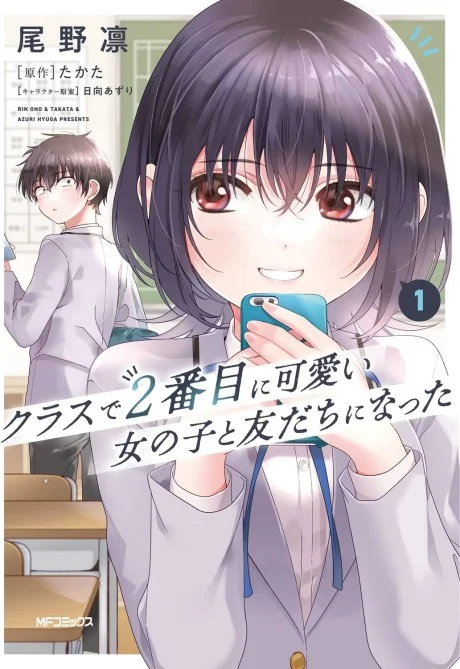
The manga adaptation is ongoing and follows the light novel’s storyline. It’s behind the LN in terms of progress. There’s no manga-exclusive content that affects the main story.
For this specific series, the manga is probably the weakest format. The art is fine, but the series’ strength is Maki’s internal processing, which manga handles through thought bubbles that feel less immersive than prose. If you want visuals, the anime does it better. If you want depth, the light novel does it better. The manga sits in an awkward middle ground. Fine. Not great. It’s the third-best way to experience a story that works better in the other two formats.
How Long Does It Take to Catch Up?
Each volume runs about 200-250 pages. At a comfortable reading pace, that’s roughly 3 hours per volume. The full 11-volume run is about 33 hours of reading. Starting at volume 4 after the anime cuts that to about 24 hours.
These are fast. Really fast. The prose is conversational, the chapters are short, and the pacing is fast enough that “just one more chapter” is a real danger. Don’t start volume 4 at midnight expecting to stop. Romcoms with good internal monologue are the literary equivalent of scrolling — you look up and two hours have passed.
Is There a Wrong Way to Read This?
No. The reading order is dead simple. There’s no supplementary material that secretly matters. The only choice is whether to start at volume 1 or volume 4 (after the anime), and both are valid entry points.
The one thing I’d avoid is reading the manga first and assuming the light novel won’t add anything. The manga compresses Maki’s internal world significantly. If you experience the story through manga panels first, you might underestimate how much the light novel adds. Start with either the anime or the LN. The manga is a supplement, not an entry point.
FAQ
Q: Can I start at volume 4 after the anime?
A: Yes. Season 1 covers volumes 1-3 faithfully. Volume 4 picks up right where the finale left off, and the transition from screen to page is seamless.
Q: Are there any side stories or extra volumes?
A: No. The main 11 volumes are the complete published content. No “.5” volumes or supplementary material.
Q: Is the manga worth reading alongside the LN?
A: Optional. It follows the same story with no unique content. The LN handles Maki’s internal monologue better, which is the series’ main selling point.
Q: How far ahead is the LN compared to the anime?
A: About 8 volumes ahead. The anime covers volumes 1-3 of 11 published volumes.
Q: Is this a completed series?
A: No. The LN is ongoing at 11 volumes with no announced ending. But the pacing suggests it’s approaching its later stages.