
This article contains affiliate links. If you buy through these links, we earn a small commission at no extra cost to you.
Seven volumes. One straight line. No spinoffs that secretly matter, no “.5” side stories wedged between main entries, no web novel chapters you need to track down to understand what’s happening. Sentenced to Be a Hero is one of the cleanest reading orders in light novel fiction right now.
That said, there are a few things worth knowing before you start. The series has a web novel, a light novel, and a manga all running at different points in the story. There’s also an anime that covered the first two volumes. Knowing which version to read and where each adaptation stops saves you from doubling back or accidentally spoiling yourself.
TL;DR
Read volumes 1 through 7 in order. That’s the complete reading order. The light novel is the definitive version — skip the web novel. The manga follows the same story but lags behind. If you watched the anime, start at volume 3 (Season 1 covered volumes 1-2 faithfully). Season 2 will likely cover volumes 3-4.
The Complete Light Novel Reading Order
Here’s every volume of Sentenced to Be a Hero (Yuusha-kei ni Shosu) in publication order. Read them in this order. There’s no alternate timeline to follow.
Volume 1 — Xylo Forbartz murdered a goddess. His sentence: lead Penal Hero Unit 9004. This volume sets up the world’s rules. Faeries are monsters. Heroes are criminals. Goddesses are weapons. You meet the core squad and get your first real mission. The anime covered this in episodes 1-6 of Season 1.
Volume 2 — The church arc. Unit 9004’s missions escalate and the political forces behind the penal hero system start showing their hand. The found-family dynamic between Xylo and Teoritta deepens. This is where the series shifts from setup to something with real stakes. Covered in episodes 7-12 of Season 1.
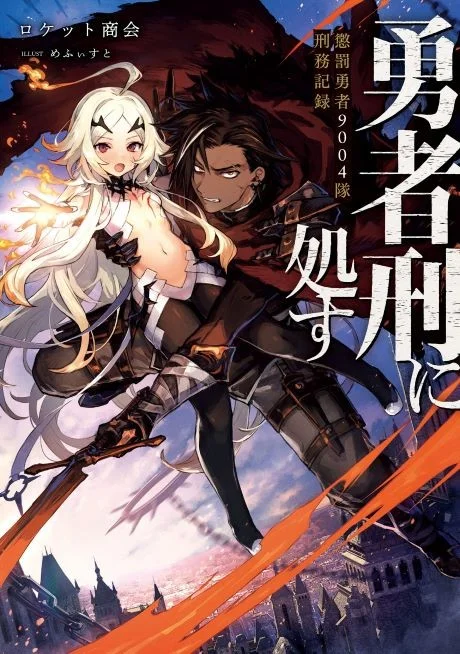
Volume 3 — First unadapted content if you came from the anime. New threats, expanded world-building, and the squad’s dynamics evolve as they take on more dangerous assignments. This is likely where Season 2 will begin.
Volume 4 — Continues the arc from volume 3. The scope of the story expands beyond Unit 9004’s immediate missions. Likely the endpoint for Season 2’s adaptation.
Volume 5 — Fully ahead of any anime adaptation at this point. The story’s larger mysteries start connecting. Xylo’s past with the goddess comes into sharper focus. The institutional forces that created the penal hero system reveal motivations that reframe earlier events. This is the volume where the series stops being episodic missions and becomes something with a longer arc.
Volume 6 — The stakes escalate beyond Unit 9004’s immediate missions. Supporting characters who felt like background players in earlier volumes step into focus with their own motivations and conflicts. The world-building expands into political territory, revealing how the penal hero system connects to larger power structures. Norgalle and the other squad members get moments that justify the fanbase’s attachment to them.
Volume 7 — The most recent volume as of mid-2026. Major plot threads are still in motion. The story is ongoing with no announced ending, and the pacing suggests we’re in the middle act. Expect the series to continue for several more volumes at minimum.
What About the Web Novel?
Skip it. The web novel ran to 153 chapters before going on hiatus, and the light novel revises and expands significantly on that draft. Details change. Scenes are rewritten. Character moments are added. The light novel is the version the author considers definitive, and it’s the version the anime adapted.
If you’ve already read the web novel and want to switch to the light novel, start from volume 1. The changes are substantial enough that skipping ahead based on web novel progress will leave you confused about details that shifted. Character interactions play out differently, motivations are rewritten, and the pacing of revelations changes in ways that matter for the later volumes.
What About the Manga?
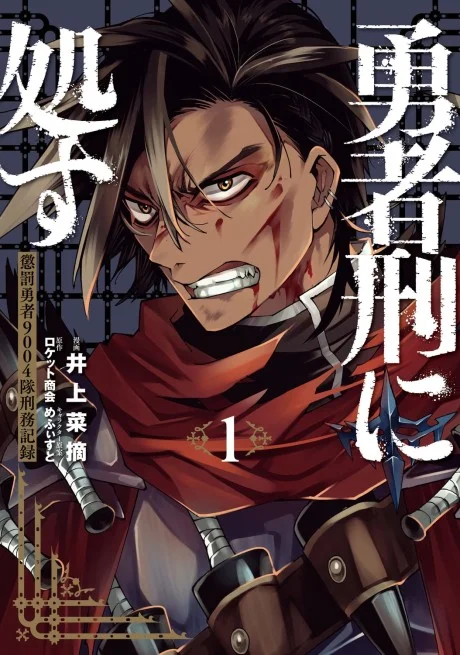
The manga adaptation is ongoing and follows the light novel storyline. It’s a fine way to experience the story visually if you prefer manga to prose, but it’s behind the light novel in terms of story progress. If you’re interested in getting ahead of the anime, the light novel is faster.
The manga does add visual interpretations of the action sequences that complement both the anime and the novels. Some fans read both — novels for the full story, manga for the art. But it’s not required. There’s no manga-only content that affects the main plot. Think of the manga as a companion piece rather than a separate entry in the reading order.
Where Should Anime-Only Viewers Start Reading?
If you watched Season 1 and want to continue in the light novel, start at volume 3. Season 1 adapted volumes 1-2 faithfully enough that you won’t miss critical plot points by skipping ahead.
That said, I’d recommend reading volumes 1-2 eventually. The novels give you Xylo’s internal monologue, which the anime can only partially convey through visual cues. His reasoning during fights, his thought process when dealing with the other unit members, his actual feelings about Teoritta — the novels make all of this explicit. The anime shows you the outcome of his decisions. The novels show you why he made them.
If Season 2 covers volumes 3-4 as expected, you’ll want to start at volume 5 after that. But Season 2 hasn’t aired yet, so volume 3 is your entry point right now.
Is There a Wrong Way to Experience This Series?
The only real mistake is reading the web novel and assuming the light novel tells the same story. The revisions matter. Beyond that, any combination works — anime first then novels, novels first then anime, manga alongside either. The story is linear and self-contained within each volume. No complicated multimedia reading orders. No supplementary material that’s secretly essential.
For a franchise that’s still early in its life, that simplicity is a feature. Start at volume 1 (or volume 3 if you’ve watched the anime), read forward, and stop when you run out of published volumes. That’s the whole reading order. Come back when the next volume drops. With the anime driving new readers to the source material every season, this is a series that rewards being caught up.
English Publication Timeline
Yen Press is releasing the English volumes on a roughly quarterly schedule. If you’re buying physical copies, availability depends on your region, but digital versions through BookWalker and Kindle are available day-and-date with the English release.
The translation quality has been strong. Kakeru Takamine writes with a mix of dark humor and genuine emotional weight, and the English localization captures both registers well. The series’ distinctive terminology — penal heroes, goddess classification systems, faerie threat levels — translates cleanly without losing the world-building specificity that makes the setting feel real.
One thing worth noting: the English release is behind the Japanese publication by several volumes. If you catch up to the English releases and want to continue, you’ll need to either wait or look into fan translations. Given the anime’s popularity, the English release schedule may accelerate — publishers sometimes speed up translations for series with active anime adaptations to capture the momentum.
Reading the Novels After the Anime vs Starting Fresh
Both approaches work, but they give you different experiences. Starting fresh from volume 1 means you get Xylo’s internal monologue from the beginning. The anime does a good job with his characterization through visual storytelling, but the novels add layers of reasoning and self-awareness that the anime physically can’t convey. You understand his choices differently when you’re inside his head.
Starting at volume 3 after the anime means you hit new content faster. The pacing advantage is real — if you watched Season 1 and you’re invested in where the story goes next, jumping to volume 3 gets you there immediately. You can always circle back to volumes 1-2 later to fill in the internal monologue gaps.
My recommendation: if you have the time, start from volume 1. The reread value is high because you’ll notice how much the anime compressed or implied rather than stated directly. If you’re impatient and just want to know what happens next, volume 3 is a clean entry point with no major gaps.
FAQ
Q: Do I need to read the web novel before the light novel?
A: No. The light novel is the definitive version. Skip the web novel entirely.
Q: Can I start at volume 3 after watching the anime?
A: Yes. Season 1 faithfully adapted volumes 1-2. Volume 3 picks up where the anime left off.
Q: Is the manga worth reading alongside the light novel?
A: Optional. It follows the same story with no unique content. Good for the art, but not required.
Q: How many volumes will Season 2 cover?
A: Likely volumes 3-4, matching Season 1’s pace of two volumes per 12-episode season.
Q: Are there any side stories or short stories I should read?
A: No required side content. The main volumes tell the complete story in order.