

This article contains affiliate links. If you buy through these links, we earn a small commission at no extra cost to you.
The Solo Leveling anime is better than its source material’s reputation, better than most adaptations have any right to be, and I’m aware that’s the opposite of how these comparison pieces usually start around here. None of it changes what the novel is for, though it took me a while to figure out what that actually meant. Usually I’m here to tell you the adaptation flattened something. This time the adaptation might be the definitive version of what it adapted — and the catch is hiding in that last word, cause what A-1 adapted isn’t really the novel.
Quick scene-setting for anyone arriving fresh: Solo Leveling started as Chugong’s Korean web novel in 2016, became DUBU’s manhwa in 2018, and became A-1 Pictures’ anime in 2024. Season 1 scored somewhere in the low 8s on MAL with a rating count in the many hundreds of thousands. Season 2 hit 8.5 and cracked the all-time top 200, which for a seasonal action show is rarefied air. I watched both seasons weekly and read the novels after Season 2 wrapped, so this comparison runs in the unusual direction: anime first, prose second. I still came away with things the show never gave me.
TL;DR
- The anime (A-1 Pictures, S1 Winter 2024, S2 Winter 2025 at a top-200 8.5 on MAL) is a spectacular adaptation — but it adapts the manhwa’s visual framing of the story. The novel’s distinct offering is Jinwoo’s internal monologue and the complete ending: the anime has covered roughly 5 of 8 volumes with an undated movie next. Watch the anime for the spectacle. Read the novel to be done, and to meet the Jinwoo who does math instead of posing.
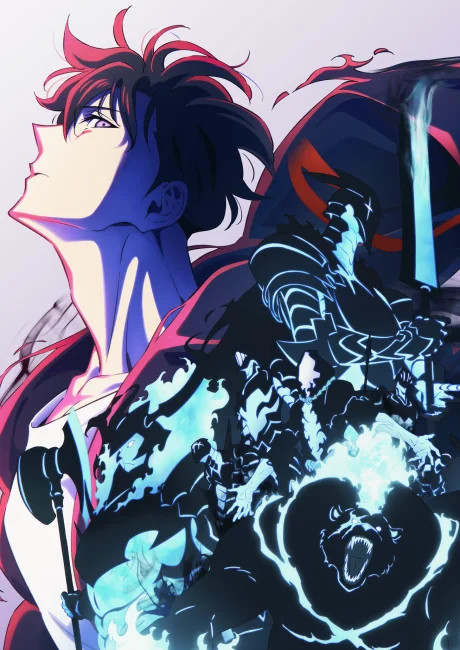
Credit First: The Anime Is the Spectacle Ceiling
I owe this section, because I called this one wrong in public. When the adaptation was announced I wrote in my manhwa comparison that no studio was going to match DUBU’s art, that the panels were the franchise and animation would inevitably be a downgrade. And then A-1 spent two seasons proving me increasingly wrong, and by the Season 2 fight against the ant king I was watching frame-by-frame breakdowns on my lunch break like everyone else. Grade my track record accordingly.
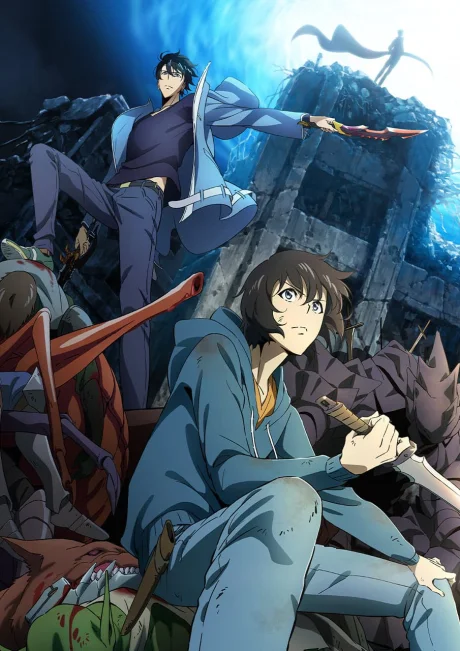
The fights are the obvious flex, but the sound design and score do heavy lifting nobody talks about, and the adaptation choices are consistently smart about pacing — arcs that dragged in weekly webtoon chapters land as tight two-episode punches. Where the show sits in the franchise hierarchy now: if you want Solo Leveling to look and sound as good as it possibly can, the anime is that, full stop. I don’t expect to revise this opinion again.
But It’s Adapting the Manhwa’s Skin
Watch the anime next to both sources and the lineage is obvious — shot compositions lifted from famous panels, character designs following DUBU rather than the novel’s illustrations, iconic manhwa moments recreated beat for beat. That’s the right call commercially, those panels are why the property is huge. But it means the thing the novel uniquely does never made it through the pipeline. The manhwa had already removed it before A-1 arrived.
What got removed is Jinwoo’s head. The novel runs on his internal calculations — the threat assessments, the mana arithmetic, the paranoid double-checking of a guy who spent years as the weakest hunter alive and doesn’t trust his own power curve. On screen (and in panels) Jinwoo mostly acts and glowers, and viewers fill in the interior. Fan threads argue constantly about whether he’s stoic or hollow, whether the nonchalance is characterization or absence, and I genuinely think that entire argument is a symptom: the adaptations show you a man doing extraordinary things without the running commentary that made him a person while he did them. In the novel that argument doesn’t exist. You know exactly what he’s thinking, cause he never shuts up internally, and the early volumes especially are a different, warmer experience because of it.
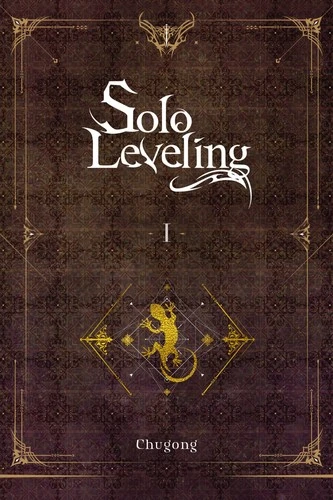
The statue room is my test case. It’s terrifying in every version, but the novel’s is the one that stuck with me, and I read it years after already knowing every beat — because prose horror runs on what the character notices, and Jinwoo notices everything, in order, while doing survival math. The anime gives you the room and trusts the direction to scare you. The novel just refuses to let you out of Jinwoo’s narration while it happens, which turns out to be worse for your nerves, or better, depending what you came for.
The Completeness Gap Is the Real Difference
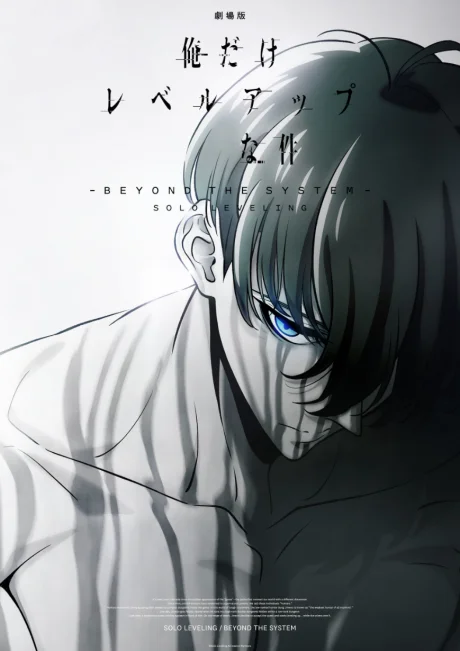
Everything above is taste, so let me do some arithmetic instead. The anime has adapted roughly five of the novel’s eight volumes across two seasons and a recap film. The next installment, Beyond the System, is an announced movie with no release date, and whether the remaining material arrives as films or more seasons is something A-1 hasn’t said and I won’t guess at. Play the timeline forward at the pace so far and the animated ending is years away, plural, possibly many.
The novel has been finished since 2017 and complete in English for years. Eight volumes, real ending, side stories included. At the speed Chugong’s prose reads, the distance between “Season 2 viewer” and “person who knows how Solo Leveling ends” is about two weeks of commutes. I’ve spent enough of my reading life in adaptation-wait purgatory (some of you have heard my Re:Zero timeline complaints more than once) that I’ve come around to treating a finished source as its own feature. Almost independent of quality, which I realize is a strange thing to type, and I’ve decided to leave it in.
What the Novel Does Worse, So You’re Not Surprised
The prose. I covered this at length in the review, but the one-line version: Chugong writes fast, plain, webnovel-cadence sentences and the novel offers zero aesthetic pleasures at the sentence level. Coming directly from the anime’s production values to the novel’s prose is a compression-artifact experience for the first fifty pages, I’m not going to pretend otherwise. It stops mattering once the momentum takes over, but the adjustment is real. Give it fifty pages before you judge, and maybe don’t do what I did, which was read the first chapter on the same evening I’d rewatched the S2 finale. That’s the least flattering possible lighting for anyone’s prose, let alone webnovel prose, and I nearly bounced off a book I ended up bingeing.
Also, no Beru voice acting. The novel version of everyone’s favorite shadow ant is still great on the page, but his S2 voice performance added something the text can’t match, and theres a handful of moments like that where the anime cast simply out-delivers the source. It happens, adaptation flows both ways, and honestly the Beru thing might be the single strongest argument for doing both versions rather than picking one. Anyway.
So Which One?
Both, staggered, and I mean that as an actual recommendation rather than a cop-out: watch the anime through Season 2 for the best version of the spectacle, then read the novels from volume 5 onward to finish the story now instead of in half a decade, then decide whether you care enough to circle back to volumes 1-4 for the interior version of the early arcs. That last step is the one most people skip and it’s quietly the best part of the whole exercise — early-novel Jinwoo, the broke and scared one doing arithmetic in hospital hallways, reads like a different guy than the one on the posters, and I mean that as the compliment it probably doesn’t sound like.
One last timing thought. When Beyond the System eventually gets a date, this franchise will do what it always does, which is eat the discourse for a season, and the spoiler environment for anime-onlys will get noticeably worse — Jeju-era spoilers already float around casually now that S2 is out, and endgame material will follow the moment marketing for the back half spins up. If you’re the type who cares about experiencing reveals cold, the novel’s completeness cuts both ways: everyone who read it is out there, posting. The safest unspoiled path at this point is honestly just reading the thing.