

Solo Leveling has two distinct reputations depending on how you read it. Manhwa readers know it as one of the best-looking power fantasies ever drawn, the art is genuinely exceptional and the action sequences hit harder visually than almost anything else in the genre. Novel readers know it as a significantly deeper story than the manhwa let on, with a protagonist who actually has an inner life, fight scenes that are more brutal, and a second half that the manhwa rushed so badly it became a community grievance.
This article contains affiliate links. If you buy through these links, we earn a small commission at no extra cost to you.
TL;DR
- The novel is deeper; the manhwa looks better. Solo Leveling’s manhwa has some of the best action art in the genre — but the second half was rushed so badly it became a community grievance. The novel gives Jinwoo an actual inner life and doesn’t sprint through the final arcs.
- What the manhwa cuts: Jinwoo’s extended internal monologue, fight details that make the power progression feel earned, and significant chunks of the endgame that the manhwa compressed into a handful of chapters.
- The manhwa’s advantage: The art. Genuinely. The Igris fight, the Jeju Island raid, the Monarch battles — these hit harder visually than prose can manage.
- Read the novel if you care about story. Read the manhwa if you want the spectacle. Both are finished.
I’ve read both to completion. Here’s the honest breakdown of where each version wins, what the manhwa cut, and which one to start with.
TL;DR
| Category | Light Novel | Manhwa |
|---|---|---|
| Story depth | Full, Jinwoo’s inner monologue, side characters developed | Surface, Jinwoo-focused, others cut |
| Fight scenes | More brutal detail (Thomas bones, Beast feeding) | Visually superior; some fights shortened |
| Cut content | ~33% of fights, the funeral aura scene, Beru hospital scene, Liu Shigang arc, Cha vs Architect | Anime-original scenes added instead |
| Ending | Same main story + after-story chapters not in manhwa | Rushed, artist illness affected S2 pacing |
| Art | N/A | God tier, characters become iconic |
| Best for | Story, character depth, emotional payoff | Visual experience, power fantasy, action |
What the Manhwa Does Better
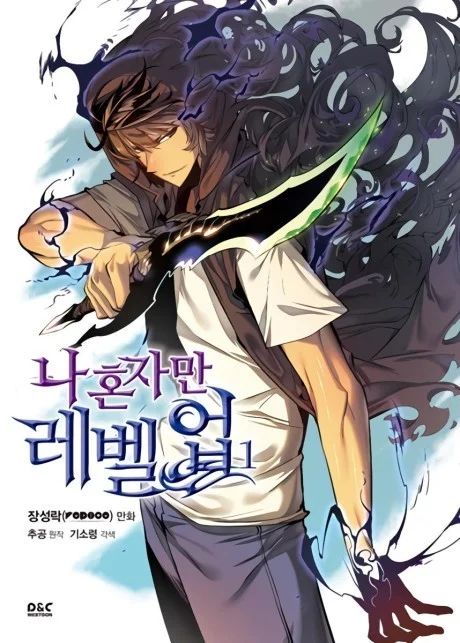
The art. This is not a small thing. Dubu (Jang Sung-rak) created a visual language for Solo Leveling that elevated the story beyond what the source material could achieve on the page. Characters who have no physical description in the novel became iconic through their manhwa designs. The shadow army, a cast of named creatures with distinct personalities, became fan favorites largely because of how they looked on panel, not how they were written.
Action choreography is the other area where the manhwa is definitively better. Some of the early fights work better in motion and panel composition than they do in prose. The Double Dungeon sequence, the Jeju Island raid, the Thomas André confrontation, the scale of these battles is communicated more immediately through art than through description. When the manhwa is at its best, you feel the weight of a punch panel-to-panel in a way that the novel can only gesture at.
Accessibility. The manhwa is the right entry point. It moves fast, it looks incredible, and it hooks you on the world and characters before asking you to commit to reading a full novel series. Most readers who love the LN started with the manhwa.
What the Light Novel Does Better

Sung Jin-Woo’s inner life. The manhwa version of Jinwoo is cool, competent, and increasingly powerful. The novel version of Jinwoo is all of that and also someone you spend hundreds of pages inside the head of. His thought process during fights, his relationships with the shadow army, his reasoning for the decisions he makes, the novel gives you the engine behind the behavior. The manhwa shows you results. The novel shows you how he gets there and why he cares.
The shadow soldiers are substantially more entertaining in the novel. Their personalities are developed through interaction and internal observation in ways the manhwa can’t replicate without breaking panel flow. The running dynamic between Jinwoo and his shadows, the bickering, the loyalty, the moments of genuine absurdity, reads more like an ensemble cast in the novel. In the manhwa they’re more like impressive set dressing.
Side character depth. The manhwa is about Jinwoo. The novel is about a world with Jinwoo at the center. Characters like Cha Hae-in, the association officials, and the international hunters get actual interiority in the novel. Their decisions make more sense. Their relationships with Jinwoo feel earned rather than convenient.
Fight brutality. The Thomas André fight is the clearest example. In the manhwa, it’s a serious confrontation. In the novel, it’s methodical destruction, every bone in Thomas’s body broken systematically, his screams audible to civilians nearby, his arms reduced to something the novel describes with specific, deliberate grotesqueness. The manhwa toned this down. The novel doesn’t look away, and that refusal to look away gives the power scaling actual weight rather than just spectacle.
What the Manhwa Actually Cut
Roughly a third of all fights are shortened or removed entirely in the manhwa. This is the most-cited statistic from novel readers, and it’s accurate. The cuts aren’t random, the manhwa consistently trims confrontations that aren’t central to Jinwoo’s arc, which means side characters lose their moments and the world feels smaller.
The funeral scene. In the novel, during a notable character’s funeral, people in the crowd are saying dismissive things about Jinwoo. He concentrates his aura in response, not attacking, just letting them feel what he is. The crowd goes silent. He says “Remember that you are at a funeral.” The manhwa cuts this entirely. It’s one of the better character moments in the series and it’s just gone.
The Beru hospital scene. After Jin-ah is hospitalized following the school gate incident, a pyromaniac tries to burn the building. Beru handles it. The manhwa doesn’t include this. The novel version lands because you understand Beru’s relationship with the Sung family at that point, it’s not just a power display, it’s protective instinct. Without the context, the scene wouldn’t mean as much; without the scene, something about Beru’s character is missing.
Liu Shigang criticizing the Chinese government. In the novel, when officials suggest bringing Jinwoo to help with a Chinese gate, Liu Shigang openly criticizes the government’s response. The manhwa removes this entirely, presumably to avoid political sensitivity in a Korean publication. The scene matters for establishing Liu Shigang as someone with actual convictions rather than just being a powerful foreign hunter who shows up.
Cha Hae-in versus the Architect in the Double Dungeon. One of the better fight sequences in the novel, featuring Cha acting independently and displaying her actual capabilities. Cut from the manhwa. Her absence from this scene is part of why manhwa Cha reads as less capable than novel Cha.
Plot changes, not just cuts. Dong-su in the manhwa travels to Korea and fights Yoonho. In the novel, he’s banned from entering Korea permanently after abandoning his team. He never shows up. The Goto Ryuji encounter goes differently: in the novel he visits Korea alone, loses to Jinwoo, then returns to Japan and easily defeats three S-rank hunters simultaneously to establish his actual power level. The manhwa version collapses this into the Korea visit and loses the Japan aftermath entirely. The Jeju Island arc is present in both but substantially more emotional and detailed in the novel.
The Ending and the Season 2 Problem

Manhwa Season 2 is where it falls apart for a lot of readers, and the context matters: Dubu, the manhwa artist, fell seriously ill during production and passed away before it concluded. The pacing in Season 2 reflects that, scenes compressed, arcs rushed, the accumulation of detail that made Season 1 work largely absent. This wasn’t editorial failure. It was a tragedy that affected the work.
The ending of both versions covers the same main story. But the novel has after-story chapters, additional epilogue content that adds emotional closure the main narrative doesn’t quite land. These chapters are not in the manhwa. Novel readers consistently cite them as making the ending hit harder. If you felt the Solo Leveling ending was abrupt or unsatisfying in the manhwa, the novel’s after-story is specifically what you’re missing.
The “dry saliva” detail is the most famous novel-only running gag: characters in tense situations are described as swallowing dry saliva nervously, and it happens constantly. It became a community meme for novel readers and a shorthand for identifying who has actually read the source material. The manhwa has none of it.
Which Should You Read First
Manhwa first. The art gives you a visual reference for the world, the characters, and the power scale that makes the novel more immediate when you transition. Going straight to the novel without any visual grounding is possible but you lose something — Dubu’s character designs are genuinely part of how most readers understand this world now.
The recommended handoff point: read the manhwa through Chapter 110, then switch to the novel at Chapter 124. Season 2 of the manhwa is where the cuts and rushing become most pronounced, you’re better served finishing the story in the novel than watching it get compressed in the manhwa.
If you’ve already finished both and want more: Solo Leveling: Ragnarok is a sequel series following Jinwoo’s son, available in manhwa format. It’s separate from the original story and uses different art. Consider it optional unless you’re specifically curious about the next generation.
More on this series: light novels like Solo Leveling
Frequently Asked Questions
Is the Solo Leveling light novel better than the manhwa?
For story depth, yes. The novel has Jinwoo’s full inner monologue, more developed side characters, more brutal fight detail, and after-story chapters not in the manhwa. The manhwa is better for the visual experience — Dubu’s art is exceptional and made the series famous. Most experienced readers recommend both, manhwa first for grounding, novel second for the full story.
What did the Solo Leveling manhwa leave out?
Roughly 33% of all fights are shortened or cut. Key omissions: the funeral aura scene, Beru’s hospital protection of Jin-ah, Liu Shigang’s government criticism, Cha Hae-in’s fight against the Architect in the Double Dungeon, and the full Goto Ryuji aftermath in Japan. Plot beats also differ — Dong-su never enters Korea in the novel, and the Thomas André fight is significantly more brutal.
Where should I start the Solo Leveling novel if I’ve read the manhwa?
Most readers recommend starting from Chapter 1 of the novel for the full experience, since early scenes read differently with Jinwoo’s internal monologue intact. If you want to skip ahead, Chapter 124 (start of the Ahjin Guild arc) is the recommended jump-in point to continue past what the manhwa adapted well.
Why was Solo Leveling Season 2 manhwa so rushed?
The artist, Dubu (Jang Sung-rak), fell seriously ill during production and passed away before the series concluded. The rushed pacing in Season 2 is a direct result of the production difficulties caused by his illness. It’s not an editorial choice. It was a tragedy that affected the work.
Does the Solo Leveling light novel have a better ending?
Most novel readers think so, yes, largely because of the after-story chapters that follow the main ending. These epilogue chapters provide emotional closure that the main narrative doesn’t fully land, and they don’t exist in the manhwa. If the manhwa ending felt abrupt, the novel’s after-story is specifically what you’re missing.