
This article contains affiliate links. If you buy through these links, we earn a small commission at no extra cost to you.
This post may contain affiliate links. If you buy something through one of those links, you won’t pay a penny more, but I’ll get a small commission that helps keep this site running.
ENGI looked at Yomu Mishima’s light novel illustrations and the manga’s sharp character designs and said “what if we made everyone look slightly wrong?” That’s uncharitable. It’s also what the entire community said when the Trapped in a Dating Sim anime trailer dropped in 2022. The eyes were off. Angelica and Olivia looked like they’d been redrawn from memory by someone who’d seen the manga once. The memes started before episode one aired, and they never stopped.
The thing is, the anime isn’t bad. It’s disappointing in specific ways that make the LN look better by comparison, and genuinely good in a few ways the LN can’t replicate. Season 1 covered two volumes out of thirteen. Season 2 arrives July 2026 and will probably cover three more. At this pace, the anime finishes sometime around 2038. So the real question isn’t which version is better. It’s whether the anime gives you enough of the story to skip the source material.
It doesn’t. Not even close.
TL;DR
Trapped in a Dating Sim’s anime (ENGI, 2022) adapted LN volumes 1-2 across 12 episodes, covering roughly 15% of the complete 13-volume story. The anime has strong voice acting (Leon and Luxion’s dynamic translates well) and serviceable mech combat, but ENGI’s character designs are a noticeable downgrade from the LN illustrations and manga art. The LN’s core strength is Leon’s internal monologue, which carries the comedy and is impossible to fully adapt to screen. Season 2 (July 2026) will likely cover volumes 3-5. Volumes 6-13, including the series’ best arcs and the full conclusion, remain LN-exclusive with no adaptation timeline. Read the LN.
What Does the Anime Cover?

Season 1 adapts volumes 1 and 2. Leon’s reincarnation into the otome game world, his discovery of Luxion, the humiliation of the prince’s faction, and the school festival arc. Twelve episodes for two volumes is a reasonable pace. ENGI didn’t rush through major plot points or cut entire subplots. The adaptation is faithful in terms of what happens. Where it stumbles is how it presents what happens.
That’s all. Two volumes out of thirteen. The story’s political escalation, the military arcs, the scope expansion into the Republic, the Marie reveal, the endgame. None of that exists in animated form. Season 2 will add volumes 3-5 at best. Even after two full seasons, the anime will have covered less than 40% of the story.
Where the Anime Wins
Voice acting. Takeo Otsuka as Leon nails the sarcastic deadpan that defines the character, and nails it so consistently across twelve episodes that you start hearing his delivery when you go back to reading the LN afterward. The delivery on throwaway lines hits harder than reading them on the page sometimes. When Leon says something genuinely cutting to a noble who deserves it, the voice performance adds venom that flat text can’t always convey.
Luxion’s VA (Satoshi Hino) finds the right tone for a genocidal AI who speaks in customer service pleasantries. The dynamic between Leon and Luxion is the series’ signature relationship, and hearing it performed aloud adds a comedic dimension. You can hear Luxion’s contempt for humanity wrapped in polite phrasing. The LN describes this tone. The anime delivers it.
Mech combat gains spectacle in animation. Leon’s battles with Arroganz have weight and motion that prose has to work harder to convey. The duels against the prince’s faction in particular benefit from seeing the mechs in action rather than reading about them. ENGI’s animation during action sequences is noticeably better than their character work in dialogue scenes.
The OST does quiet work. Background music during tense moments and comedic beats adds atmospheric texture that novels obviously can’t provide.
Where the Light Novel Wins
Leon’s internal monologue. This is the single biggest gap between formats. Leon’s commentary on everything happening around him is where Mobseka’s comedy actually lives. The anime can show Leon reacting. It can give him occasional voiced thoughts. But it can’t replicate the running internal narration where Leon dissects the absurdity of his situation in real time, drops references to his past life knowledge, and says what he actually thinks about people while maintaining his mob-character facade.
In the LN, you’re inside Leon’s head constantly. His observations about the otome game world’s broken social structure, his frustration at being dragged into protagonist situations when he’s trying to stay invisible, his genuine confusion when things stop following the game script. All of this plays as continuous comedy in text form. The anime converts maybe 30% of it into reaction shots and occasional inner monologue voice-overs. The other 70% just disappears.

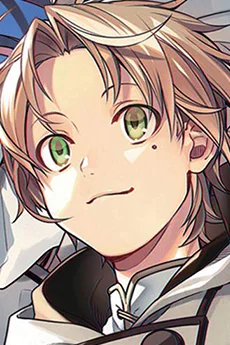
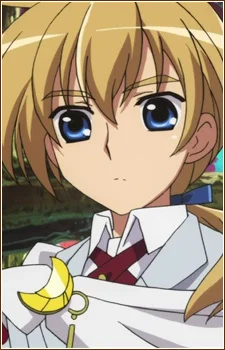
Character designs. This shouldn’t be a category where novels beat animation, but here we are. Mishima’s character descriptions combined with the manga’s gorgeous art by Jun Shiosato set a visual standard that ENGI’s anime couldn’t match. Angelica looks commanding and beautiful in the manga. In the anime, she looks like a different character. Olivia’s gentleness comes through in manga panels. The anime flattened her. Leon himself fares better because his design is simpler, but every female character took a hit in the translation to screen.
Luxion’s full dialogue. The anime trims Luxion’s lines for pacing. The LN gives you every cold, calculated, vaguely threatening thing Luxion says. Some of the best comedy in the series comes from Luxion’s multi-paragraph responses to simple questions, where the AI manages to insult all of humanity while technically answering what Leon asked. The anime keeps the punchlines but cuts the buildup that makes them land harder.
Depth beyond comedy. Volumes 3-13 contain a genuine political thriller wrapped in an isekai comedy shell. The kingdom’s power dynamics, the war arcs, the Republic’s introduction, the ancient civilization reveals. None of this exists in the anime yet, and when it eventually gets adapted, the compression from novel to 12-episode seasons will cut depth. The LN gives each political development room to breathe. You understand why factions make the choices they do, why alliances form and break, why the wars escalate. This isn’t background flavor in the LN. It’s the main course from volume 3 onward.
The ending. Done. Finished. The anime won’t reach the conclusion for years, if it even runs that long, but every page of the LN is sitting on shelves right now in English, all thirteen volumes from the setup to the final confrontation to the romantic resolution, waiting for you to pick them up.
The Character Design Problem Is Real

This deserves its own section because it’s the single most discussed aspect of the adaptation. When the anime was announced, the community was excited. When the character designs dropped, the community revolted. The comparison images between manga art and anime character sheets went viral. Fan edits attempting to “fix” the designs got more engagement than the official promotional material.
ENGI’s track record doesn’t inspire confidence. Their animation quality varies wildly between projects. For Mobseka, the budget appears to have gone toward mech animation and action sequences, leaving character animation in dialogue-heavy scenes looking flat and occasionally off-model. The LN illustrations and manga art are simply better representations of these characters.
Season 2 has shown updated character designs in its key visual, suggesting ENGI heard the feedback. Promising. Whether the execution matches that promise is a July 2026 question.
What About Season 2?

Season 2 premieres July 2026, covering volumes 3-5 at standard pacing. This is where the story shifts from school comedy to political thriller with mech warfare. If ENGI handles the tone shift well and the updated character designs hold, Season 2 could redeem the adaptation. The source material for these volumes is strong. The question is whether ENGI can do it justice.
Even if Season 2 is excellent, it leaves volumes 6-13 unadapted. The Marie reveal in volume 6. The Republic arc in volumes 7-9. The endgame in volumes 10-13. At one season every four years covering roughly three volumes, the anime finishes in the mid-2030s. If it finishes.
Should You Watch the Anime at All?
Yes, but with expectations set correctly. Watch Season 1 for the voice performances and mech combat. Accept that the character designs are a downgrade. Enjoy Leon and Luxion’s dynamic in audio form. Then read the LN starting at volume 3 for the actual story.
If Season 2 lands well, it’s worth watching for the war arc spectacle. ENGI’s action animation is competent, and volumes 3-5 have set pieces that could look impressive animated. But don’t wait for the anime to tell you the rest of the story. That’s a decade-long bet on a studio that hasn’t earned blind faith.
The LN is the complete, better-looking, funnier, deeper version of this story. The anime is a partial, visually compromised, but aurally excellent advertisement for it. Read the books.
For the full volume breakdown, check our Mobseka reading order guide. Wondering if the series wraps up properly? See whether Mobseka is finished. And for a deeper look at whether the LN holds up across all 13 volumes, here’s our full review.