

This article contains affiliate links. If you buy through these links, we earn a small commission at no extra cost to you.
The Water Magician split the anime community clean in half this summer. Half the audience called it a hidden gem. The other half called it boring and dropped it by episode four. I went into the light novels expecting the second camp to be right. They weren’t. They also weren’t entirely wrong, though.
This is a series that asks you to slow down. No power fantasy escalation. No harem collecting. Ryou Mihara gets isekai’d into a European fantasy world with one elemental affinity (water magic), joins a small party, and spends seven volumes exploring towns, dungeons, and the politics of a guild-based economy. If that description sounds like your thing, it probably is. If it sounds like watching paint dry, I have specific volumes where I think it picks up. Plus specific volumes where the critics have a real point.
TL;DR
- Seven light novel volumes make up Part 1: Central Countries Arc. The anime adapted volumes 1-2 across twelve episodes. Community reception is polarized: praised for world-building and setting, criticized for MC sidelining in later volumes. Worth reading if you enjoy slow-burn isekai with strong setting work, but expect pacing valleys in the middle stretch.

What Kind of Isekai Is The Water Magician?
The Water Magician is a slow life isekai with dungeon exploration as a secondary focus. Ryou isn’t overpowered. His water magic is useful but specialized, and the series treats it as one tool in a party-based system rather than an “I win” button.
The biggest draw here is the setting. I kept comparing it to Ascendance of a Bookworm in my head while reading, and the comparison fits in a specific way: both series care more about how their world works than about combat sequences. Towns have economies. Guilds have hierarchies and internal politics. The European fantasy backdrop isn’t just set dressing. It has consistent rules about trade routes and magic classification. Adventurers function as a labor class within the broader society, not wandering heroes.
Where it diverges from Bookworm is in ambition. Bookworm is 33 volumes with a planned endgame. The Water Magician is seven volumes covering one arc. The scope is smaller. That’s not a flaw. That does mean the world-building serves a more contained story.

Is Ryou a Good Protagonist?
Ryou is a good protagonist for this type of story. He’s not a great protagonist in general. That distinction matters.
He’s calm, practical, and observant. Water magic gives him a support-oriented role in his party, and he leans into it. He doesn’t complain about not being the strongest. No angst about being isekai’d, either. He adapts quickly, finds steady work through the guild. Relationships build through competence rather than charisma. I liked that about him. Ryou feels like someone who’d actually survive being dropped into a fantasy world because he pays attention and doesn’t pick fights he can’t win.
The problem is that his calm personality makes him passive in moments where the story needs drive. The monster stampede arc (volumes 5-6) is the clearest example. Ryou gets sidelined. The community went ballistic about this, and reading the volumes, I understand why. The MC of your story watching from the sidelines while other characters handle the big crisis? That’s a structural choice the author made deliberately. I can see what it was going for. It still didn’t land.

Does the Abel Problem Ruin the Series?
Abel is Ryou’s party member and friend-slash-rival. He’s also the character that generates the most heated discussion online. “Asshole” is the word that comes up in every thread about him. People feel he disrespects Ryou for no reason and undermines him in front of the party. Some readers accuse him of taking credit for group achievements too.
Having read all seven volumes: the Abel criticism is half-right. He does have moments where his behavior toward Ryou crosses from “rival dynamic” into genuinely rude territory. The series frames this as a character flaw Abel needs to overcome, not as a cool personality trait. By volumes 6 and 7, the relationship develops into something more balanced. The issue is that it takes too long to get there. Four volumes of a character being abrasive is a lot to ask, even if the payoff exists.
I’ve seen series handle the rival-who’s-kind-of-a-jerk dynamic better. Re:Zero‘s Julius does it in a single arc. Abel’s version is slower to resolve, and in a seven-volume series, that’s a significant chunk of the page count dedicated to friction that doesn’t always earn its page count.
How’s the World-Building?
This is the series’ strongest card, and it plays it well. The European-inspired setting feels lived-in. Magic isn’t just elemental attacks. It’s integrated into how cities function, how trade operates, how guilds recruit and train. Water magic specifically gets interesting treatment. Ryou discovers applications that go beyond combat: purification, weather prediction, irrigation. The author clearly researched how a single elemental affinity could thread through daily life in a pre-industrial economy.
Dungeon exploration follows a similar philosophy. Dungeons aren’t just monster-filled corridors. They have ecosystems, resource harvesting, and economic implications for the towns built around them. When Ryou’s party enters a dungeon, there’s always a reason beyond “get stronger.” They’re collecting specific materials, fulfilling guild contracts, or investigating changes in monster behavior.

What About the Romance?
Ryou and Sara. Slow burn. Extremely slow burn. If you’re reading this for romance progression, prepare for glacial pacing. Seven volumes and the relationship moves from “travel companions with mutual respect” to “there are clearly feelings here that neither person will say out loud.” That’s it. No confession. No kiss. Nothing definitive.
I’m personally fine with this. The slow build feels earned within the story’s tone. Sara is a solid character on her own. She’s competent, has her own motivations for adventuring, and doesn’t exist purely as a love interest. I know this is a dealbreaker for readers who want romantic payoff within a single arc. If Part 2 ever gets written, maybe we’ll get resolution. For now, it’s all subtext and lingering glances.
Does the Pacing Hold Up Across Seven Volumes?
Not consistently. Volumes 1-2 are strong. The isekai setup is handled efficiently, the world gets established without excessive info-dumps, and the party comes together naturally. Volume 3 maintains momentum by deepening the setting. Volumes 4 and 5 are where the pacing sags. The monster stampede arc stretches longer than it needs to, and Ryou’s reduced role makes it feel like the author ran out of things for him to do during a crisis that should have been his moment to shine.
Volume 6 recovers somewhat. Volume 7 is a satisfying arc conclusion that leaves threads for Part 2 without feeling like a cliffhanger. I won’t pretend the middle didn’t test my patience. Reading a lot of isekai means I’m used to slow pacing. Even for me, volumes 4-5 dragged.
Should You Read After Watching the Anime?
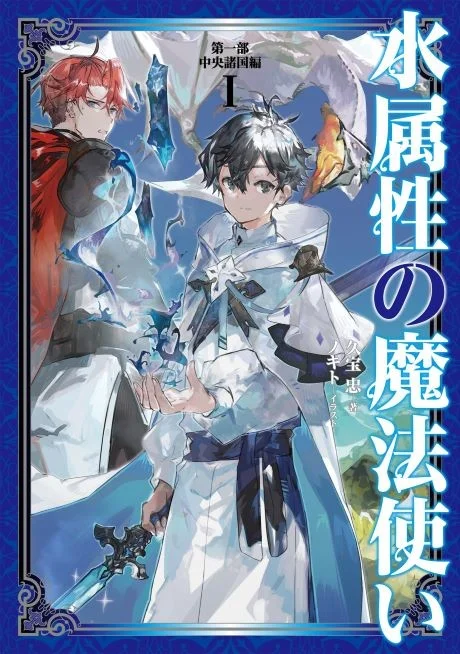
Yes, but start from volume 1. The anime covered volumes 1-2 in twelve episodes, which is a reasonable adaptation ratio. The LN has internal monologue and world-building details that the anime either trimmed or couldn’t convey visually. Ryou’s thought process during magic experimentation, the economic details of guild contracts, Sara’s backstory elements that the anime mentioned but didn’t expand on.
The biggest gap between anime and LN is the monster stampede arc’s handling of Ryou. The anime compressed it, which actually helped the pacing criticism. The LN version is longer and more detailed, which is both its strength (more world-building around the stampede’s economic impact) and its weakness (more time with Ryou watching from the sidelines). Pick your poison.
Who Is This Series For?
Readers who want isekai focused on setting rather than power scaling. Readers who like Bookworm’s economic world-building but want something shorter and less committed. People who don’t need a romance payoff within a single arc. Anyone who can tolerate a passive protagonist if the world around him is interesting enough to carry the story.
Skip it if you need constant MC progression. Pass if rival characters acting abrasive for four volumes sounds exhausting. Not for you if you want a complete story, either. Part 1 is a complete arc, not a complete narrative. Seven volumes is a commitment for something that explicitly labels itself as chapter one of a larger story.

My Final Verdict
The Water Magician is a 7/10 series that could have been an 8 with tighter pacing in volumes 4-5 and a more active role for Ryou during the stampede arc. The world-building is excellent. Sara and Ryou’s dynamic works. The setting feels genuine in a way most isekai settings don’t bother attempting. But the Abel friction drags, the MC gets sidelined at the worst possible moment, and the “Part 1” label means you’re investing in an incomplete story.
I don’t regret reading it. I’d recommend it to the right reader. It didn’t crack my top ten. The Water Magician does specific things well and lets other things slide. When it’s working, it’s a genuinely pleasant reading experience. When it’s not, you’re waiting for it to be working again. That’s the honest assessment.