

The reading order for 86 is refreshingly simple. Fourteen main volumes, numbered order, no gaps. No side arcs that slot between volumes, no alternate timelines, no “.5” entries you have to hunt down. The only extras are two Alter side story collections, and those are optional. For once in the LN hobby, you don’t need a spreadsheet to figure out where to start.
This article contains affiliate links. If you buy through these links, we earn a small commission at no extra cost to you.
TL;DR
- Volumes 1-14 in order. No gaps, no .5 entries. The only extras are two Alter side story collections, and those are optional.
- After the anime: The anime covers Vols 1-3. Pick up at Volume 4 for the Federal arc — completely unadapted and arguably the best part of the series.
- Volume 1 works as a standalone. If you just want to try it, one volume gives you a complete story.
- For once, you don’t need a spreadsheet. Refreshingly simple for the LN hobby.
Here’s the full order with what each volume covers.
More about 86
Main Series
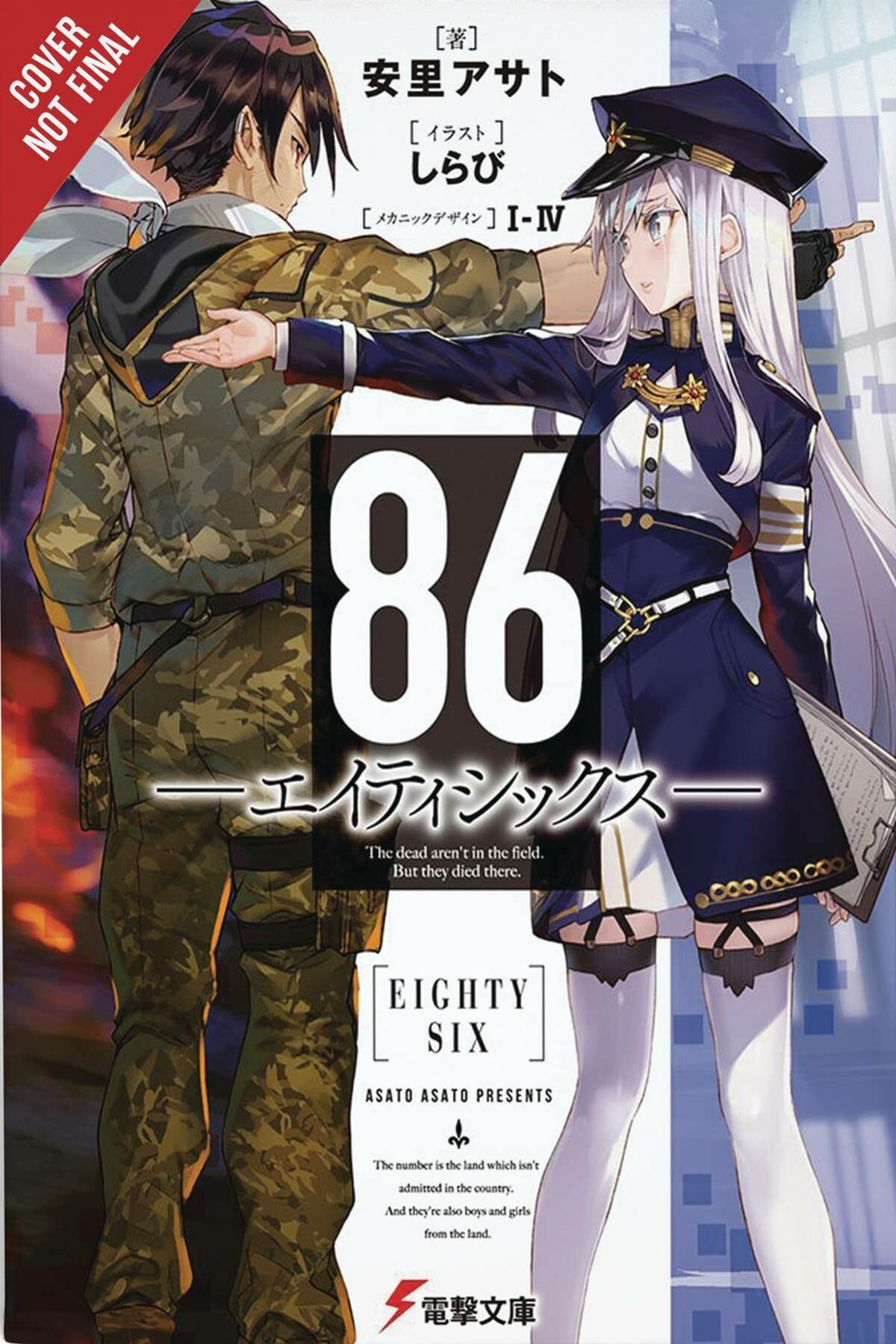
Volume 1: Eighty-Six
The Republic of San Magnolia says it’s fighting a bloodless war against the Legion using autonomous drones. The drones are piloted by humans. The 86, a persecuted minority stripped of legal personhood — are dying in those cockpits while the Republic pretends they don’t exist. Major Vladilena Milize gets assigned as Handler for the Spearhead Squadron, an elite unit of 86 veterans led by Shinei Nouzen. Lena believes in the 86’s humanity from behind a comm link and a glass of wine. Shin has buried enough squadmates to stop caring what any Handler thinks. That tension is the whole first volume, and it hooked me faster than I expected. I went in skeptical. Military sci-fi isn’t usually my genre — and finished in two sittings.
JP: February 2017 | EN: March 2019
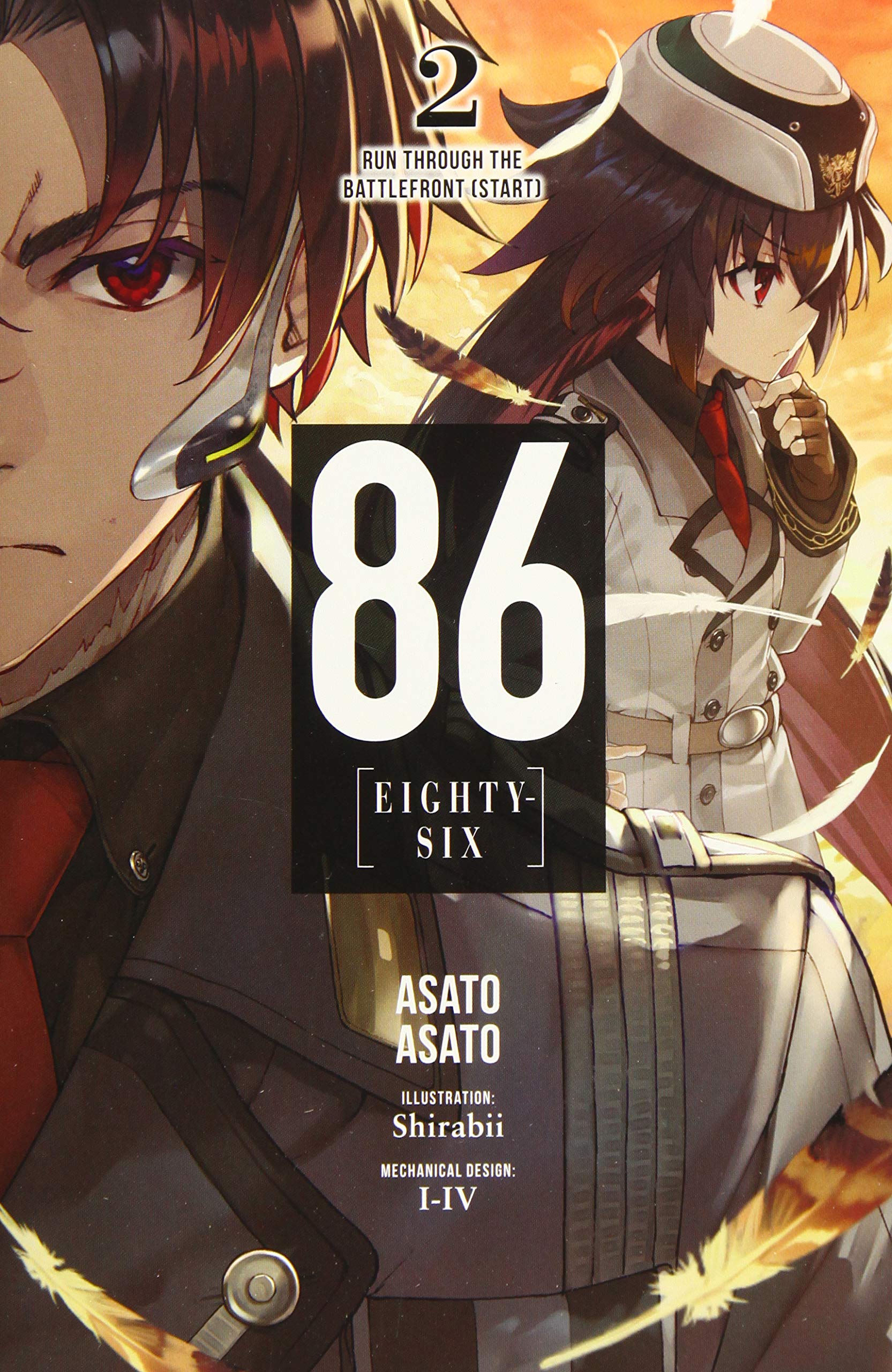
Volume 2: Run Through the Battlefront (Start)
Spearhead gets handed a final mission. A suicide run. Lena figures out the Republic is trying to quietly dispose of the entire squad, and she’s the only person in a position of power who gives a damn. The volume cuts between her scrambling to change the outcome and the squad calmly preparing for a trip they know is one-way. That contrast is brutal. The squad’s acceptance of their own deaths hit me harder here than in any of the battles. Asato earns the reader’s trust in this volume. She’s not milking the tragedy, she’s just letting it land.
JP: July 2017 | EN: July 2019
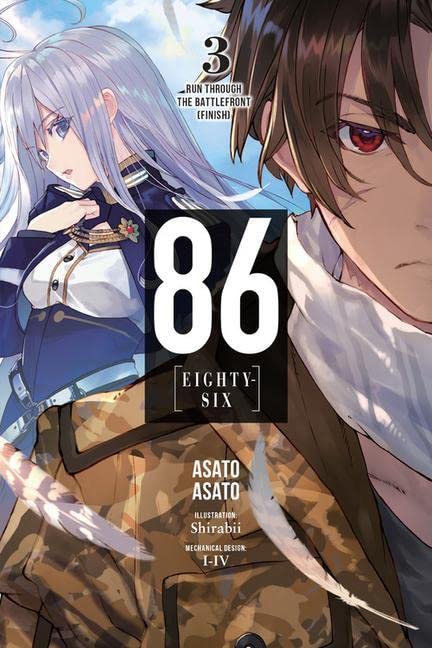
Volume 3: Run Through the Battlefront (Finish)
San Magnolia arc closes here. Five survivors push beyond the Republic’s borders into the Giad Federacy. This is where most readers either lock in or bounce, and I fully understand both reactions. But I locked in hard. Volume 3’s final pages are the kind of ending I was not prepared for. I actually set the book down and sat with it for a bit. Months later I still think about it. If you’re on the fence after Volume 2, finish this one before deciding.
JP: December 2017 | EN: November 2019

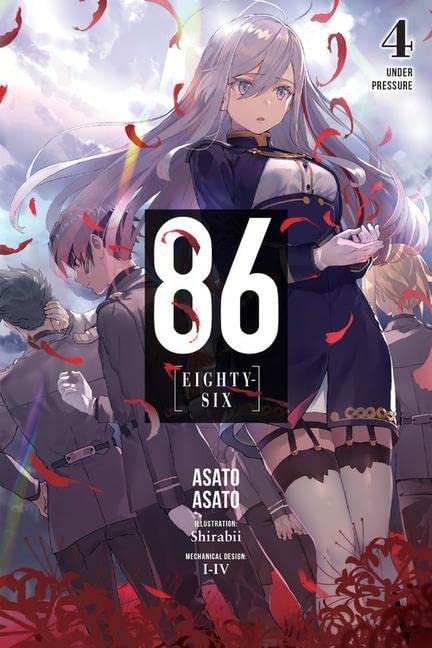
Volume 4: Under Pressure
The five survivors get taken in by the Giad Federacy. Citizenship. A home. A father figure in President Ernst who tells them they never have to fight again. And they genuinely cannot stop. The PTSD, the guilt, the inability to exist in a world that doesn’t need them in a cockpit. Volume 4 goes places the action-forward first three volumes couldn’t. It’s slower. Some readers bounce here and I get it. But this is where 86 separates itself from every other military LN I’ve read. Frederica Rosenfort also joins the cast, and she’s immediately one of my favorite characters in the series, which surprised me because I usually find “child character with tragic past” exhausting.
JP: May 2018 | EN: March 2020
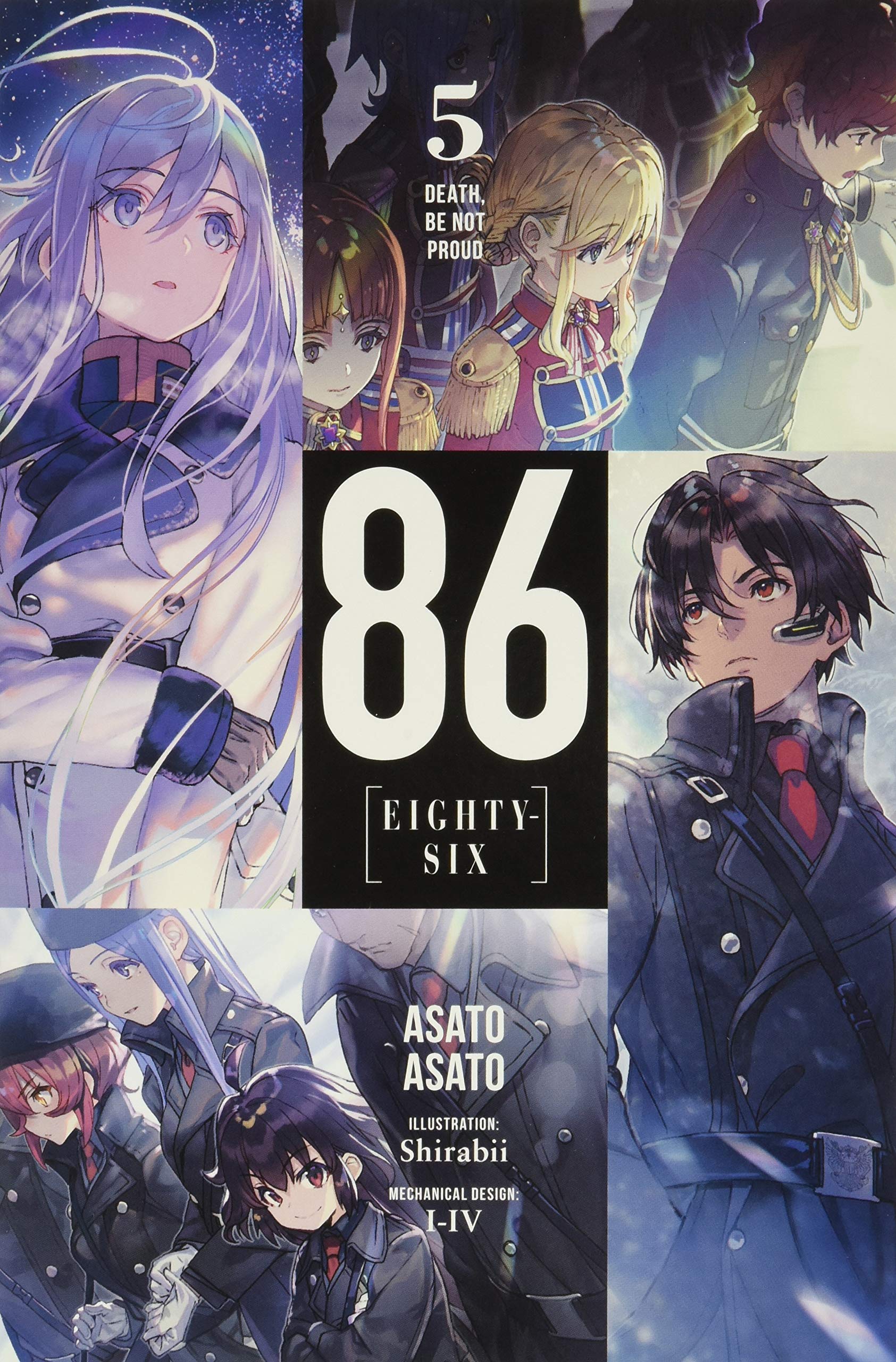
Volume 5: Death, Be Not Proud
Back to war. The squad joins the Nordlicht Squadron and gets handed a mission to destroy the Morpho, a massive Legion artillery piece that’s been carving through everything in its path. The operation runs through most of the volume. But what Volume 5 is actually about is Shin confronting a Legion unit built from someone he knew personally. That subplot is where the series reminds you it has teeth. The war stops being a backdrop. It gets personal in a way that Volume 5 handles better than I thought it would.
JP: October 2018 | EN: August 2020
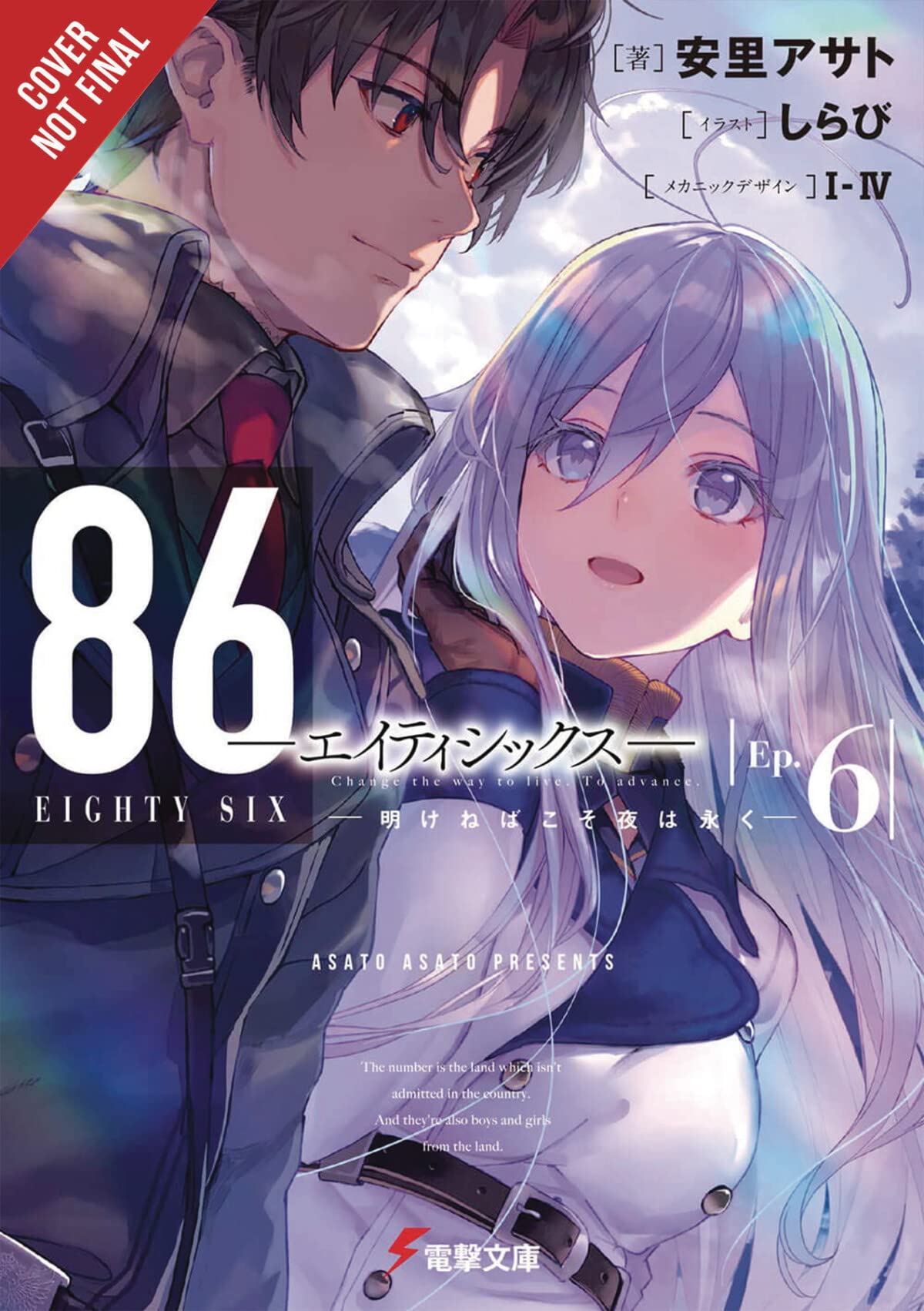
Volume 6: Darkest Before the Dawn
The Morpho operation wraps up. And then Lena and Shin are finally in the same physical space for the first time. Six volumes of comm-link conversations and one-sided emotional weight, and Asato sticks the landing. I’d be lying if I said I wasn’t nervous reading that scene. Payoffs like that can fumble easily. This one doesn’t. The Giad arc closes here, and Volumes 1-6 read as a complete story. If you just want the self-contained arc, you could stop here. I wouldn’t. But you could.
JP: April 2019 | EN: November 2020

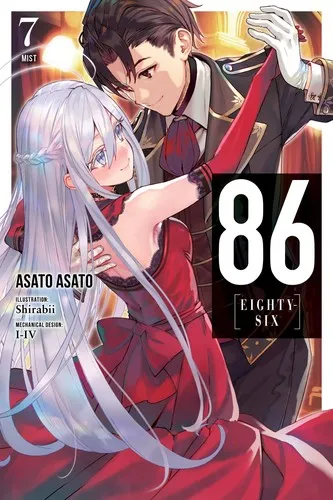
Volume 7: Mist — Start here after the anime
The scope shifts. Lena takes command of the Eighty-Sixth Strike Package, bringing Shin and the surviving Spearheads into a new structure with new squadmates. The Legion threat has grown past what any single nation can contain, and the series starts to feel like a different kind of war story. Wider, more political. If the anime covered Volumes 1-6, Volume 7 is where you pick up — and the tone adjustment is noticeable. It took me a chapter or two to recalibrate. Not a complaint, just a heads up.
JP: September 2019 | EN: March 2021
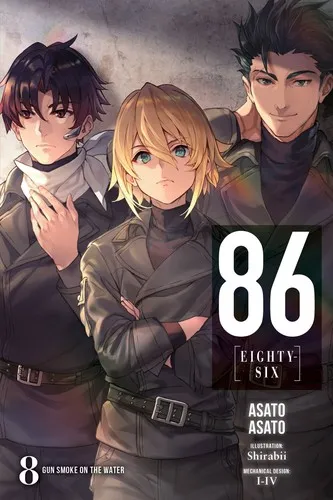
Volume 8: Gun Smoke on the Water
Naval operations this time, and a broader look at how the world is responding to the Legion at scale. New nations, new fronts, new characters to track. Shin’s squad isn’t scraping for survival anymore — they’re recognized assets in a multinational effort, and that shift changes how the story feels. Honestly, Volume 8 was my least favorite of the post-anime stretch. Not bad, just diffuse. There’s a lot happening but the emotional focus of the early volumes gets diluted when you’re juggling this many factions.
JP: May 2020 | EN: August 2021
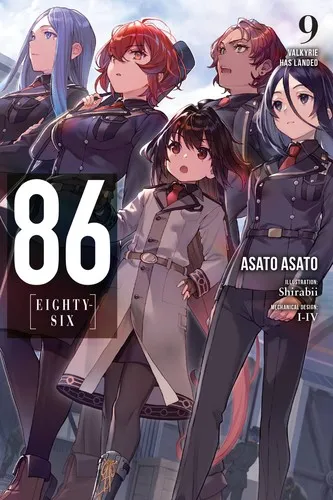
Volume 9: Valkyrie Has Landed
Large-scale operation, Shin’s reputation keeps growing, and the Shin-Lena dynamic inches forward at a pace that will test your patience if you’re not already invested in both characters. I was, so it worked for me. But Volume 9 is where a few friends told me they stalled out. The series is settling into a longer rhythm, and the page count per emotional payoff goes up. Fair warning. I kept going because by this point Frederica had completely won me over and I needed to see where her arc landed.
JP: February 2021 | EN: February 2022
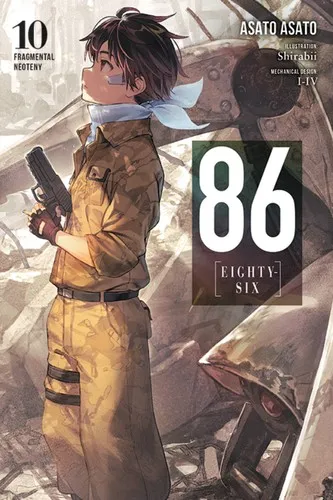
Volume 10: Fragmental Neoteny
Short story collection. Vignettes, slice-of-life between operations, backstory that didn’t fit the main narrative. Not a plot volume. I read it straight through because I was deep enough in the series that I wanted every scrap of character time I could get — and a couple of these stories are genuinely good. But if you’re reading for the war plot, skip it and come back. You won’t miss anything critical.
JP: June 2021 | EN: May 2022
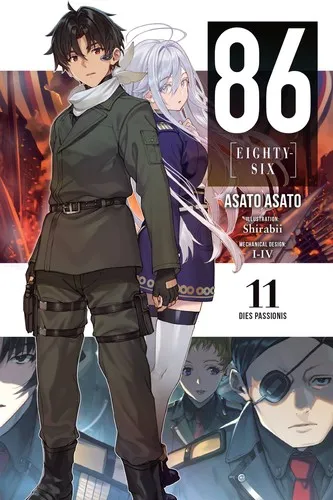
Volume 11: Dies Passionis
The Legion adapts in ways that make the conflict feel more desperate than it has since Volume 3. This is the start of a darker stretch, not grimdark for its own sake, but the kind of dark where characters you like are carrying weight that’s visibly cracking them. Shin’s psychological burden becomes impossible to ignore here. Volume 11 reminded me why I was still reading after the wider-scope middle volumes. The series found its emotional footing again.
JP: February 2022 | EN: November 2022
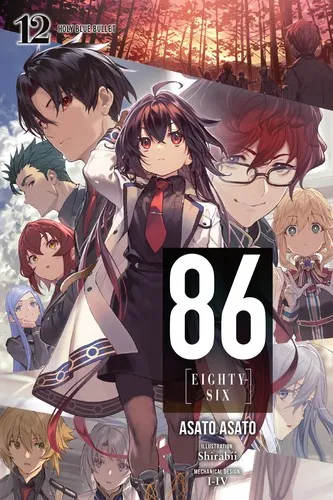
Volume 12: Holy Blue Bullet
Picks up right where 11 left off and keeps the pressure on. New revelations about the Legion: where they came from, what they’re actually capable of — reframe parts of the earlier volumes in uncomfortable ways. The coalition is fracturing under the strain, and relationships that took ten volumes to build start showing real cracks. Volume 12 is dense. I had to slow down and let it breathe instead of binging, which isn’t how I usually read. That’s not a knock on it.
JP: February 2023 | EN: November 2023
Volume 13: Dear Hunter
The war hits a critical phase and Volume 13 ends in a place that made me immediately want Volume 14 — which was not out in English yet, which was unpleasant. The 20-month gap between 13’s JP release and Volume 14 was the longest in the series, and you can feel the story building toward something big. Waiting for the English release of 14 after finishing this one is going to be rough for anyone starting the series now.
JP: January 2024 | EN: December 2024
Volume 14: Paint It Black
Japan-only as of now. No English release date yet from Yen Press. I’m not going to speculate on when it lands. Just know that the series is still ongoing and Volume 14 is not the end. If you catch up to 13 in English, you’re in the waiting room with the rest of us.
JP: September 2025 | EN: TBA
Alter Side Stories (Optional)
Two collections of short stories set within the main series timeline:
- Alter 1: The Reaper’s Occasional Adolescence (EN: September 2024) — character-focused shorts, not required for the main plot
- Alter 2: Fight, Magical Girl Reina Lena! (EN: March 2026) — comedy and side stories
Read them after the main volumes they reference. Neither is essential. Alter 1 has a couple of genuinely good Shin-focused shorts. Alter 2 is a gag volume — full comedy, very different tone. If Frederica doing magical girl parody sounds like your thing, it is exactly what it sounds like.
Anime-to-Light Novel Guide
| Anime | Covers | Start reading at |
|---|---|---|
| Cour 1 (Episodes 1-11) | Volumes 1-3 | Volume 4 |
| Cour 2 (Episodes 12-23) | Volumes 4-6 | Volume 7 |
| Full anime | Volumes 1-6 | Volume 7 (Mist) |
A-1 Pictures adapted it faithfully, but the anime compresses a lot, mostly the internal monologue and world-building that Asato uses to show what’s actually happening inside these characters’ heads. Reading from Volume 1 after the anime is worth it if you have the patience. You’ll pick up things the anime skipped entirely. If you don’t want to re-cover the same story, Volume 7 is a clean entry point and the series moves fast enough that you’ll catch up on context quickly.
More about 86
FAQ
What order should I read 86 in?
Volume 1 through 14, in order. No rearrangement needed. The Alter side stories are optional and can be read after finishing the main volumes.
Where should I start 86 after the anime?
Volume 7 (Mist). The anime covers Volumes 1 through 6. Some fans recommend re-reading from Volume 1 for the additional detail the anime couldn’t include.
Is Volume 10 skippable?
It’s a short story collection, not a main plot volume. You can skip it without losing the thread of the story. Read it later if you like the characters.
Are there any spin-offs I need to read?
No. The Operation High School manga spin-off and the main manga adaptation are separate from the light novel’s story. The Alter side story collections are the only LN extras, and they’re optional.