

This article contains affiliate links. If you buy through these links, we earn a small commission at no extra cost to you.
Good news first: this is one of the easiest reading orders I’ve ever had to write up. Sasaki and Peeps is numbered volumes, one through thirteen, read them in order, done. No side stories jammed into the main sequence, no “actually volume 4.5 is essential” nonsense, no publisher reshuffling arcs the way the TanMoshi anime taught everyone to fear.
The reason this article exists anyway is that the series has an anime, a manga adaptation, a magical girl spin-off manga, and a still-running web novel, and people coming off Season 1 keep asking where the show left off and what they’re allowed to skip. So consider this less a reading order and more a map of the whole Sasaki sprawl, with my usual commentary about which parts are worth your money. I put my first BookWalker order in during spring 2024, right after the anime wrapped, and I’ve been keeping up in a lapsed sort of way ever since — current through the English volumes plus spoilers I chose to read about the rest, which is its own kind of reading order I guess.
TL;DR
- Read the light novels in numbered order, 1 through 13 (8 available in English from Yen On). The anime covers ONLY volume 1, so start at volume 2 if you’re continuing from the show — though I’d argue for starting at 1 anyway. Manga adaptation is supplementary, the magical girl spin-off is skippable unless you fall in love with a certain character, and the web novel is for the truly impatient.
Where Does the Anime Leave Off?
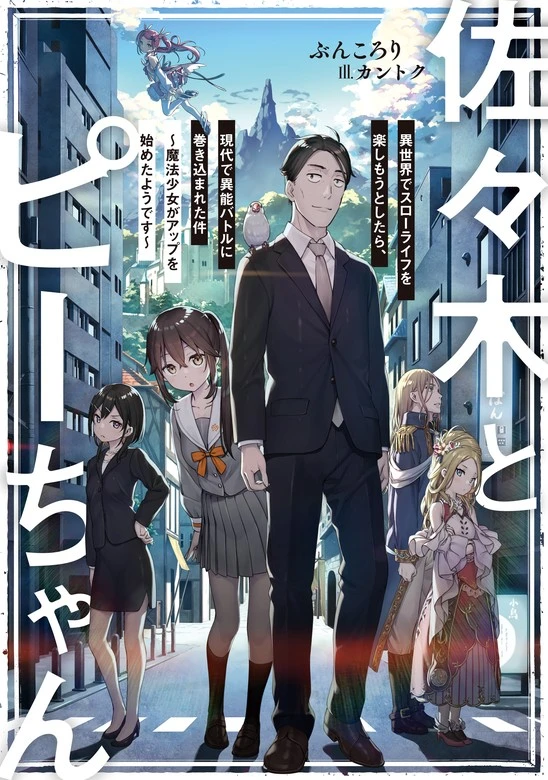
Volume 1. That’s it, that’s the whole answer, and it still kind of amazes me. Twelve episodes for one volume. These are long volumes to be fair, but the pacing choice tells you everything about what SILVER LINK thought the appeal was — they let the buy-low-sell-high scenes and the Peeps conversations breathe instead of speedrunning to the flashier arcs.
So if you finished the anime and want to continue: start at volume 2. You’re not missing material, the adaptation was faithful about coverage. The finale did tease the angel and demon storyline that properly belongs to later volumes, a little trailer for territory the show hadn’t earned yet, so don’t be confused when volume 2 doesn’t immediately pick that thread up.
My actual advice though, and I know continuing-readers never take this advice, is to go back and read volume 1 anyway. Sasaki’s internal narration is the best thing about the books and the anime could only gesture at it. You already know the plot beats, sure. The prose version of those beats is a different experience, the entire cost-benefit monologue layer is missing from the show.
The Main Series: Volumes 1-13
Here’s the volume map with the arc structure, though I’m going to be honest about the gaps in my memory on the middle stretch.
Volume 1: Setup. Sasaki, a 39-year-old salaryman running on fumes, buys a Java sparrow who turns out to be an otherworld sage named Piercarlo. Magic lessons, the two-world trading scheme, and the psychic bureau sniffing around by the end. The magical girls are lurking at the edges already.
Volume 2: The magical girl conflict stops lurking, and the death game thread opens. This is where the series shows its actual shape, which is “every urban fantasy subgenre at once, run through the filter of a middle-aged man who just wants passive income.”
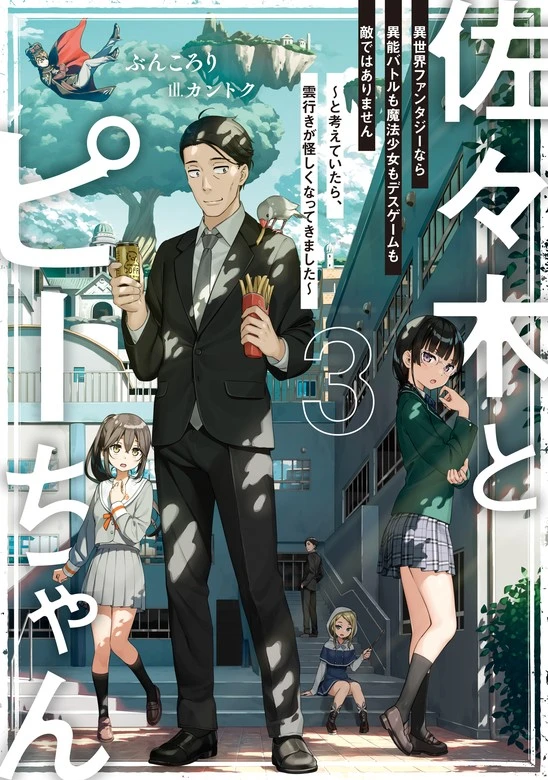
Volume 3: The death game escalates. This one’s cover (below) is doing a lot of work, and the volume mostly earns it.
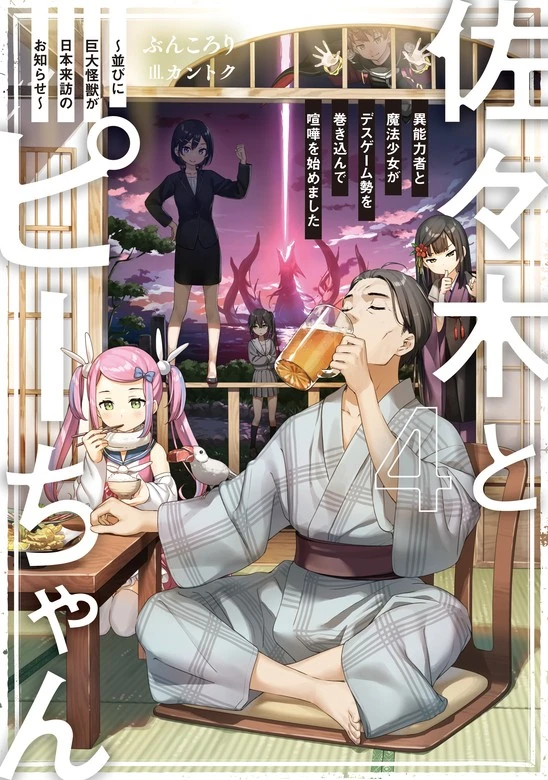
Volume 4: Psychics, magical girls, and death gamers all collide, and then a kaiju attacks Japan on top of it. Peak thread-sprawl, and weirdly one of my favorites cause Sasaki spends the whole crisis thinking about logistics.
Volume 5: The otherworld side gets its big moment: the royal succession arc actually resolves. A real arc conclusion! It felt like a unicorn at the time and I’d argue it still is.
Volume 6: Aliens. I’m not elaborating. Not because of spoilers, just because I think going in cold is funnier, this is the one volume where I refuse to do my job.
Volumes 7-9 — This is my honest memory-gap zone since I’ve read these as summaries and spoiler threads rather than cover to cover. 7 is the pseudo-family formation arc, 8 goes school rom-com, and 9 is the VTuber volume, where the neighbor subplot mutates in a direction nobody asked for and quite a few readers can’t stop reading about. Somewhere in this stretch, or maybe volume 10, is where fan consensus starts splitting into “this is the good part” versus “this is where I fell off.” I genuinely can’t adjudicate that fight yet.
Volume 10: Overseas posting, mafia involvement. Volume 11: Dungeon excavation. Volume 12: The fairy world opens up and the magical girls mobilize. Volume 13: Empire infiltration on the otherworld side, plus a brand-new POV girl, cause apparently the cast wasn’t big enough.
If that map reads like four different series stapled together, that is the series. It’s the sales pitch or the dealbreaker depending on the reader.
What About the Manga and the Spin-Off?
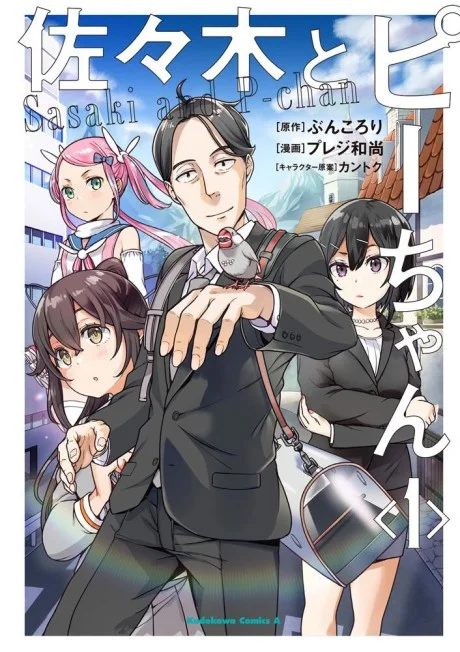
The manga adaptation (Kadokawa’s Comic Ace line) retells the main story and sits comfortably in the “nice to have” tier. The art is clean and it moves faster than the novels, but faster is not what you want out of this particular story, the slow deliberation is the product. I flipped through the early chapters and haven’t felt any pull to continue, though I say that as someone who owns three different editions of Mushoku Tensei so my purchasing logic isn’t exactly a model of consistency.
The spin-off is a magical girl side-story manga (“Mahou Shoujo Up o Hajimeta You Desu”) and its exactly what it sounds like — extra material for people who latched onto that corner of the cast. Skippable for everyone else. I haven’t read it as of yet and I keep meaning to at least look at who the art is by.
The web novel on Kakuyomu is where the story originally started back in 2018 and it’s still updating, running ahead of the print version. Standard deal applies: the LN volumes are the revised, expanded, illustrated definitive version. Read the WN if you’re desperate to know what happens past volume 13 and can handle machine translation pain.
The Practical English-Reader Path
- Volumes 1-8 — buy them from Yen On, they’re all out, the pace is good, no complaints for once.
- Wait, or don’t — the JP gap is five volumes and closing. If waiting isn’t your style the fan-translation situation for the later volumes exists, with the usual quality rolls of the dice.
- Season 2 in Fall 2026 — adapting volume 2 onward, presumably. If you want to stay ahead of the show, being through volume 3 or 4 before October should be plenty of buffer.
Formats and Where to Buy
Digital-first is my recommendation here, same as usual, and this series specifically rewards it cause the volumes are long and the covers are the collectible part. BookWalker runs Yen On titles in their coin-back sales on a pretty regular rotation, which is how I’ve bought most of mine, and Kindle has the whole English run too if that’s where your library lives. The ebooks preserve all of Kantoku’s interior illustrations, which matters more than average for this series since a couple of the color inserts in the early volumes are genuinely nice enough that I went looking for them as wallpapers afterward.
Physical is a fine choice if you’re a shelf person, the Yen On trade paperbacks are the standard quality tier, nothing fancy, no special editions announced so far. I keep expecting a box set or a deluxe reprint to materialize around the Season 2 window since that’s the standard playbook, and if one shows up I will probably buy volume 1 a second time like a person with no impulse control. Audiobooks: nothing in English as of yet, which given how much of the series is one man’s internal monologue would actually make for a great production, somebody get on that.