
I started reading Mushoku Tensei in 2017. It was the third light novel I ever picked up, right after SAO and Re:Zero. I’ve reread it twice since then. Once after the anime aired because I wanted to see if my memory was right about what got cut. Once more last year just because I felt like it.
This article contains affiliate links. If you buy through these links, we earn a small commission at no extra cost to you.
TL;DR
- My favorite light novel series. I’ve read it three times. Nothing else does what Mushoku Tensei does — not Re:Zero, not Bookworm, nothing comes close. This review is biased and I’m telling you upfront.
- 26 volumes, complete. Published by Seven Seas. You can read the entire story right now with a definitive ending. No cliffhangers.
- It’s genuinely hard to recommend without caveats. Rudeus is a deeply flawed protagonist and some of his early behavior is difficult to defend. The series knows this and makes it the point. Not everyone will agree that’s enough.
- The growth is the real story. Watching Rudeus go from who he is in Volume 1 to who he becomes by Volume 26 is the most complete character arc in light novels. The ending earns everything.
This is my favorite light novel series. Full stop. I’ve read over a hundred series across isekai, romance, fantasy, slice of life. Nothing else has done what Mushoku Tensei does. Not Re:Zero (which I also love). Not Bookworm (which is structurally better in some ways). Nothing comes close.
This review is biased. I’m telling you that upfront. I’ll also tell you exactly where the series drags, where the writing is rough. Where Rifujin na Magonote makes choices that are genuinely hard to defend. But I’m not going to pretend I’m neutral about a series I’ve read three times.
More about Mushoku Tensei
The Setup (And Why It Almost Lost Me)

Rudeus Greyrat is reincarnated into a fantasy world with his memories from his previous life as a shut-in NEET. He’s born with extraordinary magical talent, a loving family, a second chance at everything he wasted the first time around.
That’s the pitch. And it sounds like every other isekai published between 2012 and now, because Mushoku Tensei is the series that established the template. Rifujin na Magonote started posting the web novel on Shosetsuka ni Narou in 2012. Most of the isekai tropes you’re tired of? They trace back to this story. Truck-kun. The overpowered reincarnated protagonist. The RPG-adjacent skill system. The harem. Mushoku Tensei did them first, or at least popularized them so thoroughly that everything after was riffing on it.
Here’s the thing that almost made me drop it: Rudeus is not a good person. Volume 1 Rudeus is a 34-year-old man in a child’s body, and the novel doesn’t sanitize what that means. He has the thought patterns and the moral failures of the person he was before he died. Some of those are deeply uncomfortable to read. The first two volumes contain scenes that a lot of readers cannot get past. I almost didn’t.
The reason I kept going, and the reason this series earns its reputation despite that: Rifujin na Magonote is not asking you to be okay with Rudeus. The entire 26-volume arc is the story of whether a person who failed at being human the first time can actually change when given a second chance. Not “power up.” Not “win.” Change. As a person. The uncomfortable parts of early Rudeus exist because the distance between who he is and who he becomes is the actual subject of the series.
If that framing doesn’t work for you, you should stop at Volume 2. No shame in it. But if you can sit with it, what the series builds from that foundation over 26 volumes is unlike anything else in the genre.
The Characters
Rudeus is the most complex protagonist in isekai light novels. That’s not praise in the way “complex character” usually functions as praise. He’s selfish, self-aware about being selfish, genuinely trying to be better, and frequently failing at it in specific ways that the narrative doesn’t excuse. His internal monologue is the engine of the series. The anime cuts roughly 40% of it. Reading the LN, you’re inside his head for every calculation, every justification, every moment where he knows he’s making the wrong call and does it anyway because the right call is harder. By Volume 20, the person thinking those thoughts is measurably different from the person in Volume 1. Not because of some dramatic redemption arc, but through accumulation. Years of small choices. That’s rare.

Eris Boreas Greyrat starts as a violent, illiterate noble brat and becomes something else entirely. Her arc from Volumes 1-6 is the setup. Volumes 15-17 are the payoff. The gap between those is deliberate and, frankly, agonizing if you’re reading in real time. Eris’s growth happens mostly offscreen, which was a controversial choice. You see who she was. You see who she becomes. The middle is implied. Some readers loved that restraint. I wanted more of it on the page. But what we do get, particularly her dynamic with Rudeus when they reconnect, is some of the best character work in the series.

Roxy Migurdia is the character the fandom loves most, and I get it. She’s Rudeus’s first teacher, a Migurd demon who’s lived a lonely life as a wanderer. Her arc is quieter than Eris’s. Less dramatic. But the moment in the Labyrinth arc where her role in Rudeus’s life crystallizes is one of the emotional peaks of the whole series. Roxy represents something specific to Rudeus: the person who reached into his previous life’s trauma and pulled him out before he even understood what she was doing. That carries a weight the anime can gesture at but never fully captures, because it lives in Rudeus’s interiority.

Sylphiette is the most divisive of the three. She’s gentle, loyal, self-sacrificing in ways that can read as passive. But her solo arc during the Ranoa Magic University section (Volumes 7-9) is quietly excellent. Sylphie as Fitts, operating under a false identity, navigating a political environment she’s not built for, protecting Ariel while trying to figure out how to reveal herself to Rudeus. That arc works. The issue is that after it resolves, Sylphie’s role in the story narrows. She becomes domestic. Some readers see that as realistic. Others see it as the narrative running out of things to do with her.
Paul Greyrat is the best parent character in isekai. A former adventurer who’s charming, flawed, unfaithful, and genuinely loves his children while being bad at showing it consistently. His arc, particularly the Labyrinth arc in Volumes 12-15, is where the series hits its emotional ceiling. I won’t spoil specifics. But what happens between Paul and Rudeus in the Labyrinth is the scene I think about most when I think about this series.
Volume-by-Volume: Where It Peaks and Where It Drags
Volumes 1-3: The Foundation
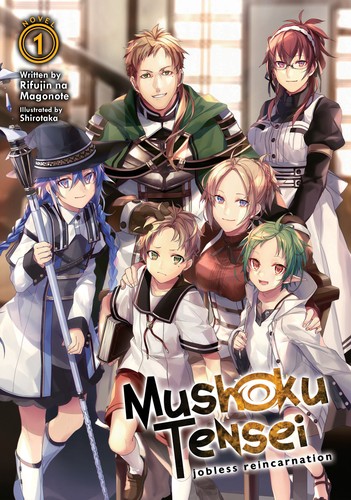
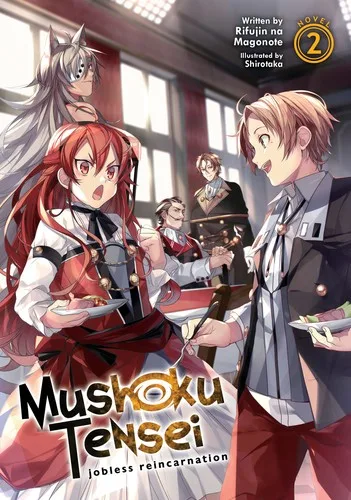
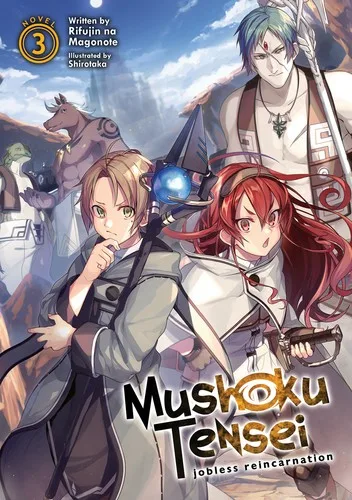
Vol 1 establishes the world, the magic system, Rudeus’s mentorship under Roxy, and the Greyrat family dynamic. It’s functional. The writing is dense. Worldbuilding is efficient, uncomfortable parts front-loaded. Vol 2 introduces Eris and the Boreas household. The dynamic between Rudeus and Eris is volatile and specific in ways the anime captured well. Vol 3 is the first Turning Point: the teleportation disaster that scatters the cast across the world. This is where the story actually starts. (The fandom tracks “Turning Points” as major plot pivots, but they’re not what you’d expect. According to the author, they represent shifts in the Orsted-vs-Hitogami conflict, not just dramatic moments. Some Turning Points feel huge. Others are quiet and only matter in retrospect.)
Read 1-3 as a block. Judge the series after Vol 3, not Vol 1.
Volumes 4-6: The Demon Continent
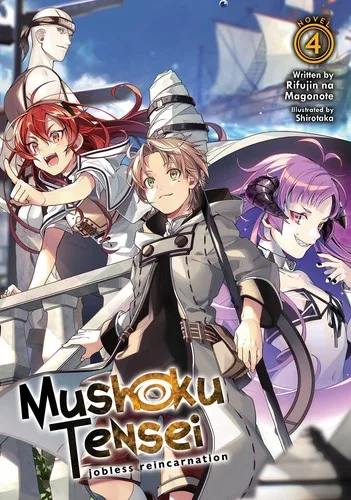
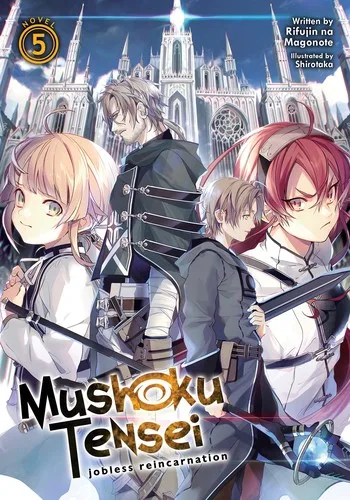
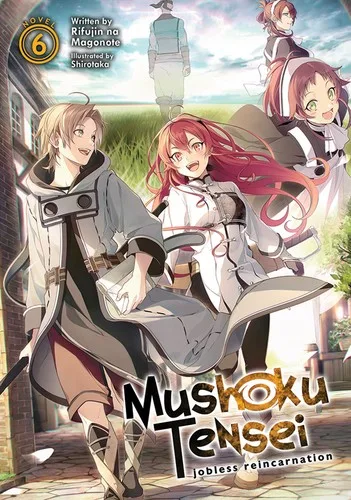
Rudeus, Eris, and Ruijerd traveling together through hostile territory. This stretch is classic adventure writing done well. Ruijerd is one of the best supporting characters in the series. A centuries-old warrior carrying the weight of his race’s reputation, quietly observing a child who he recognizes as someone carrying weight too. The dynamic between the three of them is the heart of the early series.
Vol 6 ends with the scene that broke the anime fandom. Eris leaves. The context is different in the LN. You understand why. But it still hurts, and what it does to Rudeus sets up the next three volumes.
Volumes 7-9: Ranoa Magic University
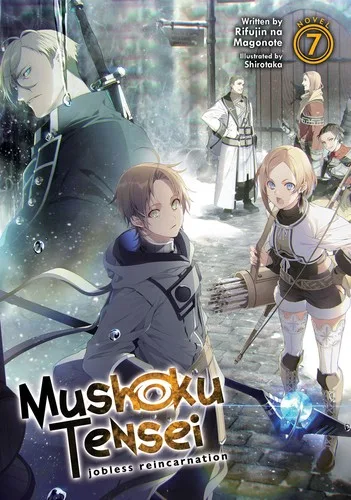
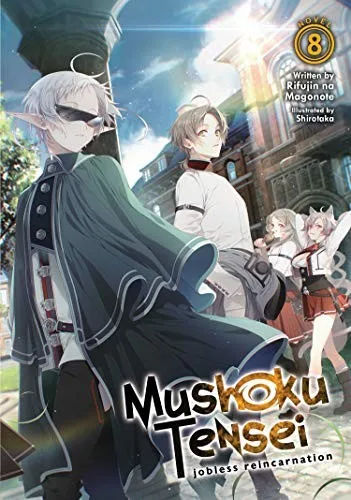
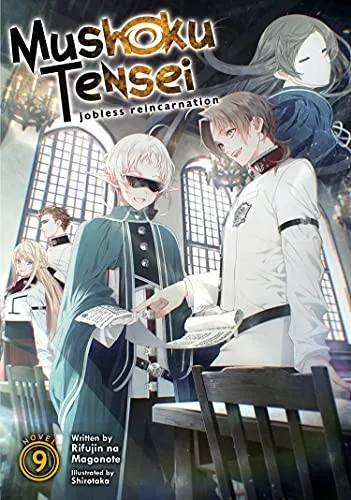
This is where the series splits readers. Rudeus is at his lowest. Depressed, dysfunctional, unable to move forward after Eris’s departure. The pacing slows way down. The university setting introduces new characters (Cliff, Zanoba, Nanahoshi) who become important later but feel tangential here. Sylphie’s arc as Fitts is the highlight.
Vol 9 introduces Orsted and the Man-God plotline. This is the pivot point for the entire second half of the series. Everything about Mushoku Tensei‘s structure changes here. If you’re in the “this is slow” camp during Volumes 7-8, Vol 9 is the reason to push through.
Volumes 10-12: Rebuilding
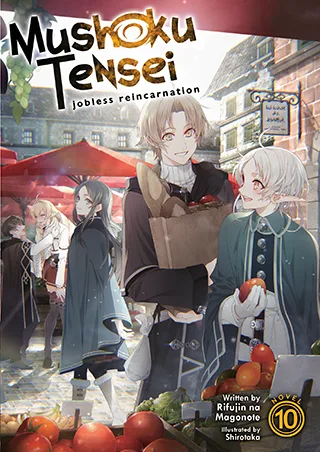
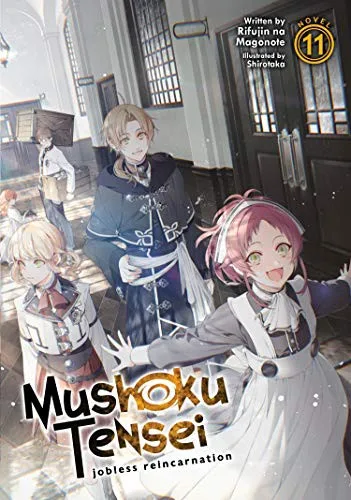
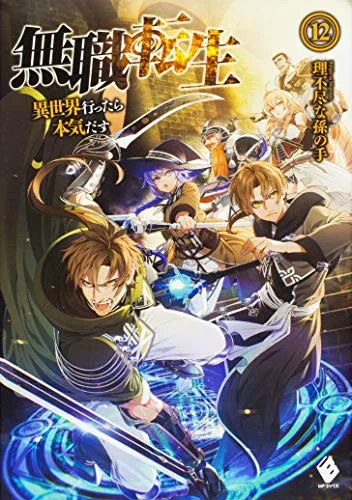
Rudeus rebuilds his life. Marriage, family, professional work. These volumes are genuinely domestic in a way that light novels almost never attempt. Rudeus learning to be a husband and a father, making mistakes at both, getting better gradually. It’s not exciting in the traditional sense. But the accumulation matters for what comes next.
Vol 12 begins the Labyrinth arc. The tone shifts hard.
Volumes 12-15: The Labyrinth
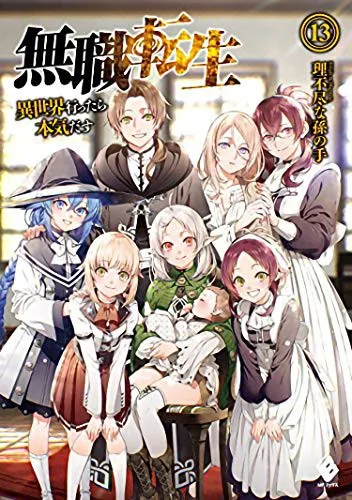
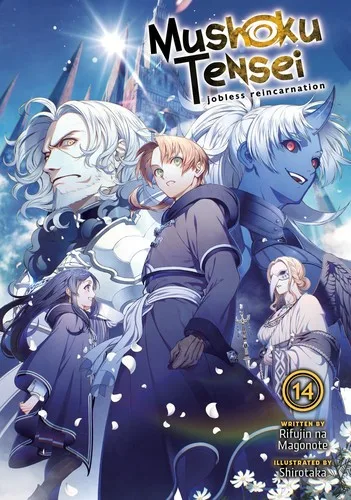
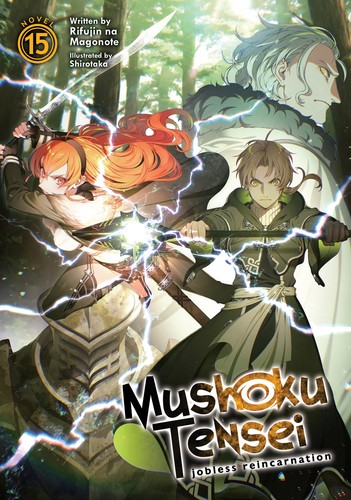
This is the peak of the series. The fandom agrees almost unanimously: Volumes 12 and 15 are the two best volumes in the entire run.
Paul’s party went into the Teleport Labyrinth to rescue Zenith. Things went wrong. Rudeus joins the rescue operation. What follows across four volumes is the most emotionally devastating stretch of writing in any light novel I’ve read.
Volume 12 resolves the Paul-Rudeus relationship in a way the entire series had been building toward. The community cites a specific line from that resolution as the most emotional moment in the series. I won’t quote it here. You’ll know it when you hit it. Studio Bind reportedly timed the anime adaptation of this moment to air on Father’s Day, which tells you everything about the weight it carries.
The Hydra fight is the most technically detailed and tense combat in the series. And Zenith’s fate after the rescue is a gut-punch that lingers longer than Paul’s arc, because it doesn’t resolve cleanly. It just sits there.
Volume 15 introduces Oldeus’s diary. Rudeus reads the life story of an alternate version of himself who failed. Seeing the fates of everyone he loves written out in clinical detail, watching a version of himself who made different choices at every junction and lost everything because of it. The community calls this volume the single best in the series, and I agree. The diary recontextualizes the entire Man-God plotline and makes the second half of the series feel urgent in a way the first half never was.
I cried reading Vol 15. I don’t say that to perform sensitivity. It’s a statement of fact about what the writing does in those chapters.
Volumes 15-17: Eris Returns
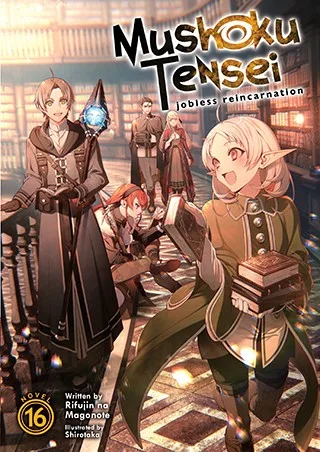
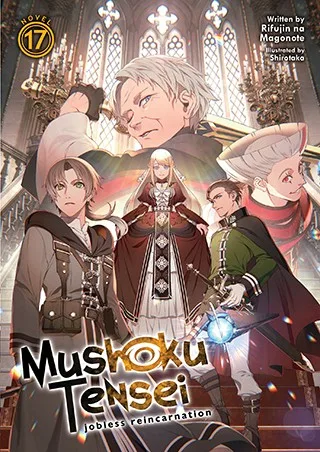
Eris comes back. The version of her that returns is not the version that left. She’s been training with the Sword God for years. She’s become something Rudeus doesn’t know how to process. Their reunion and the recalibration of their dynamic across these volumes is some of the best relationship writing in the genre.
Vol 17 wraps the Asura Kingdom arc. The Geese bar scene is a standout. The fandom treats Volumes 11-17 as one sustained emotional peak, and honestly that’s the right way to read it. If you make it to Volume 11, the series will carry you through to 17 without effort.
Volumes 18-22: The Endgame Setup
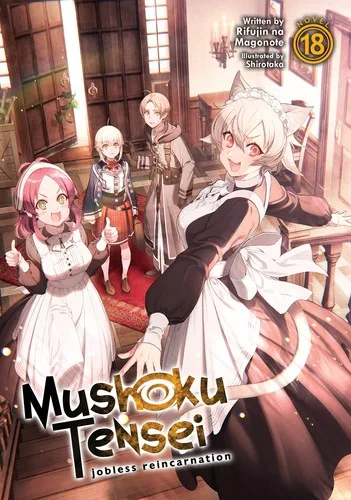
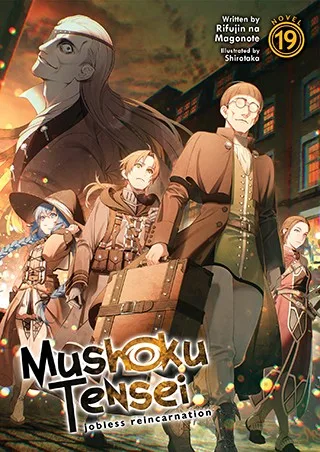
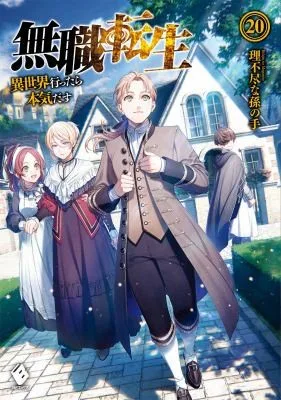
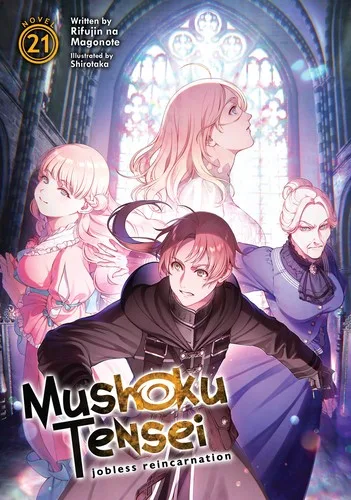
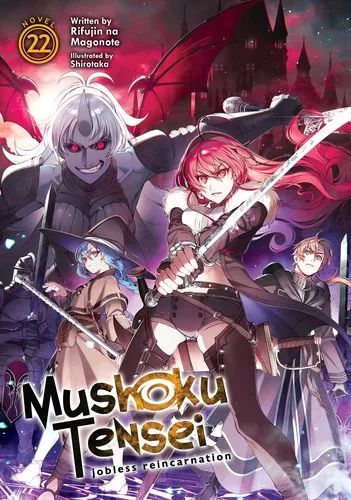
These are the volumes where the Man-God conflict becomes the primary narrative engine. Rudeus is building an organization. The stakes are existential for the first time. Not just “can Rudeus win this fight” but “can he prevent a future where everyone he loves dies.”
Vol 18 is the weakest volume in the second half. The community consensus on this is near-universal. After the emotional peaks of 11-17, Vol 18 feels like a tonal reset. It’s lighter, funnier, and the pacing drops. Some readers defend it as a necessary breather. On a reread, the comedy hits better. But on a first pass, coming off what just happened, it’s jarring.
Volumes 19-20 involve political maneuvering that reads as setup rather than payoff. If you’re binge-reading, Rudeus’s anxious monologues about Hitogami get repetitive through this stretch. The setup is load-bearing for the finale, but it tests patience.
Volumes 23-26: The Finale
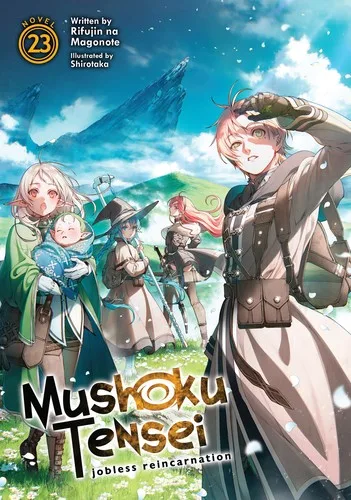
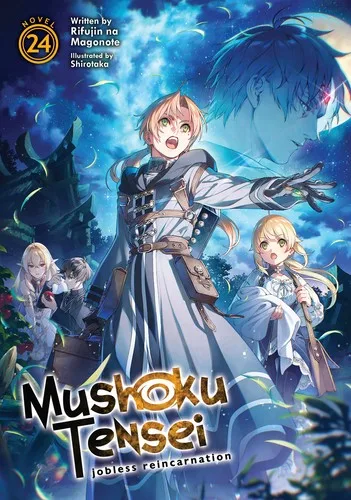
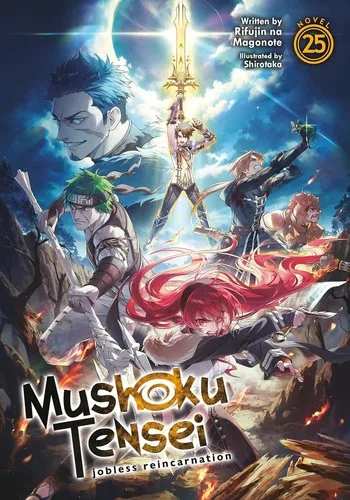
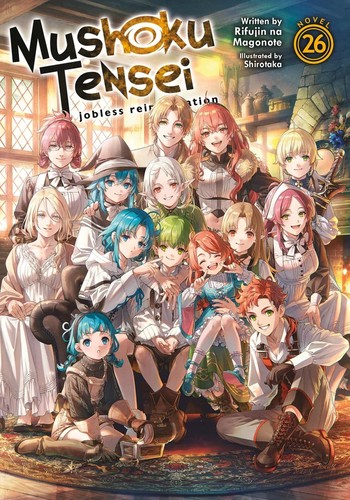
The final confrontation with the Man-God. The resolution of the Orsted alliance. The last pieces of Rudeus’s growth as a person.
Vol 24 contains the climactic battle. It’s technically impressive and emotionally satisfying. The payoff for dozens of characters’ arcs across 24 volumes lands because Rifujin na Magonote earned every thread. Not every thread resolves perfectly. Nanahoshi’s resolution felt rushed. The Man-God’s final status is ambiguous in a way that divided readers. But the Rudeus arc, the thing the whole series exists to tell, closes well.
Vol 25-26 are the epilogue volumes. Rudeus lives out the rest of his life. He grows old. The story’s point was never the battle. It was always about whether a person who wasted one life could build a second one worth living. The epilogue shows that he did.
One thing that divided readers: the three wives never fully learn that Rudeus is reincarnated from another world. Eris finds out through Orsted and is asked not to say anything. Roxy gets strong hints (Rudeus tells her a thinly veiled metaphorical version in Volume 12, and Nanahoshi implies they’re from the same place). Sylphie has the least information. That missing conversation bothered a lot of people. I get why. But I also think it fits who Rudeus is. He kept that secret because he was afraid of what it would mean for how they saw him. That fear is consistent with his character through the entire series.
The community calls the ending “bittersweet” rather than triumphant, and that’s right. Readers who finish describe feeling empty, not cheated. That’s the sign of a good ending for a series like this.
The Redundancy Volumes
After the main 26 volumes, Rifujin na Magonote published the Redundant Reincarnation side story collections (the fandom calls them “Redundancy” for short). These are short stories set within the timeline of the main series, filling gaps the main narrative skipped. Eris’s training arc. Roxy’s perspective during key events. Paul’s backstory before the teleportation.
They’re supplementary. You don’t need them. But the Eris chapters specifically address the biggest gap in the main series (her growth happening offscreen) and the community rates the “last one to leave the nest” chapter as emotional perfection. Multiple readers call the Redundancy volumes the best epilogue content they’ve read in any series.
There’s also Jobless Oblige, a related spinoff that follows Rudeus’s descendants and continues the larger Hitogami/Laplace War arc. Rifujin na Magonote has confirmed plans for a sequel series with Lara (Rudeus and Sylphie’s daughter) as the protagonist. The Redundancy volumes and Jobless Oblige are the bridge to that story.
Three Redundant Reincarnation volumes are out in English through Seven Seas. A fourth is expected. Read them after you finish the main 26 volumes.
The Writing (Honest Assessment)
Rifujin na Magonote is not a prose stylist. The writing is functional. Descriptions are efficient, dialogue is natural, action scenes are clear. But you’re not going to underline sentences for their craft. The web novel origins show. Some arcs have structural repetition. The inner monologue, which is the series’ greatest strength, is also occasionally indulgent. There are passages where Rudeus processes his feelings for paragraphs that could have been sentences.
Seven Seas’ English translation is decent. The community doesn’t have a strong fan translation preference the way Overlord does. The official version is fine.
One thing worth knowing: in 2021, Seven Seas got caught quietly censoring the English LN releases (Mushoku Tensei and Classroom of the Elite both got hit). After community backlash, they admitted it and released v2 digital editions with the edits reversed and typo fixes. If you’re buying digital, make sure you have the v2 versions. Physical reprints after 2022 should have the corrections. The community considers this resolved, but it comes up in every translation discussion.
The bigger practical issue is availability. Later volumes go out of print regularly. Seven Seas has confirmed restocks but without dates. If you’re collecting physical copies, buy volumes when you see them in stock. The digital editions on BookWalker and Kindle don’t have this problem.
Where the writing excels: long-range payoff. Rifujin na Magonote planned this story end to end. Characters introduced in Volume 2 have pivotal moments in Volume 24. Throwaway worldbuilding details in Volume 5 become plot-critical in Volume 20. The structural ambition of the series, the fact that it actually lands a 26-volume arc with deliberate foreshadowing throughout, is what separates it from everything else in the genre. Most isekai series run until they stop selling. This one was always going somewhere.
The Elephant in the Room
I need to address this directly because every discussion about Mushoku Tensei eventually gets here.
Rudeus’s behavior toward women, especially in the early volumes, is the reason a significant portion of readers cannot engage with this series. His internal thoughts are those of an adult in a child’s body, and the narrative gives you those thoughts without editorial distance. There are scenes that are played for comedy that many readers find indefensible. This is the most common criticism of the series and it’s legitimate.
My position: the series is aware of what Rudeus is. His growth over 26 volumes includes growth in this dimension specifically. The person he is by the end is not the person he was at the start. Whether the journey justifies the starting point is a personal question that I can’t answer for you.
What I will say: if you read Volume 1 and the discomfort is a dealbreaker, trust that instinct. The series does not suddenly become comfortable. It earns its arc gradually, and the early volumes are part of what you’re signing up for. Not everyone should read this series. That’s okay. It’s still my favorite.
The other controversial element is the harem. Three wives. The community splits hard on this, particularly around how Roxy enters the picture in Volume 12. The timing is rough: Rudeus is married to Sylphie, he’s in the Labyrinth under extreme emotional stress, and the Roxy relationship develops in that context. Some readers feel the romance was rushed and undermined the Sylphie relationship. Others point out that the series frames this as morally complicated on purpose. You’re supposed to feel conflicted. The Man-God plotline later reveals that Rudeus and Roxy’s connection was essentially fated, which retroactively contextualizes the timing. Whether that justification works for you is personal. It worked for me. But I understand the readers it didn’t work for.
Is Mushoku Tensei Worth Reading?
If you can handle the protagonist issues I described above: yes, unambiguously. This is the most complete, deliberately constructed isekai story in the medium. It starts rough, earns its complexity. Sticks the landing across 26 volumes in a genre where most series can’t stick a landing across 6.
Read it if: you want character development that happens over years, not episodes. If you want a fantasy world that has history and consequence. If you want an isekai that’s actually about something beyond power and wish fulfillment.
Skip it if: the early Rudeus content is a hard no for you (valid), you need fast pacing throughout (Volumes 7-8 and 19-20 will test you), or you want a traditional hero. Rudeus is never a hero. He’s a flawed person trying to be less flawed. That’s the whole thing.
26 volumes, Seven Seas Entertainment. Complete. Start at Volume 1.
More on this series: light novels like Mushoku Tensei
FAQ
Is the Mushoku Tensei light novel worth reading?
Yes, with the caveat that the protagonist’s behavior in early volumes is a legitimate dealbreaker for some readers. If you can sit with an uncomfortable starting point for a 26-volume character arc, it’s the most complete and rewarding isekai series available. The payoff in the Labyrinth arc (Volumes 12-15) and the finale (Volumes 23-26) justifies the investment.
How many Mushoku Tensei light novels are there?
The main series is 26 volumes, all available in English through Seven Seas Entertainment. There are also three Redundancy side story volumes in English (with a fourth expected), plus the Mushoku Tensei: Roxy Gets Serious manga spinoff. The main 26 volumes tell the complete story from beginning to end.
Is the Mushoku Tensei light novel finished?
Yes. The main series wrapped at Volume 26. It’s fully complete in both Japanese and English. The Redundancy side story collections are still being published but are supplementary to the finished main story.
Does Mushoku Tensei have a good ending?
The main conflict resolves in Volume 24. Volumes 25-26 are epilogue chapters that show Rudeus’s life continuing after the final battle. Most readers found the ending satisfying. The Man-God’s final status is the most debated element. The emotional closure for Rudeus and his family is strong. Rifujin na Magonote planned the ending from the start and it shows.
Should I read the Mushoku Tensei web novel or light novel?
The light novel. It’s the definitive version. Rifujin na Magonote revised the story extensively from the web novel, with improved pacing, additional scenes, a more refined version of Rudeus’s development. The web novel is rougher, and some arcs play out differently. The community treats the light novel as canon.
What is Mushoku Tensei Redundancy?
Redundancy is a collection of side stories set within the timeline of the main 26-volume series. They fill in gaps like Eris’s training arc, Roxy’s perspective on key events, and backstory for supporting characters. Three volumes are available in English through Seven Seas. They’re optional but recommended after finishing the main series, especially the Eris chapters.