

This article contains affiliate links. If you buy through these links, we earn a small commission at no extra cost to you.
A Certain Magical Index is one of those series that the light novel community will never stop arguing about. Twenty-two volumes of Old Testament. Twenty-three volumes of New Testament. Genesis Testament still going. A franchise that spawned Railgun, Accelerator, and an entire shared universe that’s been running since 2004. The scope is absurd. The ambition is real. And the execution is wildly uneven in ways that matter.
I’m going to be honest about this one. Index is a series I respect more than I consistently enjoy. Some volumes are genuinely brilliant. Some volumes feel like Kamachi Kazuma wrote them on a deadline while juggling three other serializations (which, knowing his output, he probably was). The highs justify the commitment. The lows test your patience. Whether it’s “worth reading” depends entirely on what you’re willing to put up with to get to the good parts.
TL;DR
Index is a deeply ambitious fantasy series with a magic system more intricate than almost anything else in light novel fiction and a protagonist who’s far better than his anime reputation suggests. The world-building is exceptional. The political intrigue in the later volumes is top-tier. But the prose is functional at best. The pacing is inconsistent. Some arcs in the middle of Old Testament drag hard. If you can push through the weaker stretches, the payoff in volumes 14-22 and especially New Testament is substantial. Start with volume 1. If you’re not hooked by volume 6, this probably isn’t your series.

What Is This Series Actually About?
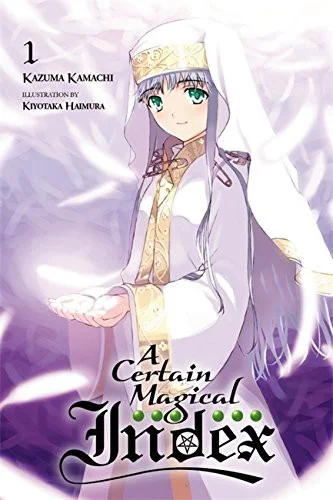
On the surface: Touma Kamijou is a high school student in Academy City whose right hand, Imagine Breaker, can negate any supernatural ability. He meets Index, a nun who memorizes 103,000 grimoires, and gets pulled into conflicts between the science side (espers, Academy City’s power structure) and the magic side (religious organizations, secret societies, literal saints).
What it’s actually about: a story about power systems and institutional corruption. It’s about one person’s stubborn refusal to accept that any problem is unsolvable. The early volumes play like standard light novel action. The later volumes become political thriller territory with fantasy elements. The shift is gradual enough that you don’t notice it happening until you’re reading about international geopolitics between the Anglican Church, the Roman Catholic Church, and Academy City’s Board of Directors, and realizing this is the same series that started with a boy punching a magic nun’s friends.
The Magic System Is the Star
Kamachi built something genuinely impressive here. The magic side draws from real-world religious and occult traditions — Christianity, Norse mythology, Kabbalah, Thelema, Shinto. Every spell has a logical basis within its tradition. Every magical conflict has rules that, if you pay attention, you can follow and even predict.
The science side operates on a completely different framework. Esper powers in Academy City are explained through quantum mechanics and AIM fields. The two systems shouldn’t be compatible, and that incompatibility is a plot point. When they collide, the results are unpredictable in ways that drive some of the best conflicts in the series.
This is the content the anime strips almost entirely. If you watched the show and thought the fights were just flashy power exchanges, the novels will change your understanding of every single one. The Acqua of the Back fight alone goes from “strong guy attacks” in the anime to a multi-layered tactical puzzle in the novels where you understand exactly why God’s Right Seat is terrifying and what specific properties of Imagine Breaker create a vulnerability that Touma has to exploit.
Touma Is Not What the Anime Told You
The single biggest misconception about Index comes from anime-only viewers who think Touma is a generic punch-and-speech protagonist. The anime, especially Season 3, presents him that way because it cuts his internal monologue to save time. The novels give you everything the anime removes.
Touma in the novels is constantly thinking. Analyzing. Working through why an opponent’s worldview is wrong on its own terms, not just by his personal morality. When he gives his “I’ll destroy that illusion” speech, it’s the conclusion of a logical argument he’s been building internally for pages. The anime gives you the punchline. The novels give you the full reasoning. The difference turns him from a template protagonist into someone who earns his victories through understanding, not just through his power.
He also gets hurt. A lot. And the novels don’t gloss over it. The physical toll of being a normal human in fights against saints and espers is a recurring theme. Touma’s willingness to endure pain isn’t played as cool — it’s played as stubborn and sometimes genuinely concerning. The people around him notice. It affects relationships. The anime rarely has time for this.

The Cast Is Massive (and That’s a Problem Sometimes)
Index has one of the largest character rosters in light novel fiction. Across Old Testament alone you’re tracking Touma, Accelerator, Hamazura, Index herself, Mikoto Misaka, the Level 5 espers, God’s Right Seat, the Amakusa Church, the Anglican Church hierarchy, Academy City’s Board of Directors, and dozens of recurring side characters who appear across multiple arcs.
When this works, it’s incredible. The Battle Royale arc in volume 15 puts four esper factions against each other in a citywide conflict where every group has understandable motivations. The World War III arc has threads running across half a dozen countries with characters you’ve been following for the entire series. The payoffs are enormous because Kamachi has been planting seeds for ten volumes.
When it doesn’t work, you’re reading an arc about a character you barely remember from six volumes ago, trying to care about their conflict while the characters you actually invested in are off-screen. Some of the middle volumes of Old Testament suffer from this. Kamachi introduces arcs that serve the larger plot but don’t work as standalone stories, and if you’re not already committed to the world, those volumes feel like homework.
Accelerator’s Arc Is the Best Thing in the Series
I’ll say it plainly. Accelerator’s character arc across Old Testament is the single best piece of character writing in the Toaru franchise. His journey from the Sisters arc villain to the antihero of the final volumes is earned in a way that very few light novel redemption arcs are.
The key is that Kamachi doesn’t let him off the hook. Accelerator did terrible things. The story acknowledges those things consistently. His growth isn’t about being forgiven — it’s about choosing to act differently despite knowing he doesn’t deserve forgiveness. Last Order’s role in that transformation is handled with more emotional intelligence than you’d expect from a series that also includes lengthy explanations of AIM diffusion fields.

Hamazura Shiage, the third protagonist who enters later, is less consistent. His arc is meant to represent the “normal person” perspective — no powers, no special abilities, just someone trying to survive. When it works, it grounds the escalating power levels. When it doesn’t, his sections feel like interruptions to the main story. Your mileage will vary.
The Writing Quality Is Functional, Not Beautiful
I need to be honest about this: Kamachi Kazuma is not a prose stylist. He writes fast. He publishes multiple novels per year across different series simultaneously. The writing reflects that pace. Short sentences. Repetitive fight descriptions. Exposition dumps that tell you the rules of a magic system in the middle of an action scene. Character descriptions that repeat the same physical details every time someone appears.
If you’re coming from NisiOisin’s Monogatari or the literary ambition of something like Violet Evergarden‘s source material, the prose in Index will feel flat. It’s workmanlike. It gets the information across. It rarely elevates the material through language itself.
What Kamachi does well is structure. The way arcs build on each other. The way throwaway details in volume 3 become critical plot points in volume 18. The foreshadowing across the entire Old Testament run is meticulous even when the individual prose isn’t. You’re reading for the architecture of the story, not the sentence-level craft.
The Pacing Problem
Old Testament has a pacing issue in the middle stretch. Roughly volumes 7 through 11, some arcs feel like they exist primarily to set up later payoffs rather than working as satisfying stories on their own. The Daihasei Festival arc has important plot development buried inside a structure that doesn’t generate much tension. The Remnant arc is necessary for the worldbuilding but isn’t particularly engaging as a standalone read.
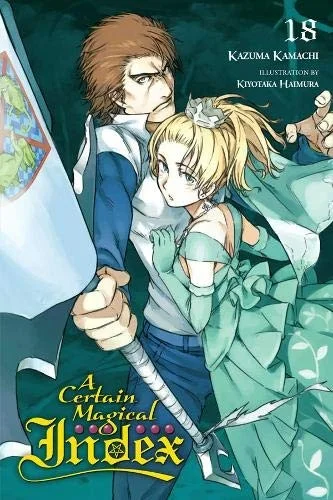
Then volumes 14 onward hit, and the pacing transforms. The political intrigue accelerates. God’s Right Seat becomes a genuine threat. The British Royal Family arc, the Acqua fight, the Document of Constantine, DRAGON — these are some of the best volumes in the entire franchise, and they reward every slower chapter you pushed through to get here.
World War III (volumes 19-22) is the culmination, and it’s impressive. All three protagonists converge. Every faction you’ve been tracking makes their move. Plot threads from the entire run come together. It’s messy in places — Kamachi is juggling an enormous number of characters and locations — but the ambition is undeniable. Very few light novel series attempt something at this scale, and even fewer pull it off as well as Index does.
What About New Testament?
New Testament is the sequel series — 23 volumes continuing after Old Testament’s conclusion. General consensus in the community: the highs are higher. The writing is noticeably tighter. And the power scaling goes absolutely wild. Magic Gods enter the picture. The scope expands from international politics to cosmological threats.
If you finish Old Testament and wonder whether to continue, the answer from the community is an overwhelming yes. New Testament is where Kamachi’s long-term planning pays off most dramatically. Character relationships that developed across 22 volumes get challenged and deepened. The world-building reaches a scale that makes Old Testament look like a prologue.
Genesis Testament is still ongoing, for the truly committed. At this point you’re deep enough into the franchise that you don’t need a review telling you whether to continue. You already know.
The Yen Press Translation
All 22 volumes of Old Testament are available in English from Yen Press. New Testament is being translated on an ongoing schedule. The translation is adequate. It conveys the information clearly and handles the technical terminology (both magical and scientific) consistently. It doesn’t add literary quality that isn’t in the Japanese, but it doesn’t lose the structural sophistication either.
Some longtime fans prefer the old fan translations for specific terminology choices, but for new readers picking up the official release, the Yen Press version is perfectly serviceable. The reading experience is dense. These aren’t light reads despite being “light novels.” The magic system explanations alone require active attention, and volumes in the 14-22 range assume you remember details from the earliest books.
Who Should Read This?
Read A Certain Magical Index if you want a fantasy series that treats its magic system with the rigor of a hard sci-fi novel. If you care about world-building that spans religious traditions and political structures. If pseudo-scientific esper frameworks interest you, even better. If you want a protagonist who wins through understanding, not just power. If you’re willing to push through some uneven middle volumes for payoffs that genuinely deliver.
Don’t read it if you need consistently beautiful prose. Don’t read it if pacing issues in the middle of a long series will make you drop it. Don’t read it if you can’t handle a cast of 50+ recurring characters across multiple storylines. And definitely don’t judge the series by the Season 3 anime — that adaptation did the source material no favors.
Index is a commitment. Twenty-two volumes for Old Testament alone, and the full franchise runs past sixty. But within that commitment is a world and a story that very few light novels match in ambition. The execution falters sometimes. The ambition never does.
FAQ
Q: Do I need to watch the anime before reading?
A: No. The novels are the complete experience. Seasons 1-2 are faithful enough to serve as an alternative entry point, but Season 3 is widely considered an inadequate adaptation.
Q: Can I skip straight to New Testament?
A: No. New Testament assumes full knowledge of Old Testament’s 22 volumes. Characters, plot threads, and world-building all carry forward.
Q: How does Index compare to Railgun?
A: They share a universe but feel very different. Railgun is more focused and character-driven. Index is broader in scope with more complex politics. Most fans recommend experiencing both.
Q: Is 22+ volumes too long?
A: Each volume reads quickly — Kamachi’s prose is fast-paced. Most readers finish a volume in 3-4 hours. The real time investment is the series’ length, not individual volume density.
Q: What’s the best volume in Old Testament?
A: Community favorites are volume 15 (Battle Royale), volume 20 (World War III), and volume 22 (the conclusion). The late-series run from 14-22 is consistently praised.