

This article contains affiliate links. If you buy through these links, we earn a small commission at no extra cost to you.
The Index manga has been running for 19 years. It started in 2007 in Monthly Shōnen Gangan. Artist: Kogino Chuya. And it’s still going. Thirty-three volumes later, it hasn’t even finished adapting the first series of light novels. The LN, meanwhile, has over 60 volumes across three complete series and a fourth in progress.
That gap tells you most of what you need to know about the relationship between these two versions of the same story. The manga is a condensed, visually polished retelling. The light novel is the full picture. The specifics of what the manga cuts, what it outright skips, and where it actually improves on the source are worth breaking down if you’re trying to decide where to spend your time.
TL;DR
- The light novel is the definitive version of Index. Sixty-plus volumes across Old Testament, New Testament, and Genesis Testament.
- The manga has only covered 19 of the original 22 OT volumes in 33 manga volumes over 19 years.
- It skips LN volumes 2 (Deep Blood arc) and 4 (Angel Fall arc) entirely.
- Touma’s internal monologue and the magic system depth get compressed significantly.
- The manga is a better adaptation than the anime, but it will never catch up to the novels. If you want the full story, you need the LNs.
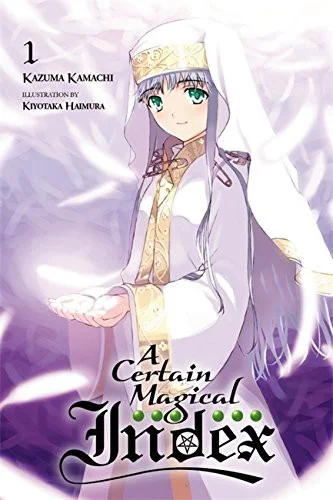
How Much of the Light Novel Does the Manga Actually Cover?
This is where the numbers get brutal. The Index light novel has three completed series plus an ongoing fourth:
- Old Testament (OT): 22 volumes + 2 side story volumes (2004-2010)
- New Testament (NT): 23 volumes (2011-2019)
- Genesis Testament (GT): 15+ volumes (2020-ongoing)
The manga? After 19 years of monthly serialization and 33 published volumes, it has adapted up to approximately LN Volume 19 of Old Testament. Not New Testament. Not Genesis Testament. Just OT.
Here’s the mapping:
| Manga Volumes | LN Volume | Arc |
|---|---|---|
| 1-2 | OT Vol 1 | Index arc |
| 3-4 | OT Vol 3 | Sisters arc |
| 5-6 | OT Vol 5 | Three Stories arc |
| 7-8 | OT Vol 6 | Angel Fall resolution |
| 9-10 | OT Vol 7 | Orsola/Book of Law |
| 11 | OT Vol 8 | Tree Diagram Remnant |
| 12-14 | OT Vol 9-10 | Daihasei Festival |
| 15-17 | OT Vol 11-12 | La Regina del Mare Adriatico |
| 18-19 | OT Vol 13 | Academy City Invasion |
| 20 | OT Vol SS | Side Stories |
| 21-22 | OT Vol 14 | Battle Royale |
| 23-25 | OT Vol 15 | Acqua of the Back |
| 26-27 | OT Vol 16 | British Royal Family |
| 28-29 | OT Vol 17 | Document of Constantine |
| 30-31 | OT Vol 18 | DRAGON |
| 32-33 | OT Vol 19 | World War III (beginning) |
At this pace, the manga will need another 3-5 years just to finish Old Testament. As one reader on r/Toaru put it: “It’s been going for 19 years, and they still haven’t finished OT yet, despite skipping a couple of novels.”
The LN content beyond OT — over 40 volumes of New Testament and Genesis Testament — will almost certainly never get a manga adaptation. If the manga is your only entry point, you’re reading maybe a third of the total story.

What Does the Manga Skip?
Two entire light novel volumes are missing from the manga: Volume 2 (Deep Blood arc) and Volume 4 (Angel Fall arc).
This isn’t trimming. These arcs don’t exist in the manga at all. The manga jumps from the Index arc (Vol 1) straight to the Sisters arc (Vol 3), then from Sisters straight to the Three Stories arc (Vol 5).
The community theory on why these were cut is pragmatic rather than artistic. As one r/Toaru commenter explained: “Popular theory is that these were skipped in order to spend more time concentrating on stories involving Misaka Mikoto, rather than spend time introducing characters such as Aisa Himegami or Sasha Kreutzev.” Monthly serialization means every chapter counts for reader retention, and Misaka sells.
The problem is that both skipped arcs introduce characters who reappear later. Himegami shows up in later volumes and the manga just glosses over who she is. Sasha Kreutzev becomes relevant during the Russia arc. The manga either hand-waves these characters’ backgrounds or ignores the gap entirely.
The anime at least partially adapted these volumes (albeit poorly). The manga doesn’t even try. If you want the full Index experience, these arcs only exist in the light novels.
Where the Manga Does Better Than the Anime
Here’s the thing the community consistently agrees on: the manga is a better adaptation than the anime. “The manga follows most of the LN, but not every single detail… The manga is not perfect, but it’s better than the anime,” as one reader summed it up.
This holds especially true for the material that corresponds to anime Season 3. The Index anime tried to cram nine volumes into 26 episodes and the result was borderline incoherent. The Battle Royale arc, the British Royal Family arc, World War III — all of these were butchered in the anime. The manga, by giving each arc multiple volumes of space, keeps these storylines comprehensible.
Kogino’s art is another genuine strength. Fight choreography that gets lost in JC Staff’s inconsistent animation reads clearly on the page. The visual storytelling carries weight that the anime’s rushed production couldn’t maintain, especially in the later arcs where the anime’s quality dropped off a cliff.
The pacing difference is real. Where the anime sprinted, the manga walks. That slower pace means individual scenes land harder. Character reactions get panel time. The escalation of Academy City’s political situation builds visually across chapters instead of being compressed into a montage.

What the Manga Still Loses From the Light Novel
Better than the anime doesn’t mean equivalent to the source. The manga shares the same fundamental limitation as every visual adaptation of Index: Touma’s internal monologue gets gutted.
In the novels, Touma is constantly thinking through situations. He’s analyzing why a villain’s worldview doesn’t hold up, calculating when to deploy Imagine Breaker, making deliberate choices about escalation. The novels dedicate pages to his reasoning before he throws a single punch. That reasoning is what separates him from every other “punch to win” protagonist in the medium.
The manga can’t reproduce that. Thought bubbles and narration boxes exist, but a manga panel can’t carry three pages of internal debate about whether an enemy’s philosophy has merit. Kogino compensates with expressive art and panel composition, and he does it well. The character depth that makes novel Touma interesting gets flattened into a more straightforward action hero on the page.
The magic system takes a similar hit. Kamachi built Index’s magic from real-world religious and occult frameworks. The explanations of how spells function, why certain magical traditions conflict, how the science side and magic side operate on fundamentally different logical systems — all of that requires prose. The manga keeps the surface-level “this spell does this thing” information and drops the deeper architecture.
For the first dozen volumes, this compression is manageable. But as the story’s political complexity ramps up in the later OT volumes, the manga’s inability to convey the full scope of what’s happening becomes more noticeable. The British Royal Family arc reads fine in the manga. It reads better in the novel, where you understand the political motivations driving every faction.
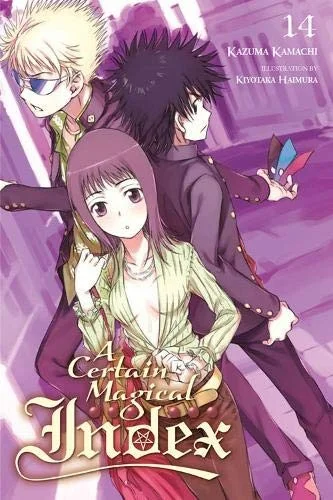
What About the Railgun Manga?
This needs mentioning because the Railgun manga is widely considered the superior manga in the Toaru franchise. Different artist (Fuyukawa Motoi), different magazine (Dengeki Daioh), different protagonist (Misaka Mikoto), and a significantly better reputation among readers.
Railgun isn’t a replacement for Index. It’s a side story that runs parallel to the main narrative, focusing on the science side of Academy City. The two series intersect during the Sisters arc and occasionally share events, but they tell different stories.
The reason I bring it up: if you’re coming to Toaru through manga specifically, the Railgun manga is the stronger manga experience. The Index manga is a competent adaptation limited by its monthly pace and the sheer density of its source material. Railgun was designed as a manga from the ground up and it shows.
If you’re already committed to reading the Index novels, the Railgun manga is a great companion piece. If you’re choosing between the Index manga and the Index novels, the novels win. Period.
Which Should You Read?
The light novels. The answer has always been the light novels.
Index is the fourth most sold light novel franchise ever. The reason isn’t the anime or the manga. It’s because Kamachi wrote 60+ volumes of dense, interconnected worldbuilding that rewards investment in ways no adaptation has managed to capture. The manga gets closer than the anime did, but “closer” still leaves two skipped arcs, 40+ unadapted volumes, and a fundamental inability to convey the internal reasoning that makes the whole thing work.
Read the manga if you genuinely cannot engage with prose and you need a visual medium. It’s competent. Kogino’s art is consistent. The pacing is better than the anime. You’ll get a version of Index that makes sense, which is more than Season 3 of the anime managed.
Read the light novels if you want to actually understand why this franchise has endured for over two decades. Yen Press publishes both in English. The omnibus editions make the novels more accessible than they’ve ever been.