

This article contains affiliate links. If you buy through these links, we earn a small commission at no extra cost to you.
Short version: the Russian gimmick in the title is the worst thing about this series and it’s gone from being the point by volume 3. What’s left is a student council election story with the best brother-sister dynamic in current light novels, and that’s the book I’d recommend, nine volumes in. If you came for a girl muttering sweet nothings in a language the guy secretly understands, you’ll get it. Volume 2 you’re still smiling at it. By 3 I’d started skimming those lines, and I think the book had too.
I bought volume 1 in July 2024, the week the first episode’s end-credits dance went around and everyone I know who doesn’t read light novels asked me whether the show was based on anything. It was. I read the first three during the season, slightly ahead of the show, and then the series had me. I’m caught up to 9 as of this spring and I read the 9.5 side book last week, in two sittings, mostly on a bus. That’s the reading history, and I lay it out because this is a series where where you are in it changes what you think it is.
The premise
Alisa Kujou, half-Russian, silver hair, top of the class, student council accountant, unapproachable to everyone except the slacker next to her, Masachika Kuze, whom she scolds daily and occasionally says something affectionate to in Russian on the assumption that he can’t understand. He can. His grandfather’s side of the family has the connection. He doesn’t tell her, not for a long time. That’s the premise, and the first volume is mostly that joke run in different rooms, and I’ll be honest it nearly lost me, cause one joke is one joke no matter how good the illustrations are, and Momoco’s illustrations are very good.
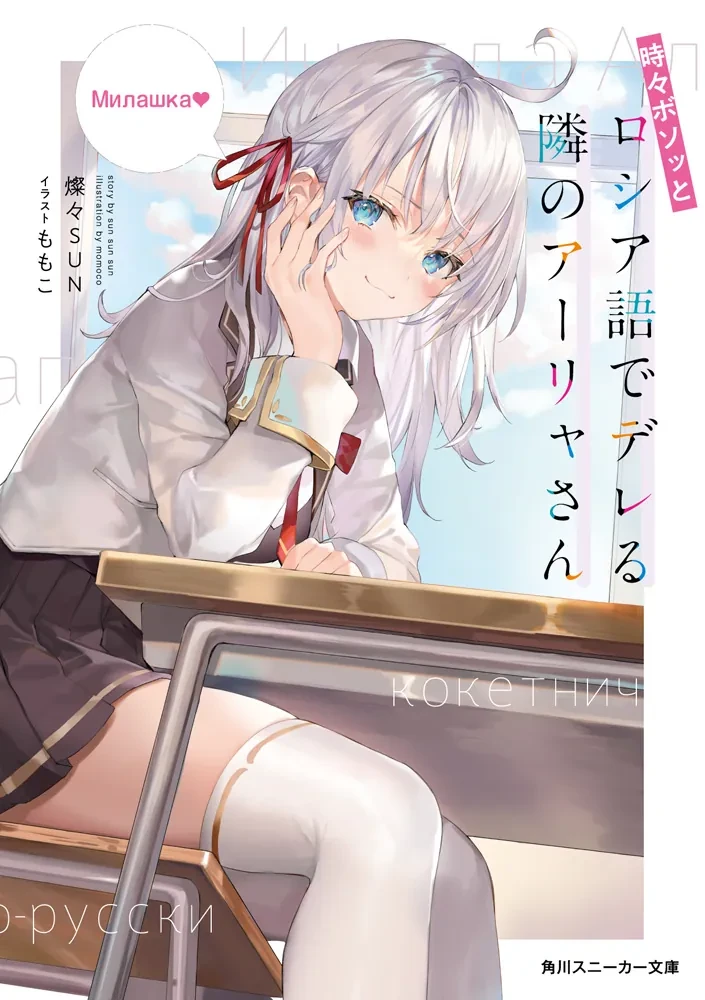
The early Russian is also, by reputation, not great. I don’t read Russian. I have a friend who does and her verdict on the volume 1 lines was a face I won’t describe. SunSunSun apparently got better at it, or got a better consultant, because by the later volumes nobody complains, but if you’re a Russian speaker going in, the first book is going to be a bumpy ride.
The election, and Yuki
A student council election. Alya decides to run for president and Masachika ends up as her running mate, and from the back half of volume 1 through volume 9 the series is a campaign story with a romance inside it rather than the other way around. Debates, a school festival, an athletics festival, speech prep, rival tickets, a sabotage plot in volume 6 that’s genuinely tense. SunSunSun writes school politics like he’s interested in school politics, which is rare, most authors in this genre treat the student council as a set.
And then there’s Yuki. Yuki Suou is the rival candidate, the cheerful one. She is also, early on, revealed to the reader as Masachika’s younger sister, from the half of his family he walked away from. The two of them have a public persona and a private one and the gap between them is the funniest thing in the series and, by volume 9, the most serious. The anime figured this out too, the Yuki scenes are what everyone screenshotted, but the books give you the whole architecture of why those two are the way they are, the Suou family and the Kuze family and the grandfather and the mother, and it’s a real family drama by the end, the kind with a sick kid and a confrontation in a cold house.

I’d predicted, somewhere around volume 4, that the sibling thing would stay a running gag, the way these series usually keep their best joke in a jar. It didn’t. Volume 9 is the Yuki book. It’s the one where Masachika finally tells Alya and goes to the Suou house, and the series stops being a comedy for about a hundred pages. I read it on a flight in April and I remember being annoyed at the drink cart.
Alya herself
Here’s the complaint I have that I don’t see in most reviews, and I’ll own that it might be a me problem. Alya is the least interesting person in her own series for about five volumes. She’s proud and competent and lonely, the book keeps telling you about the loneliness and I believed it, but Masachika’s got the family thing. Yuki’s got the family thing and a whole second self. Alya’s got a crush. The sister helps. Masha, the older sister, is a better character in half the page count, which I don’t think is intentional.
The numbers say I’m in the minority on this. It’s past five million copies in Japan, so clearly the cover is selling the book and the book is keeping the people the cover brings in. I’m not arguing with that. I’m saying the person on the cover is the fourth-best reason to keep reading, and the series seems to half know it, cause the Yuki and Masha material keeps getting more page time with every volume.
It improves. Volume 5, where she starts actually making friends instead of being told to, is where I started caring about her as a person rather than as the cover. And the volume 8 beat, where she loses the sports festival and realizes what the losing means, is the first time the book gives her an interior moment that isn’t about him. Took eight volumes.
The pace, and the other thing
Two complaints that go together. The books started coming out twice a year and have slowed, I checked for 12 enough times this year that I stopped checking, and then it landed this month. I don’t know what’s going on there and I’ve stopped guessing at Sneaker Bunko’s schedule, it burned me on another series I won’t name. Yen On is at 9 plus the two side books, which for once is close to caught up. I’d take that trade. The other thing is the harem drift. The series is honest about who the pairing is, it’s in the title, but the cast of girls with a stake in Masachika grows every couple of volumes, and by 7 there’s a stretch where the election plot is competing with a fairly standard who-is-he-going-with setup, and the election plot loses. It recovers in 8. It’s the only stretch I’d call skippable, and I didn’t skip it, because I never do.
The side books
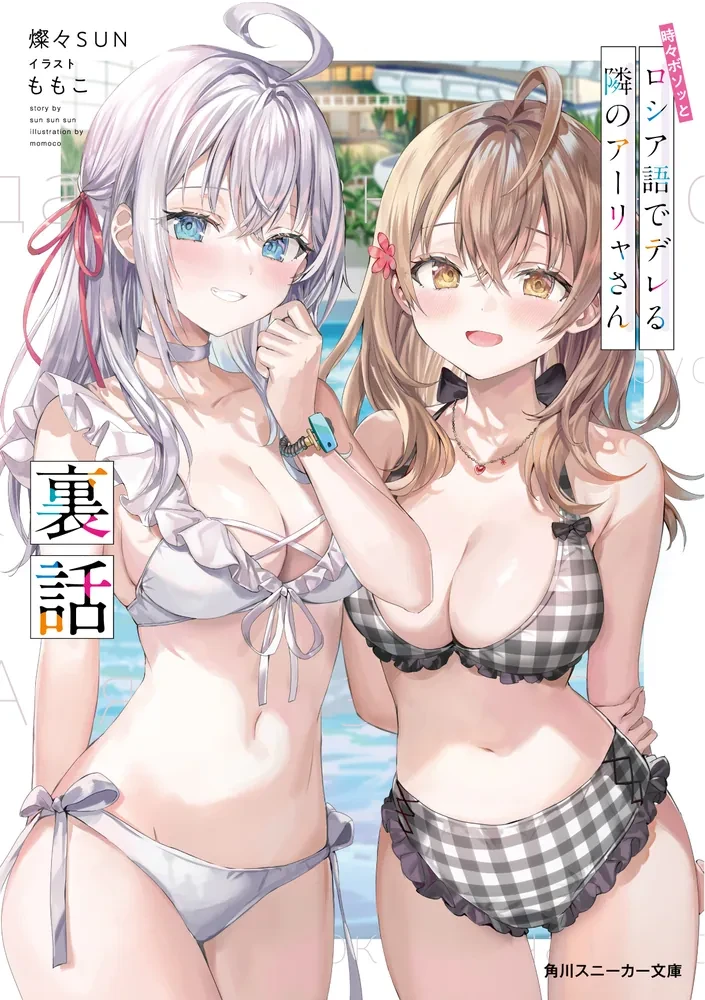
Two of them, 4.5 and 9.5, and I’d read both, which I don’t say about most side volumes. 4.5 is the summer stories, slight and pleasant, the beach trip from volume 4 from a few more angles. 9.5, the one I just finished, is better, it’s a set of behind-the-scenes shorts from across the series and it has the hypnosis incident from volume 3 told from the other side, which I’d wanted for three years. Also a handicraft club story that I did not need and enjoyed anyway, plus a Yuki piece that explains one of her schemes from volume 2 in a way that made me go back and reread the chapter, on the bus, which is where I’ve apparently decided to read this series. Neither is required. 4.5 is 2022 in Japan, 9.5 is late 2024, and Yen On did both, which is more than they do for most side books.
Should you read it
Yes, through volume 9 at minimum, cause 9 is where the series pays off the thing it’s been building since the first book, and if you stop at 3 where the anime stops you’ve read the setup and none of the point. Skip it if a one-joke premise is a dealbreaker for the first book, cause the first book is the joke. And if you’re here for Alya specifically, I don’t know, you might be happier with the anime, which likes her more than the books do.
One thing I can’t tell you is where it ends. Twelve volumes in Japan, an election that hadn’t happened yet as of the ninth, a family situation that’s half resolved, and a second anime season pushed to 2027 that’ll cover maybe through volume 6. I have no idea whether SunSunSun is writing toward the election or past it. I’d like it to be the ending. I said the same thing about the student council arc in Oregairu and look how that went.
Nine volumes, two side books. I’ve had the volume 12 cover open in a tab for two weeks and I’m not going to look at it properly until Yen On gets there, which is a thing I do now, apparently.