

This article contains affiliate links. If you buy through these links, we earn a small commission at no extra cost to you.
The first thing anyone saw of this show was the end of episode 1, Alya in a white outfit doing a dance to a song I didn’t know, and the clip was everywhere by the weekend. I bought volume 1 that week. What I haven’t said anywhere is that I spent the next three months mildly confused, cause the show I was watching on Wednesday nights and the books I was reading a volume ahead of it kept disagreeing about something I couldn’t name for a while. I can name it now.
The anime made Alya the lead. The books are Masachika’s story. That’s the whole difference, and every smaller difference between the two, every scene the show softens or trims or plays for a blush where the book plays it straight, comes out of that one choice. I don’t think it was the wrong choice for a twelve-episode summer show. I think it’s why people who come to the books from the show find them stranger and slower and, by volume 9, a lot better than they expected.
Whose head you’re in
The novels sit inside Masachika Kuze. Not literally first person, but close enough that the narration knows what he’s thinking and mostly doesn’t know what Alya is, and the running joke, the Russian lines he secretly understands, works in the books because you’re inside the person doing the understanding. You get the line, you get his reaction, you get him deciding not to react. The show can’t do that without a narrator and it wisely doesn’t try. What it does instead is put the camera on her. The Russian line lands, cut to Alya’s face, hold on the blush, cut to Masachika being unreadable. It’s the same beat flipped. On the page the person with the secret is the one you’re sitting with, and on screen it’s the person the secret is about.
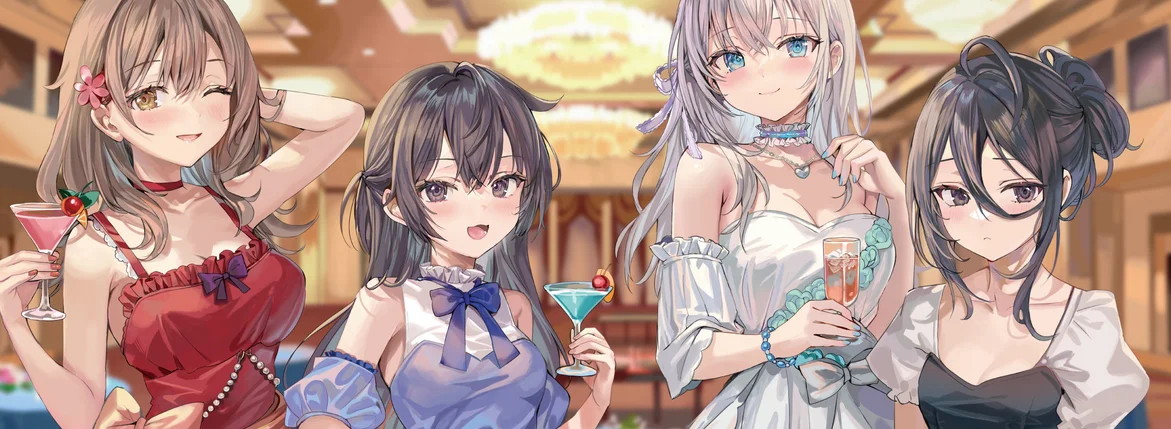
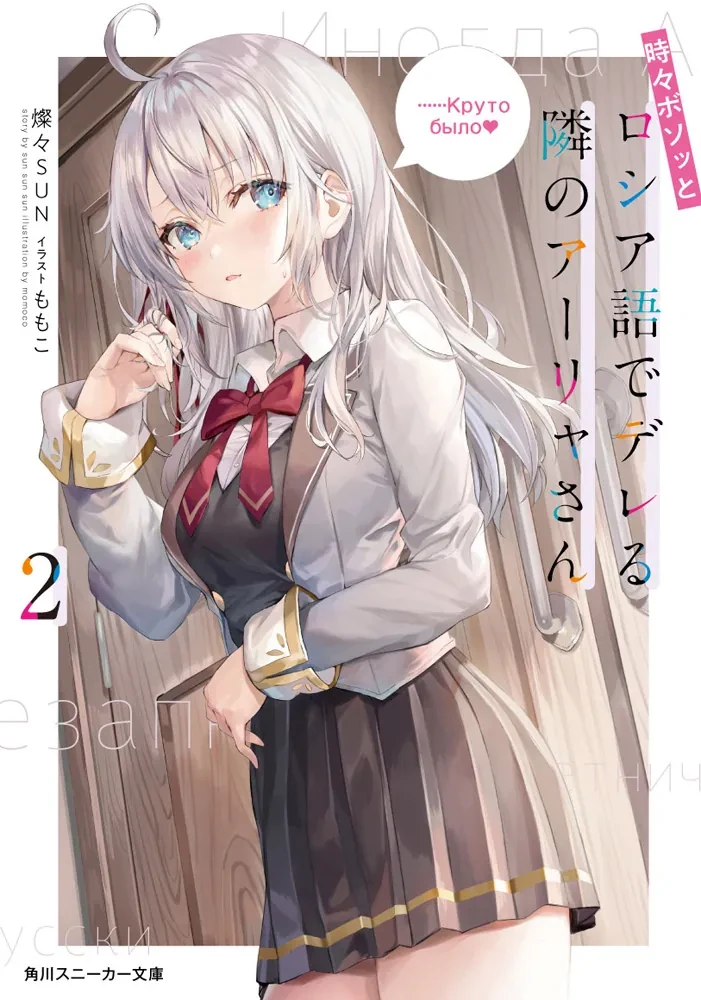
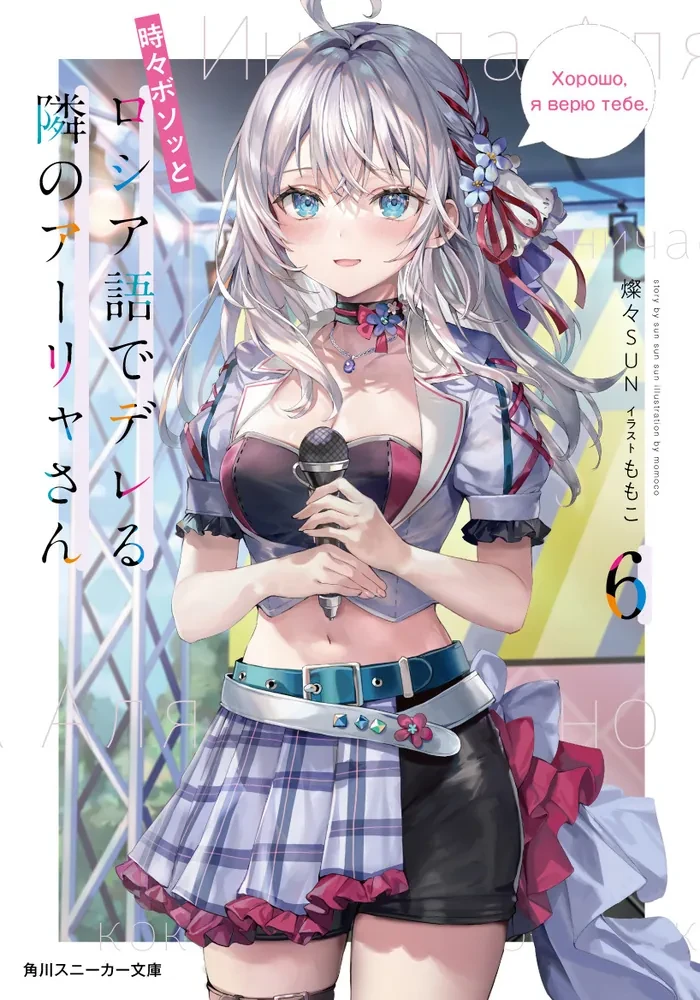
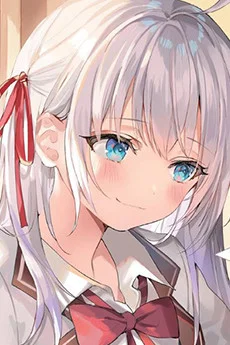
Her face is the better shot, I know that. Doga Kobo knew exactly what it had, and the volume 1 cover is her too, so it’s not like the books don’t sell it the same way. But the books are selling one thing and delivering another. The show sells it and delivers it, and that’s most of why the show was a hit and the books have a reputation for being slow.
The Russian, which the show wins outright
The Russian in the books is text. Romanized in the English edition with the translation right there, so the joke is intellectual. You read it, you see the gloss, you move on. In the show the Russian is Sumire Uesaka, who by every account actually studied the language and has been doing Russia-nerd bits on radio for a decade, and the lines come out as speech, with an accent I’m told is real. I have a friend who reads Russian, and her verdict on the show’s lines was a lot kinder than her verdict on the volume 1 text, which she described with a face.
That matters more than it sounds. The whole premise is that something is being said that one person can hear and another can’t, and on the page that’s an abstraction, a line in a different font. On screen it’s a sound in the room, and Masachika’s not reacting to it becomes a performance you can watch. The show is better at the premise than the books are. I also think the premise is the least interesting part of the series.
What got compressed
The Suou family. That’s the short answer. The books have, running under the election from volume 2 onward, a family story about Masachika and the half of his family he walked away from, the Suou side, his mother’s people, the political family. And about the fact that the cheerful rival candidate Yuki is his younger sister. The show tells you the sister thing early, same as the books. What it doesn’t do is give it weight. In the show Yuki’s double life is a comedy engine, public princess and private gremlin. It’s the best comedy in the show, the scene everyone clipped from the dub is a Yuki scene and it deserved it. In the books it’s that too, but it’s also the thing the whole series is slowly turning toward, and by volume 9 it’s a family drama with a sick kid and a cold house in it, and the show gives you almost none of the setup for that, cause the setup is Masachika’s interior stuff and the show isn’t in his interior.

There’s also a thing with the grandfather in volume 2 that the show gets slightly backwards, in a way that doesn’t matter until it does. I’m not going to explain it, partly for spoilers and partly because I’ve tried twice to write the paragraph and it keeps turning into a plot summary.
The result is that the show’s Masachika is a lazy guy with a hidden competence, a type. The books’ Masachika is a guy who’s hiding from his own family in a slacker costume, and those read completely differently in the scenes where Alya scolds him. In the show it’s cute. In the book, by volume 3, it’s slightly sad, and the Russian lines he’s not reacting to start to look less like a joke he’s enjoying and more like one more thing he’s keeping to himself.
The election as set dressing
Second thing the show softens. The books are a campaign story. I said this in the review and I’ll keep saying it, SunSunSun is interested in the student council election as a process, the debates and the speech prep and the vote math and the rival ticket, and volumes 2 and 3 are mostly that, with the romance running alongside. The show has the debate. It’s a good episode. But the show treats the election as the thing that puts Alya and Masachika in rooms together, which is a romcom’s job, and the books treat the romance as the thing that happens to two people who are running a campaign, which is a different job. The debate itself is the clearest example. In the book it’s a chapter of prep, the rehearsal, the question list, Masachika coaching her on where to pause, and then the debate. In the show it’s the debate, with a short montage in front of it. Same result, different story. You can feel it again in how the show handles the stretch after the debate, the lunch date and the study sessions and the hypnosis bit. In the show that stretch is the fun part, the payoff, the cast relaxing. In volume 3 it’s a lull before the second semester and you can feel the book waiting to get back to work.
I’ll say for the record that I predicted, in a group chat in August 2024 with the two people I still talk anime with, that the show would cut the hypnosis scene as too dumb for its tone. It didn’t. It was most of an episode. I was wrong. It’s a girl who can’t say things being given an excuse to say them and the show plays it completely straight, longer than I’d have had the nerve to.
The dances
The show invented something the books can’t have, and it’s the thing that made the show a hit, and I’d be lying if I pretended the books are the complete experience. Every episode ends with Alya doing a dance to a different song, idol covers mostly, in a different outfit each time. The sequences are good enough that there was a stretch in July 2024 where I’d have told you the show was better than the books on the strength of them alone. I tried to find out, last week, whether the song from the episode I rewatch most was a cover of a 2000s track I half-recognized, and I could not find a tracklist I trusted. Two sites disagreed and I gave up.
Twelve of them, all Alya. They turn each episode into an Alya episode regardless of what happened in it, which the books have no equivalent for. A volume ends with an afterword from SunSunSun, usually about how tired he is.
Where it stops, and why page three doesn’t feel like an ending
The show covers the first three volumes and stops at the end of the first semester, with Yuki’s sneak attack and the summer coming. As a season finale it’s fine, it caps the romcom, it sets up the beach trip. On the page, volume 3 doesn’t feel like an ending at all. It feels like the end of the setup. The family material has been placed but not played. The election is nowhere near a vote and the series is visibly clearing its throat for volume 4. I read 3 the week the finale aired, maybe two days before, on the couch with the finale paused at the title card cause I wanted to finish the chapter first. The book wasn’t done and the show was. That’s what adapting a slow-build campaign story as a summer romcom gets you, a romcom-shaped stopping point out of a book that wasn’t shaped that way. I don’t hold it against the show. I’d have cut it in the same place.
Season 2 will have the same shape, and that’s fine
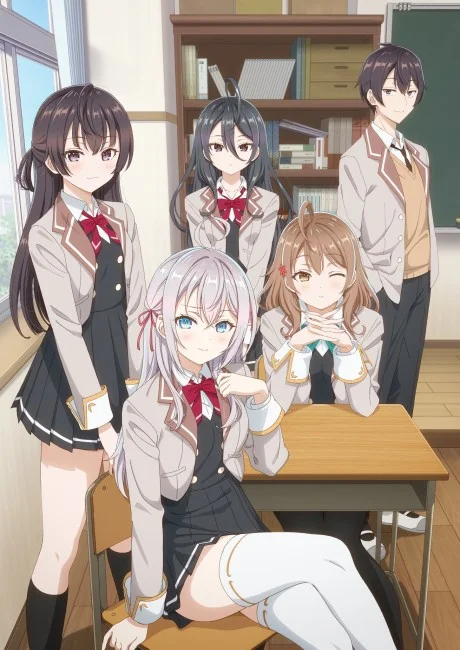
Season 2 is 2027 now, after the delay, with a new director. If it’s a normal cour it’ll cover 4 through 6, which are the summer book and the two festival books. Those are, as it happens, the most Alya-forward volumes in the run. The beach trip, the band, the trivia showdown, her making friends for the first time. The show’s approach is going to work even better on them than it did on 1 through 3, and I expect season 2 to be a bigger hit than season 1. The Suou material is mostly in 9. At this pace that’s a third season nobody’s announced, 2029 at the earliest, and I’ve been off by two years on this show’s schedule already so don’t hold me to that either. The one scene I most want to see animated is in volume 9 and I’ll be in my thirties by the time it airs, if it airs.
Which one to do
Watch the show first. I don’t say that often. Twelve episodes, a weekend, you’ll know by the end of episode 2 whether the Russian thing works on you at all. If it does, the books start at volume 4 for you. I’ve written about that in the reading order, with the caveat that you’ll end up going back to 2 anyway once volume 9 makes you want to know what you missed about the Suou house.
If you’ve already read the books and you’re wondering whether the show is worth it, yes, for the Russian and the dances and the Yuki scene, with the understanding that it’s a show about the wrong person. I’ve rewatched one episode maybe four times, I think it’s 7 but I keep saying that without checking. It’s the one with the least Masachika in it.
One last thing I noticed on the rewatch, and I don’t have a conclusion about it. The show’s Masachika is voiced with a lot more warmth than I hear in the books. Kohei Amasaki plays him as a guy who’s amused by everything, and the book’s version is amused by about half of it and tired by the rest. I don’t know whether that’s a casting choice or a direction choice or just me reading my own tiredness into a seventeen-year-old. The scene I’d check it against is the one at the family dinner in 2, and I’ve got the paperback of 2 and not the episode, so that’s where that stays.