

This article contains affiliate links. If you buy through these links, we earn a small commission at no extra cost to you.
Classroom of the Elite Season 3 ended in January 2024 and left a lot of anime-only viewers confused. Not because the finale was bad. Because it was clearly rushing to a conclusion that the light novel spent three full volumes building toward.
I read the Year 1 light novels before Season 3 aired. Watching the anime afterward felt like watching someone speed-read your favorite book out loud while skipping paragraphs. The core events are there. The weight behind them is not.
Here’s what actually happened in that ending and why the light novel version hits different.
TL;DR
Season 3 covers Year 1 Volumes 8 through 11.5 (five volumes in thirteen episodes). The finale resolves Suzune’s leadership arc and Manabu’s graduation while establishing Nagumo as the new threat. The anime cut most inner monologue and all the strategic preparation scenes. Large portions of Vol 11.5 are just gone. The light novel ending carries more weight because you spend 600+ pages getting there instead of watching a highlight reel.
What Does Season 3 Actually Cover?
Season 3 adapts the back half of Year 1: Volumes 8 through 11.5. Five volumes. Thirteen episodes. For context, Season 1 covered Volumes 1-3, and Season 2 handled Volumes 4-7.5. The pacing problem is obvious from the math alone.
The anime hit the plot points. Sakayanagi’s chess match with Ayanokouji. Ryuuen’s final moves. Hirata’s breakdown. Nagumo’s intervention in the student council. Manabu’s graduation ceremony. The connective tissue between those moments — the strategy sessions, the behind-the-scenes manipulation, the slow build of tension that makes those payoffs land — was stripped out almost entirely.
How Does the Season 3 Ending Play Out?
The final episodes center on three threads coming together.

Suzune Horikita accepts Class D’s leadership. This isn’t a sudden decision in the novels. It’s the payoff of a slow transformation across five volumes where she goes from someone who pushes people away to someone who understands that class survival requires trust she hasn’t earned yet. The anime compresses this into a couple of scenes. Done. You get the result without the journey.
Manabu Horikita graduates. His final conversation with Ayanokouji is one of the best moments in Year 1. In the novel, their relationship has been building quietly across multiple volumes through student council interactions and a mutual respect that neither of them expresses directly. They observe each other. They test each other. And when Manabu finally says what he thinks of Ayanokouji, it lands because you’ve watched that respect form across hundreds of pages. The anime gives you the scene but not the accumulated context that makes it resonate.
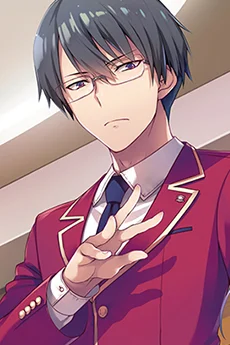
Nagumo’s shadow over the student council is established. The anime mentions him. The novels show you why the entire school fears what happens when Manabu leaves and Nagumo takes over. Entire chapters are dedicated to Nagumo’s manipulation of student council politics that the anime reduced to background exposition.
What Did the Anime Cut from the Light Novel?
This is the part that frustrated LN readers the most. The cuts weren’t random. The anime systematically removed everything that wasn’t a direct plot event.
Inner monologue. Ayanokouji’s internal narration is the backbone of the light novel series. His thoughts reveal strategy and deception that his blank expression never shows. Sometimes genuine emotion. Rarely. When it surfaces, it matters. The anime kept his poker face but removed the narration that makes it interesting. You’re watching a character act without understanding why.

Strategic preparation. Every exam and confrontation in the novels has chapters of setup. Students forming alliances, gathering information, running scenarios. The Ryuuen karaoke strategy meeting — a key scene where his group plans their approach — was cut entirely. Sakayanagi’s methodical approach to targeting Hiyori, which spans multiple chapters of careful moves, became a few short scenes.
Vol 10’s full impact. LN readers rank Volume 10 as one of the best arcs in Year 1. Hirata’s mental breakdown is built across an entire volume as the pressure of maintaining his nice-guy persona finally cracks. In the anime, it happens fast. In the novel, you watch it coming from fifty pages away and still aren’t ready for it. Ayanokouji’s rare involuntary smile during this arc — one of the few times his mask slips without him intending it — is a moment LN readers talk about constantly. The anime included it but without the buildup that makes it significant.

Vol 11.5 character work. The .5 volumes in this series are where character relationships develop. Vol 11.5 contains some of the best Suzune content in Year 1 — her quiet acknowledgment of how far she has to go, her shifting dynamic with Ayanokouji. The anime barely touched this volume. You can feel the gap. Year 1 just… stops, without the slow wind-down that Vol 11.5 provides in the source material.
Hiyori and Ayanokouji’s library dynamic. Their interactions are a slow-burn thread across multiple volumes. Two people who genuinely enjoy each other’s company in a school designed to make trust impossible. The anime kept a couple of these scenes. Not enough. The novels have a consistent pattern of meetings that builds into something genuine, and you can’t replicate that with two isolated moments spliced into a crowded episode schedule.

Why Do LN Readers Feel Differently About This Ending?
The community split is real. Anime-only viewers gave Season 3 a 7.97 on MAL. Solid. LN readers? Much harsher.
The frustration isn’t about what the anime included. It’s about what’s missing between the events. One LN reader’s comment captured it well: the anime cut the preparations, the meetings, the backdoor dealings, the monologue. What’s left is a sequence of outcomes without the process that gives those outcomes meaning.
Blame mostly lands on Kadokawa for ordering thirteen episodes to cover five volumes. Not Lerche. Lerche worked with what they were given, and condensing that much material while keeping the story coherent required sacrificing depth for coverage — a trade-off the studio didn’t get to make on their own terms.
The irony is that Season 3’s ending is actually strong in the light novel. Manabu’s graduation, Suzune’s acceptance of leadership, the quiet dread of Nagumo’s rise — all of it works when you’ve spent the time getting there. The anime delivered the same beats but at a pace that prevents them from hitting with the same force.
Should You Read the Light Novel After Watching Season 3?
Yes. Volume 8.
I know the standard advice is always “start from Volume 1.” And if you have the time, that’s better. Volumes 1-3 contain character establishment the anime handled decently, and Volumes 4-7.5 have their own cuts worth experiencing. If you watched Seasons 1 and 2 and want to understand why Season 3 felt thin, Volume 8 is where you need to start.
The Year 1 light novels are available in English from Seven Seas Entertainment. All eleven volumes (including the .5 entries) are published. You can buy them digitally through BookWalker or Amazon, or pick up physical copies if you want them on a shelf.
After finishing Year 1 (through Vol 11.5), you’ll be at the starting point for Year 2, which is where the story expands significantly. Season 4 is currently airing and covers Year 2 content. Reading through Vol 11.5 won’t spoil anything from Season 4 — it’s the same material Season 3 adapted.
How Does Season 3’s Ending Set Up Year 2?
Vol 11.5 is the bridge volume. It closes out Year 1’s character arcs and establishes the new status quo.
Suzune is now Class D’s acknowledged leader. She’s not good at it yet. She knows that. But the class follows her, which is the precondition for everything that happens in Year 2.
Ayanokouji’s position has shifted. He’s no longer operating purely in the shadows. Sakayanagi, Ryuuen, and Nagumo all know he’s dangerous. The protection of anonymity that defined his Year 1 strategy is gone.
Nagumo controls the student council. Full stop. Every institutional check on his power graduated with Manabu. Year 2 opens with Nagumo as the most powerful student at the school, and the consequences are immediate.
The first-year class arriving in Year 2 includes Nanase, Amasawa, and Yagami — characters the anime introduced in Season 4. Their presence in the school is foreshadowed in the final pages of Vol 11.5, which the anime skipped.
Frequently Asked Questions
What volumes does Classroom of the Elite Season 3 cover?
Season 3 covers Year 1 Volumes 8 through 11.5. That's five volumes adapted across thirteen episodes.
Is the Season 3 ending different from the light novel?
The events are the same. The depth is not. The anime hits the same plot outcomes but strips away the inner monologue and strategic preparation that give those outcomes weight in the light novel. You know what happened. You don't feel why it mattered.
Should I read the light novel from the beginning or can I start at Volume 8?
Starting at Volume 8 works if you've watched Seasons 1 and 2. Starting from Volume 1 is better if you have the time, since Seasons 1 and 2 also made cuts. Volume 8 is the efficient entry point for understanding what Season 3 compressed.
Why was Season 3 so rushed?
Kadokawa ordered thirteen episodes to cover five volumes. Lerche (the studio) worked with what they were given. The pacing issue is a production decision, not a studio quality problem.
Does Season 3 spoil anything for the light novel?
Season 3 covers the same events as Volumes 8-11.5. If you've watched it, you know the plot outcomes. The light novel adds context, depth, and character work that the anime didn't include, so reading the volumes still feels worthwhile even knowing where the story goes.
Where does the story go after Season 3?
After Vol 11.5 (end of Year 1), the story moves to Year 2, which is being adapted in Season 4 (currently airing, started April 2026). Year 2 introduces new first-year students and escalates Nagumo's influence. Ayanokouji's approach shifts significantly.