
Goblin Slayer has a reputation problem. If you’ve heard of it, you probably heard about the first episode of the anime. The cave scene. The controversy. Crunchyroll initially rated it TV-PG, which tells you how badly the marketing team misread what they were airing. The internet had a week-long argument about whether the content was justified or gratuitous, and most people formed their opinion about the series without reading a single page of it.
This article contains affiliate links. If you buy through these links, we earn a small commission at no extra cost to you.
TL;DR
- Goblin Slayer has a reputation problem. Most people formed their opinion from the first anime episode. That’s a shame, because the actual light novel is a dark fantasy that reads like a tabletop RPG campaign being narrated in real time.
- The characters don’t have names. Priestess, High Elf Archer, Dwarf Shaman, Lizard Priest. The gods literally roll dice. The prose reflects this — it reads like a DM’s session notes that became a novel.
- The real hook is the character study. A man so broken by trauma that he’s reduced himself to a single purpose, and the people who slowly pull him back toward being human. The shock content is the entry cost, not the point.
- 16 volumes, ongoing. Published by Yen Press. The anime covers volumes 1-2 with significant changes.
That’s a shame. Because the actual light novel is doing something specific and interesting that gets buried under the discourse. Kumo Kagyu wrote a dark fantasy that functions like a tabletop RPG campaign being narrated in real time. The characters don’t have names. They’re called by class: Priestess, High Elf Archer, Dwarf Shaman, Lizard Priest. The gods of the world literally roll dice at a table to determine fate. The prose reflects this. It reads like someone running a session where the DM is taking notes, and the notes became a novel.
That’s the hook. Not the shock content. The shock content is the entry cost. What keeps you reading is a character study about a man so broken by trauma that he’s reduced himself to a single purpose, and the people who slowly pull him back toward being human.
More about Goblin Slayer
What Goblin Slayer Is Actually About

The premise sounds like a joke: a guy who only kills goblins. Low-level monsters that experienced adventurers ignore. While the hero party fights the Demon Lord and the fate of the world hangs in the balance, Goblin Slayer clears out goblin nests in backwater villages. Nobody respects the work. Nobody wants to do it. He does it anyway.
The series takes this seriously. Goblins in this world are genuinely dangerous. Not because they’re powerful. Because they’re cunning, they breed fast, they learn from every encounter, and the things they do to captured humans are the reason the series has its reputation. The opening chapter of Volume 1 establishes this with a group of rookie adventurers walking into a goblin cave expecting an easy first quest. It does not go well.
Goblin Slayer (the character) survived a goblin attack as a child that killed his sister. He watched it happen. He spent years training with a rhea hermit, learning traps, poison, tactics. Not magic. Not swordsmanship. Pest control, elevated to lethal efficiency. He wears cheap armor because goblins fight dirty and expensive gear gets ruined. He carries multiple weapons because goblins fight in tight spaces where a longsword is useless. Every decision he makes is optimized for killing goblins. Only goblins. He can’t do anything else.
That obsession is the engine of the series. It’s also the character’s cage. The question running through all 16 volumes is whether he can become more than his trauma. Whether the people around him can reach the person underneath the helmet.
The Party
Goblin Slayer works because of its ensemble. The man himself barely talks. He processes the world through tactical assessment. The people around him provide the emotional register the story needs.

Priestess is the actual protagonist of the early novels. She’s the POV character in Volume 1. A fifteen-year-old on her first quest who watches her entire party get wiped out in a goblin cave, gets saved by Goblin Slayer, and decides to keep adventuring with him. Her growth from traumatized survivor to competent strategist who can match his tactical thinking is the backbone of the series. The anime shifts the perspective toward GS himself. The light novel keeps Priestess at the center longer, and the story is better for it.

High Elf Archer joins in Volume 1 as part of a trio (with Dwarf Shaman and Lizard Priest) who recruit GS for a quest. She’s 2,000 years old, more experienced than anyone in the party, and constantly frustrated that their adventures consist entirely of goblin extermination. She provides levity, but also the most direct emotional pressure on GS to be a person instead of a weapon. Volume 7 has their strongest scenes together.

Sword Maiden appears in Volume 2 (the Water Town arc) and stays relevant through the series. She’s the Archbishop of the Supreme God, probably the most politically powerful person in the setting, and a former adventurer who was captured by goblins as a young woman. The trauma she carries mirrors GS’s. Her arc is about whether someone can function at the highest level of society while being silently destroyed by what happened to them. Volume 2 is the best arc in the series partly because of her.

Cow Girl is GS’s childhood friend. She runs the farm where he lives. Their dynamic is domestic and quiet. She represents the life he could have if he could stop. She’s the emotional anchor the series returns to between quests. Volume 14 has a significant development in her arc that the community is still debating.
The TRPG Structure
This matters. It’s not set dressing. The entire world is built as a tabletop RPG campaign.
Characters are named by class/role, the way players refer to each other at a table. The gods are literal game masters rolling dice to determine outcomes. Chapter titles reference TRPG mechanics: “Hack and Slash,” “Dungeon Master’s Guide,” “Choose Your Own Adventure.” When something improbable happens in combat, the narration acknowledges the dice roll that made it possible.
Kumo Kagyu started Goblin Slayer as an ASCII art Yaruo Thread on a Japanese textboard in 2012. The audience participated in real time. That collaborative, game-like origin shaped everything about how the series handles narrative. There’s a randomness to outcomes that feels deliberate. Characters die when the dice say they die. Plot armor exists only insofar as the gods choose to keep rolling in your favor.
If you’ve played tabletop RPGs, this lands different. The party composition, the resource management, the “we’re level 3 and the DM just threw a nest of 50 goblins at us” energy. It’s the most authentic TRPG-inspired fiction I’ve read in the LN space.
Volume Highlights
Volumes 1-3: The Core
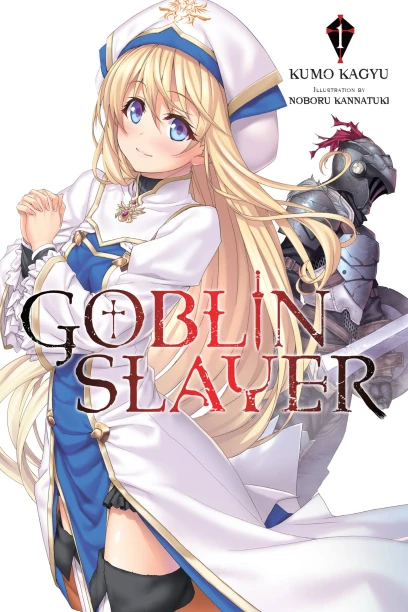


Volume 1 does the most work. The rookie adventurer massacre establishes the stakes. The Goblin Lord siege on Cow Girl’s farm is the emotional climax. The entire adventurer guild showing up to help GS defend the farm is the first time the series suggests he’s part of a community, not just a lone weapon. He removes his helmet at the end. It matters.
Volume 2 (Water Town) is the peak of the series. Sword Maiden hires GS to investigate goblins in the sewers beneath Water Town. The arc layers political intrigue, the Sword Maiden’s concealed trauma, and a mystery about how goblins got into a supposedly secure city. The “worst timeline” reveal about Sword Maiden’s past is the darkest and most effective moment in the series.
Volume 3 (Harvest Festival) broadens the scope. A festival disrupted, cosmic-scale threats briefly touched. The series hints at something bigger than goblins without abandoning its core focus.
Volumes 4-7: Expansion

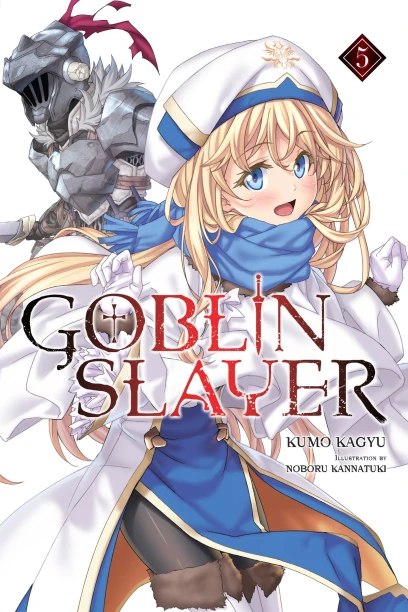
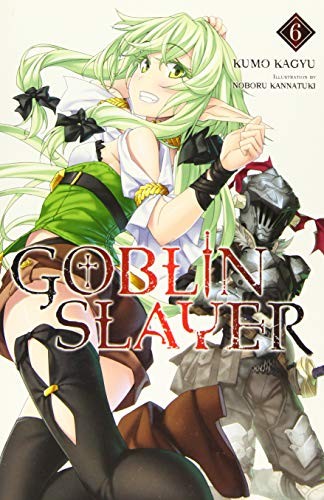

Volumes 4-5 slow down. Volume 4 is an anthology of side stories featuring other characters in the setting. It’s worldbuilding, not narrative momentum. Volume 5 (adapted as the Goblin’s Crown film) is a self-contained rescue mission in the northern mountains. Solid but standalone.
Volumes 6-7 pick up again. Volume 6 (adapted in Season 2) follows the Wizard Boy arc with Priestess mentoring a traumatized rookie. Volume 7 has the strongest High Elf Archer content. The party dynamics deepen here. GS starts showing cracks in the armor (figuratively). He’s not becoming emotional. He’s becoming less efficient at hiding that he is.
Volumes 8-10: Southern Expedition

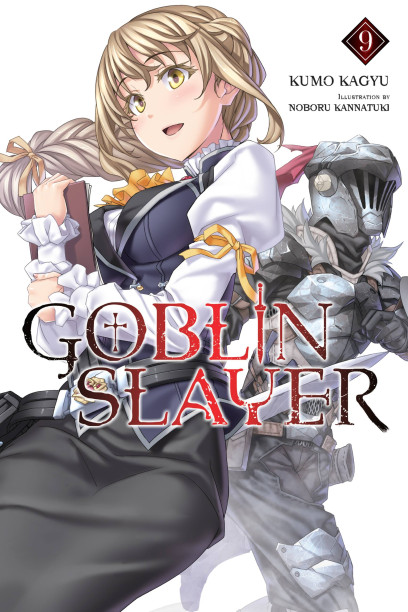

The southern expedition arcs. Sword Maiden correspondence continues. Capital visit. Ice Witch cave. The series starts asking whether the world can address the goblin problem systemically, not just through one man’s obsession.
Volumes 11-14: Expanding Scope


Political intrigue increases. New characters enter. An Apprentice Cleric joins the cast. Volume 14’s Cow Girl development changes the domestic dynamic that’s been static for thirteen volumes. The series is growing, slowly. The same way its protagonist does.
Volumes 15-16: Latest

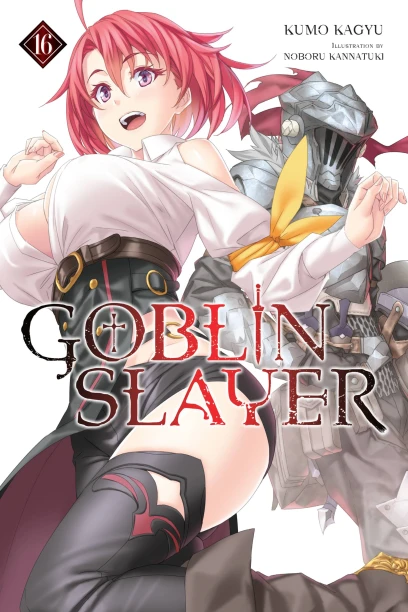
The most recent volumes in English. Viking-inspired quest. Ongoing goblin campaigns. The series is still ongoing with no announced end.
The Dark Content (Honest Assessment)
I’m not going to dance around this. Volume 1 contains graphic depictions of sexual violence perpetrated by goblins. The opening chapter. The series’ most controversial content is front-loaded.
Here’s what I think: it’s not gratuitous, but it is graphic. Kagyu uses it to establish goblins as a genuine evil that the setting has no interest in softening. The reason GS’s obsession makes sense, the reason nobody else wants to do this work, the reason these creatures aren’t just low-level XP fodder with green skin. This is what they do. If the series sanitized it, the entire premise collapses. You need to understand what goblins are to understand what Goblin Slayer has dedicated his life to fighting.
The comparison readers make most often is Berserk. Berserk depicts comparable or worse content and gets called a masterpiece. The double standard exists. Whether it bothers you is personal.
What I will say: the series doesn’t repeat this level of graphic content in every volume. Volume 1 is the worst of it. Later volumes reference goblin atrocities without the same level of explicit depiction. If you get through Volume 1 and the content was at your limit, it doesn’t escalate beyond that point. If Volume 1 is a hard no, trust your instinct. The series isn’t for you.
Year One (the prequel spinoff) is significantly darker than the main series. The first chapter makes Volume 1 look restrained. Read it only if you’re invested and prepared.
The Writing
Kagyu’s prose is better than most light novels. That’s a low bar, but he clears it by a real margin. The sentences are shorter, more deliberate. The TRPG framing gives the narration a detached, almost documentary quality that works for the material. You’re watching events unfold the way a game master would describe them.
The translation (Yen Press) is solid. A rumor circulated online that pages were censored in the English edition. This was debunked by readers who compared the Japanese and English texts. What happened was a printing error (30 missing physical pages in some copies), not content removal. The English edition is complete and uncut.
Where the writing struggles: the anthology structure. Some volumes feel like collections of quests rather than a continuous narrative. Volume 4 is the clearest example. The interlude chapters that jump between perspectives are either charming worldbuilding or momentum-breaking diversions, depending on your tolerance. The series doesn’t have the long-range structural ambition of something like Mushoku Tensei or Re:Zero. It’s episodic by design. Each arc is a quest. The character growth happens between quests, not because of them.
Who This Is For
Read it if: you want dark fantasy that takes low-level threats seriously. If you’ve played tabletop RPGs and want fiction that captures that feeling. If you want a protagonist defined by trauma recovery rather than power escalation. Berserk fans who want something in the LN space that doesn’t flinch will find it here.
Skip it if: the content warnings are dealbreakers (valid). If you need a strong overarching narrative (this is episodic). If you want fast power progression or a protagonist who changes dramatically. GS changes. He changes slowly. Over 16 volumes, the movement is real but incremental. Patience required.
16 volumes, Yen Press. Ongoing. Start at Volume 1.
More on this series: Goblin Slayer reading order | light novels like Goblin Slayer
FAQ
Is the Goblin Slayer light novel worth reading?
Yes, if you can handle the dark content in Volume 1, and you’re interested in a character-driven dark fantasy with TRPG mechanics. The ensemble cast is strong, the tactical combat is detailed, and the series does something specific with the “adventurer who only fights low-level monsters” premise that no other LN has attempted.
How many Goblin Slayer light novels are there?
16 volumes in the main series, all available in English through Yen Press. The series is ongoing. There are also 4 Year One prequel volumes, 3 Dai Katana spinoff volumes (complete), and several manga adaptations.
Is the Goblin Slayer light novel finished?
No. The series is ongoing with 16 volumes published. No end date has been announced.
How does the Goblin Slayer light novel compare to the anime?
The LN is the better experience. The anime (White Fox, Season 1) reorders arcs from Volumes 1-4 and cuts interludes. Season 2 (Liden Films) covers Volume 6 but skips content. The biggest loss is Priestess as the POV character. In the LN she’s the emotional center. The anime shifts focus to GS himself. The LN also has richer tactical detail and internal monologue.
Is Goblin Slayer like Berserk?
The comparison comes up constantly. Both are dark fantasy with graphic content that serves the narrative. Both feature protagonists defined by trauma. The key difference: Berserk is about rage and cosmic horror. Goblin Slayer is about obsession and recovery. Berserk’s scope is bigger. GS is deliberately small. If you liked Berserk’s willingness to go dark, GS operates in a similar register.
What order should I read Goblin Slayer in?
Main series (Vols 1-16) first. Then Year One (4 vols, prequel) for GS’s backstory. Dai Katana (3 vols, complete) is a separate story in the same world. Brand New Day manga is optional side stories.