

This article contains affiliate links. If you buy through these links, we earn a small commission at no extra cost to you.

Here’s the thing nobody tells you about the Re:Zero debate: it’s not really about what the anime cuts. It’s about whether Tappei Nagatsuki’s writing style, hundreds of pages of Subaru screaming at himself inside his own skull, should even be adapted at all. And that question is more interesting than any list of deleted scenes.
TL;DR
- The light novel is the definitive version. Tappei Nagatsuki writes hundreds of pages of Subaru’s internal breakdown per arc, and the anime can only gesture at it. The psychological depth — the real reason Re:Zero works — lives in the prose.
- The anime covers roughly volumes 1-15 across two seasons. That’s Arcs 1-4. The LN is on Volume 37+ and currently in Arc 8. Most of the story is unadapted.
- What gets cut: Internal monologue (a lot of it), side character POV chapters, worldbuilding details about the Witch Cult, and Subaru’s extended suffering sequences that the anime compresses.
- Where to start: Volume 1. The anime is a good hook, but the LN is where you actually understand why Subaru breaks the way he does.
I’ve been reading Re:Zero since the Yen Press releases started dropping. Re:Zero Starting Life in Another World Vol. 1 came out in 2016 and I grabbed it immediately after finishing S1. At that point I’d already burned through the web novel translation up to Arc 5, so I knew what was coming. I just wanted to see how Nagatsuki polished it.
The difference is significant. The LN is a real book. The WN reads like a very long, passionate first draft.
But I’m getting ahead of myself.
The Verdict (Upfront)
LN wins on psychological depth. It’s not close. If you want to actually understand Subaru, why he breaks the way he does, what’s happening in his head during the spiral sequences, the LN is the only format that delivers that. Nagatsuki writes interior monologue the way Dostoevsky writes interior monologue: too much, compulsively, until you’re so deep inside the character’s self-loathing that you start feeling it yourself.
The anime wins on specific emotional peaks: the From Zero scene in episode 18, Rem’s monologue, the S1 finale. White Fox did something with timing and silence and Subaru Kimura’s voice performance that the text on the page doesn’t replicate. Not better exactly, different. The anime makes those moments land in a way that pure prose sometimes can’t, especially for readers who process emotion visually.
Season 2 is another story. We’ll get there.
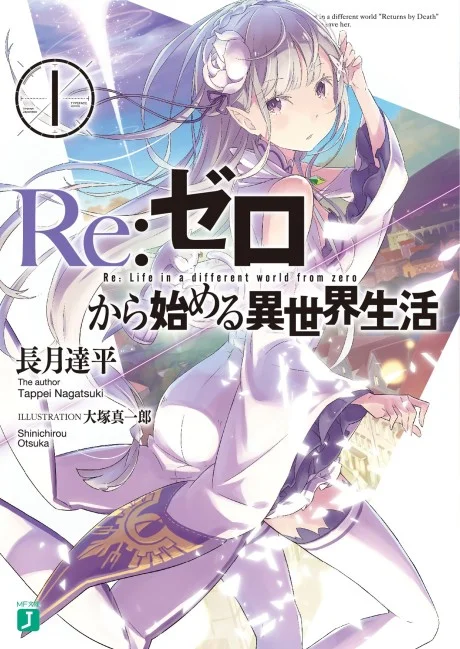
What the Anime Gets Right
S1 is a genuinely good adaptation. I don’t say that lightly; most isekai adaptations are fine at best, cynical cash grabs at worst. White Fox in 2016 was working with a director (Masaharu Watanabe) who understood that this show lives or dies on atmosphere, and the production reflected that.
Every time Subaru dies and resets, the color grading shifts slightly. The music cues get slightly wrong. There’s this subtle wrongness layered in throughout the Death Returns direction. The LN has to describe that feeling in words; the anime can just show it, and the best episodes do exactly that.
Subaru Kimura as Subaru Natsuki is a perfect casting decision. The character requires someone who can do desperate, pathetic, and genuinely heroic in the same scene, sometimes the same breath. Kimura does it. The “I can’t do it alone” breakdown in the From Zero episode works in the anime partly because of his delivery. The LN version has more text, more interiority, but I’ve had arguments with people who say the anime version hits harder specifically because you’re not inside Subaru’s head rationalizing it. You just see a guy collapsing, and you feel the weight of that externally.
That’s a real argument. I don’t fully agree with it. The LN context makes the breakdown more devastating because you’ve been sitting with his psychological state for hundreds of pages. But I understand why anime viewers felt it as a gut punch without that context. The direction makes the scene function at all without the interiority.
Rem’s character also works in S1, particularly her infamous confession scene and “episode 18” arc. The anime gives her visual language, the way she looks at Subaru, that’s harder to convey in text without becoming overwrought. Yoshitsugu Matsuoka and Inori Minase have chemistry in those scenes that’s just harder to replicate in prose.
Subaru’s Head — The Core Difference
This is where the adaptation gap becomes significant. Nagatsuki doesn’t just write internal monologue; he writes compulsive internal monologue. Subaru isn’t a reliable narrator and Nagatsuki wants you to feel the unreliability. In the LN, you’re with Subaru through every micro-rationalization, every moment where he talks himself into a bad decision because he can’t admit he’s scared, every loop where he starts justifying his cowardice as strategy.
The anime can’t replicate this without becoming a 40-episode lecture. So it cuts it. What you lose is the texture of Subaru’s self-loathing. In the anime, he comes across as impulsive and occasionally annoying. In the LN, he comes across as someone with a specific psychological damage, a guy who built his entire identity around being the protagonist of his own story and is now confronting the fact that he might actually just be a burden. That’s a more specific portrait, and a more uncomfortable one.
The early volumes are where this hits hardest. Subaru’s reaction to Reinhard in Vol. 1, his spiraling during the mansion arc in Vol. 2-3, his complete mental collapse in Vol. 4—the anime shows you the behavior, but the LN shows you the engine. You understand why he’s doing this to himself in a way the anime doesn’t fully convey.
Consider the specific scene in Vol. 3, during the mansion loop sequences, where Subaru explains his situation to Beatrice. You get this extended internal sequence where he’s negotiating with himself, trying to find the version of events that lets him feel less useless. The anime compresses this into maybe two lines of dialogue. Which works; the scene still functions. But you’re missing the archaeological layer underneath. The reason Beatrice eventually responds to him the way she does is more earned when you’ve seen how he got there.
The LN version of Rem is a little more intense too. Less the gentle caretaker, more the person who is watching you closely and has decided what she thinks of you and you need to prove her wrong. Her interest in Subaru reads as more active and slightly more unsettling in early volumes. The anime softens her edges—not a bad call for pacing, but you lose something.
Arc 4 — Where the Adaptation Falls Apart
Season 2 is the story of an adaptation that was too ambitious for its own good and paid the price.
Arc 4 in the LN, roughly volumes 9 through 17, is enormous. It’s the Roswaal’s Mansion and Sanctuary arc, covering Subaru’s most complex psychological territory in the whole series. His relationship with Echidna, his breakdown and confrontation with Roswaal, the Sanctuary loops, Emilia’s trauma and how it connects to Subaru’s codependency—this is where the LN becomes genuinely literary. Not “anime literary” but actually demanding, the kind of thing you have to sit with.
White Fox crammed all of that into one season: 25 episodes for eight volumes of dense material. They were also dealing with COVID production issues and, depending on who you believe, serious internal staffing problems. There are reports from around that period suggesting the studio was in financial distress.
The result is a season that moves too fast. The Sanctuary arc in particular, which in the LN spends enormous time building the Emilia loop sequences and Subaru’s reaction to watching her suffer repeatedly, gets compressed into a handful of episodes that don’t have room to breathe. The payoff still lands because the actors and the source material are strong enough. But the setup is rushed, and if you’re watching without LN context you might feel like Subaru’s arc lands without you fully understanding why.
Echidna gets the worst of it. In the LN she’s a genuinely complicated presence; the Tea Party sequences are layered and strange and you’re never quite sure how to feel about her or what she wants. The anime versions of those scenes feel like CliffsNotes. The visual direction is beautiful, the witch’s tea party aesthetic is some of White Fox’s best work visually, but the substance is thinned out.
Roswaal’s entire arc suffers similarly. The reveal about what he’s been doing and why, his relationship to Beatrice, what his endgame actually is—all of it gets about 40% of the page space it deserves. In the LN you spend enough time with him that when the full picture emerges it’s properly disturbing. In the anime it feels like a mid-tier twist.
The Beatrice resolution is earned over dozens of chapters of small moments in the LN, building toward her choice. The anime does it in a handful of scenes that are emotionally effective but missing the scaffolding. You feel the emotion. You don’t fully feel the weight of the decision.

The Translation Controversy
This is the part of the Re:Zero LN discussion nobody really wants to have, but it’s honest and I’m going to have it: the English Yen Press translation has consistency issues significant enough that some people find the LN reading experience inferior to the anime specifically because of translation quality.
I’ve seen the criticism framed as “reads like a screenplay,” meaning the dialogue feels functional but not naturalistic, the prose doesn’t flow, certain character voices are inconsistent across volumes. I’ve noticed it myself. Early volumes have a different register than later ones, which suggests multiple translators or at least a shifting style guide. Subaru’s voice in particular, which is doing a lot of work carrying the psychological interiority, can feel flat in passages where it should feel urgent.
This is a real issue. I don’t want to oversell it; the translation is serviceable and the story is strong enough that it comes through anyway. But if you read both fluently or have read the fan translations, you know Nagatsuki’s prose has a specific rhythm in Japanese that the official translation doesn’t always capture. The fan translations of the WN, whatever their other problems, sometimes nailed Subaru’s voice in a way the official LN releases don’t consistently.
So when someone says “I prefer the anime experience,” that’s not always an admission that they don’t appreciate the source material. Sometimes it’s a reasonable reaction to a translation that’s doing the source material a disservice in specific places.
My take: the LN is still worth reading despite the translation issues. But acknowledge the criticism instead of dismissing it as “anime-only cope.”
Web Novel vs Light Novel — Quick Version
There’s persistent confusion about this, so let me be direct.
The WN (web novel) is the original version Nagatsuki posted for free on Shousetsuka ni Narou starting in 2012. It’s a rough draft—not in a “first draft is rough” way, but in a “the author was posting chapters in real time with no editor and you can feel that” way. Certain arcs are paced differently, some character beats land differently, and there are significant plot differences in later arcs. The WN is also unfinished and hasn’t been updated in years on some arcs.
The LN is the revised, published version. Kadokawa put a real editor on it, Nagatsuki rewrote substantial sections, and it’s the actual canonical version of the story. The anime is based on the LN, not the WN.
The manga came after the anime and is essentially a visual summary, compressing aggressively. A 10,000-word chapter might become three manga chapters that hit the plot beats without the texture. It’s fine as a refresher or a gateway. As a primary reading experience it’s missing too much.
If you’re new to Re:Zero and want to go deeper after the anime, you want the LN, not the WN. The WN for later arcs is interesting if you’re desperate for content, but treat it as a rough cut, not the real version.
Where to Start — Reading Order
Depends on where you’re coming from.
Anime-only, want to go deeper
Start at Vol. 1. Don’t skip it just because you know the story; the early volumes have the most compressed adaptation cuts and reading them gives you the psychological baseline for Subaru that makes the later arcs hit harder. Vol. 1-4 cover roughly S1. Vol. 5-8 cover S2 Part 1. Vol. 9-17 cover the massive S2 Arc 4.
Anime-only, just want to pick up where it left off
S2 ended partway through Arc 4 in the LN, specifically covering through roughly the end of Vol. 15-16. Arc 5 starts at Vol. 17 and the physical Yen Press releases are ongoing. If you just want new content, Vol. 17 onward is where the anime hasn’t been.
That said: I’d still recommend reading Arc 4 in full rather than skipping to Vol. 17. The compression in S2 means you missed things that matter, particularly Roswaal’s full arc and the depth of Beatrice’s resolution.
Completely new to Re:Zero
Watch S1 first. It’s genuinely a great season and the anime direction for that arc is strong enough that it’s a better entry point than Vol. 1. Then if you’re hooked, read from the beginning, then watch S2 knowing it’s a compressed adaptation and temper expectations accordingly.
Don’t start with the WN. Seriously. The LN exists. Use it.
Final Take
Re:Zero is the rare isekai that’s actually doing something with the genre’s conventions. The Return by Death mechanic isn’t a power fantasy; it’s a psychological trap. Nagatsuki writes it that way. The LN gives you the full portrait of that trap. The anime gives you a compressed, sometimes beautiful, sometimes frustratingly rushed version of it.
S1 is worth watching even if you read the LN. S2 is worth watching but read Arc 4 first so you have the context. The manga is fine if you’re impatient. The WN is for the committed and the obsessive—I’ve been both, at different points.
My honest recommendation: LN from Vol. 1, use the anime as a companion. The two formats do different things and neither completely replaces the other. But if you can only pick one? Vol. 1 of the LN is where you actually meet Subaru, the real one, the one who’s terrified and angry and clinging to the idea that he’s the hero of this story. The anime gives you a version of him. The LN gives you the inside of his head.
Those are different experiences. The second one is more uncomfortable. That’s kind of the point.
Frequently Asked Questions
Is the Re:Zero light novel better than the anime?
For psychological depth, yes. The LN has Subaru’s full interior monologue and spends far more time inside his self-loathing, which is the core of what makes Re:Zero work. The anime wins on specific emotional peaks (the From Zero scene, Rem’s arc in S1) where direction and voice acting add something the text alone doesn’t. S1 is a strong adaptation. S2 is noticeably compromised by pacing cuts. If you want the complete portrait of Subaru as a character, the LN is where it lives.
How much content does the Re:Zero anime cut?
S1 (covering roughly LN Vol. 1-4) cuts internal monologue and some psychological texture but hits the major story beats. S2 cuts more substantially: Arc 4 in the LN spans roughly Vol. 9-17 (eight volumes of dense material) and White Fox adapted it in one 25-episode season during COVID production issues. Specific casualties include Echidna’s tea party depth, Roswaal’s full arc, the scaffolding behind Beatrice’s resolution, and most of Emilia’s loop sequences. The emotional payoffs still land but the setup is rushed.
Should I read the light novel or web novel?
Light novel. The web novel is Nagatsuki’s original free draft posted to Shousetsuka ni Narou; it’s unedited, paced differently, and the LN has substantial revisions in key arcs. The anime is based on the LN, not the WN. The WN is interesting for later arcs that haven’t been animated yet, but treat it as a rough cut. The LN is the actual canonical version of the story.
Where does the anime leave off in the light novel?
Season 2 covers through roughly the end of LN Vol. 15-16, partway through Arc 4. Arc 5 begins at Vol. 17 and continues with ongoing Yen Press physical releases. If you’re an anime viewer who wants to pick up new content, Vol. 17 is the entry point, though reading Arc 4 in full from Vol. 9 first is recommended since S2’s compression means you missed significant character development.
Is the Re:Zero manga worth reading?
As a refresher or visual companion, sure. As a primary reading experience, no. The manga condenses aggressively; what Nagatsuki writes as a 10,000-word chapter of psychological interiority becomes a few pages of plot beats. The art is solid and it hits the story’s major moments, but the texture that makes Re:Zero interesting—Subaru’s interior monologue, the slow build of the loop sequences—gets stripped out. If you’re choosing between manga and LN as your first read, the LN isn’t optional.
[…] is how the majority of popular isekai were born. Re:Zero, Mushoku Tensei, Overlord, Shield Hero, That Time I Got Reincarnated as a Slime, Konosuba, a…s […]
[…] Re:Zero is psychological horror wearing isekai’s clothes. Subaru dies. Comes back. Dies again. Remembers everything. Nobody else does. It’s a time loop, except the loop is powered by trauma and each reset costs Subaru a piece of his sanity he doesn’t get back. […]
[…] I see the same “best light novels” lists recycling the same ten series. Mushoku Tensei, Re:Zero, Overlord — yeah, they’re still great. They were great last year too. This list is d…s that mattered specifically in 2025 and 2026 — series that released standout volumes, completed […]
[…] Half the time those series are great but terrible starting points — you don’t hand someone Re:Zero volume 1 and say “welcome to light novels, here’s 37 volumes of psychological […]
[…] been reading light novels since 2015. Started with Sword Art Online (don’t judge), moved to Re:Zero, got obsessed with Mushoku Tensei, and now have an embarrassing shelf of J-Novel Club and Ye…s changed how I consume stories. But explaining what they actually are to someone who’s never […]