
This article contains affiliate links. If you buy through these links, we earn a small commission at no extra cost to you.
This article may contain affiliate links. We may earn a small commission if you purchase through these links, at no extra cost to you.
No. Four volumes published, ongoing, and the anime just made it a lot more popular than it was six months ago.
Here’s what caught my attention about this series before I even opened volume 1: the author is Kana Akatsuki. Same person who wrote Violet Evergarden. That name alone carries weight in the LN community, and it should. VE earned every ounce of its reputation. So when I heard she had a second major series with a fantasy premise about seasonal personifications and a 10-year separation, I wanted to know if the writing lived up to the pedigree. Short version? It does, but differently than you’d expect.
The anime (Dance of Spring, WIT Studio, 14 episodes) just finished airing, Season 2 has been announced, and the series crossed 1 million copies. The light novel is very much alive and very much unfinished.
TL;DR
- Four light novel volumes published, ongoing. Each volume covers a different season’s arc: Spring, Summer, Autumn, and Winter. The anime adapted volume 1 (Dance of Spring) across 14 episodes with WIT Studio. Season 2 announced. The series crossed 1 million cumulative copies in June 2026. Written by Kana Akatsuki, the author of Violet Evergarden. Licensed in English.
How Many Volumes Are Out?
Four. Each one is its own self-contained arc named after a season:
| Volume | Title | Published |
|---|---|---|
| Vol 1 | Dance of Spring (Haru no Mai) | April 2021 |
| Vol 2 | Dance of Summer (Natsu no Mai) | July 2022 |
| Vol 3 | Dance of Autumn (Aki no Mai) | November 2023 |
| Vol 4 | Dance of Winter (Fuyu no Mai) | TBD |
The publication pace is roughly one volume per year. Not fast. But each volume functions as a complete story within a larger framework, so the wait between releases doesn’t leave you dangling on a cliffhanger the way something like Re:Zero does between arcs.
The structure is unusual for a light novel series and I think it’s what makes the reading experience distinct. You’re not following one continuous plot across volumes. You’re reading interconnected seasonal stories set in the same world with overlapping characters and themes. Think of it like an anthology with a shared mythology rather than a traditional serialized narrative.
What’s the Anime Status?
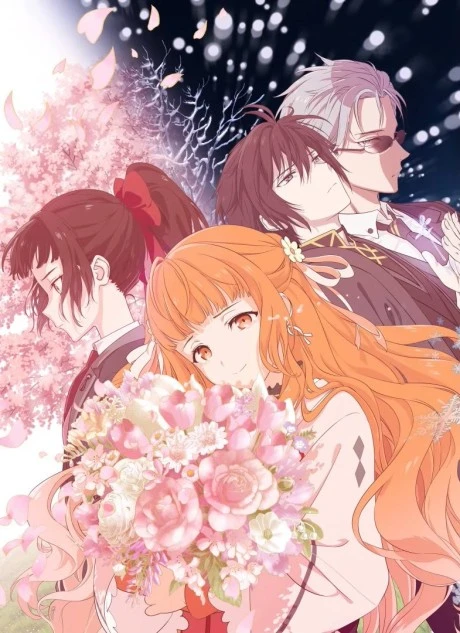
Dance of Spring aired from March 29 to June 28, 2026. Fourteen episodes. WIT Studio (Attack on Titan, Spy x Family). Season 2 has been announced.
The anime adapted volume 1 faithfully. Readers who’ve compared the two note that the adaptation stays close to the source material, which is refreshing after covering series where the anime rewrites half the story. Small details from the LN were trimmed for runtime, but the emotional beats land the same way. If you watched the anime and want to know how the LN differs, the answer is: not drastically. The novel gives you more internal context for Hinagiku’s trauma-shaped speech patterns and Sakura’s quiet desperation during the 10-year search. The anime conveyed those things visually. The novel makes them explicit.
The production quality divided viewers though. Character scenes and the botanical imagery are gorgeous. Action sequences (especially gunfights) took a hit in quality that some fans found jarring. The soundtrack by Kensuke Ushio (Chainsaw Man, Dandadan) was universally praised. I’d argue the OST elevates scenes that the animation sometimes undersells.
Who Is Kana Akatsuki?
This matters because the VE connection is the primary reason half the audience found this series. Kana Akatsuki debuted in 2015 and wrote Violet Evergarden for KyoAni’s imprint. That series defined a generation of emotional anime storytelling. Her writing style carries over: quiet devastation, characters who communicate through what they don’t say, emotional payoffs that take their time arriving.
Agents of the Four Seasons is her second major work, published through Dengeki Bunko instead of KA Esuma Bunko. Different publisher, different world, same emotional DNA. If you cried during VE and you’re wondering if this series will hit the same way, the answer is yes. Different flavor of sadness. Same precision in how it’s delivered.
I went in expecting VE with a fantasy coat of paint. What I got was something that uses its seasonal mythology to explore loss and devotion in ways VE’s letter-writing framework couldn’t. The premise (Spring was kidnapped, her guard never stopped searching, the world lost an entire season for a decade) gives the emotional stakes a scale that feels earned rather than manufactured.
Is Each Volume a Standalone Story?
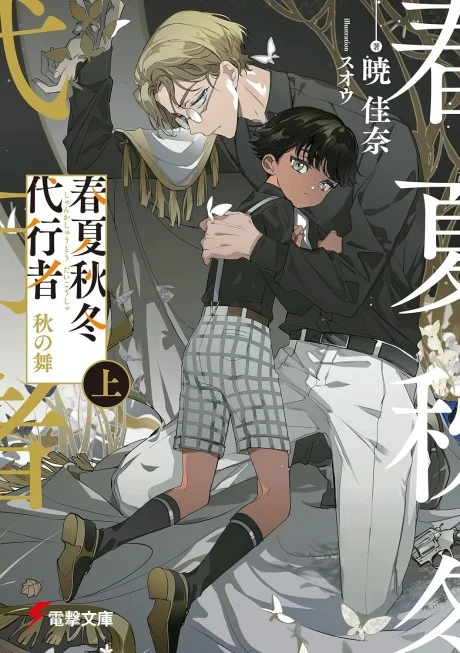
Mostly. Each “Dance” follows a different seasonal agent and their relationships. Dance of Spring is Hinagiku (Spring) and Sakura (her guard). Dance of Summer and Dance of Autumn shift focus to different characters in the same world. They share mythology, themes, and some character overlap, but you get complete emotional arcs within each volume.
That said, the series builds toward something larger. Readers who’ve gone through all four volumes describe connections between the seasonal stories that deepen on rereads. It’s not required to read them in order, but the experience is richer if you do. The mythology unfolds gradually, and the way each season’s story reflects on the others creates a cumulative effect that a single volume can’t achieve alone.
I appreciate this structure because it means no volume feels like filler. Every entry matters to its own story even as it contributes to the whole. Compare that to traditional LN series where volumes 4 through 7 exist purely to set up the climax. Here, every volume IS a climax for its particular season.
What About the Manga?
There’s a manga adaptation of Dance of Spring (the same arc as the anime) plus a spin-off called “One Hundred Songs and One Hundred Pages” that adapts short stories from the novels. The manga handles Hinagiku’s unusual dialogue patterns better than the novel does, according to readers. If you find her speech in the LN difficult to parse, the manga’s visual format helps.
The other seasonal arcs don’t have manga adaptations yet. For now, the manga is supplementary to volume 1 only. If you want Summer, Autumn, or Winter’s stories, the light novels are the only option.
Should You Start Reading Now?
The timing is ideal. The anime just ended, S2 is confirmed, and the series is trending. Four volumes is a low-commitment entry point. If you liked Violet Evergarden and want more from the same author, this delivers emotional writing at that level with a fantasy framework that gives it room to operate on a grander scale.
Fair warning about the prose: Hinagiku’s dialogue is intentionally fragmented and difficult. It reflects her trauma. Some readers find it compelling. Others find it exhausting. The manga smooths this out. The anime conveys it through voice acting. The novel asks you to sit with it on the page, and your tolerance for that will shape your experience with volume 1 significantly.
One million copies and a WIT Studio anime with S2 greenlit. This series isn’t slowing down. The VE community has essentially adopted it as their next emotional investment, and that fanbase does not abandon things lightly. If you start now, you’re catching it in the middle of its breakout moment rather than discovering it two years from now when everyone else has already formed their opinions and you’re playing catch-up.