

This article contains affiliate links. If you buy through these links, we earn a small commission at no extra cost to you.
No. Eighteen volumes published, ongoing, and Season 2 of the anime is about to bring a lot of people back to a series they probably forgot existed.
I started reading this after watching Madoka Magica and wanting more dark magical girl content. The comparison gets thrown around constantly — “it’s like Madoka but with a battle royale” — and while that’s true for volume 1, it stops being accurate fast. What Asari Endō built across 18 volumes is closer to Fate than Madoka. Rotating casts, faction-based conflicts, political intrigue between magical girl organizations, and a protagonist whose evolution from naive idealist to hardened operator is one of the better long-term character arcs in the medium.
The anime aired in 2016. Season 2 drops October 2026. That’s a full ten-year gap between seasons. If you’re wondering whether the source material is worth investing in or whether you’ll be waiting forever for an ending, here’s the full picture.
TL;DR
- Eighteen light novel volumes published, ongoing. Written by Asari Endō, published by Takarajimasha in Japan, licensed by Yen Press in English (all 18 volumes available).
- Each 2-3 volume arc features a mostly new cast in a different survival scenario with recurring characters threading through.
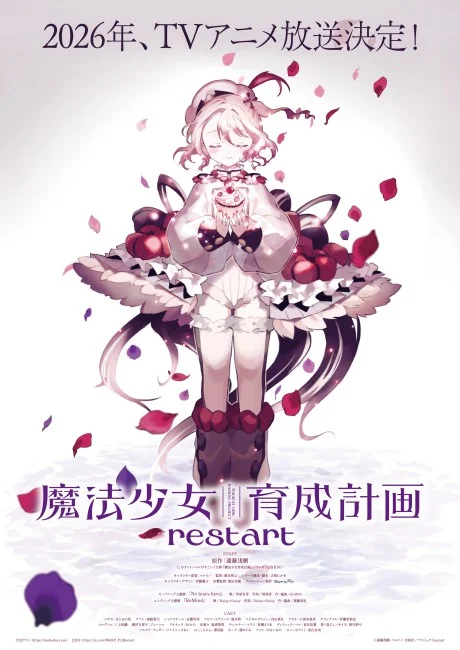
- The anime adapted volumes 1-2 in 2016 (Lerche). Season 2 adapts the “Restart” arc (volumes 2-3) with SynergySP, premiering October 2026.
How Many Volumes Are Out?
Eighteen. All available in English through Yen Press’s Yen On imprint. That’s unusual for a series in this niche — full English availability with no translation gaps. Yen Press has kept pace with the Japanese releases, which means you can read the entire story as it currently exists without waiting for translations to catch up.
The publication pace is roughly 2 volumes per year. Endō has maintained that rhythm since the series started in 2012. No announced endpoint yet, but the arc-based structure means individual storylines resolve cleanly even as the larger world keeps expanding around them.
How Is the Series Structured?
This is the part that surprises people who only watched the anime. Volume 1 is a battle royale. Sixteen magical girls, elimination format, high body count. The anime adapted this, and it’s what most people think the entire series is.
It isn’t. Every 2-3 volume arc after the first has a completely different setup:
| Arc | Volumes | Premise |
|---|---|---|
| Original | 1 | Battle royale. 16 magical girls, elimination. S1 anime. |
| Restart | 2-3 | Virtual game world. Serial killer mystery. S2 anime (Oct 2026). |
| Limited | 4-6 | Three factions hunting one target. Political maneuvering. |
| Jokers | 7-8 | Underground bunker survival. Often cited as the best arc. |
| ACES | 9-10 | Organization-focused. Deeper world lore. |
| QUEENS | 11-12 | Continuation of the organizational conflict. |
| Breakdown | 13-15 | Major arc. Significant escalation. |
| Current | 16-18 | Ongoing. |
Each arc introduces a mostly new cast of magical girls with different powers, different agendas, and different survival scenarios. Recurring characters (especially Snow White) thread through the arcs, but you’re meeting new faces every time. As one reader on r/LightNovels put it: “Every volume is basically a Battle Royale between different factions with complex relationships. Think more like Fate Series.”
The rotating cast is both a strength and a limitation. You get fresh dynamics every arc. You also lose characters you just started caring about, which some readers find frustrating. The high death count is the series’ identity. If character death bothers you, this will test your limits across 18 volumes.
What About the Anime?
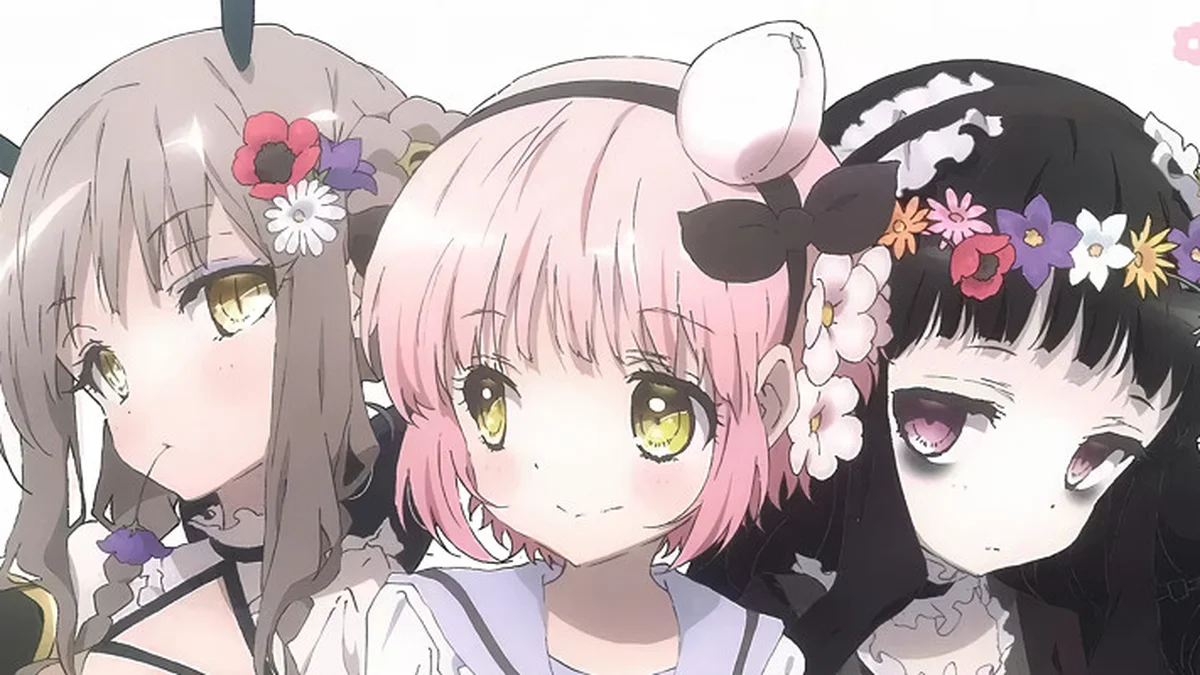
Season 1 aired Fall 2016. Twelve episodes, Lerche studio. MAL score: 6.95. It adapted volumes 1 and the beginning of volume 2, covering the original battle royale arc. The reception was polarizing — some viewers loved the dark twist on magical girl conventions, others felt it was shock value without enough substance.
Season 2 (“Restart”) premieres October 2026 with a new studio: SynergySP replacing Lerche. It adapts the Restart arc (volumes 2-3), which shifts from battle royale to a serial killer mystery set in a virtual game world. LN readers consistently say Restart is a significant step up from the original arc.
The ten-year gap between seasons is remarkable. Most anime that go a decade without a sequel are dead. The fact that the LN kept publishing (and Yen Press kept translating) through that entire gap speaks to the series’ staying power in its niche.
How Does It Compare to Madoka Magica?
Everyone asks. The volume 1 comparison is fair — both take the magical girl concept and inject survival horror into it. After volume 1, the comparison breaks down. Madoka is a self-contained story about cosmic systems and the weight of sacrifice. Magical Girl Raising Project is an ongoing franchise about organizations, power structures, and what happens when you give ordinary people superhuman abilities and put them in survival scenarios with no good options.
The emotional register is different too. Madoka builds toward devastating revelations. MGRP is more consistently tense across its runtime. Readers describe it as a thriller rather than a tragedy. The death count is higher, but the tone is less oppressive than you’d expect because Endō cycles through enough characters and scenarios that grief doesn’t accumulate the way it does in a single-cast story.
Snow White’s evolution is the throughline that makes the whole series work. She starts as an idealistic girl who just wants to help people. By the later arcs, the fan community calls her “John Wick Snow White.” That transformation doesn’t happen all at once. It builds across arcs as she survives things that break everyone around her.
Should You Start Reading Now?
The timing is good. Season 2 drops in October, which means there’ll be search traffic and community discussion around the series again. All 18 volumes are available in English. The arc structure means you can read at your own pace — each 2-3 volume arc gives you a complete story even if you stop there.
If the 2016 anime left you cold, give the LN a chance anyway. Volume 1 is widely considered the weakest entry by readers who’ve gone further. “Season 1 had no right to be as good as it was,” one r/anime commenter noted, but even they acknowledged the LN Restart arc is a substantial improvement.
Eighteen volumes sounds like a lot, but the arc structure makes it modular. You can read volumes 1-3, see if the format works for you, and decide from there. You don’t need to commit to all 18 upfront the way you would with a continuous series like Re:Zero or Mushoku Tensei. Each arc has its own beginning, middle, and resolution. If Restart clicks for you (most readers say it will), you’ll want to keep going. If volume 1 alone leaves you uncertain, push through to the Restart arc before making a final call — the jump in quality between the original arc and Restart is significant enough that it changes minds.
Available through Amazon Kindle, physical, BookWalker, Barnes & Noble, and Kobo. Yen Press has been reliable with this series for over a decade.