

I don’t read enough sci-fi light novels. That’s partly my fault, partly the market’s. The LN space is so saturated with isekai and fantasy that when a genuine cyberpunk post-apocalyptic series shows up, it takes a while to find it. Rebuild World sat on my J-Novel Club queue for months before I actually started it. Then I read all six available volumes in about a week.
TL;DR
- The best sci-fi light novel I’ve found. A cyberpunk post-apocalypse where the protagonist is a slum kid trying not to starve, not a chosen hero. His only advantage is an AI companion whose motives are genuinely unclear.
- 6 volumes available in English. Published by J-Novel Club. The setting does as much work as the characters — walled corporate cities, Old World ruins guarded by bioweapons, scavenger economy.
- Scratches the itch that isekai doesn’t. No reincarnation, no cheat skills. Just survival, scavenging, and a power dynamic with an AI that keeps you guessing.
- It sat on my J-Novel Club queue for months. Then I read all six volumes in a week. The LN market is so saturated with isekai that genuine sci-fi gets buried.
This is the kind of series where the setting does as much work as the characters. A ruined future where humanity clings to walled corporate cities, scavenging ancient technology from Old World ruins that are still guarded by automated defenses and bioweapons. The protagonist isn’t chosen or reincarnated. He’s a slum kid trying not to starve. And his only advantage is an AI companion whose actual motives are unclear.
The Setup
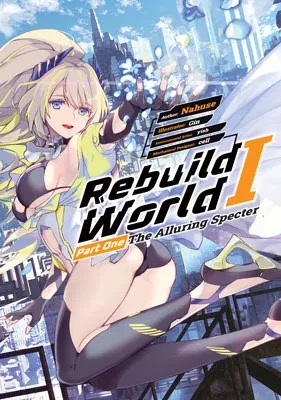
Akira is a street orphan living in the slums outside Kugamayama City. No family, no connections, no future. His one shot at a decent life is becoming a hunter: someone who ventures into the Old World ruins to salvage lost technology for money. On his first real expedition, he nearly dies. Then he meets Alpha.
Alpha is an Old World AI who appears to Akira through augmented reality. She’s beautiful, incorporeal, and completely transparent about the fact that she’s using him. She needs a physical agent to access a specific part of the ruins she can’t reach on her own. In exchange, she’ll train him in combat and feed him tactical data in real time. It’s a transactional relationship from the start, and the series never pretends otherwise.

That dynamic is the engine of the whole series. Alpha is not a cheerful sidekick. She’s strategic, manipulative, and occasionally ominous. You’re never entirely sure if she’s genuinely invested in keeping Akira alive or if she’d sacrifice him the moment he stopped being useful. The series drops enough hints in both directions to keep you guessing through every volume.
Why It Works
Rebuild World is refreshingly cynical. Akira doesn’t want to save anyone. He wants money, safety, and enough gear to not die on the next job. His goals are survival-level pragmatic. When he helps people, it’s because Alpha calculated that it benefits them strategically. When he kills people, it’s because they were trying to kill him first. The moral framework of the slums is simple: power is currency, weakness gets you eaten.
The progression system is economic rather than magical. Akira’s growth is tracked through his hunter rank and his bank account. Gear costs money. Ammo costs money. Medical treatment after a bad run costs money. Nahuse (the author) keeps a running ledger in the reader’s head: you always know whether a mission was profitable or if Akira just barely broke even. It feels like a mercenary sim, and I mean that as a compliment.
The world itself earns the “cyberpunk” label honestly. This isn’t just aesthetic. The corporate city-states, the information economy, the way technology creates power imbalances between the augmented and the unaugmented. Kugamayama City has its own internal politics: hunter guilds, corporate factions, black market arms dealers. Sheryl, one of the key supporting characters, runs a relic shop in the slums and navigates gang politics with the same desperation Akira brings to ruin exploration.

The AI Lore
This is where the series separates itself from everything else I’ve read. Alpha isn’t unique. The Old World left behind multiple AIs, each with their own territories, hierarchies, and agendas. By Volume 6, when Akira reaches the Kuzusuhara ruins, he encounters Tsubaki, another AI manager who has a grudge against Alpha. The two don’t cooperate. They have competing objectives rooted in whatever the Old World actually was.
The lore is parceled out slowly and deliberately. Six volumes in, you still don’t know what caused the apocalypse. You don’t know Alpha’s full history. You don’t even know if all the Old World AIs are from the same era. The mystery works because Nahuse resists the urge to info-dump. Every new piece of information raises more questions than it answers.
There’s also a rival hunter named Katsuya who gets his own “mysterious encounter” with a different entity. The community debate around whether Akira is genuinely less talented than Katsuya (but compensated by Alpha’s support) or whether Alpha chose him precisely because of qualities Katsuya lacks is one of the better ongoing discussions in the fandom.
Volume Breakdown
J-Novel Club splits some volumes into two parts (Volumes 1, 2, 3, 6, and 8 are each two books). So when I say “Volume 1,” that’s actually two physical releases. Don’t let the numbering confuse you.
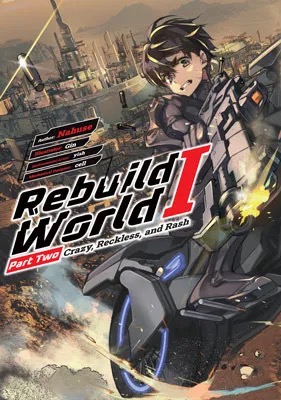
Volumes 1-2: Strong start. Akira meets Alpha, learns to survive, deals with slum politics and his first monster swarm. Volume 2 introduces the Katsuya rivalry and “Revergeware,” enemies that pursue you beyond death. That concept alone hooked me harder than anything in the first volume.
Volumes 3-4: The world expands. Yonozuka Station ruins, a behemoth extermination job, the Mihazono Town factory district where machines start defying their own programming. The action stays sharp but the political and economic threads start weaving together.
Volume 5: Gang war arc. Sheryl’s relic shop gets caught between the Ezent Family and Harlias faction. This is where the series proves it can do more than dungeon-crawling. The power dynamics in the slums mirror the power dynamics in the ruins, and both run on the same logic: control resources or someone else will.
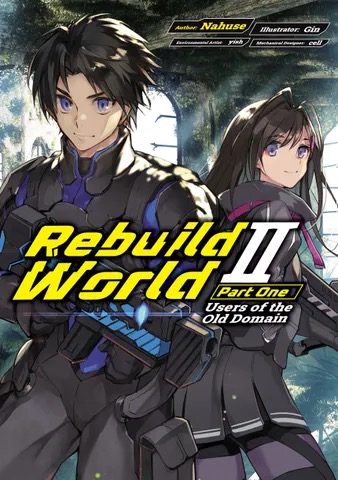
Volume 6: The payoff volume. Kuzusuhara ruins, Tsubaki, the Alpha conflict. Akira hits hunter rank 50. If you’re on the fence after the early volumes, this is where the series cements itself. The Old World AI lore goes from interesting to genuinely compelling.
Volume 7+: Akira outgrows Kugamayama and heads east. New characters, new city, wider scope. I’m still catching up here, but the consensus from readers ahead of me is that the series keeps improving.
What Doesn’t Work
Alpha’s visual presentation. She’s a superintelligent Old World AI. She appears to Akira via augmented reality. And she’s often barely clothed or outright naked. The series plays this for comedy (“why are you naked again?”), but it undercuts the tension of her character. You’ve got this genuinely unsettling, strategically brilliant entity whose motives are opaque, and then she’s doing the fanservice pose. It doesn’t ruin anything, but it’s the one element that feels like it belongs in a different, lazier series.
Some readers find Akira too dependent on Alpha for decision-making, especially in the early volumes. I think that’s intentional. He’s a kid who grew up with nothing, and suddenly he has access to a tactical supercomputer. Of course he leans on it. The question of what happens when Alpha’s support isn’t enough (or when she decides to withdraw it) is the structural tension of the whole series.
The pacing can be deliberate. Nahuse tracks missions, expenses, and gear upgrades in detail. If you want constant escalation, the mercenary-sim pacing will test your patience. I personally love it, but I’ve seen enough complaints to flag it here.
The Translation
J-Novel Club’s translation is solid. The editor reportedly has a Ph.D. in literary studies, and it shows. The prose reads cleanly without losing the author’s voice. Action scenes are clear and spatial. The cyberpunk jargon is introduced organically rather than dumped on you. For a series with this much worldbuilding terminology, that’s no small achievement.
Should You Read It?
If you’re tired of isekai and want something that takes its sci-fi setting seriously, this is it. Rebuild World scratches the same itch as Cyberpunk 2077 but as a novel: gritty mercenary work in a stratified society where technology determines who lives and who gets exploited. The AI companion dynamic is unlike anything else in the LN space.
Read it if you like 86 for the dystopian worldbuilding, Goblin Slayer for the pragmatic protagonist, or if you’ve ever wished someone would write a light novel set in a world that feels like Blade Runner instead of Dragon Quest.
Skip it if you need a heroic protagonist, hate slow-burn progression, or find AI fanservice too distracting to take the story seriously.
An anime adaptation has been announced with Daiki Yamashita (Deku from My Hero Academia) voicing Akira. No air date yet. Read the books before it drops. The source material is strong enough that you’ll want the full experience before the adaptation inevitably compresses it.
Frequently Asked Questions
How many Rebuild World light novel volumes are there?
Nine volumes in Japanese as of 2025, with several split into two parts (Volumes 1, 2, 3, 6, and 8). J-Novel Club has released through Volume 8 Part 1 in English. The series is ongoing.
Is Rebuild World getting an anime?
Yes. An anime adaptation was announced at Anime Expo 2023. Akira is voiced by Daiki Yamashita and Alpha by Yurika Kubo. No premiere date or studio has been confirmed yet.
Should I read the Rebuild World light novel or manga first?
The light novel. The manga (15 volumes, art by Kirihito Ayamura) is excellent and has a larger fanbase by raw numbers, but the LN has more internal monologue from Akira and Alpha, which is critical for understanding their dynamic. The manga is a great complement after reading the source.
Is Rebuild World similar to 86?
Both are dystopian sci-fi with military/mercenary themes and ruthless worlds. 86 focuses on war and discrimination. Rebuild World focuses on individual survival and corporate power. They share a tone but tell very different stories. If you liked one, you’ll probably like the other.
What is Alpha’s goal in Rebuild World?
Deliberately unclear. She needs Akira to physically access a specific area in the Old World ruins. Beyond that, her full motivations are one of the series’ central mysteries. The story drops hints that she may have goals far beyond what she’s told Akira.