

The setup sounds like a hundred other isekai: guy gets trapped in a game world, discovers he’s OP, starts winning. But Overlord by Kugane Maruyama has been running since 2012, sold 11 million copies in Japan, and still generates active discussion fourteen years later. That doesn’t happen with generic power fantasies. I picked up Overlord back in 2018 expecting another isekai power trip, honestly. What I got was something weirder and better.
This article contains affiliate links. If you buy through these links, we earn a small commission at no extra cost to you.
TL;DR
- Not a generic power fantasy. Overlord sounds like every other isekai but it’s actually a character study about loneliness and misdirected loyalty. Ainz is a lonely salaryman playing god without knowing what he’s doing, and his NPC servants worship him for it.
- 16 volumes out, ending at 18. Published by Yen Press. The major climax (Volume 14) is already available. You won’t be left on a cliffhanger.
- 11 million copies sold in Japan. Still generates active discussion 14 years later. That doesn’t happen with disposable isekai.
- The worldbuilding is the real hook. The New World feels lived-in. Side characters get full arcs. Jircniv’s paranoia spiral alone is worth the read.
The actual pitch is weirder than the premise suggests. Ainz Ooal Gown (formerly Momonga, formerly the salaryman Suzuki Satoru) is not a hero stumbling through a fantasy world. He’s a lonely, mediocre man who built his entire social identity inside an MMO, watched his friends leave one by one, and ended up alone on the last night of the servers. Then the game didn’t end. It became real. His guild hall is now a real dungeon. His NPCs are now real people who worship him. And he cannot, no matter how badly he wants to, just log out.
Sixteen volumes in, the series ends at eighteen. Volumes 17 and 18 are written but not yet released. What’s already out is a complete reading experience, though. The major arc most fans call the climax, Volume 14, is there. You won’t be left on a cliffhanger.
More about Overlord
What Overlord Is Actually About
The power fantasy is real. Ainz is the strongest entity in the New World. Nobody can challenge him after Volume 3. And the series knows this. Instead of escalating the fights, it does something most isekai won’t: it makes you sit with the consequences of winning every single time.
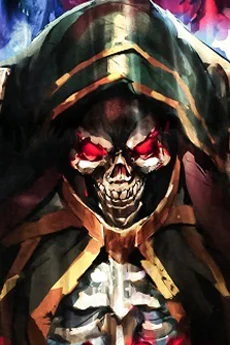
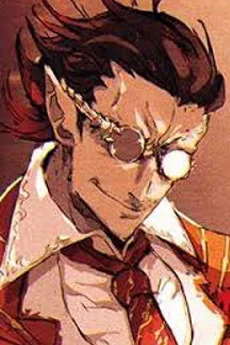
Here’s what makes it work: Ainz improvises constantly. He’s just a regular guy inside a godlike avatar, bluffing his way through every political situation because he can’t admit uncertainty to subordinates who genuinely believe he’s a genius. Demiurge and Albedo are so much smarter than him at actual strategy that they keep interpreting his accidents as deliberate 4D chess. Then they report back on how his plan worked perfectly. He has to pretend he intended it. I have genuinely laughed out loud at these scenes.
It’s funny. But it’s also kind of heartbreaking? Every “brilliant strategy” is a blunder that permanently reshapes the world, because nobody can challenge him. His mistakes have consequences nobody can reverse. And he knows it.
And then there’s the part that sticks with me most. Suzuki Satoru is disappearing inside the undead avatar. The game mechanics suppress his emotions whenever they get too strong. He can’t panic. Real grief doesn’t come through either. So he performs the role of Ainz Ooal Gown to honor his absent guildmates, the 40 other players who built Nazarick with him and then moved on with their lives. The guardians worship him. He can’t confide in any of them. His loneliness is invisible to everyone around him. If you’ve ever been the last person in a Discord server that used to be active, you get it.
That’s the actual story. A lonely guy using a role he didn’t choose as a mask, in a world that reshapes itself around his accidents. How many isekai even try that? Most of them hand the protagonist power and call it a day. Mushoku Tensei does something adjacent with Rudeus, but the loneliness in Overlord is quieter and in some ways harder to shake.
The First Three Volumes: Getting In
Volume 1 is a setup volume and it knows it. Ainz wakes up in the New World, scouts the territory, saves a village from a massacre, and kills the arc’s villain, Clementine, with his bare hands. The fight is deliberately understated. There’s no contest. It’s calibrating your sense of scale: this is how far above everything else Nazarick sits. I almost wrote it off as generic here. Glad I didn’t.
Volume 2 develops the “Momon” disguise, Ainz operating as an adventurer in E-Rantel to gather information. The Clementine death scene is the first moment the series uses his power for something emotionally satisfying rather than just demonstrating scale. She spends the whole fight taunting him about people she’s killed. He crushes her. It works. You feel something.
Volume 3 is where stakes appear. Shalltear Bloodfallen, the series’ most powerful floor guardian, gets brainwashed by an external power. Ainz has to fight her himself, spending 500 million gold to prepare, and barely wins. The existential question (are there players out there who preceded him into this world, who have World Items, who can threaten Nazarick?) is established here and runs through every volume after it.

If you’re on the fence after Volume 2, give Volume 3 a shot before you decide. That’s when it stops being a power fantasy and starts being something else.
The Arc That Divides Everyone: Volume 4
Volume 4 follows the Lizardman tribes. Cocytus is ordered to annihilate them as a training exercise. The volume spends most of its pages on Zaryusu Shasha, a lizardman trying to unite his people against the coming assault. You know they’re going to lose. You’re supposed to root for them anyway. And I did.
This is the first time the series puts you on the wrong side of Ainz’s power. The Lizardmen are sympathetic, competent, and completely doomed. Their failure is earned and it hurt to read. Volume 4 is where Overlord shows you what kind of series it really is: the tragedy lives in the gap between what ordinary people think they can do and what Nazarick actually is.
Fair warning: this is also where a lot of people drop the series. If you need Ainz in every chapter and don’t care about side characters who can’t win, you’ll hit a wall here. The anime version (Season 2) got mixed reception for the same reason. And the LN is slower. If you bounced off Season 2, the LN doesn’t fix the pacing. It leans into it harder.
The Best Arcs: Volumes 5-6 and 14
The Men of the Kingdom arc (Volumes 5-6) is where the human cast gets its best material. Sebas Tian, Ainz’s head butler, rescues a human girl from a criminal organization against Nazarick’s protocols. It creates a genuine loyalty conflict. Sebas might be my favorite guardian because of this. He’s the only one who acts on conscience rather than obedience, and it’s the closest the series gets to showing what happens when the human element inside a guardian actually wins out.
The arc also introduces Renner, the “golden princess” of Re-Estize. She’s presented as an idealistic young royal. She is not. Best character twist in the series, and I didn’t see it coming at all.
Volume 6 ends with Demiurge posing as the demon Jaldabaoth, staging a demonic invasion of the city, with Ainz as Momon publicly “defeating” him. The entire sequence is theatre. Nobody in Re-Estize knows they just watched a production. The reader watches a civilization celebrate a fiction.
Volume 14, The Witch of the Falling Kingdom, is the payoff. The Re-Estize Kingdom, which readers have lived alongside since Volume 2, refuses to submit to the Sorcerer Kingdom. Ainz orders it destroyed. All of it. The civilian population included.
Brain Unglaus, the former swordsman who’s been a recurring human POV since Volume 2, fights Ainz directly. He dies. Ainz acknowledges his courage. Brain gets a death with more dignity than most isekai protagonists get in victory. I’d spent twelve volumes with this guy. It hit hard.
This is what all those side-POV chapters were building toward. The Lizardmen, the Kingdom characters, Climb, Brain. Maruyama spent a decade of publishing teaching you to care about people who were always going to lose. Volume 14 collects the debt. I finished it at 1am and just sat there for a while.
The Arc Nobody Defends: Volumes 12-13
The Holy Kingdom arc (Volumes 12-13) is the honest weakness of the series. The Roble Holy Kingdom is invaded by a demi-human army led by Jaldabaoth. Ainz as Momon joins the defense. The protagonist POV for most of this arc is Remedios Custodio, a paladin.
Remedios is the most criticized character in the Overlord community, and honestly? The criticism is fair. She’s stubborn, bigoted, wrong about everything the reader already has full context for, and she gets way too much page time. Two volumes is a lot for what actually happens. The Sacred Kingdom movie (2024) got a 4/10 from IGN, which tracks.
The bright spot is Neia Baraja. She’s a young soldier who becomes fanatically devoted to Ainz because he was the only one who actually helped her people. Watching someone radicalize into worshipping the Sorcerer King in real time is genuinely unsettling and fascinating in a way the rest of the Holy Kingdom arc just isn’t.
Skip the anime movie. Just read the volumes. But go in knowing this is the slow part. I nearly dropped the series during Volume 12. Neia is what pulled me through.
The Floor Guardians
The Nazarick ensemble is what kept me invested during the arcs where Ainz is offscreen. These characters are the reason the series works at sixteen volumes.
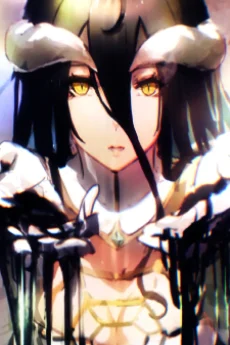
Albedo is the overseer of the floor guardians. Politically sharp, fanatically devoted to Ainz, and in love with him in a way that is literally programmed into her settings. Ainz changed those settings as a joke on the last night of the game. She doesn’t know this. The series never tells her. There’s a slow-burn thread about whether she suspects something is wrong with the “Supreme Beings,” whether she’s running her own agenda underneath the devotion. It never resolves in the published volumes. That drives me crazy.
Demiurge is the brains. Genuinely evil, morally indifferent, the most dangerous mind in Nazarick. He builds elaborate geopolitical schemes from Ainz’s accidents. And he’s the reason the comedy has teeth: Demiurge is smart enough that if he ever correctly read Ainz, the whole thing falls apart. Every scene between them is a tightrope walk.
Shalltear is the strongest guardian in a straight fight. Her Volume 3 arc (brainwashed, forced into a fight against her lord, then resurrected and having to live with the fact that she nearly killed him) is one of the better character beats early on. The guilt she carries afterward is more affecting than most full-series character arcs in other LNs.
Sebas is the most human guardian by a mile. His Volume 5-6 conflict is the purest the series gets about conscience vs. loyalty. He’s the one guardian I kept thinking Ainz could actually trust, if Ainz were capable of trusting anyone.
Who This Is For
If you played MMORPGs seriously, this series is going to hit different. The guild that built Nazarick together, the 41 members who left, the last player staying through server shutdown out of sentiment. That’s not a generic fantasy setup. Maruyama clearly lived some version of this. The way Ainz thinks about his guildmates, the little pieces of Nazarick that were each someone’s contribution. If you’ve ever watched a guild fall apart, you know exactly what he’s feeling.
If you’ve read Re:Zero (and if you follow my stuff, you know it’s one of my favorites), Overlord rewards that background. Both series use multi-POV to make you care about outmatched people. Both use their protagonist’s uncertainty as the engine. The difference is tone. Subaru suffers visibly. Ainz’s suffering is invisible. But they’re doing adjacent things structurally, and I think reading both makes each one land harder.
If you need the fights to stay tense, you’re going to bounce. By Volume 9, nothing in the New World can threaten Ainz in combat. The series swaps combat stakes for political consequences, human tragedy, and Ainz’s internal uncertainty. That trade works for me. But if it doesn’t work for you, there are sixteen volumes of it.
If you need moral clarity, this will frustrate you. Overlord never labels Ainz as a villain. It doesn’t condemn or endorse what he does. The destruction of Re-Estize in Volume 14 is presented as geopolitical logic, not horror. Are you supposed to find it cool or disturbing? The text won’t tell you. I’m still not sure how I feel about it, and I think that’s the point.
The Translation Question
The community swears by the Skythewood fan translation, especially for earlier volumes. Yen Press’s official translation catches a lot of criticism for stiff phrasing, and having read both, I get why. The fan translation reads more naturally. My recommendation: buy the Yen Press volumes to support Maruyama, read the fan translation for the actual prose.
The Wait
Volume 16 came out in Japan in July 2022. As of March 2026, Volumes 17 and 18 still have no release date. Maruyama plans to release them together and was reportedly close to finishing Volume 17 as of late 2025. Community estimates put the Japanese finale somewhere in 2026-2027, with English editions a year or two behind that.
Real talk: if you need the complete package before you start, you’re waiting. But sixteen volumes including Volume 14 (which most fans call the climax) is a lot of series. You won’t be stuck on a cliffhanger. I went in knowing it wasn’t done and didn’t regret it.
The Verdict
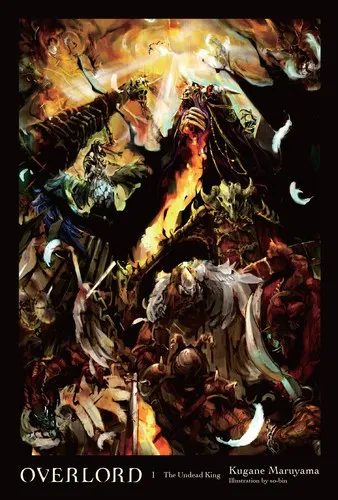
Overlord is the strongest case I’ve read for isekai doing something genuinely interesting with the power fantasy premise. It’s not about making Ainz win harder. It’s asking what happens to an ordinary person when consequence disappears, when everyone around him mistakes his accidents for genius, and when the mask he wears to honor people who’ve left starts becoming his real face.
That’s harder to pull off than it sounds. Maruyama does it for most of sixteen volumes. The Holy Kingdom arc is the price of admission for what Volume 14 delivers. Pay it. I did, and Volume 14 left me staring at the ceiling at 1am wondering how an isekai about a skeleton got me this invested. Worth it.
16 volumes, Yen Press. Series ends at Volume 18 (pending). Starting at Volume 1.
More on this series: Overlord reading order
More about Overlord
FAQ
Is the Overlord light novel worth reading?
Yes. If you want a power fantasy that uses its OP protagonist for something beyond winning fights, this is the one. The multi-POV structure, the political worldbuilding, and the running gag of Ainz’s subordinates thinking he’s a genius are what set it apart. The Holy Kingdom arc (Volumes 12-13) drags, but Volume 14 makes up for it.
How does the Overlord light novel compare to the anime?
The anime is Sparknotes. The floor guardian ensemble gets real page time in the LN that the anime compresses or cuts. Season 3’s CGI on the goblin army is rough. And Ainz’s internal monologue, especially his constant anxiety about being exposed as a fraud, is almost entirely absent from the anime. If you watched the anime and thought the series was fine but not special, try the LN. It’s a different experience.
Is Overlord light novel dark?
Yes. Volume 7 includes the off-page deaths of an entire adventurer group who walked into Nazarick not knowing what it was. Volume 14 is the destruction of a civilization you’ve been following for twelve volumes. The series doesn’t editorialize about any of it. It presents what happens and lets you decide how to feel. That restraint makes it darker than most series that try harder to shock you.
Should I read the Overlord web novel?
No. The web novel ended in 2012 before the LN began and diverges from the LN significantly after the Volume 8 equivalent. The community treats it as non-canon. Start with the light novel.
Which Overlord light novel arc is the best?
Volumes 5-6 (Men of the Kingdom) for the human character work. Volume 9 for the most iconic single scene (70,000 soldiers). Volume 14 for the payoff of everything the series built. And Volume 3 is where the series first generates real stakes.
Which Overlord arc is skippable?
Nothing is technically skippable. The multi-POV structure means side characters in one arc become important in later arcs. Volume 8 (Two Leaders) is the lowest-stakes volume and the least plot-essential. Volume 4 (Lizardman) is the most commonly skipped, though skipping it means missing the series’ clearest statement of what it’s doing with multi-POV storytelling.