

The Slime anime is fine. I need to say that upfront because this article is going to spend a lot of words explaining what the light novel does better, and I don’t want that to read as “the anime is bad.” It isn’t. Season 1 is a solid adaptation. Season 2’s Falmuth War hits hard in both formats. The voice cast is good. The character designs work.
This article contains affiliate links. If you buy through these links, we earn a small commission at no extra cost to you.
TL;DR
- The anime is fine. The LN is better in every dimension that matters. More nation-building, more political complexity, more of what makes Slime actually different from generic isekai.
- The gap widens as the series progresses. Early volumes translate well to anime. Once Tempest becomes a real nation with trade agreements and diplomatic summits, the anime can’t keep up.
- Season 4 (April 2026) has five full cours committed. That’s promising, but the LN’s political content doesn’t condense well into episode format.
- 23 volumes, complete. The anime will catch up eventually. The LN is there now.
But the anime isn’t where Tensura lives. The light novel is a nation-building political series where Rimuru’s internal monologue drives the strategy and the diplomatic maneuvering carries the plot. The anime is an isekai action show with meetings in between. Those are different experiences. If you’ve only watched the anime and felt like something was missing, the LN is what was missing.
I read the LN after watching Season 2 because someone on Reddit told me the Falmuth War had more weight on the page. They were right. I’ve since read all 23 volumes and rewatched all three seasons. Here’s what each format does differently and where the gaps actually matter.
More about That Time I Got Reincarnated as a Slime
What the Anime Covers
Quick mapping so you know what you’ve seen:
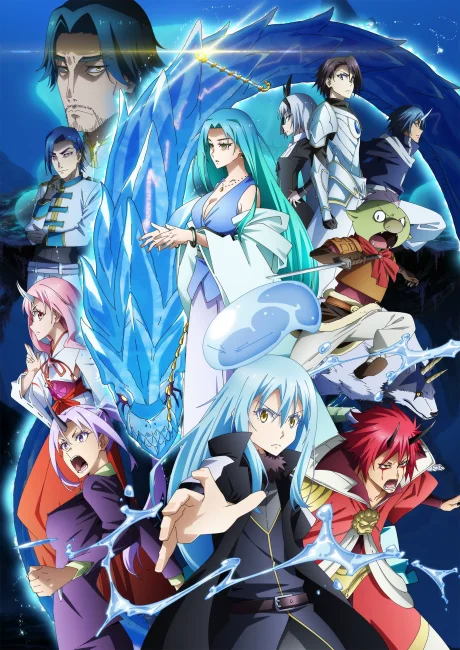
- Season 1 (24 episodes, 2018): Volumes 1-4. Reincarnation through the Orc Disaster arc.
- Season 2 Part 1 (12 episodes, Jan-Mar 2021): Volumes 5-6. Falmuth invasion, Rimuru becomes Demon Lord.
- Season 2 Part 2 (12 episodes, Jul-Sep 2021): Volumes 6-7. Walpurgis Banquet, Clayman’s defeat.
- Scarlet Bond (2022 film): Original story. Not in the LN. Characters may return in future content.
- Season 3 (24 episodes, 2024): Volumes 7-11. Tournament arc, dungeon creation, diplomatic meetings.
- Visions of Coleus (2024 OVA): Side story. Fuse-supervised but not LN canon.
- Season 4 (April 2026, 5 cours): Volumes 12-23. Empire arc through conclusion.
Three seasons plus specials have adapted roughly 11 of 23 volumes. That means the anime has covered less than half the story after six years of production. The LN finished in November 2025. If you’re an anime-only viewer, you’re years away from seeing the conclusion.
Season 4’s five-cour commitment means the anime will eventually cover the complete story. No other isekai adaptation has attempted this scope. For reference: Mushoku Tensei has adapted about 6 of 26 volumes across two seasons. Overlord adapted 14 of 18 but cut enormous amounts of content. Re:Zero has adapted roughly 15 of 37+ volumes. Tensura committing to finish the adaptation puts it in rare company.
Rimuru Is a Different Character in the LN

This is the single biggest difference and the one the community talks about most. A 1,000-upvote thread on r/TenseiSlime is titled “Friendly Reminder: Rimuru is not as innocent/endearing as the Anime and Manga portrays him to be.” That thread exists because the gap is real.
Anime Rimuru is friendly, reactive, and wholesome. He stumbles into situations, makes the nice choice. Everyone loves him. That’s the version most people know.
LN Rimuru is a 37-year-old salaryman in a slime’s body. His inner monologue is calculating. Occasionally cynical. Self-aware about his own selfishness. He describes himself as greedy. He manipulates people through carefully constructed generosity. When he offers trade deals that seem fair, his internal narration reveals he’s already calculated how much he benefits. When he’s kind to subordinates, he’s sometimes thinking about how their loyalty serves his interests.
He’s not evil. He’s pragmatic in a way the anime smooths over. The anime makes Rimuru endearing. The LN makes him interesting. I prefer the LN version because his competence feels earned. Anime Rimuru sometimes looks lucky. LN Rimuru is always three steps ahead and the narration lets you see each step.
The best example is the Empire arc (Volumes 12-15, which S4 will cover). When the Empire captures Veldora, anime viewers will see Rimuru respond with fury. LN readers get the full internal process: genuine rage at Veldora’s capture, then a cold pivot to strategic assessment. How many troops does the Empire have? What are Velgrynd’s capabilities? Can Tempest survive a prolonged war? And then the deliberate choice to let his rage show publicly, not because he lost control, but because he calculated that demonstrating righteous anger would serve as a deterrent against other nations considering aggression.
That distinction between genuine emotion and strategic display of emotion is everywhere in the LN. When Rimuru is generous, the narration tells you what he’s actually calculating. When he’s angry, the narration tells you how much of it is real and how much is performance. The anime can’t show this because it lives entirely in Rimuru’s head. What you lose isn’t just inner monologue. You lose the character.
What Season 1 Changed
Season 1 is the most faithful adaptation. 8-Bit covered four volumes in 24 episodes, which is comfortable pacing by anime standards. The core beats are all there: the sealed cave, Veldora, the goblin village, Dwargon, the Orc Disaster.
What’s missing: trade negotiation detail. The Dwargon chapters in the LN have extensive scenes of Rimuru working out trade agreements, haggling over resource exchange rates. Dwarven guild politics. The anime compresses these into brief montages. If you watch S1 and think “the city just appeared,” the LN shows you the economics that built it.
Also missing: the depth of Rimuru’s Predator skill usage. In the LN, every time Rimuru absorbs something, Great Sage runs a detailed analysis. The prose gives you the skill descriptions, the tactical applications, the edge cases Rimuru discovers through experimentation. When Rimuru absorbs the Orc Lord’s Starved ability, the LN walks you through Great Sage testing how the skill interacts with Predator, what the stamina costs are, under what conditions it activates. The anime shows a sparkle effect. The LN treats absorption as a problem-solving process where each new skill expands Rimuru’s tactical toolkit in specific, explained ways.
This matters more than it sounds. By the time you reach Volume 15 and Rimuru is fighting Velgrynd, the accumulated skill knowledge means you understand why he makes certain tactical choices. Anime viewers see flashy moves. LN readers see Rimuru deploying skills he acquired in Volume 3 because he remembers Great Sage’s analysis from back then. The power system has continuity on the page that the anime can’t maintain.
The Shizu arc is also handled differently. In the LN, Shizu’s backstory and her connection to the Otherworlders has more emotional groundwork. Her death, and Rimuru’s absorption of her, carries more weight because you’ve spent more time inside her perspective. The anime hits the emotional beats but compresses the context that makes them land.
Ifrit’s characterization gets trimmed too. In the LN, the fire spirit possessing Shizu has more interiority. In the anime he’s a boss fight. Small difference, but it’s part of the pattern.
These cuts don’t hurt S1 much. The story works without them. But they establish a pattern the anime never breaks: trim the logistics, keep the spectacle. For a series whose identity IS the logistics, that’s a trade-off with compounding costs.
What Season 2 Got Right (and Wrong)
Season 2 is the strongest adaptation. The Falmuth War is the emotional peak of the series, and 8-Bit gave it the weight it deserved. The scene where Rimuru harvests 10,000 souls to become a Demon Lord works in both formats. The voice acting for Rimuru’s rage is excellent. The Walpurgis Banquet in Part 2, where Rimuru faces down the Demon Lords and dismantles Clayman, translates well to animation because it’s a confrontation scene where dialogue carries the action.
What’s weaker: the buildup. The LN spends more time establishing why Falmuth attacked, the economic pressures on the Kingdom of Falmuth, the church’s role in framing monsters as threats. Rimuru’s political isolation, where he realizes Tempest’s rapid growth made human nations nervous, reads as a slow realization in the LN. The anime presents it as a plot twist.
The Raphael evolution (Great Sage becoming Raphael during the Demon Lord awakening) is also more significant in the LN. In the anime it’s a cool power-up moment. In the LN it’s the beginning of an AI developing autonomy. Raphael starts making decisions Rimuru didn’t authorize, optimizing skill combinations without being asked, running background processes that Rimuru only discovers after the fact. That thread runs through the rest of the series, eventually evolving into Ciel, a fully self-aware being with her own personality and will. The anime underplays Raphael’s significance because the early signs of autonomy live in Rimuru’s internal narration. You can’t animate a skill making unauthorized calculations.
The Hinata fight in S2 Part 2 is also worth comparing. The anime makes it a straightforward action sequence. The LN makes it a political disaster with a fight attached. Rimuru doesn’t want to fight Hinata. He needs to resolve the conflict with the Western Holy Church without killing its strongest warrior, because killing her would make diplomatic relations with human nations impossible. The fight itself is secondary to the negotiation happening inside Rimuru’s head during the fight. The anime shows two people clashing swords. The LN shows a politician trying not to create an international incident while someone is trying to kill him.
Season 3: Where the Gap Gets Wide
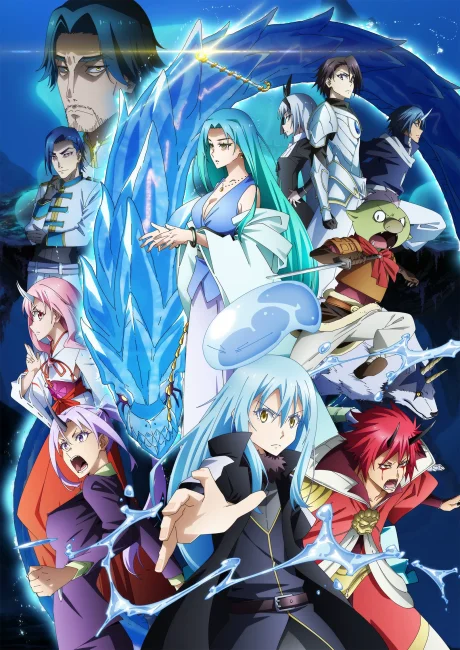
Season 3 is where the adaptation conversation gets heated. The LN community is split between “S3 was a bad adaptation of good material” and “S3 was an acceptable adaptation of material that doesn’t translate to anime well.” I lean toward the first camp.
Volumes 7-11 are the political core of Tensura. The Tournament Arc, the Dungeon creation, the diplomatic recognition meetings with human nations. In the LN, this stretch is where Tempest transitions from “powerful settlement” to “legitimate nation-state.” The meetings ARE the content. Rimuru negotiating with Gazel, establishing trade agreements with Blumund, convincing the Western Nations that a Demon Lord-led country won’t threaten them. The political chess is the entire appeal.
The anime put these meetings in the same conference room for episodes at a time. Reused assets. Still frames. Characters sitting at the same table with minimal visual variety. A manga reader summed it up: “LN still has the same amount of meetings but anime adapted it rather poorly, it was better in manga (more diverse visuals instead of the same meeting room).”
Weekly viewers suffered the most. If you watched S3 as it aired, you got six consecutive weeks of characters talking in rooms. No action climax to break the tension. No visual spectacle to reward your patience. LN readers who binged the same content in a weekend had a completely different experience because prose handles political content more efficiently than animation.
Specific content S3 cut: the dinner scene fans were looking forward to (compressed to nothing), the spring bath comedy scenes (cut entirely), Raphael’s explanation of the Beelzebub sacrifice mechanics (created a minor plot hole), and Shion’s character development scenes.
The result: S3 has the worst reception of any Tensura season among general audiences. LN readers know the source material is strong. But the adaptation didn’t make the case for why meetings matter. It presented the political content as an obstacle to get through rather than the point of the story.
Here’s the thing about the meeting arc that the anime fails to communicate: the meetings are where Rimuru wins. Not through force. Through preparation, information asymmetry, and controlled generosity. In Volume 8, Rimuru hosts the representatives from Dwargon, Blumund, and the Armed Nation. In the LN, you’re inside his head as he calculates what each delegation wants, what he’s willing to concede, and what he needs them to think he’s conceding. He lets Gazel Dwargo believe he’s getting a favorable deal. He is. But Rimuru’s getting a better one, and the narration shows you exactly how.
The anime shows people sitting around a table agreeing to things. The LN shows you a salaryman running a boardroom.
There’s also the Dungeon arc within this stretch. Volumes 9-10 cover the creation and optimization of the Labyrinth as both a military installation and an economic engine. In the LN, the dungeon design reads like a business plan. Rimuru working out monster spawning rates, adventurer revenue projections, floor difficulty curves. It’s gamified city planning. The anime glosses over the economics and just shows the dungeon existing.
My take: if S3 is the reason you dropped Tensura, read Volumes 7-11 instead. The same content reads faster. More detail. Works better in prose. The meetings are genuinely interesting when you’re inside Rimuru’s head watching him think through each negotiation. I read these volumes in three days and was never bored. Six weeks of S3 anime had me checking my phone during episodes.
Side-by-Side: The Falmuth War

The best way to understand the gap is to compare the same scene in both formats. The Falmuth massacre in Volume 6 / Season 2 Part 1 is the obvious choice because it’s the most important scene in the series and both formats give it their best effort.
In the anime: Rimuru learns his citizens were killed. He goes to the battlefield. Megiddo (the light refraction attack) activates. Falmuth soldiers die. Rimuru harvests 10,000 souls. He evolves into a Demon Lord. It’s dramatic. The music swells. The animation quality spikes for this episode.
In the LN: Before Megiddo, you get three full pages of Rimuru’s internal debate. He knows harvesting human souls will make him a Demon Lord. He knows the political consequences: every human nation will view him as a threat. He runs probability calculations with Great Sage on whether Tempest can survive the diplomatic fallout. He considers alternatives. There aren’t any that guarantee his people’s resurrection. He makes the choice with full knowledge of what it costs.
During Megiddo itself, the LN describes Rimuru’s emotional state: cold. Not angry. Not grieving. Cold. The 37-year-old salaryman has made a business decision that requires 10,000 deaths, and he executes it with the same detachment he’d bring to a corporate restructuring. That’s more disturbing than any amount of animation can convey. The anime makes it look heroic. The LN makes it look calculated.
After the massacre, the LN gives you Rimuru’s private moment of doubt. Did he choose correctly? Was there a path that didn’t require this? He suppresses the doubt because dwelling on it doesn’t bring anyone back. The anime cuts to the Demon Lord evolution and the triumph of resurrection. The cost gets buried under the reward.
That’s the pattern across the entire series. Same events. Different emotional texture. The anime gives you the highlights. The LN gives you the character.
The Animation Question
I’m not an animation expert. But the community discussion is worth summarizing because it affects whether the anime serves the source material.
Studio 8-Bit has produced all three seasons. The consensus: competent but not matching the series’ prestige. When people compare Tensura’s anime to Mushoku Tensei (Studio Bind), Frieren (Madhouse), or even The Eminence in Shadow, Tensura looks workmanlike. The character animation is clean. The action scenes are functional. But “functional” is the ceiling, not the floor.
Season 3 was in production alongside six other shows at 8-Bit. A small studio stretched thin. The meeting scenes showing reused assets and static compositions weren’t creative choices. They were resource constraints.
Season 4 may improve this. 8-Bit has fewer concurrent projects, and the Empire Invasion arc (Volumes 12-15) is action-heavy material that plays to animation’s strengths. The Tenma War battles that felt flat in the LN (Fuse isn’t great at fight choreography) could genuinely work better as animated sequences. If 8-Bit delivers on S4, it might rehabilitate the anime’s reputation.
The Manga Factor
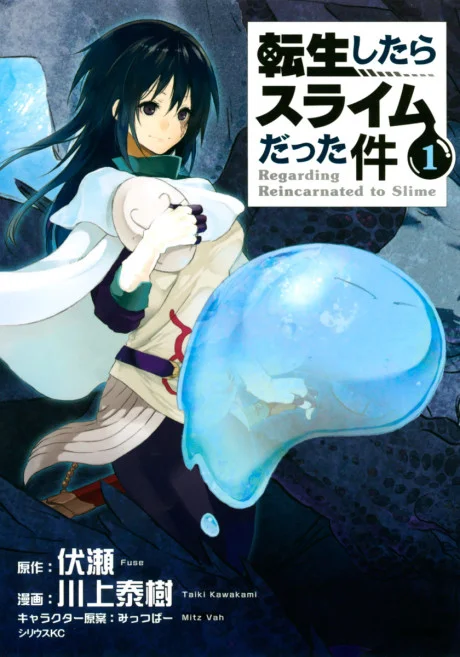
Worth mentioning because it’s part of the conversation. The Tensura manga, illustrated by Taiki Kawakami, has the reputation as the best visual adaptation of the source material. The art quality is above average for manga. Kawakami handles the meeting scenes with diverse panel compositions and expressive character art that the anime’s static conference rooms couldn’t match.
The community ranking is consistent: LN ≥ Manga >>> Anime. If you want the full story, read the LN. If you want visuals with the political content intact, the manga is the better option over the anime. The manga is behind the LN (roughly Volume 11 adapted), but it’s catching up.
What the Anime Adds
Two pieces of original content exist in the anime that aren’t in the LN:
Scarlet Bond (2022 film): An original story set between Seasons 2 and 3. Rimuru and company travel to the Raja Small Nation and encounter Towa and Hiiro. Fuse supervised the story. It’s self-contained. Fun but not essential.
Visions of Coleus (2024): A side story OVA. Same situation. Fuse-adjacent, not LN canon.
An upcoming second film, Tears of the Blue Sea, is announced for 2026. Also an original story, not from the LN.
These exist because the franchise is profitable enough to warrant original projects between seasons. None of them are required viewing for understanding the main story. If you’re reading the LN and wondering if you need to watch the movies, you don’t.
Season 4 Preview
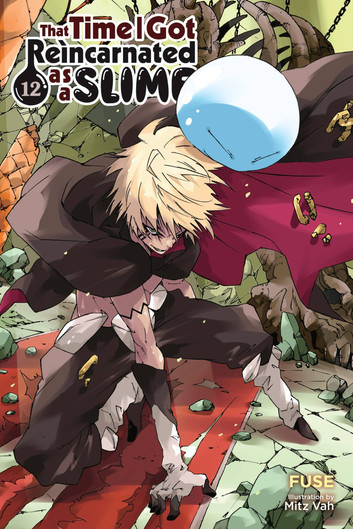
Season 4 premieres April 3, 2026. Five cours. Volumes 12-23. The first two cours air consecutively, then a break before cours 3-5.
This is the stretch that LN readers have been waiting for. Volumes 12-15 (the Empire Invasion) are the action peak of the entire series. The community consistently says “wait until the anime gets to THIS content.” Rimuru vs. Velgrynd. The Rudra/Michael reveal. The scale of the conflict expanding to cosmic stakes while the political foundation holds everything together.
Volumes 16-23 (the Tenma War and conclusion) are more divisive in the LN. Volumes 20-21 in particular are battle-heavy and Fuse’s fight writing is his weakest skill. But this is exactly where an anime adaptation could improve on the source. Fights that read flat on the page might land with choreography and a soundtrack. 8-Bit has an opportunity here.
If you start reading the LN now, you’ll be ahead of S4 for the foreseeable future. And when the anime inevitably compresses political scenes (it will), you’ll understand what was cut.
I’m approaching S4 as a companion piece to the LN rather than a replacement. The Empire arc has the best fights in the series, and animation should serve those well. But it also has political maneuvering between Tempest, the Western Nations, and the Eastern Empire that needs the same diplomatic nuance the LN provides. If 8-Bit handles the politics as poorly as S3 did, the fights won’t matter because the stakes won’t feel earned. If they get both right, S4 could be the best isekai anime season in years.
Should You Read the LN After Watching the Anime?
Yes. Start from Volume 1.
The subreddit’s standard recommendation is to start from the beginning because the anime cuts add up. Trade negotiations, skill analysis, internal monologue, character depth. None of these are single scenes you can skip to. They’re woven throughout every volume.
If you absolutely won’t restart from Volume 1, start at Volume 7 (where S3 begins). That’s where the adaptation gap is widest. The Volumes 7-11 stretch that S3 struggled with is significantly better in the LN.
If you’ve watched through S3 and don’t want to re-read anything the anime covered, Volume 12 is where S4 begins. But you’ll be reading without the full context that the LN builds across the earlier volumes. I started at Volume 1 after S2, and I’m glad I did. The Dwargon trade scenes alone recontextualized how I understood Tempest’s economy. The skill analysis depth changes how you read every fight scene. And Rimuru’s internal monologue adds a layer of strategic thinking that makes the political arcs hit differently.
One more thing: the LN has an audiobook narrated by Britney Karbowski, who voices Rimuru in the English dub. If you liked the anime’s voice cast but want the LN’s depth, the audiobook splits the difference. I haven’t listened to it myself, but the community speaks highly of Karbowski’s Gabiru impression specifically.
For a full assessment of the series, see my Slime light novel review.
More on this series: Slime reading order | light novels like Slime
More about That Time I Got Reincarnated as a Slime
FAQ
Is the Slime light novel better than the anime?
For world-building, political content, and Rimuru’s characterization, yes. The LN gives you the full nation-building experience with Rimuru’s strategic internal monologue. The anime is better for action scenes and the voice cast is strong. Both are worth experiencing, but the LN is the complete version.
What did the Slime anime cut from the light novel?
Trade negotiations, diplomatic detail, Rimuru’s inner monologue, character development scenes (especially in S3), economic world-building, skill analysis depth, and comedy/breather scenes. The cuts add up across three seasons to create a noticeably different experience.
Where should I start the Slime LN after the anime?
Ideally, Volume 1. If not, Volume 7 (where S3 begins and the adaptation gap is widest) or Volume 12 (where S4 starts). The subreddit recommends starting from the beginning.
Why was Season 3 controversial?
S3 adapted Volumes 7-11, which are heavy on political meetings and diplomatic negotiations. The anime presented this content with reused assets, static compositions, and the same meeting room for episodes at a time. Weekly viewers found it boring. The source material is better paced because prose handles political content more efficiently.
Does the Scarlet Bond movie matter?
No. It’s an original story not in the LN. Fun but not required for understanding the main plot. The same goes for Visions of Coleus and the upcoming Tears of the Blue Sea film.
Will Season 4 be better than Season 3?
The source material is stronger. Volumes 12-15 are the action peak of the series. 8-Bit has fewer concurrent projects. The community is cautiously optimistic. Five cours is an unprecedented commitment for an isekai adaptation.