

Slime is a nation-building series disguised as an isekai power fantasy. That’s the thing people get wrong about it.
This article contains affiliate links. If you buy through these links, we earn a small commission at no extra cost to you.
TL;DR
- Slime is a nation-building series disguised as a power fantasy. The first few volumes lean into the overpowered protagonist formula. Then around Volume 5, Fuse stops caring about fights and starts writing trade agreements, infrastructure, and diplomatic summits. That’s when it becomes something genuinely different.
- 23 volumes, complete. Published by Yen Press. 25 million copies sold. Season 4 starts April 2026 with five full cours committed.
- The anime undersells the nation-building. The LN spends significantly more time on the mechanics of building Tempest as a functioning civilization. If you liked the political episodes, the novels have ten times more.
- It’s long but it earns the length. The scope grows from “slime in a cave” to “international geopolitics between demon lords.” Each arc escalates the stakes without losing the character core.
You watch the anime. Rimuru absorbs a dragon, names some goblins, gets absurdly powerful. It looks like another overpowered protagonist show. And the first few volumes do lean that way. But somewhere around Volume 5, Fuse stops caring about fights and starts caring about trade agreements, infrastructure, diplomatic summits. The mechanics of building a functioning civilization from scratch. That’s when the series becomes something genuinely different.
Twenty-three volumes. Eleven years of publication. Twenty-five million copies sold. Season 4 starts in April 2026 with a commitment to five full cours that will adapt the rest of the story. This is the biggest isekai franchise that isn’t named Sword Art Online, and the light novel is where the full picture lives.
Here’s the honest review. What makes Tensura worth reading, where Fuse stumbles, and why I keep recommending Volume 6 to anyone who’ll listen.
More about That Time I Got Reincarnated as a Slime
The Premise (And Why It Works Better Than It Should)
Satoru Mikami is a 37-year-old salaryman who gets stabbed and dies. Standard isekai opening. He reincarnates not as a hero or a demon lord but as a slime, the weakest monster type in every RPG ever made. Blind, boneless, rolling around in a cave.
The twist is the skill system. Dying Satoru’s last thoughts get interpreted by a cosmic voice as requests. His regret about never having a girlfriend becomes “Pain Resistance” and “Temperature Resistance.” His love of computers becomes the “Great Sage” analysis skill. And Great Sage is the real main character of the early series. It’s an AI assistant living in Rimuru’s head, analyzing everything, suggesting strategies, running probability calculations. Think of it as an isekai Jarvis.
Rimuru (the name he takes later) befriends Veldora, a storm dragon sealed in the cave for 300 years, absorbs him for safekeeping, and walks out into the world with two massive advantages: Predator (absorb anything, copy its abilities) and Great Sage (know everything about what you absorbed). He’s weak-looking but already broken.
What makes this work when hundreds of OP isekai protagonists don’t: Rimuru’s power is a management tool, not a combat tool. He uses Predator and Great Sage to solve logistical problems. How do you feed a goblin village that just doubled in size? How do you forge trade routes with a neighboring dwarven kingdom when your citizens are monsters that humans instinctively fear? How do you negotiate non-aggression pacts when the other side has every historical reason to distrust you?
The fighting happens, but it’s almost always in service of a political goal. Rimuru beats the Orc Lord not for glory but because the orc invasion threatens his settlement’s food supply. He fights Hinata not because she’s evil but because a misunderstanding between a human church and a monster nation escalated beyond diplomacy. Every battle has a negotiation table waiting on the other side. Rimuru builds a country. That’s the actual plot.
The Cast
Rimuru carries a cast of fifty-plus named characters. Some series would collapse under that weight. Tensura makes it work because Fuse treats his cast like departments in an organization chart. Everyone has a role and a reason to exist within Tempest’s power structure.

Rimuru himself is polarizing among LN readers. The anime presents him as generically nice. The light novel gives more texture. He’s a 37-year-old office worker in the body of a genderless slime. He negotiates like a middle manager. He avoids conflict not out of heroism but because conflict is bad for business. His internal monologue has the energy of someone running a startup who keeps accidentally becoming the most powerful being in the room. The Web Novel version of Rimuru was more ruthless, more willing to make hard calls. The LN version is softer, and the community is split on whether that’s an improvement. I lean toward the WN having the more interesting Rimuru, but the LN having the better story around him.

Veldora is a storm dragon who reads manga in Rimuru’s stomach for half the series. He’s comic relief that works because his power level is genuinely terrifying and his personality is genuinely childish. When he finally gets released and starts acting like a chuunibyou who happens to be a world-ending catastrophe, it’s satisfying in a way that only a long buildup can deliver.

Diablo shows up and immediately becomes the fan favorite. A primordial demon who pledges absolute loyalty to Rimuru after witnessing his power during the Falmuth War. He’s the subordinate who’s clearly stronger than his boss but chooses subservience out of genuine fascination. The community has been begging for Fuse to let Diablo go all-out for about ten volumes. It hasn’t really happened yet. That’s a legitimate complaint.

Shion is the loyal secretary whose cooking can kill people. Literally. Before she evolves the right skills, anything she prepares is poison. She’s brute force personified, the character who solves every problem by hitting it harder. But her death in Volume 6, and Rimuru’s decision to become a Demon Lord specifically to bring her back, gives her weight beyond the comedy. She matters to Rimuru in a way the story earns.

Benimaru is the military commander who holds Tempest’s army together while Rimuru handles diplomacy. He doesn’t get the flashy character moments that Diablo or Veldora do, but the series would fall apart without him. Every time Rimuru leaves to negotiate, Benimaru is the reason the country doesn’t collapse. He’s the competent middle management that makes the nation-building believable.

Milim Nava is the wildcard. Dragonoid Demon Lord. Could destroy continents on a whim. Acts like a ten-year-old hopped up on candy. Her friendship with Rimuru is played for comedy, but her backstory, when you learn about her father and Geld, has real tragedy underneath the hyperactive surface. Fuse handles the gap between her power and her personality better than most LN authors handle their comic relief characters.
The cast works because the nation-building framework gives everyone a job. Geld runs construction. Gabiru handles the lizardmen contingent (badly, and that’s the joke). Shuna manages domestic affairs. Hakurou trains the military. It reads like an org chart that developed personalities, and I mean that as a compliment.
Great Sage / Raphael / Ciel deserves its own mention. Rimuru’s internal skill evolves across the series from a basic analysis tool to a Unique Skill to an Ultimate Skill with its own personality. The progression from Great Sage (cold analysis) to Raphael (strategic planning with hints of autonomy) to Ciel (a fully self-aware being with her own will) is quietly the best character arc in the series. The community ships Rimuru and Ciel. I get it.
Where the Volumes Peak
I’ve read all twenty-three volumes. The quality curve has a clear shape, and my experience lines up with what the community says about where the peaks and valleys fall.
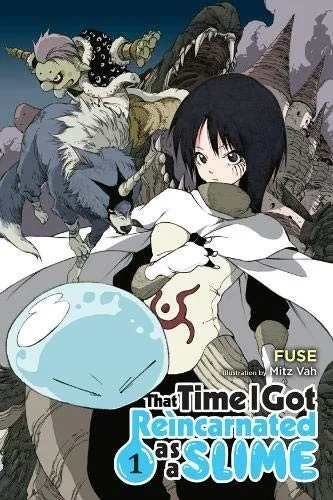
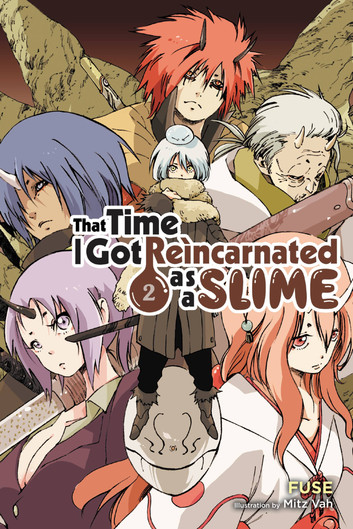


Volumes 1-4 are setup. Rimuru reincarnates, befriends Veldora, builds a goblin village into a functioning settlement, forges an alliance with Dwargon (the dwarven kingdom), and resolves the Orc Disaster crisis. The Orc Lord arc is the first time the series shows what it’s really about: Rimuru doesn’t just defeat the Orc Lord, he absorbs the orc nation into Tempest, turning enemies into citizens. That pattern repeats across the whole series. Every conflict ends with Rimuru’s nation getting bigger.
It reads like competent isekai with better-than-average world building. The anime covers this stretch well. If you’ve watched Season 1, you’ve gotten most of this content, though the LN has more diplomatic detail the anime trimmed. The Dwargon chapters in particular have trade negotiation scenes that the anime mostly skipped.
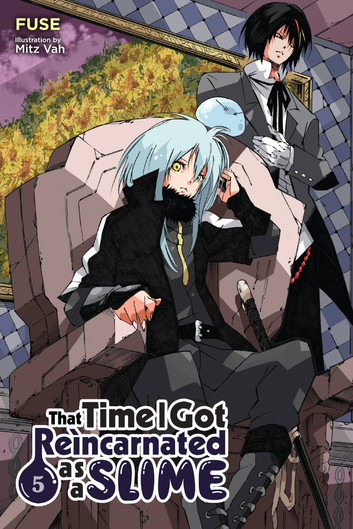

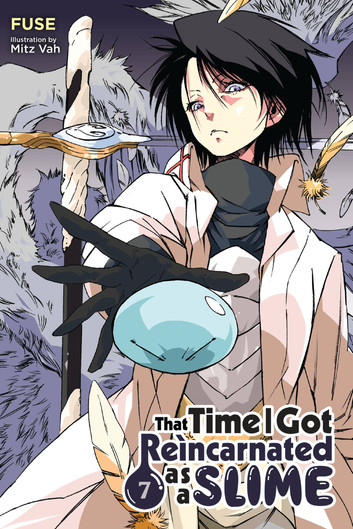
Volumes 5-7 are the first peak. The Falmuth War arc. This is where Tensura stops being “good isekai” and starts being something I actively recommend to people who don’t read isekai. Volume 5 sets up the political tensions. Volume 6 delivers the payoff. Falmuth invades Tempest, 20,000 of Rimuru’s citizens die, and Rimuru makes the decision to become a Demon Lord to resurrect them. The resurrection requires 10,000 human souls. He harvests the Falmuth army.
That sequence in Volume 6 is the emotional high point of the entire series. The cost is real. The decision is morally complex in a way that most isekai never attempts. Rimuru crosses a line. He knows it. The story acknowledges the weight of it. And then the Walpurgis Banquet in Volume 7, where Rimuru faces down the existing Demon Lords and dismantles Clayman politically before destroying him physically, is the most satisfying power move in twenty-three volumes.
I’ve reread Volumes 6 and 7 three times. They hold up.


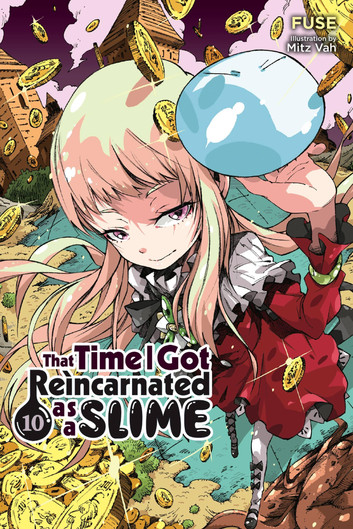

Volumes 8-11 are the stretch the anime fumbled in Season 3. The Tournament Arc, the Dungeon creation, heavy diplomatic maneuvering between nations. The infamous “meeting arc.” When S3 aired weekly, anime viewers were furious. Six weeks of characters sitting in rooms talking. LN readers were confused by the backlash, because the meetings are the point. The politics of building international credibility, establishing Tempest as a legitimate nation-state rather than just a monster settlement. That’s the stuff I read Tensura for.
In the LN, these volumes move faster than the anime suggests. The prose handles political maneuvering better than animation does. You can skim a paragraph of trade negotiations in ten seconds. You can’t skim a four-minute anime scene of the same content. If S3 put you off, the source material is significantly better paced.
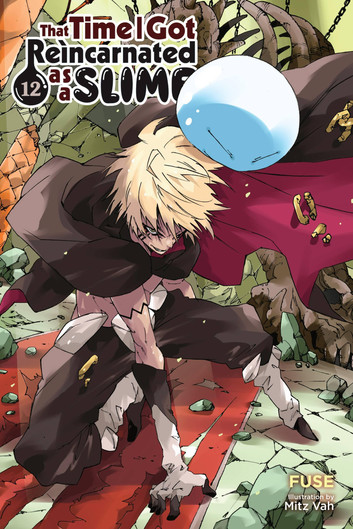


Volumes 12-15 are the second peak. The Eastern Empire, which has been lurking in the background since the early volumes, finally invades. Fuse spent ten volumes establishing this threat through diplomatic channels and intelligence reports. When it pays off, it feels earned in a way that most isekai escalation doesn’t.
Volume 15 in particular hits the action ceiling of the series. Rimuru vs. Velgrynd is the best fight Fuse has written. The reveal of what’s actually happening with Rudra and the entity called Michael recontextualizes a lot of what came before. The scope expands to genuinely cosmic stakes, but the political foundation underneath keeps those stakes grounded. You care about the world being threatened because you’ve spent twelve volumes watching it get built.
This stretch has the best balance of the series: fights that matter, politics that complicate those fights, character moments that connect both. A lot of readers consider this the actual peak, above even the Falmuth War. I go back and forth. The Falmuth War has the emotional gut punch. The Empire arc has the better payoff for long-term readers.

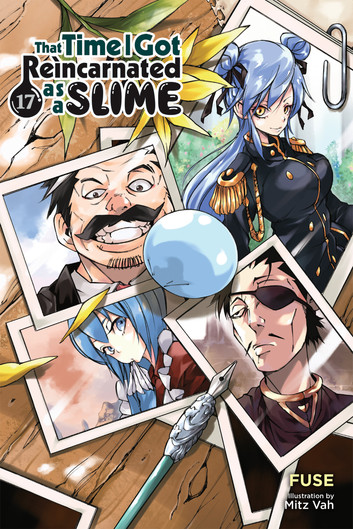


Volumes 16-19 shift into the Tenma War setup. New antagonists enter: Feldway, an angelic being with ties to the world’s creation myth, and Michael, a corrupted Ultimate Skill inhabiting Rudra’s body. The lore gets deep here. Fuse starts connecting the cosmology to the power system in ways that reward attentive readers. Quality stays solid through 19, though the balance tips further toward combat. The meeting-room Tensura starts giving way to battlefield Tensura. Some readers love this transition. For me, the series is always better when people are talking than when they’re fighting. Volume 19 still has enough political maneuvering to keep me engaged, but I could feel the shift coming.

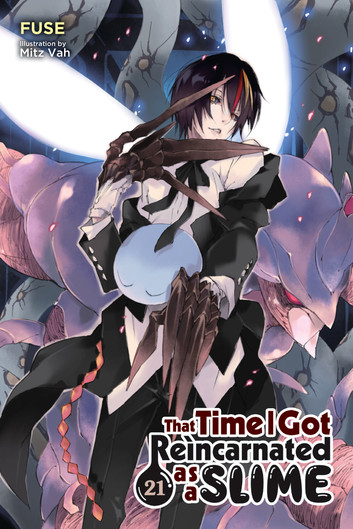
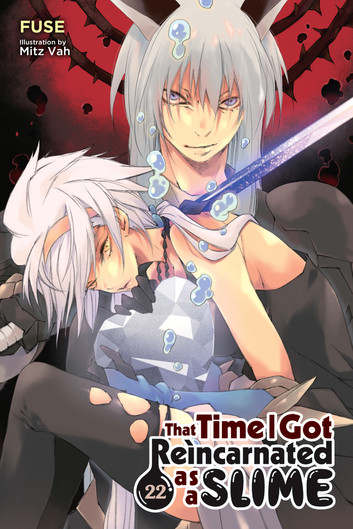
Volumes 20-21 are the low point. I’ll be direct about this. These two volumes are a slog. The Tenma War goes full battle manga. Fuse rotates through every named subordinate giving them power-ups and individual fight scenes. Volume 21 in particular reads like a power-up checklist. Veldora, Shion, Ultima, Shuna, Zegion, Benimaru, Geld, Diablo, Dino. Every single one. In one volume.
The problem is Fuse’s writing strengths are world-building and political scheming. His character dynamics carry the slow stretches. His fight choreography is functional at best. When the entire volume is fights, the gap shows. A well-written Tensura fight, like Rimuru vs. Hinata in the middle volumes, uses the combat as a vehicle for character tension and political stakes. A badly written one just describes skill activations and EP numbers going up.
The Veldora vs. Dagruel matchup in Volume 21 is genuinely entertaining because both characters have personality. Most of the rest isn’t. Zegion’s power-up, where he goes from defeated to 69 million EP in the span of pages, felt like the author pulling numbers out of thin air. Diablo, the character the entire community wants to see go all-out, gets his fight cut short by Zegion stealing the spotlight. Vega, an antagonist who should have been eliminated three volumes earlier, still takes up page time. The community’s frustration with Vega is a recurring meme on r/TenseiSlime. I share it completely.
Volumes 22-23 are the conclusion. Volume 22 recovers some of the quality lost in 20-21. The pacing tightens up, the plot threads start converging, and it feels like Fuse found his rhythm again after the slog of the Tenma War battles. The series wraps at 23. Fuse announced the final three volumes when he was at Volume 20, so the ending was planned, not rushed. That puts it ahead of a lot of LN endings by default.
The Nation-Building Argument
Here’s why I keep pushing Tensura on people who think they don’t like isekai.
Most isekai are about an individual becoming powerful. Tensura is about a society becoming powerful. Rimuru’s personal power level matters, but the series spends far more page time on how Tempest functions as a nation. Trade routes. Agricultural policy. Military organization. Diplomatic recognition from human nations. Tax systems. Infrastructure projects. The Dungeon as both a defense mechanism and an economic asset.
I compare it to Ascendance of a Bookworm, which regular readers know I love. Bookworm builds a society from the perspective of information and literacy. Tensura builds one from the perspective of geopolitics and military deterrence. They’re attacking the same “watch a civilization get built” itch from different angles.
If the phrase “isekai trade negotiations” makes you perk up rather than zone out, Tensura is your series. If it makes you zone out, the anime is fine. You’ll get the highlights.
The Dungeon deserves special mention. Ramiris, the fairy Demon Lord, teams up with Rimuru to build an underground labyrinth beneath Tempest. What starts as a defensive project becomes an economic engine. Adventurers pay to challenge the dungeon. The dungeon generates revenue. Tempest uses the revenue to fund infrastructure. It’s a fantasy theme park that doubles as a military installation, and watching Rimuru optimize it like a business investment is more entertaining than it has any right to be. Zegion, the insect warrior who guards the deepest floors, has a fan following specifically because of how absurdly powerful the dungeon made him.
The Spinoffs
Tensura has a massive spinoff ecosystem. Most of it is manga-only, but it’s worth knowing what exists.
The Slime Diaries (Tensura Nikki) is the standout. A slice-of-life manga following the daily lives of Tempest’s citizens. It got its own anime adaptation. The community consensus is that Slime Diaries captures the cast’s charm better than some of the main series’ later volumes. If you love the characters but find the Tenma War exhausting, Slime Diaries is the antidote.
Trinity in Tempest follows subordinates of various Demon Lords investigating Tempest. It adds world-building that the main series doesn’t have room for.
The Ways of the Monster Nation is a travel guide format spinoff. A rabbitman named Flamaire reviews Rimuru’s country. It’s light and fun.
Clayman Revenge is newer, recontextualizing the Clayman arc from his perspective. There’s also Tenchura (chibi Rimuru comedy) and a corporate satire spinoff where the cast reincarnates as office workers.
None of these are essential reading. But if you finish the main series and want more time with the cast, Slime Diaries is the one I’d recommend. I picked it up between Volumes 19 and 20 when I needed a break from the Tenma War, and it reminded me why I liked these characters in the first place.
The Translation and Physical Product
Yen Press publishes the English edition under their Yen On imprint. Kevin Gifford translates. The translation is clean and readable. Tensura’s prose style is straightforward. Fuse isn’t trying to be literary. He’s writing a story about geopolitics and monster evolution with clear, functional prose, and Gifford matches that energy well. It doesn’t generate the controversy that Seven Seas’ Mushoku Tensei translation did, or the passionate defense that J-Novel Club’s Bookworm translation gets. It just works.
I do wish Yen Press released faster. J-Novel Club pre-publishes chapters weekly for their titles. Yen Press drops volumes months apart. For a 23-volume series where the Japanese edition already finished, the wait is frustrating. If you’re impatient, fan translations exist for the later volumes, and the community generally considers the edited machine translations for Volumes 18+ to be readable if imperfect.
Mitz Vah’s illustrations are good. The character designs are clean. The color inserts are attractive. Rimuru’s various forms all look distinct. The later volumes have some genuinely impressive full-page spreads for the bigger set pieces.
The audiobook, narrated by Britney Karbowski, is worth mentioning. Karbowski voices Rimuru in the English dub of the anime, so there’s continuity there. Her Gabiru impression alone is worth the Audible credit, based on what I’ve heard from fans.
One note on the EN release schedule: Yen Press is behind the Japanese release. The LN completed at Volume 23 in Japan in November 2025, but the English edition still has several volumes to go. If you want to read the full series in English right now, you’ll need fan translations for the later volumes, or patience.
The Web Novel Question
Should you read the WN instead? No. But it’s complicated.
The LN is the definitive version. The WN was Fuse’s first draft, serialized on Shousetsuka ni Narou from 2013 to 2016. The LN diverges significantly from Volume 3 onward, with better character development, more coherent world-building, and a plot that actually plans ahead instead of making it up as it goes.
But WN Rimuru is a more interesting protagonist. He’s harder, more decisive, more willing to be ruthless when the situation calls for it. LN Rimuru is safer. There’s a scene the community references constantly: moments where WN Rimuru would have made the cold, pragmatic call, but LN Rimuru finds a nicer solution. The LN improves everything around Rimuru while making Rimuru himself less compelling.
The community consensus, which I agree with, is “LN for the story, WN for the protagonist.” Read the LN. If you finish and want more, the WN is free online and offers a different enough experience to justify revisiting. Some specific arcs play out very differently. Characters who survive in the LN die in the WN, and vice versa. The WN ending was divisive when it dropped in 2016, and Fuse clearly took that feedback into account when writing the LN’s conclusion.
One thing the WN does better: Rimuru and Ciel’s dynamic has more romantic tension in the WN. The LN keeps it strictly professional. If that ship matters to you (and judging by the subreddit, it matters to a lot of people), the WN delivers what the LN only hints at.
Season 4 and Why the LN Matters Now
Season 4 premieres April 3, 2026. Five cours. That’s unprecedented for an isekai adaptation. They’re committing to adapting the entire remaining story, from the Empire Invasion arc through to the conclusion.
This is the stretch where reading the LN matters most. Volumes 12-15 are the best action content in the series. Volumes 16-19 have the political machinations that the anime will inevitably compress. And Volumes 20-21, the weak spot, will probably be improved by animation, because Fuse’s flat fight choreography is an easier problem for an anime studio to solve than for prose to carry.
If you start reading now, you can get through the Empire Invasion arc before S4 catches up to it. And when the anime inevitably cuts political scenes for time, you’ll know what you’re missing.
The five-cour commitment is interesting for another reason. The anime will reach the Tenma War stretch that LN readers found disappointing. Fuse’s battle writing is the weakest part of the LN, but 8-Bit’s animation team can potentially fix that. Fights that felt flat on the page might land differently with choreography and a soundtrack behind them. I’m genuinely curious whether S4 will rehabilitate Volumes 20-21 the way good anime adaptations sometimes do for weaker source material.
Is Tensura Worth Reading?
Yes. With caveats.
The first nineteen volumes are a genuine achievement in isekai world-building. The Falmuth War arc (Volumes 6-7) and the Empire Invasion (Volumes 12-15) are peak light novel storytelling. The cast is enormous but functional. The nation-building focus gives Tensura an identity that no other isekai occupies at this scale.
Volumes 20 and 21 are rough. The battle-heavy final arc exposes Fuse’s weakness as a fight writer. If you’re reading primarily for the political and world-building content, those two volumes will test your patience. They tested mine.
But the good stretches are very good. And the bad stretches are “disappointing relative to the series’ peak,” not “actually bad.” I’ve read worse final arcs in shorter series (Shield Hero, I’m looking at you).
Read the whole thing. Or read Volumes 1-15 and decide then whether you want to continue through the Tenma War. Either way, you’ll have experienced the best nation-building isekai in the medium. Twenty-three volumes is a commitment. But I started Tensura expecting a generic power fantasy and finished it genuinely impressed by how much thought Fuse put into making a fictional country feel functional. That’s not a small thing.
23 volumes, Yen Press (Yen On). Complete in Japan. EN release ongoing. Start at Volume 1.
More on this series: Slime reading order | light novels like Slime
More about That Time I Got Reincarnated as a Slime
FAQ
Is the Slime light novel worth reading?
Yes, especially if you like world-building and political strategy in your isekai. The LN has significantly more nation-building content than the anime. Volumes 5-15 are the peak. The final arc (Volumes 20-21) is weaker, but the overall series is strong.
How many Slime light novels are there?
23 main volumes. The series completed in Japan in November 2025. Yen Press publishes the English translation, which is still catching up to the Japanese release. There are also multiple spinoff manga and the original web novel.
Is the Slime light novel finished?
Yes. Fuse completed the main story at Volume 23 in November 2025. The English translation by Yen Press is still ongoing. The web novel, which is a separate and earlier version of the story, was completed in 2016.
Should I read the light novel or watch the anime?
Both have strengths. The anime is good for action scenes and the voice cast is excellent. The LN is better for world-building, political content, Rimuru’s internal monologue. Season 3’s controversial “meeting” arc works much better in print. Start with whichever format appeals to you, but the LN is the complete version of the story.
What volumes does the anime cover?
Season 1 covers Volumes 1-4. Season 2 covers Volumes 5-7. Season 3 covers approximately Volumes 7-11. Season 4 (premiering April 2026, 5 cours) will adapt Volumes 12-23.
Is the Slime light novel better than the web novel?
The LN is the superior version overall, with better world-building and story structure. The WN reads like a first draft. Some readers prefer the WN’s version of Rimuru, who is more ruthless and decisive. The WN is free to read online and offers a different enough experience to be worth checking out after finishing the LN.