
Most romantic comedies end with a confession. Too Many Losing Heroines starts with three of them going wrong. The girl who grew up next door watches her childhood friend choose someone else. The track star’s crush starts dating her teammate. The shy bookworm confesses to the club president and gets turned down at a beach training camp. All of this happens before the actual story begins.
TL;DR
- Sharper than it sounds. Too Many Losing Heroines starts where most romcoms end — three girls get rejected before the story even begins. The premise is about what happens after you lose. Takibi Amamori’s debut won the Gagaga Award and hit #1 on Kono Light Novel ga Sugoi.
- Not disposable romcom fluff. The comedy is strong but the character writing is what carries it. Each “losing heroine” gets genuine emotional depth, not just a sad backstory for laughs.
- A-1 Pictures anime adaptation swept the Newtype Awards. That’s an absurd trajectory for a first-time author writing about girls who lost.
- The protagonist is the highlight. Nukumizu isn’t a self-insert blank. He’s a specific character with opinions, and his dynamic with each heroine works because he treats them like people, not romantic targets.
Takibi Amamori’s debut novel won the 15th Shogakukan Light Novel Award (the Gagaga Award) in 2020, hit #1 on the Kono Light Novel ga Sugoi rankings by 2025, and got an A-1 Pictures anime adaptation that swept the Newtype Awards. That’s an absurd trajectory for a first-time author writing about girls who lost. I picked it up expecting disposable romcom fluff. What I got was sharper than that.
The Premise
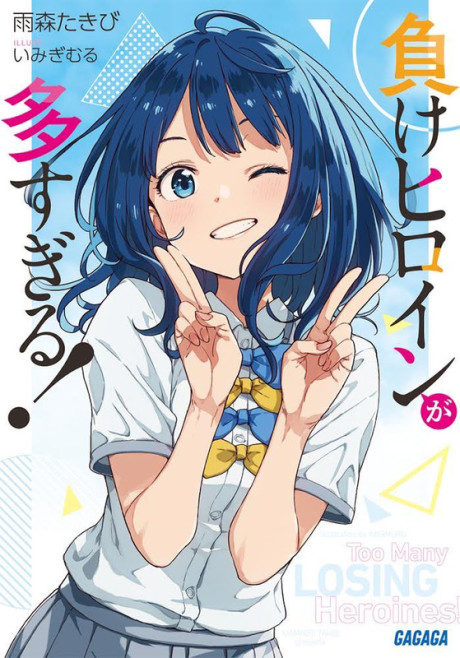
Kazuhiko Nukumizu is a self-described background character. Light novel otaku. No social life. His hobby is rating tap water quality, which tells you everything about how Amamori writes comedy. He’s sitting in a family restaurant when he overhears popular classmate Anna Yanami get rejected by her childhood friend Sōsuke Hakamada, who’s started dating another girl. Nukumizu labels her a “losing heroine” (負けヒロイン) in his head, a term from romantic fiction for the girl who never gets the guy. Usually the childhood friend who loses to the transfer student.
Then it keeps happening. Lemon Yakishio, the track team ace, discovers her crush is dating someone else. Chika Komari, the Literature Club’s quiet member, confesses to the club president and gets nothing back. All three end up orbiting Nukumizu because he happened to witness their lowest moments. The Literature Club becomes their accidental support group.
The hook is the inversion. In a standard romcom, these girls would be side characters. The childhood friend loses to the main love interest. The sporty girl gets sidelined by the quiet one. The shy bookworm never stood a chance. Amamori takes all three losing archetypes and makes them the entire cast. The “winners” of the love triangles are supporting characters. The story belongs to the ones who got left behind.
The Three Heroines
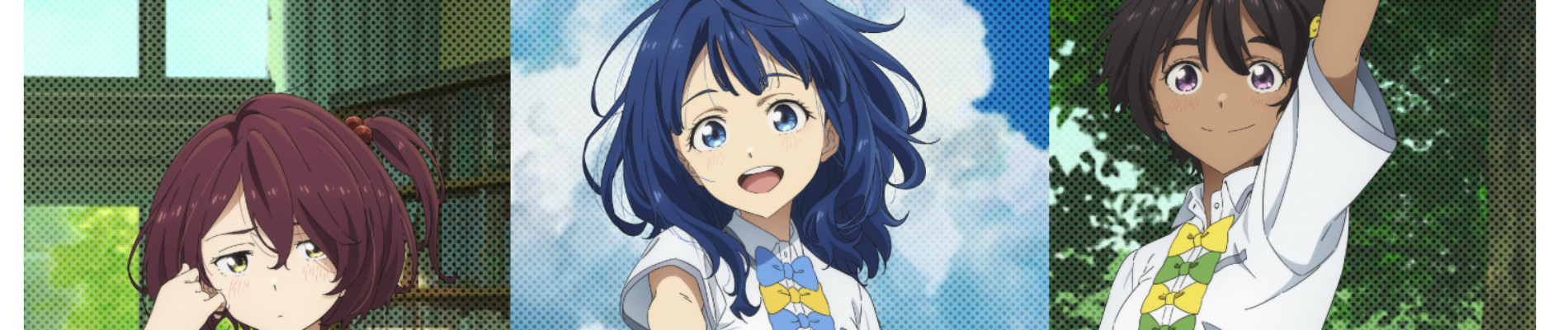
Anna Yanami
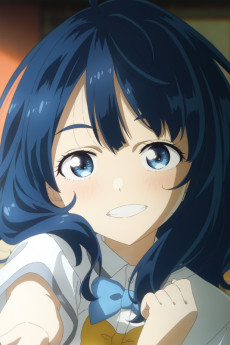
Anna is the heart of the series. Blue-haired, loud, perpetually eating. She knows her childhood friend Sōsuke chose someone else. She handles it the way a lot of real people handle rejection: by pretending she’s fine while obviously not being fine. There’s a scene early on where she drinks from Sōsuke’s abandoned glass at a restaurant. Indirect kiss. It’s played for comedy but it’s genuinely sad underneath, and Amamori lets both emotions exist in the same moment without picking one.
She’s positioned as the primary heroine. Volume 1 cover, most screen time, the one Nukumizu interacts with first. Amamori originally planned to name her “Iroha” but his editor flagged that Oregairu already used it. Good catch. Anna has enough in common with Iroha Isshiki already without sharing her name.
Lemon Yakishio
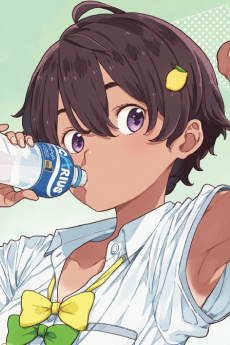
The genki sporty girl. Track team ace. Had feelings for her childhood friend Mitsuki Ayano, who’s now dating Chihaya Asagumo. Lemon’s arc gets the most interesting resolution of the three in the early volumes. Turns out Mitsuki actually had feelings for Lemon when they were younger but didn’t understand them and felt unworthy, so he never said anything. That context reframes Lemon’s “loss” as a mutual failure to communicate rather than a clean rejection. It’s a smarter take on the trope than I expected.
She’s also the most physically expressive character. Where Anna processes rejection through eating and denial, Lemon channels it into athletic performance. Her training montages aren’t filler. They’re how she copes.
Chika Komari
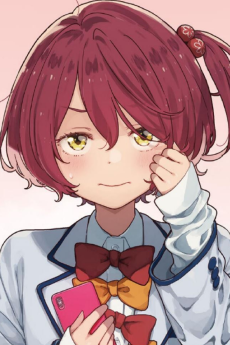
Shy, stutters around strangers, Literature Club member. Confessed to club president Shintarō Tamaki and got turned down because he’s in love with vice president Koto Tsukinoki. Chika shares Nukumizu’s interest in tap water quality, which becomes a surprisingly endearing bonding point between them.
Her arc is the slowest burn of the three. Anna’s rejection is loud and public. Lemon’s is physically active. Chika’s is quiet. She processes it internally, in the club room, surrounded by books. She’s the hardest character to write comedy for because her natural register is subdued, but when Amamori lands a Komari joke, it hits differently precisely because she’s so restrained the rest of the time.
Nukumizu as a Protagonist
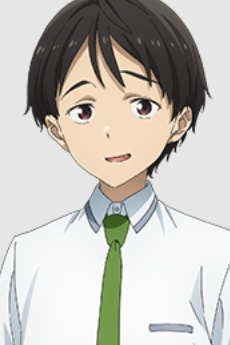
Here’s where I have to be honest. Nukumizu is the weakest element. He’s designed to be a background character who gets dragged into the heroines’ lives, and for the first few volumes, that’s exactly what he is. Dragged. He observes. He reacts. He provides deadpan commentary. But he rarely drives the plot forward on his own.
The Kono Light Novel ga Sugoi voters gave him the #1 Best Male Character spot in 2025, which surprised me. His appeal is in what he doesn’t do. He doesn’t white-knight. He doesn’t try to fix anyone. He doesn’t develop romantic feelings for the heroines at the speed the plot would normally demand. He’s just present, consistently, and that steady presence becomes its own form of support. It’s a subtle kind of characterization that works better on the page than I initially gave it credit for.
But if you’re coming from series with proactive male leads like Classroom of the Elite’s Ayanokouji or Re:Zero’s Subaru, Nukumizu will feel passive. That’s by design. Whether it works for you depends on how much you need your protagonist to steer the ship.
What Makes It Work
The comedy. Full stop. Amamori’s timing is excellent. The tap water gags shouldn’t work but they do. Anna eating her way through emotional distress is funny in a way that respects her pain instead of mocking it. The Literature Club interactions have a rhythm that reminds me of early Konosuba (male MC + chaotic female cast, PG tone) but with more emotional grounding.
The tonal balance is the real achievement. Rejection hurts. The series acknowledges that. But it doesn’t wallow. The Literature Club becomes a space where these girls can be honest about what happened to them without the conversation turning heavy or therapeutic. They’re not in group therapy. They’re eating snacks and arguing about novels and occasionally admitting they’re still a little broken about the person who didn’t choose them. That’s a hard tone to sustain across multiple volumes without either trivializing the pain or drowning in it. Amamori sustains it.
The setting helps. Amamori set the series in Toyohashi, his real hometown in Aichi Prefecture. The local details (specific restaurants, train stations, neighborhood geography) give the world a lived-in quality that generic “anime high school” settings lack. You can tell he knows these streets. The anime production team even visited Toyohashi for location scouting, and fans have done pilgrimages to the real spots. That kind of specificity in a romcom LN is rare. Most authors default to a vaguely Tokyo-ish suburb. Amamori made Toyohashi a character.
The writing itself is clean. Amamori doesn’t over-describe. His dialogue carries scenes without heavy narration telling you how to feel about what characters just said. The humor lands in the delivery rather than in setup-punchline structures. Nukumizu’s internal monologue reads like someone who’s genuinely funny but only in his own head, which is a harder voice to sustain than it looks.
What Doesn’t Work
The series is self-aware about romcom tropes but doesn’t fully subvert them. Anna is the childhood friend archetype. Lemon is the genki sports girl. Komari is the shy bookworm. Amamori knows these are stock types. He names the trope (“losing heroine”) in the title. But knowing you’re using a trope and actually breaking it are different things. A sharp criticism I’ve seen on Reddit puts it well: the series sets up Anna as the obvious eventual winner from Volume 1. She gets the most page time. She’s the primary cover girl. The “losing heroine” framing suggests she’ll eventually “win” Nukumizu, which means Lemon and Komari are… losing heroines again. The meta-awareness circles back on itself.
I’m not sure that criticism fully lands. The story might go somewhere unexpected in later volumes. But through Volume 5, the structural favoritism toward Anna is hard to ignore.
The other issue: Nukumizu’s passivity, as I mentioned. Some readers bounced off the series because of it. If you need a protagonist who does things rather than witnesses things, this will frustrate you. One reviewer on Novel Updates described him as “barely existing in his own story.” That’s harsh but not entirely wrong for the early volumes. He develops more presence around Volume 4 when he takes over the Literature Club presidency, but the first few volumes lean hard on the heroines carrying everything.
Volume-by-Volume Breakdown
Volume 1: Introduces all three heroines. Anna’s rejection by Sōsuke. Lemon’s situation with Mitsuki. Chika’s confession and rejection at the beach training camp. The Literature Club forms as an accidental gathering point. This volume does a lot of heavy lifting. Three separate rejection stories in 248 pages, all given enough room to breathe. Amamori’s pacing instincts are strong here.
Volume 2: Deepens Anna’s arc. The Yanami-Hakamada-Himemiya triangle gets more screen time. Karen Himemiya (Sōsuke’s girlfriend) turns out to be genuinely nice, which is a smart choice. It would be easy to make her unlikable so the reader roots for Anna. Instead, Karen is kind, considerate, completely unaware of Anna’s pain. She even tries to be friends with Anna. That makes everything worse in a way that’s much more interesting than a simple rivalry. Anna can’t even hate the girl who “won” because there’s nothing to hate.
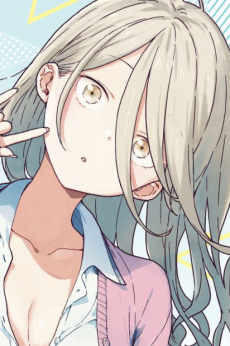
Volume 3: Student council characters enter. Yumeko Shikiya shows up as a low-energy, zombie-like student council secretary who’s secretly the top student in their year. The community has been debating whether she’s being set up as a love interest for Nukumizu or a fourth losing heroine. The culture festival arc gives Komari her best material yet. She steps into a leadership role within the Literature Club, which is the first real sign of growth from any of the heroines beyond just processing their rejections. This volume is where the series proves it can develop characters rather than just introduce them.
Volume 4: New heroine Shiratama Riko is introduced. She’s described as having qualities of both losing and winning heroines, which adds a structural wrinkle the first three volumes didn’t have. Her arc begins here and isn’t fully resolved by Volume 5. This is also where Nukumizu starts feeling like an actual character rather than a camera.
Volume 5: Lemon’s arc gets its resolution. The revelation about Mitsuki’s unspoken feelings recontextualizes her “loss” in a way that feels earned rather than contrived. This is the volume where I stopped thinking of Makeine as a comedy with feelings and started thinking of it as a character study with comedy. The emotional payoff here is real.
Volumes 6-7: The school year transitions to second year. Cast dynamics shift as old conflicts resolve and new ones surface. Riko’s arc continues. The series expands past the initial “three losing heroines” framework into something broader. By Volume 7, the Literature Club dynamic has changed enough that returning to Volume 1’s tone would feel regressive. The characters grew. The series grew with them.
Volume 8 (JP only as of March 2026): Released May 2025. Plus a short story collection volume (8.5) from January 2026. English readers won’t reach this material until late 2026 at the earliest.
The Anime Adaptation
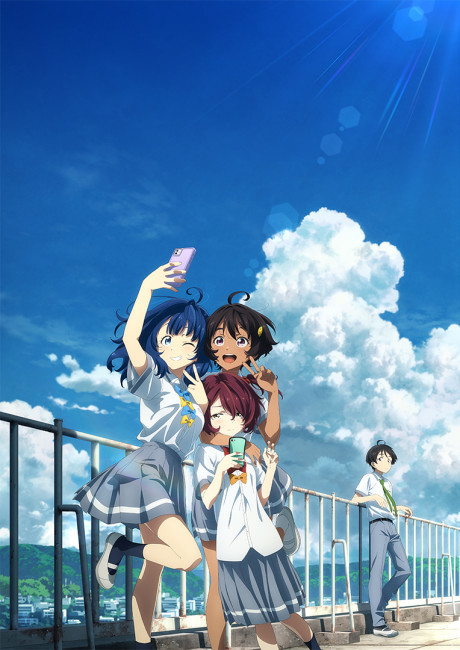
A-1 Pictures adapted the first three volumes across 12 episodes (July-September 2024). Episodes 1-11 cover Volumes 1 through 3 completely. Episode 12 is anime-original, written by Amamori himself. It’s an amusement park sequence that works as an epilogue to the first arc without advancing the plot. Season 2 has been announced (April 2025) and will cover Volumes 4-6.
The adaptation pacing is notably good. Three volumes across 11 story episodes works out to roughly 67 pages per episode. Compare that to My Happy Marriage Season 2, which crammed four volumes into 13 episodes, or most isekai adaptations that rush through 4-5 volumes per season. A-1 Pictures gave this series room to land its jokes and its emotional beats. The community on Reddit praised it specifically for not doing “the usual ‘let’s rush 4-5 volumes into one season’ approach.”
The anime scored an 8.08 on MAL (170,969 voters), which is strong for a romcom. The light novel sits at 8.42 on MAL (1,780 voters). Both numbers reflect genuine fan enthusiasm rather than hype inflation.
One production detail that got attention: Episode 1’s ending sequence used cel animation shot on 8mm film. Reportedly the first time new cel animation appeared on Japanese television in over a decade. It’s a small thing, but it signals a production team that cares about craft beyond the baseline.
If you watched the anime and want to continue the story in the light novel, start at Volume 4. Episodes 1-11 adapt Volumes 1-3 faithfully. Some short intermission stories were skipped, but nothing that affects the plot.
That said, I’d recommend going back to Volume 1 even if you’ve seen the anime. Nukumizu’s internal monologue adds a lot that the screen can’t convey. His running commentary on losing-heroine archetypes, his tap water observations, his slow realization that he actually cares about these people. The anime captures the events. The novels capture the inner life. For a character-driven series, that gap matters.
The anime is also missing Amamori’s prose rhythm. He writes short, punchy paragraphs interspersed with longer observational passages. The pacing on the page has its own comedy timing that animation can approximate but not replicate. Reading Volume 1 after watching the anime feels like hearing the director’s commentary. Same scenes, richer context.
The Awards Sweep
This is where the numbers tell an interesting story. Too Many Losing Heroines didn’t just perform well. It dominated the 2024-2025 awards cycle in a way that few romcom light novels have.
The light novel ranked #1 in the bunkobon (paperback novel) category of Kono Light Novel ga Sugoi 2025, Takarajimasha’s annual industry ranking. That same edition gave Imigimuru (the illustrator) the #1 Best Illustrator spot and Nukumizu the #1 Best Male Character. Anna Yanami placed #2 Best Female Character. Four top rankings from a single series in the same year.
The anime won Best Slice of Life at the 9th Crunchyroll Anime Awards. It won Best Work, Best Male Character, Best Studio, Best Theme Song, and Best Voice Actor at the 15th Newtype Anime Awards. It won Comedy Anime of the Year and Best Voice Acting at the Anime Trending Awards. Five wins at Newtype alone.
For a first-time author’s debut series, published by Gagaga Bunko (which is respectable but not Kadokawa-level in market reach), this is an exceptional run. Carlos Zen (author of Saga of Tanya the Evil) was the guest judge on the Gagaga Award panel that selected Amamori’s manuscript. Whatever Zen saw in that submission, the market validated it.
How It Compares to Other Romcom Light Novels
The obvious comparison is Oregairu. Both series feature an antisocial male lead, a club setting, a cast of girls with distinct archetypes. Both have meta-awareness about high school social dynamics. But they’re doing different things. Hachiman in Oregairu is the center of gravity. Every character exists in relation to his worldview. Nukumizu in Makeine is more like a bystander who gradually becomes invested. Oregairu asks “what’s wrong with being alone?” Makeine asks “what do you do after someone chooses not to be with you?” Different question. Different energy.
The other comparison that keeps coming up in the community is Konosuba. Male MC surrounded by chaotic women, comedy-first tone, PG relationship dynamics. I see it. The group chemistry is similar. But Konosuba’s comedy is absurdist. Makeine’s comedy is observational. Aqua is funny because she’s a disaster. Anna is funny because she’s coping badly and knows she’s coping badly. The self-awareness changes the humor.
Rent-A-Girlfriend gets mentioned too, but I think that comparison is lazy. Rent-A-Girlfriend is about a protagonist who can’t let go. Makeine is about characters who have to let go. The emotional vectors point in opposite directions. If anything, Makeine is the anti-Rent-A-Girlfriend. The heroines process rejection and move forward. Kazuya from Rent-A-Girlfriend would never.
The closest match I’ve found in tone and structure is actually Toradora. Both series take place in a realistic school setting. Both use comedy to soften genuine emotional stakes. Both have a male lead who functions more as a catalyst for the female characters’ growth than as a traditional protagonist. And both series are ultimately about what happens when the person you like doesn’t like you back.
The “Losing Heroine” as a Genre Concept
This is the part that most English-language readers miss. The “losing heroine” (負けヒロイン) isn’t just a trope. It’s a recognized category in Japanese light novel and manga discourse. Readers debate which characters qualify. Fan communities rank losing heroines across different series. There are popularity polls specifically for characters who lost their love triangle. It’s a thing.
Amamori’s contribution is taking that discourse and building a narrative around it. The title isn’t just catchy marketing. It’s a thesis statement. The series argues that the losing heroine’s story doesn’t end when she loses. She has a life after that. Friends to make. Growth to do. A self to rebuild that isn’t defined by the person who rejected her.
Whether the series fully delivers on that thesis is debatable. Anna is clearly being set up as a “winner” in a new love triangle with Nukumizu, which means she’s not actually a losing heroine so much as a temporarily displaced one. Lemon’s arc comes closest to the stated premise because her resolution isn’t about finding a new love interest. It’s about understanding what happened and moving past it. Komari’s arc is still developing.
The series is at its best when it commits to the losing part. When Anna sits alone in the restaurant processing what just happened. When Lemon runs track because she doesn’t know what else to do with the feelings. When Komari returns to the club room knowing the president will never see her that way. Those quiet moments are where Amamori’s writing is sharpest. The comedy and the plot machinations are good. The silence is better.
The Illustrator
Imigimuru’s illustrations deserve a mention. He’s the character designer behind Lycoris Recoil and This Art Club Has a Problem, so his design work is proven. The Makeine character designs walk a line between standard LN aesthetics and something more grounded. The heroines look like anime characters but their expressions carry genuine emotion. Anna’s face when she’s pretending to be fine is drawn differently from when she’s actually fine, and Imigimuru makes that distinction without exaggeration. Kono Light Novel ga Sugoi gave him #1 Best Illustrator for 2025. Earned it.
Who Should Read This
Read it if you like Konosuba’s cast dynamic but want more emotional stakes. The comedy-to-drama ratio is similar (mostly funny, occasionally real), but Makeine’s characters carry genuine hurt that Konosuba’s deliberately avoid.
Read it if you liked Oregairu but want something less cynical. Nukumizu shares Hachiman’s observer temperament without the philosophical baggage. The series doesn’t hate its genre the way Oregairu sometimes did. It loves romcom tropes enough to understand exactly why the losing heroine always loses, and then builds the whole story around that understanding.
Skip it if you need a proactive protagonist. Skip it if you want actual romance progression in the first three volumes. And skip it if meta-awareness about tropes without full subversion of those tropes bothers you. The series knows it’s playing with loaded dice. If you can’t enjoy the game anyway, it’s not for you.
Seven Seas publishes the English translation. Five volumes are out as of September 2025, with Volumes 6 and 7 scheduled through early 2026. The series is ongoing at 8 main volumes plus two short story collections in Japan. The anime is on Crunchyroll. Start with either. The adaptation is faithful enough that you won’t miss anything critical going anime-first, and you can pick up at Volume 4 to continue.
The Bottom Line
Too Many Losing Heroines does something genuinely clever with a premise that could have been one-note. “Rejected girls form a club” sounds like setup for a harem comedy. Instead, Amamori wrote a series about how people recover from romantic disappointment without reducing that recovery to “find a new love interest.” The Literature Club matters because it gives these characters something that isn’t romance. A place to be. People to be around. Purpose that isn’t tied to whoever broke their heart.
It’s not perfect. Nukumizu needs two volumes to develop a personality. The trope awareness doesn’t prevent the series from following some of those tropes straight. Anna’s structural advantage over the other heroines undermines the “losing” conceit. But when the comedy hits (and it hits frequently), and when the emotional beats connect (and they do, especially in Lemon’s arc), the series earns its #1 ranking and its awards sweep.
A debut author winning Gagaga Award, hitting #1 Kono Light Novel ga Sugoi, getting an A-1 Pictures adaptation that sweeps the Newtype Awards. That doesn’t happen by accident. The series has moved over a million copies in Japan. The anime scored 8.08 on MAL from nearly 171,000 voters. The LN sits at 8.42 from a smaller but dedicated readership. Those numbers reflect a series that connected with an audience looking for exactly this: a romcom that treats the losing side of love as a story worth telling.
Amamori wrote something people needed, even if what they needed was a story that takes losing seriously. The girls who don’t get chosen deserve better than a footnote in someone else’s love story. Makeine gives them their own.
Frequently Asked Questions
How many Too Many Losing Heroines light novel volumes are there?
Eight main volumes plus two short story collection volumes in Japanese as of January 2026. Seven Seas has released five volumes in English, with more scheduled through 2026. The series is ongoing.
What volumes does the Makeine anime cover?
Season 1 (12 episodes, Summer 2024) covers Volumes 1 through 3 in episodes 1-11. Episode 12 is an anime-original written by author Takibi Amamori. Season 2 has been announced and will cover Volumes 4-6.
Is the Makeine light novel better than the anime?
They’re both strong. The light novel has more internal monologue from Nukumizu and the heroines, plus intermission stories the anime skipped. The anime benefits from A-1 Pictures’ production quality, the voice acting (Hikaru Tono won awards for Anna), and a faithful three-volumes-in-eleven-episodes pacing. Start with either.
Where should I start reading after watching the anime?
Volume 4. Episodes 1-11 adapt Volumes 1-3 completely. Episode 12 is anime-original. Some intermission short stories were skipped but nothing that affects the ongoing plot.
Does Nukumizu end up with anyone?
Not as of Volume 8. The series focuses on the heroines’ recovery from rejection rather than rushing into new romantic pairings. Anna Yanami has the most screen time and structural positioning as a potential love interest, but no confession or relationship has happened.
What awards has Too Many Losing Heroines won?
The light novel won #1 bunkobon at Kono Light Novel ga Sugoi 2025. The anime won Best Slice of Life at the Crunchyroll Anime Awards, Best Work at the Newtype Awards, and Comedy Anime of the Year at the Anime Trending Awards, among others. The series won the 15th Shogakukan Light Novel Award (Gagaga Award) before publication.