

I didn’t expect to care this much about a Cinderella retelling. The premise sounded like every other “abused girl meets kind prince” romance: Miyo Saimori, mistreated stepdaughter, gets arranged to marry the scary military commander Kiyoka Kudou. He’s actually nice. She learns to trust. They fall in love. I’ve read that story before. You’ve read that story before.
This article contains affiliate links. If you buy through these links, we earn a small commission at no extra cost to you.
TL;DR
- Not just another Cinderella retelling. Akumi Agitogi does something I haven’t seen done as well anywhere else — she makes the recovery slow. Painfully, realistically slow. Miyo doesn’t bloom into confidence because a handsome man loves her. She inches toward believing she’s allowed to want things.
- 10 volumes available, series complete at 10. Published by Yen Press. Netflix anime spent six consecutive weeks in the Global Top 10. Live-action film debuted #1 in Japan.
- The romance works because it’s patient. Kiyoka and Miyo’s relationship develops at a pace that respects trauma. No miraculous overnight healing. That distinction changes everything about how the romance reads.
- 9 million copies across all formats. Goodreads 4.29/5 for Volume 1. Those numbers don’t happen for disposable romance.
But Akumi Agitogi does something with this formula that I haven’t seen done as well anywhere else in the light novel space. She makes the recovery slow. Painfully, realistically slow. Miyo doesn’t bloom into confidence because a handsome man loves her. She inches toward believing she’s allowed to want things. That distinction sounds small. It changes everything about how the romance reads.
Nine million copies across all formats. A Netflix anime that spent six consecutive weeks in the Global Top 10. A live-action film that debuted #1 at the Japanese box office and earned ¥2.8 billion. Goodreads readers gave Volume 1 a 4.29 out of 5. Those numbers don’t happen for disposable romance. Something about this series connects, and after reading all ten available volumes, I think I understand what it is.
More about My Happy Marriage
The Setup
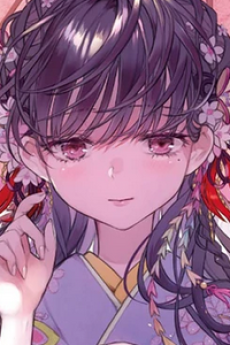
Miyo Saimori is the eldest daughter of a noble family in an alternate Taishō-era Japan where supernatural abilities called “Gifts” run in certain bloodlines. Her mother Sumi died when she was young. Her father Shinichi remarried his mistress Kanoko, and from that point Miyo became a servant in her own house. Kanoko took her room. Half-sister Kaya took her possessions, her status, her childhood friend Kouji. In a world where your Gift determines your worth, Miyo appeared to have none. She was nothing.
Then the Saimori family arranges her marriage to Kiyoka Kudou, commander of the Special Anti-Grotesquerie Unit. His reputation is brutal. Every previous fiancée fled within three days. The family sends Miyo expecting her to fail, hoping she’ll crawl back humiliated so they can use her however they want.
She doesn’t fail. Kiyoka isn’t cruel. He’s distant, professional, and quietly observant. He notices that Miyo flinches when he raises his voice. That she won’t eat unless given explicit permission. That she sleeps in the corner of her room because she’s never had a proper bed. And instead of ignoring these details or trying to fix her immediately, he creates space. He asks before touching her. He gives choices instead of instructions. He adjusts his behavior around her trauma without making a show of it.

That calibration is why the romance works. Kiyoka isn’t a generic nice guy. He’s a man who understood what was done to Miyo and specifically chose to be safe for her. The novels make this explicit through bonus POV chapters at the end of each volume where you hear Kiyoka’s reasoning. The anime can’t replicate that. On screen, he’s just kind. On the page, he’s strategically kind, and the strategy makes him a better character.
The Recovery Arc
This is where Agitogi earns her audience. Miyo’s trauma isn’t a backstory checkbox. It’s the engine of the first three volumes. She apologizes for existing. She calculates whether she’s allowed to sit in a chair or eat the food being offered. She accepts kindness while internally mapping exit strategies in case it turns out to be a trap. Every small step forward (cooking a meal, wearing a nice kimono, saying “I want to stay here”) is preceded by pages of her talking herself out of believing she deserves it.
Some readers find early Miyo too passive. I’ve seen the criticism. One reviewer described her as “more akin to a beaten dog than anything else.” That’s harsh but not unfair to how Volume 1 reads on the surface. But the passivity is the point. Agitogi isn’t writing a shy girl who needs to come out of her shell. She’s writing a person whose sense of self was systematically destroyed over years. The recovery is slow because real recovery is slow. The series respects that timeline instead of compressing it for narrative convenience.
By Volume 5, Miyo is making decisions. Fighting for things. Entering a dream world to rescue Kiyoka when he’s captured. That progression took five volumes and it couldn’t have been shorter without cheapening everything before it. When Miyo finally acts with agency, it matters because you watched her earn every step.
The relationship milestones land the same way. Miyo cooking her first meal for Kiyoka. Asking if she can call him by his first name. Wearing the hair ornament he bought her. Each one is preceded by enough internal debate that when she finally does it, the moment carries weight far beyond its surface simplicity. Goodreads reviewers keep quoting the same line: “I would like to stay with you, if you would permit it.” That line works because of the 150 pages of Miyo convincing herself she’s not allowed to say it.
Kiyoka’s side of the recovery is quieter but just as present. He learns to express feelings he’s suppressed behind military discipline. The bonus chapters from his perspective reveal a man who fell first and harder than Miyo realizes, but who deliberately held back because he understood that any pressure, however well-intentioned, could trigger her defenses. That restraint reads as passivity to some readers. To me, it reads as the most emotionally intelligent male lead in the LN romance genre.
The Supernatural Layer
My Happy Marriage isn’t a pure romance. It’s a romance with a supernatural political thriller underneath. The Gift system is straightforward: certain noble families carry supernatural abilities. The Saimori family has Spirit-Sight. The Kudou family has elemental powers (Kiyoka wields three elements, which is nearly unheard of). The Usuba family, Miyo’s maternal line, carries Dream-Sight, the rarest and most coveted Gift in the setting.
Miyo’s mother Sumi sealed her Dream-Sight before dying to protect her from exploitation. That seal breaking open is the catalyst for the second half of the series. Political factions want to control Miyo. The Gifted Communion (a cult led by Naoshi Usui) wants to weaponize her. The Imperial court wants to leverage her. Even her maternal family, the Usubas, have complicated motives. Miyo goes from being worthless to being the most valuable person in the room, and neither state lets her live in peace.

The Gift system isn’t deep by fantasy standards. Don’t come to this expecting Mushoku Tensei’s magic system or Re:Zero’s world-state complexity. The supernatural elements serve the character drama. Dream-Sight matters because it makes Miyo a target. Kiyoka’s combat abilities matter because they let him protect her. The Grotesqueries (demons) exist so Kiyoka has a military role that pulls him away from Miyo at narratively convenient moments. It all works. But if you strip the fantasy elements out, the emotional core (abused woman rebuilds her life with a patient partner) stands on its own.
The Supporting Cast
Yurie is the household servant who fills the maternal role Miyo never had. She’s warm without being saintly. She notices things about Miyo’s behavior and adjusts gently. In a series full of people with political agendas, Yurie is the one character whose kindness is completely unconditional.
Hazuki Kudou, Kiyoka’s older sister, arrives in Volume 2 as Miyo’s etiquette tutor. She’s cheerful, slightly pushy, and exactly the big-sister energy the story needed. Her own history (a failed marriage) gives her empathy for Miyo’s situation without making it a parallel. She teaches Miyo how to exist in polite society, which is a different skill than learning to trust people. Both are necessary.
Arata Usuba is the most interesting supporting character. Miyo’s cousin from her mother’s side. He kidnaps her in Volume 2. Challenges Kiyoka to a duel. Then gradually shifts from antagonist to protector. His loyalties split between the Usuba family’s interests and genuine concern for Miyo. In Volume 6, he shoots Kiyoka, claiming it’s for Miyo’s protection. Whether you trust that claim depends on how generously you read his character, and Agitogi leaves the ambiguity intact longer than most authors would.

Kaya Saimori is Miyo’s half-sister and the primary domestic antagonist. Spoiled, arrogant, threatened by Miyo’s engagement to someone as prestigious as Kiyoka. She’s a simple villain. The series doesn’t ask you to sympathize with her. Sometimes that’s fine. Not every antagonist needs a redemption arc. Kaya is the reminder of what Miyo escaped.
Volume Quality Curve
The series isn’t consistent. Here’s my honest read on each stretch.
Volumes 1-2 are the strongest. The domestic intimacy, the slow trust-building, the Dream-Sight reveal, the first real action climax. This is where Agitogi’s writing is tightest and the emotional stakes are clearest.
Volume 3 is the weakest. The in-laws arc with hostile mother Fuyu rehashes the abusive authority figure dynamic too soon. I get what Agitogi was doing (showing that Miyo’s trauma responses persist even in safe environments), but the execution felt like retreading ground the first two volumes already covered.
Volume 4 is setup. Necessary but unsatisfying as a standalone read. Usui and Kaoruko are introduced. Political threads get laid. Nothing resolves.
Volumes 5-6 are the action climax. Usui’s assault, Miyo’s full awakening, the dream-world rescue, Kiyoka’s proposal. If you pushed through Volume 3-4 feeling lukewarm, this is where the series wins you back. The emotional payoff is enormous.
Volume 7 is the wedding. The emotional peak of the entire series. I’d rank it just below Volumes 1-2 for pure impact.
Volume 8 is a side story collection. Pleasant but inessential.
Volumes 9-10 are a tonal shift. Post-marriage Miyo navigating political threats at a national scale. Eugene, a foreign character with unclear motives, tries to recruit her. The Miyakouji family harasses her. New settings, new antagonists. Good worldbuilding, different energy. The intimate domestic romance of the early volumes gives way to something broader. Agitogi is clearly building toward a new macro-arc, but the emotional stakes have shifted from “can Miyo learn to trust someone?” to “can Miyo protect what she’s built?” I’m reading these with interest but not the same grip the first half had. The romance is resolved. What’s left is the political cost of being powerful in a world that wants to use powerful people.
The Antagonists
My Happy Marriage runs through three antagonist tiers, and they get progressively more interesting.
The first tier is the Saimori family. Kanoko (the stepmother), Kaya (the half-sister), Shinichi (the absent father). They’re domestic villains. Their cruelty is mundane: taking Miyo’s room, denying her food, treating her as a servant. Minoru Tatsuishi fits here too. He kidnaps Miyo for breeding purposes, which is horrifying but straightforward. These villains work because they’re believable. You’ve met people like them. The everyday cruelty of people who simply decided someone didn’t matter.
The second tier is Fuyu Kudou, Kiyoka’s mother. Less effective, as I mentioned. Her hostility toward Miyo echoes the Saimori dynamic without adding enough new dimension. She comes around eventually. The resolution is fine. The arc is forgettable.
The third tier is Naoshi Usui, and this is where Agitogi levels up. Usui shares Usuba bloodline with Miyo. He was childhood friends with Miyo’s mother Sumi. His obsession with Sumi drives everything he does. His Gift, opinokinesis, lets him mentally manipulate anyone through physical contact. He can reach into your mind and rewrite your priorities. The Gifted Communion cult he leads can turn humans into Grotesqueries. He’s the first villain in the series who feels genuinely threatening on a level beyond personal cruelty. The Saimori family could hurt Miyo. Usui could destroy her.
His defeat in Volume 6 (killed by Arata in the dream world, Sumi’s spirit rejecting his plan) is satisfying. It ties the supernatural and personal threads together. Miyo’s mother, who sealed her powers to protect her, appears one final time to protect her daughter from the man who couldn’t let go of a dead woman. That’s good writing.
The Taishō Setting
Agitogi sets the series in an alternate Taishō-era Japan (roughly 1910s-1920s equivalent) where spirits and supernatural Gifts coexist with early modernization. The setting does real work. Kimono fashion, wooden architecture, the social hierarchies of noble families, the tension between tradition and modernity. It gives the romance a period drama quality that most contemporary LN romances lack.
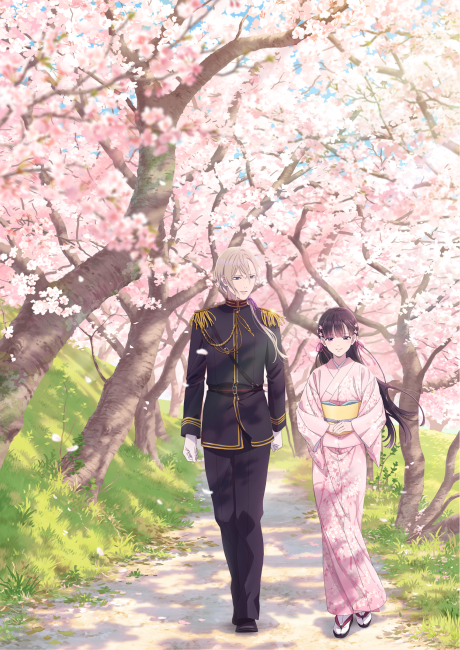
The anime production by Kinema Citrus nails this. Cherry blossoms in spring, snow in winter, firelight across wooden interiors. But the novels describe these details with a specificity that builds atmosphere paragraph by paragraph. The seasonal transitions mark time in Miyo’s recovery. Spring when she arrives at the Kudou estate. Summer when she starts cooking. Autumn when she begins asserting herself. The setting isn’t just decoration. It’s pacing.
The military elements ground the fantasy in something resembling real institutional structure. Kiyoka commands a unit that fights demons for the government. He has superiors. He files reports. He gets deployed. The bureaucracy around his Gift feels more like early 20th century Japan than standard fantasy kingdom fare. When he retires from the military after Volume 6, it carries weight because the institutional context makes his position feel real.
The Writing
Agitogi writes in close third person, centered almost entirely on Miyo. The interiority is the selling point. You hear every anxious thought. Every flinch. Every internal negotiation about whether she’s allowed to feel safe. When the perspective occasionally shifts to Kiyoka (usually in bonus chapters), the contrast is striking. He’s thinking about Miyo with the same intensity she’s thinking about him, but from a position of stability rather than fear. Seeing the same moments from both sides deepens the romance in a way that single-POV stories can’t.
The English translation from Yen Press is functional. Kiki Piatkowska translated Volume 1. David Musto handles Volume 2 onward. Some readers find the EN prose a bit flat compared to what they imagine the Japanese conveys. I can’t compare directly, but the translation reads cleanly. Action scenes are spatial enough to follow. Dialogue sounds natural. The emotional beats land even when the sentence construction isn’t elegant. Musto handles the internal monologue well, which matters because that monologue is the entire emotional engine of the series. If the translation flattened Miyo’s anxiety or Kiyoka’s restraint, the books wouldn’t work. They work.
The volumes are short. Around 160 pages each in English. You can read one in an afternoon. That brevity works for the story. Agitogi doesn’t pad. Each volume covers a specific arc or emotional milestone. The pacing would suffer if the books were 300 pages of a protagonist sitting with her anxieties. At 160 pages, the ratio of internal processing to plot movement feels right.
How It Compares
In the light novel romance space, My Happy Marriage sits closest to Spice and Wolf in structure. Both series resolve the central romance early enough that the story continues with the couple facing external threats together. Lawrence and Holo’s dynamic is wittier. Miyo and Kiyoka’s is more emotionally raw. Spice and Wolf is the better-written series overall. My Happy Marriage is the more emotionally accessible one.
Ascendance of a Bookworm gets compared because of the protagonist archetype: an underestimated woman who turns out to be extraordinarily gifted. Myne’s ambition drives Bookworm. Miyo’s survival instinct drives My Happy Marriage. Bookworm is a better series for worldbuilding. My Happy Marriage is a better series for romance. Both are top-tier examples of female-led LN storytelling.
Outside the LN space, the closest comparison might be Fruits Basket. The emotional architecture is similar: traumatized protagonist slowly healing through the patience of people who choose to care about her. Tohru Honda and Miyo Saimori would get along. The difference is that Fruits Basket spreads its emotional focus across a larger cast, while My Happy Marriage keeps the lens almost entirely on two people. If Fruits Basket is an ensemble drama about healing, My Happy Marriage is a duet.
The anime comparison matters too. Kinema Citrus did strong work. Evan Call’s score won the Tokyo Anime Award Festival Best Music prize. Reina Ueda won Anime Trending Awards Best Voice Acting for Miyo. The Taishō-era visual design is gorgeous. But Season 1 adapted two volumes across 12 episodes (comfortable pacing), while Season 2 crammed four volumes into 13 episodes. The compression shows. Political maneuvering gets trimmed. Character beats get shortened. Kiyoka’s warmth, which the novels show through careful behavioral calibration, becomes simple stoicism on screen.
The full LN vs anime comparison covers what gets lost in detail. Short version: watch Season 1 for the music and visuals, read the novels from Volume 1 for everything the screen can’t capture. For Season 2’s material, read first. The compression matters more.
What Doesn’t Work
Volume 3. I said it already but it bears repeating. The Fuyu arc is the weakest point in the series. Miyo’s recovery is tested by another hostile authority figure too soon after escaping the Saimori household. Agitogi resolves it competently but the emotional pattern is the same: powerful woman mistreats Miyo, Miyo endures, situation eventually improves. The series does this arc once (Volumes 1-2) brilliantly and once (Volume 3) adequately. The difference matters.
The Gift system is underdeveloped. Dream-Sight, electrokinesis, opinokinesis. The abilities are defined enough to serve the plot but never explored systematically. If you want a fantasy romance where the magic system has rules and consequences, Bookworm does it better. My Happy Marriage uses its supernatural elements as plot tools rather than as a framework to explore.
Miyo’s passivity in the first two volumes. I personally think it’s justified by her character, but I understand the criticism. If you need a proactive protagonist from page one, this will test your patience. The payoff comes in Volumes 5-6 when Miyo finally acts. But that’s 800+ pages of waiting.
Should You Read It?
Yes, if you want a romance that takes psychological recovery seriously. My Happy Marriage earns its emotional beats by refusing to rush them. The relationship between Miyo and Kiyoka is built on specificity: he’s kind in ways that account for her damage, she grows at a pace that respects what she’s been through. That’s rare in any genre. In light novels, it’s almost unheard of.
Skip it if you need fast plot progression or deep magic systems. Skip it if passive protagonists frustrate you regardless of context. The first half is domestic and slow. The second half is political and faster. Neither half is action-driven. This is a character study with fantasy elements, not a fantasy with character elements.
The series is ongoing at ten volumes with no ending announced. But Volume 7 (the wedding) works as a natural stopping point if you want closure. Everything before it builds toward that moment, and it delivers. What comes after is bonus. Good bonus, with new territory and genuine stakes, but the core emotional promise of the series is fulfilled by Volume 7. If you stop there, you got a complete love story. If you continue, you get a political fantasy about two married people defending their happiness against a world that keeps demanding something from them.
Yen Press releases are consistent. The gap between Japanese and English volumes is manageable. If you start reading now, you’ll catch up to the EN releases within a few weeks (the volumes are short) and be waiting for new releases alongside everyone else. The full reading order has the volume-by-volume breakdown if you want the detailed map before starting.
Start from Volume 1 even if you’ve seen the anime. Miyo’s interiority is the whole point, and the screen can only approximate what Agitogi puts on the page. The anime gave you Evan Call’s score (which won the Tokyo Anime Award Festival Best Music prize, deservedly). The novels give you the mind behind every scene the music is scoring. You need both for the full picture.
The MAL anime score sits at 7.68 from 193,000 voters. The AniList LN score averages 80. The Goodreads Volume 1 rating is 4.29 from nearly 5,000 readers. Across every platform, the reception is consistently positive. That’s not hype. That’s a series earning its audience volume by volume, scene by scene, one painfully honest moment of recovery at a time.
Frequently Asked Questions
Is the My Happy Marriage light novel worth reading?
Yes. It’s the strongest romance light novel currently running, with 9 million copies sold and a Goodreads rating of 4.29/5. The anime is good but the novels provide Miyo’s internal experience, which is the series’ biggest strength.
How many volumes are there?
Ten in Japanese as of March 2026. Yen Press publishes the English translation, currently through Volume 8-9. The series is ongoing with no ending announced.
Is My Happy Marriage similar to Spice and Wolf?
Structurally, yes. Both resolve the central romance early and continue with the couple facing external challenges. Spice and Wolf has wittier dialogue and a more developed economic setting. My Happy Marriage has rawer emotional stakes and a protagonist dealing with trauma recovery. Both are excellent romance LNs.
What’s the best volume?
Volumes 1-2 for the romance and character work. Volumes 5-6 for the action climax and Dream-Sight payoff. Volume 7 for the wedding. Volume 3 is the weakest.
Should I watch the anime or read the light novel first?
Watch Season 1 first for the music and visuals, then read from Volume 1 for Miyo’s internal monologue. For Season 2’s material, read the novels first because the anime compresses four volumes into 13 episodes. Full comparison here.
Do Miyo and Kiyoka get married?
Yes. Volume 7. The reading order guide has the full breakdown.