

The Apothecary Diaries is the series that made me realize light novels could do mystery well. Not “isekai protagonist solves everything with cheat powers” mystery. Actual deductive reasoning, physical evidence, court politics. Maomao notices a discoloration on a wall, connects it to a specific chemical compound. Three chapters later that observation unravels a conspiracy. That kind of mystery.
This article contains affiliate links. If you buy through these links, we earn a small commission at no extra cost to you.
TL;DR
- My favorite ongoing light novel series. The Apothecary Diaries made me realize light novels could do mystery well — actual deductive reasoning, physical evidence, court politics. Not “isekai protagonist solves everything with cheat powers.”
- 16 volumes available in English, ongoing. Published by J-Novel Club (digital) and Square Enix (print). The core loop of palace intrigue plus poison-related problem-solving never gets old.
- Maomao is the best protagonist in light novels right now. Dry, competent, genuinely interested in chemistry, and completely uninterested in the romantic tension she’s creating around herself.
- It has problems. The foreshadowing gets messy in the middle volumes. Some character names blur in translation. But the strengths carry it.
Sixteen volumes in, this is still my favorite ongoing light novel series. It has problems. The foreshadowing gets messy in the middle volumes. Some character names blur together in English translation. But the core loop of palace intrigue plus poison-related problem-solving never gets old for me. Here’s the full breakdown.
More about Apothecary Diaries
What Makes It Work

Maomao is the draw. She’s an apothecary’s daughter kidnapped into service at the imperial rear palace. She’s not interested in romance, not interested in climbing the social ladder, not interested in impressing anyone. All she wants is to be left alone with her herbs and poisons. The fact that she keeps getting pulled into political conspiracies against her will is both the central tension and the central comedy of the series.
What I like about her is the specificity. She doesn’t just “know medicine.” She knows that ingesting a particular flower causes a specific reaction in combination with copper cookware. And she knows why a particular incense would mask the smell of one poison but not another. Hyuuga clearly did research, and Maomao’s knowledge feels grounded rather than magic.
The setting carries weight. The rear palace is inspired by historical Chinese imperial courts, and the political dynamics feel real. Consorts jockeying for the Emperor’s favor. Eunuchs navigating bureaucratic power structures. Ladies-in-waiting forming alliances. It’s not window dressing. The politics drive the mysteries. Every poisoning, every suspicious illness, every unexplained death connects to someone trying to gain or protect power.
The mystery structure works on two levels. Each volume has self-contained cases that Maomao solves, mostly involving medicine or poison. These are satisfying on their own. But there’s also a longer political arc running underneath everything, and details from the episodic mysteries feed into it. A seemingly random incident in Volume 3 connects to a revelation in Volume 7. Hyuuga plants things early.
Where It Stumbles
I’ll be honest about the weaknesses because they’ve frustrated me too.
The foreshadowing gets opaque. This is the most common criticism I see from readers, and I agree with it. The smaller mysteries are fun to follow along with. But the bigger political conspiracies sometimes rely on connections that feel like leaps. Volume 3’s caravan and perfume subplot is a good example. Maomao connects dots that the reader has almost no chance of connecting themselves. Whether that’s satisfying or frustrating depends on your tolerance. I land somewhere in the middle. I enjoy the reveal, even when I couldn’t have predicted it.
Character names in the English translation. This isn’t Hyuuga’s fault, but it’s a real problem. The names are transliterated from Chinese-inspired Japanese readings, and some are extremely similar. Shenmei, Shisui, Suirei. Fonmin, Fengming. If you’re reading quickly, you will mix people up. I had to go back and reread sections in Volume 4 because I’d confused two characters. It gets easier once you’ve internalized the cast, but the first few volumes require concentration.
Pacing slows in the middle stretch. Volumes 5 through 8 feel slower than the opening arc. The mystery-of-the-week cases are still interesting, but the overarching political plot takes a while to advance. It picks back up around Volume 9 when the scope expands beyond the palace walls. If you stall in the middle volumes, push through. The payoffs later are worth it.
The Jinshi Situation

People ask about the romance. Here’s the deal: Jinshi, the head eunuch who serves as Maomao’s primary contact at the palace, is clearly interested in her from Volume 1. Maomao is aggressively uninterested. She finds his beauty annoying. She’d rather dissect a frog than deal with his feelings.
The slow burn is real. Sixteen volumes in and the relationship has progressed, but at a pace that will test your patience if romance is your main reason for reading. I actually think this works. Maomao’s disinterest isn’t played as tsundere denial. She genuinely has other priorities. The moments where she does show vulnerability hit harder because of the buildup.
If you want a romance-focused light novel, this is not it. If you want a mystery series with a slow-developing relationship woven through it, that’s what you’re getting.
How It Compares to the Manga and Anime
The anime adaptation by Toho and OLM is excellent. Beautiful production. But it necessarily compresses things. Maomao’s internal reasoning during mystery-solving is the best part of the light novel, and the anime can only show the conclusions, not the full thought process. The “aha” moments land differently when you’ve been inside her head.
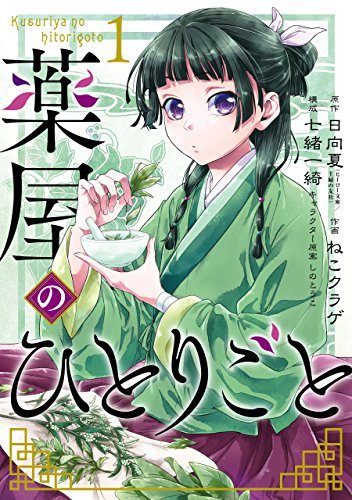
The Nekokurage manga (the Square Enix version) is stunning visually. I genuinely love how it renders the palace scenes. But like any manga adaptation of a mystery novel, it loses the internal monologue that makes Maomao’s deductions click.
I wrote a full comparison of the light novel vs manga and covered the anime’s changes separately. Short version: the LN gives you the most complete experience. The other formats are great supplements.
Volume-by-Volume Quality
Not all volumes are equal. Here’s my rough breakdown:
Volumes 1-2: The best entry point in light novels. Period. Volume 1 hooks you with Maomao’s character and the palace setting. Volume 2 introduces Lakan, who ended up being my favorite recurring character in the series. I reviewed both Volume 1 and Volume 2 individually.
Volumes 3-4: Strong continuation. The political web gets more complex. The mystery logic starts requiring more from the reader.
Volumes 5-8: The slowest stretch. Still good, but the overarching plot takes a backseat to more episodic content. Volume 7 has some important revelations that pay off later.
Volumes 9-12: The scope expands outside the palace. New settings, new types of problems. The political stakes ramp up significantly. This is where I got reinvested after the middle stretch.
Volumes 13-16: The current arc. Threads planted in earlier volumes start converging. Maomao’s personal history becomes central. These are the volumes that convinced me the series is building toward something big.
Who Should Read This
You’ll love this if you like: mystery fiction, historical settings, competent female protagonists, slow-burn character development, court intrigue. If you enjoyed Ascendance of a Bookworm‘s world-building and protagonist-driven storytelling, you’ll find a lot to like here. The community draws that comparison constantly, and it’s accurate.
Skip it if: you need fast romance payoffs, you want action-heavy scenes, or you get frustrated by mystery logic that’s hard to follow. This is a cerebral series. The excitement comes from Maomao figuring things out, not from fight scenes.
The Bottom Line
The Apothecary Diaries is one of the best ongoing light novel series right now. Sixteen volumes with consistent quality is rare in this medium. Maomao is a top-tier protagonist. The mystery-plus-politics formula keeps each volume fresh while building toward something larger. The English translation from J-Novel Club is caught up with Japan, so you won’t be stuck waiting years for new content.
It’s not perfect. The middle volumes slow down. The foreshadowing can be opaque. The character names will trip you up early. But those are minor issues in a series that gets the fundamentals right. Start with Volume 1. If Maomao doesn’t have you hooked by the honey incident, nothing will.
For the full reading path, check my Apothecary Diaries reading order guide. If you want to know the series’ current status, see is the Apothecary Diaries light novel finished.
FAQ
Is The Apothecary Diaries light novel worth reading?
Yes. It’s one of the best mystery-focused light novel series available. Strong protagonist, engaging political intrigue, consistent quality across 16 volumes. The English translation is caught up with Japan.
Is the light novel better than the anime?
For mystery-solving, yes. The light novel gives you Maomao’s full internal reasoning process. The anime is a great adaptation but compresses the deductive sequences. Both are worth experiencing.
How many volumes of The Apothecary Diaries are there?
16 volumes as of May 2025. The series is ongoing. J-Novel Club publishes the English digital edition, and Square Enix handles the print release.
Is The Apothecary Diaries a romance?
There’s a slow-burn romance between Maomao and Jinshi, but the series is primarily a mystery. The romance develops gradually over 16 volumes. If fast romantic progression is what you want, this isn’t the right pick.
Is it similar to Ascendance of a Bookworm?
Yes. Both feature intelligent female protagonists navigating complex social hierarchies through specialized knowledge (medicine vs books). Both prioritize world-building over action. Bookworm fans frequently recommend Apothecary Diaries and vice versa.