
The most common thing you’ll hear from Overlord fans: “the anime is fine, but the light novel is completely different.” That framing undersells it. The anime and the LN aren’t different in degree, they’re different in kind. One is an action-fantasy where an overpowered skeleton does whatever he wants. The other is a character study about loneliness, misdirected loyalty, and what happens when someone plays god without actually knowing what he’s doing.
This article contains affiliate links. If you buy through these links, we earn a small commission at no extra cost to you.
TL;DR
- The gap between the anime and LN is one of the widest in isekai. The anime is an action-fantasy about an overpowered skeleton. The LN is a character study about loneliness, misdirected loyalty, and playing god without knowing what you’re doing.
- Four anime seasons cover volumes 1-14 but compress heavily. Entire character arcs and political subplots get reduced to a few scenes. Volumes 12-13 (the Holy Kingdom arc) were turned into a movie that cut most of what made it work.
- What you lose: Ainz’s internal panic (he has no idea what he’s doing and the Guardians don’t realize it), the Lizardman arc’s actual depth, Jircniv’s paranoia spiral, and basically all of the worldbuilding that makes the setting feel lived-in.
- Start from Volume 1. The anime gives you the skeleton. The LN gives you the actual Overlord.
I’ve read through Volume 14 in official Yen Press releases and caught up on the fan translations for 15-16. I watched all four seasons of the anime plus the Pleiades shorts. The gap between them is one of the widest I’ve encountered in isekai adaptations, and I read a lot of isekai.
Here’s what you actually lose going anime-only, and whether it’s worth making the jump.
More about Overlord
The Short Answer
If you liked the anime, you’ll like the LN more. Not marginally more. Significantly more. The LN is the show you thought you were watching, complete with the worldbuilding payoffs, the political maneuvering, and the actual version of Ainz.
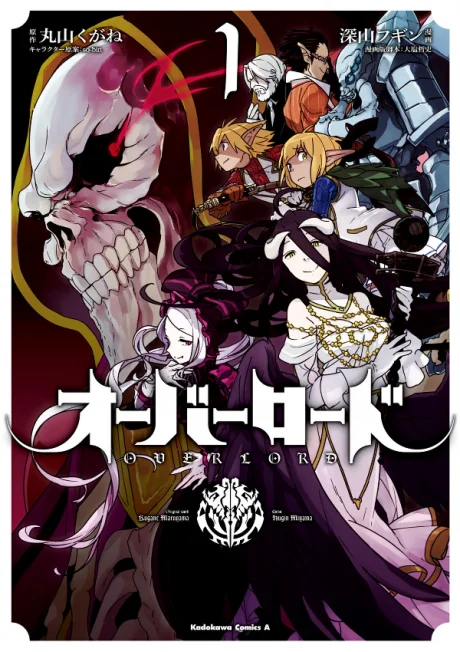
If you bounced off the anime because Ainz feels like a hollow power fantasy, the LN fixes that problem specifically. The anime Ainz is a pose. The LN Ainz is a salary man from Japan who got dropped into godhood and is quietly terrified he’s going to disappoint everyone who depends on him.
That’s the core difference. Everything else follows from it.
Ainz: Two Completely Different Characters
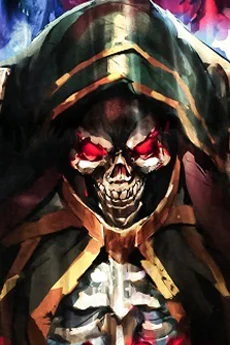
In the anime, Ainz is the villain protagonist of a power fantasy. He shows up, he’s terrifying, his subordinates worship him, he wins. Cool detachment with occasional flashes of the old Momonga underneath. It works as entertainment. It doesn’t work as character writing because you never understand what he actually wants, beyond vague notions of supremacy and not dying.
LN Ainz is different on a fundamental level. He’s trying to protect his children. That’s it. Nazarick’s NPCs, created by his former guild friends, are the only things left of a life that mattered to him. He’ll do anything to keep them safe, including pretending to be far more competent and far more evil than he actually is. Every scene where he acts like a supreme overlord is a performance. He’s fumbling through godhood, terrified that his subordinates will figure out he has no idea what he’s doing and lose faith in him.
Almost all of that interiority is absent from the anime. You get glimpses, but the internal monologue that makes Ainz’s motivations clear gets cut. So anime viewers get a character with no apparent stakes, no real fear, no particular reason to root for or against him beyond the spectacle. LN readers get someone they actually understand, even when he’s doing monstrous things.
This isn’t subtle. It changes how you read every scene. When Ainz orders something brutal in the LN, you have context for the decision, the calculation, the thing he’s protecting. The anime just shows the brutality and expects the cool factor to carry it. Sometimes it does. But it’s a lesser story.
The World Building That Didn’t Make the Cut
Overlord’s New World has actual history. The anime gestures at it. The LN delivers it.
13 Heroes. Six Great Gods. Eight Greed Kings. Demon Gods. These aren’t just flavor text — they’re the architecture of the world Ainz is trying to conquer. Understanding them changes how you read his position in it. The Eight Greed Kings especially are load-bearing for the later volumes. The anime barely touches them.
Wild Magic is another example. The LN explains the distinction between Yggdrasil magic and the magic system native to the New World — a distinction with real plot consequences. The anime treats it as background decoration. Readers who want to understand why certain characters can do certain things, or why Ainz approaches specific enemies with actual concern, need the LN explanations.
Political landscape is similarly compressed. Countries like the Draconic Kingdom and the City-State Alliance are names or brief appearances in the anime. In the LN they get real time: internal politics, genuine fear of Ainz, attempts to organize a response to Nazarick. That context makes the later volumes land differently. You understand what Ainz is actually displacing.
What the Anime Cut (Without Replacing)
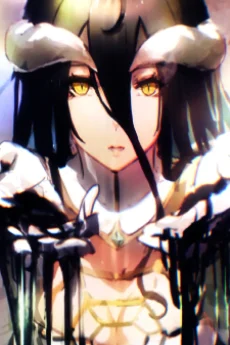
Nigredo is the most significant single omission. Albedo’s older sister, guardian of the 8th floor, introduced in Volume 3 before Ainz fights Shalltear. In that scene, Nigredo and Albedo argue about their other sister Rubedo — Nigredo fears Rubedo could destroy Nazarick from within. That argument recontextualizes Albedo completely. You understand the family dynamic, the hierarchy, what Albedo is actually protecting. Without it, Albedo reads as devoted-to-Ainz in a simpler way than Maruyama intends. The anime didn’t bring Nigredo in until Season 4, by which point the setup she was supposed to create was long past relevant.
Also cut: the Momon vs Workers fight. In the LN, this sequence does real work — it establishes Ainz’s fighting reputation from a ground-level perspective, shows you why the workers made the decision to enter Nazarick, and gives Momon a real antagonist rather than generic threats. Without it, the anime skips over the human texture that made those arcs land.
Flags are the other casualty. Maruyama plants small details in one arc that pay off volumes later. The anime’s pacing doesn’t allow for that kind of long-game setup, so later reveals can feel like they came out of nowhere for anime viewers. They didn’t. You just needed to be reading to catch them.
The Volumes 12-13 Situation
Season 4 adapted Volume 14 and skipped 12-13. Those volumes, the Holy Kingdom arc, are being adapted as a movie. This is important to know before you start reading.
The Holy Kingdom arc is not skippable. It’s not a side story. It’s one of the better arcs in the series, and it does significant work establishing Ainz as a figure in the world beyond Nazarick’s borders. Watching Season 4 without reading 12-13 first means you’re missing setup that Season 4 assumes you have. The movie will eventually exist. Until then, read the volumes.
The current state: the LN is at Volume 16 as of 2025, with the series planned to conclude around Volume 18-19. The anime has adapted through Volume 14. Volumes 15-16 are what you’d be reading if you want to continue past the anime.
One caveat: Volumes 15-16 are considered by most readers to be the weakest in the series. Not bad, but a step down from the high points. Vol 17 onward is reportedly a return to form, though I’m still waiting on the translation.
Where the Anime is Actually Better
Clementine. The fight choreography in her confrontation with Ainz in Season 1 is better in the anime. The LN version is fine, but it’s the anime that turns that sequence into something genuinely kinetic. The way the camera moves, the shift in Ainz’s posture, the sound design. That particular scene works better in motion.
Shalltear’s arc in Season 1 also benefits from the visual medium. Her design, her voice performance, the horror of the brainwashing sequence, all of it translates better with actual animation. The LN describes it competently. The anime makes it visceral.
The Pleiades shorts (Ple Ple Pleiades) are original to the anime and they’re good. If you haven’t watched them, they’re a lighter look at Nazarick’s daily life that fits the world without contradicting the tone of the main series.

What About the Manga?
Most of the subreddit ranks the manga above the anime as an adaptation, and having read a chunk of it I’d agree. It preserves more of the worldbuilding and the interiority, and the art for Ainz and the Pleiades in particular is strong. Problem is it’s on indefinite hiatus. The illustrator stopped working on it with no announced return. It’s adapted through roughly Volume 10, so it only covers half the anime. Pick it up for the early volumes if you want, but it’s not a substitute for the LN.
Where to Start If You’re Coming From the Anime
Start from Volume 1. I know that feels like backtracking when you’ve already watched four seasons, but the consensus on this is strong for a reason. The early volumes contain setup that pays off later, and reading them with knowledge of the anime is a different experience than watching the anime with knowledge of the LN. You’ll catch things you missed, understand motivations that seemed opaque, and get the actual version of Ainz rather than the anime’s approximation.
If you genuinely can’t do a full restart, Volume 12 is the minimum jump-in point to get the Holy Kingdom arc before the movie drops. But you’ll be missing context, and Maruyama’s writing rewards patience with the early material.
Official translations are from Yen Press. The quality is competent but has some translation choices the community debates, the Yen Press rendering of some magic terms and character voice differences from the fan translations. The fan translations are better for feeling like the original writing, but they’re unofficial and incomplete for the newer volumes. Start wherever’s more convenient for you; just start.
TL;DR Comparison
| Category | Light Novel | Anime |
|---|---|---|
| Ainz characterization | Complex, motivated, self-doubting | Cool villain pose, limited interiority |
| World building | Full: 13 Heroes, Greed Kings, Wild Magic, political factions | Surface-level, background decoration |
| Internal monologue | Extensive, essential to understanding character motivation | Minimal, shown-not-told or cut entirely |
| Nigredo / Albedo backstory | Vol. 3 setup that recontextualizes Albedo completely | Introduced S4, too late to matter |
| Momon vs Workers | Included | Cut |
| Volumes 12-13 | Best arc in the series (Holy Kingdom) | Skipped; movie upcoming |
| Action sequences | Competent in text | Better in motion (Clementine, Shalltear) |
| Manga adaptation | — | Better than anime but on hiatus since Vol. 10 |
More on this series: Overlord reading order
Frequently Asked Questions
Does Overlord light novel have more content than the anime?
Yes, significantly. The anime adapts roughly 3 volumes per season, which at 4 pages per minute is cutting about a quarter of the text. What’s cut isn’t just filler: it’s the internal monologue, worldbuilding details, and character backstory that make the series work as more than a power fantasy. The LN runs 16+ volumes with more planned.
Is the Overlord anime faithful to the light novel?
Faithful to the events, not to the experience. The main plot beats follow the LN without major rewrites. What the anime can’t replicate is the density: Ainz’s interiority, the lore explanations, the side character perspectives that make the New World feel inhabited. So it’s faithful the way a summary is faithful, technically accurate but missing the thing that made it worth adapting.
Should I start Overlord LN from Volume 1 or where the anime ended?
Volume 1. The community is consistent on this, and I agree. Even if you know the events, the LN reading experience is different enough that going back to Volume 1 is worth it. If you skip ahead to Volume 15, you’ll be missing the characterization buildup that makes the later volumes land.
What chapters did the Overlord anime skip?
The anime skipped Volumes 12-13 (the Holy Kingdom arc) when jumping from S3 to S4. This was intentional: Madhouse is adapting those volumes as a movie. S4 adapted Volume 14. Within each season, smaller scenes were cut: the Nigredo introduction, the Momon vs Workers fight, various bits of lore exposition and character interiority. Nothing was changed from the source, just compressed or removed.
Is the Overlord manga better than the anime?
Generally considered to be, yes. The manga preserves more of the detail from the LN and the art is strong. The problem is it’s on indefinite hiatus at around Volume 10, so it only covers through Season 2 of the anime. It’s a better adaptation of what it covers, but it’s incomplete and may not resume.
[…] methods include summoning (Shield Hero), teleportation (Konosuba), and getting trapped in a game (Overlord, SAO). All reincarnation isekai is isekai, but not all isekai involves […]
[…] illustration quality also varies wildly. Some series have stunning art — Overlord’s so-bin illustrations are gallery-worthy. Others have generic character designs that…s for the […]
[…] Overlord’s web novel is essentially a rough creative document that Maruyama used to figure out… is the actual story. They diverge substantially starting around Vol. 9-10 equivalent material, and the later WN arcs are genuinely unrecognizable compared to the LN versions. […]