
This article contains affiliate links. If you buy through these links, we earn a small commission at no extra cost to you.
You finished the anime. The season ended on a cliffhanger. Reddit says “read the source material” — but which source material? The light novel? The manga? And wait, someone in the comments is recommending a manhwa that’s “basically the same thing but Korean.” What does that even mean?
TL;DR
- Light novel = Japanese novel with illustrations. Manga = Japanese comics, read right-to-left. Manhwa = Korean comics, read left-to-right, usually vertical scroll. Three completely different reading experiences.
- The source material matters. If a series started as a light novel (Re:Zero, Mushoku Tensei), the LN has the full story. The manga and anime are adaptations that cut content.
- Manhwa ≠ manga with a different name. Korean manhwa (Solo Leveling, Tower of God) has different art styles, pacing, and storytelling conventions than Japanese manga.
Here’s the thing nobody tells you: manga, manhwa, and light novels aren’t just three words for the same thing. They’re fundamentally different reading experiences. I’ve spent over a decade bouncing between all three, and picking the wrong format for what you actually want is a fast track to disappointment.
Let me break down what each one is, how they’re different, and — most importantly — which one you should pick based on what you’re trying to get out of it.
TL;DR — Quick Comparison
| Light Novel | Manga | Manhwa | |
|---|---|---|---|
| Origin | Japan | Japan | South Korea |
| Format | Prose (text) with occasional illustrations | Black & white comic panels | Full-color digital comic panels |
| Reading Direction | Left to right | Right to left | Top to bottom (vertical scroll) |
| Typical Length | 200–300 pages per volume | 180–200 pages per volume | 60–80 panels per chapter |
| Release Schedule | Every 3–6 months per volume | Weekly or monthly chapters | Weekly chapters |
| Primary Platform | Physical books / BookWalker / Kindle | Physical tankōbon / Shonen Jump app | Webtoon / Tapas / Kakao |
| Story Depth | Deepest — full internal monologue, worldbuilding | Medium — visual storytelling, dialogue-driven | Varies — pacing optimized for mobile |
| Relation to Anime | Often the original source | Sometimes adaptation of LN, sometimes original | Usually original (webtoon-first) |
What Is a Light Novel?
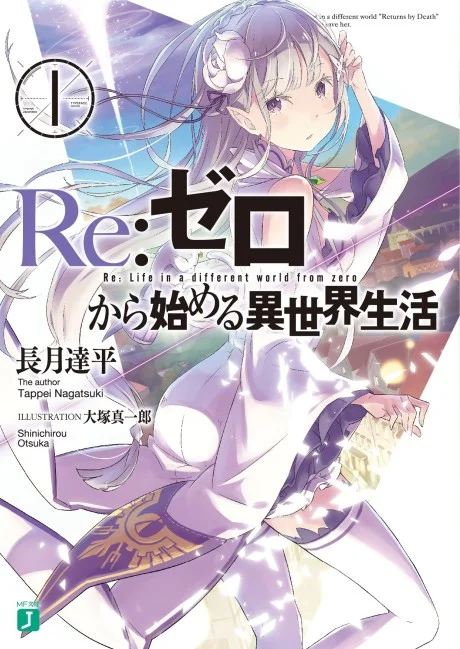
A light novel is a Japanese prose novel — actual paragraphs of text you read, not panels you look at. They’re typically 200–300 pages, published as small paperback volumes with a handful of interior illustrations (usually 4–8 full-page art pieces per book). Think of them as short novels with occasional anime-style artwork.
The name “light” doesn’t mean shallow. It means accessible. Light novels originated on web publishing platforms like Shousetsuka ni Narou (basically Japan’s Wattpad, except it actually produced masterpieces) and evolved into a massive publishing industry. Series like Sword Art Online, Re:Zero, and Mushoku Tensei all started as web novels before getting picked up by publishers like Yen Press, J-Novel Club, and Seven Seas for English translation.

Why Light Novels Hit Different
The thing that separates light novels from manga and manhwa is interiority. You’re inside the protagonist’s head. When Subaru dies in Re:Zero, the anime shows you his face. The manga shows you a dramatic panel. But the light novel? You get pages of his internal spiral — the specific thoughts he can’t say out loud, the way trauma from the fifteenth death bleeds into how he processes the sixteenth. Tappei Nagatsuki spends an entire chapter inside Subaru’s head during the “Choose Me” sequence in volume 13, and it’s suffocating in a way no visual medium can replicate.
This is also why fans of series like Mushoku Tensei insist the light novel is the “real” version. Studio Bind’s anime adaptation is gorgeous — genuinely one of the best-animated shows in years. But it necessarily cuts the interior monologue that makes Rudeus work as a character. Volume 12’s Turning Point 3 hits completely differently when you’re processing the aftermath through his thoughts rather than watching it happen from the outside.
Light novels also tend to have more story than any adaptation covers. Re:Zero’s anime has adapted through Arc 4 (roughly volumes 1–15). The light novel is on volume 37+ and deep into Arc 8. That’s years of story the anime won’t reach. Same deal with Overlord — the anime infamously rushed through the Holy Kingdom arc (volumes 12–13), which fans consider the best content in the series.

The Catch
Light novels require actual reading commitment. A single volume takes 3–5 hours depending on your pace. A 30-volume series is a genuine time investment. And translations can lag — some series are years behind the Japanese releases, while others (looking at you, No Game No Life) seem to have been abandoned entirely.
The illustration quality also varies wildly. Some series have stunning art — Overlord’s so-bin illustrations are gallery-worthy. Others have generic character designs that all blur together. You’re not reading light novels for the visuals.
What Is Manga?
Manga is Japanese comics. Black and white panels, read right to left, published as serialized chapters in magazines (Weekly Shonen Jump, Monthly Comic Alive, etc.) and collected into physical volumes called tankōbon. It’s the format most Western anime fans encounter first.
The right-to-left reading direction throws people off for about ten pages. Then your brain adapts and you never think about it again. If you’ve watched any anime, you already understand manga’s visual language — dramatic speed lines, exaggerated facial expressions, panel-based pacing. It’s the same storytelling vocabulary, just frozen in frames.

What Manga Does Best
Manga’s superpower is visual pacing. A great manga artist controls exactly what you see, when you see it, and how long your eye lingers on it. The double-page spread in Berserk when Guts first encounters the God Hand. The silent panels in Chainsaw Man after Aki’s death. The way One Piece uses panel size to signal emotional weight — small panels for buildup, massive panels for payoff. This is a craft that prose and animation handle differently, and manga has a specific rhythm that neither can replicate.

Action manga in particular translates poorly to prose. Trying to describe a fight scene that Yusuke Murata draws in One Punch Man would take paragraphs of text and still not hit as hard as a single panel. This is why most action-focused series (Jujutsu Kaisen, Demon Slayer, Dragon Ball) originate as manga rather than light novels — the medium IS the message.

Manga also offers a massive back catalog. We’re talking decades of completed series across every genre imaginable. Want horror? Junji Ito has you covered. Slice of life? Yotsuba&! exists. Sports? Haikyuu!!, Slam Dunk, Blue Lock. The sheer volume of manga available in English dwarfs both light novels and manhwa combined.

Manga vs Light Novel: The Adaptation Question
Here’s where it gets confusing. Some manga ARE light novel adaptations. The Re:Zero manga is an adaptation of the Re:Zero light novel. The Overlord manga is an adaptation of the Overlord light novel. In these cases, the manga is almost always a compressed version — it cuts internal monologue, simplifies worldbuilding, and sometimes skips entire arcs.
But plenty of manga are original works. Attack on Titan, One Piece, Chainsaw Man, Jujutsu Kaisen — these started as manga. There’s no light novel “source material” with extra content. The manga IS the source.
The rule of thumb: if a series started as a web novel or light novel (most isekai and fantasy series), the LN has more content. If it started as a manga (most action and slice-of-life series), the manga is the definitive version.

What Is Manhwa?
Manhwa is Korean comics — but calling it “Korean manga” misses the point. Modern manhwa is built for phones. Vertical scroll format. Full color. Released weekly as individual chapters on platforms like Webtoon, Tapas, and Kakao. The reading experience is fundamentally different from flipping through a physical manga volume.
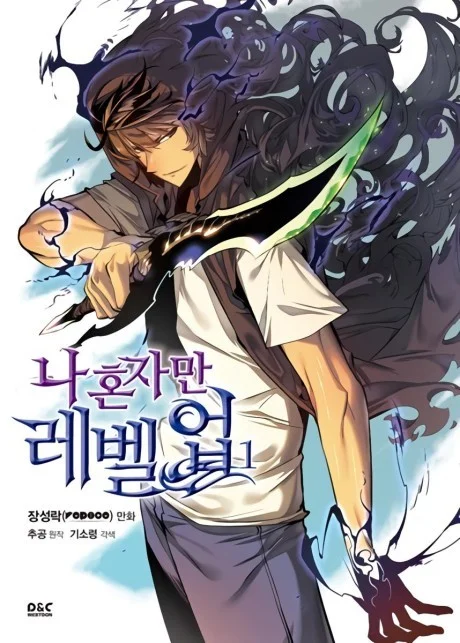
The vertical scroll format isn’t a gimmick. It changes how artists compose their panels. Instead of fitting art into a fixed page grid, manhwa artists use the infinite vertical canvas to control pacing through scroll speed. A dramatic reveal gets a massive panel that fills your entire screen. A quiet conversation gets smaller panels stacked vertically. The best manhwa artists — like Sung-Rak Jang (Solo Leveling) or SIU (Tower of God) — compose their chapters so the scroll itself creates tension. You’re physically pulling the story toward you.

The Webtoon Revolution
The reason manhwa exploded in the 2020s isn’t just quality — it’s accessibility. Webtoon and Tapas are free (ad-supported) or cheap (coin-based). You don’t need to find a manga retailer, figure out right-to-left reading, or commit to a physical volume. You open your phone, scroll, and read in full color. The barrier to entry is basically zero.
This accessibility shaped the content too. Manhwa chapters are designed for 5–10 minute reading sessions — perfect for a commute or a lunch break. Cliffhangers hit at the end of every chapter because the platform needs you to come back next week. Pacing is faster than manga on average because the audience has shorter attention spans on mobile.
Where Manhwa Shines
Manhwa dominates three specific niches:
Solo progression/power fantasy. Solo Leveling basically created this subgenre (in Korean comics at least). Sung Jin-Woo goes from weakest hunter to unstoppable god, and Sung-Rak Jang’s art makes every power-up feel earned through sheer visual spectacle. The Jeju Island raid arc in full color is something manga’s black-and-white format genuinely can’t match. Other standouts: Omniscient Reader’s Viewpoint, The Beginning After the End, Second Life Ranker.
Romance/drama. Korean romance manhwa has a depth and maturity that most Japanese romance manga doesn’t attempt. True Beauty, Remarried Empress, and Your Throne handle complex emotional dynamics and social commentary in ways that feel more kdrama than shonen. The full-color art also helps — expressions land harder when you can see the blush, the tears, the lighting.
System/regression stories. The “I died and came back with knowledge of the future” plot is everywhere in manhwa. It’s basically Korea’s version of isekai. Trash of the Count’s Family, Return of the Mount Hua Sect, The S-Classes That I Raised — they all run on this engine. If you like isekai light novels, these are your gateway into manhwa.
The Manhwa Catch
Manhwa has a quality consistency problem. Because Webtoon’s model incentivizes volume, there are hundreds of series that start strong and fall apart after 50 chapters. The art outsourcing pipeline (lead artist + multiple assistants + colorists) means some series have noticeable quality drops mid-run. And translations — especially on unofficial platforms — range from excellent to barely comprehensible.
The other issue: manhwa rarely gets the kind of definitive physical releases that manga enjoys. Some series (Solo Leveling, Tower of God) have gotten physical volumes, but most exist only as digital chapters. If you want something on your shelf, manga is still the better bet.
The Adaptation Pipeline: How Everything Connects
Understanding which came first matters because it tells you where the most complete version of the story lives.

Light Novel → Manga → Anime (most common for isekai/fantasy)
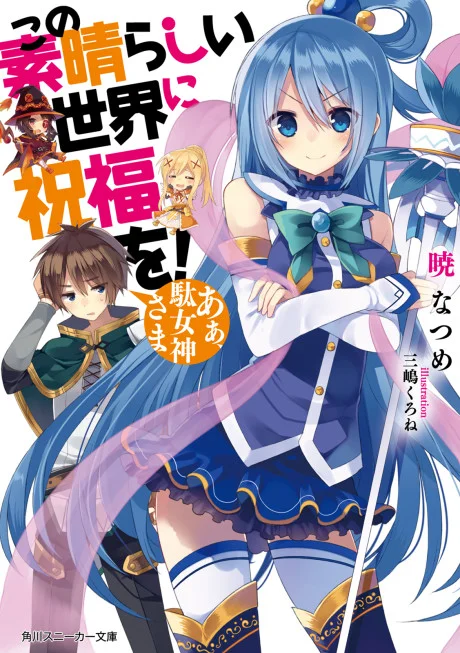
Re:Zero, Mushoku Tensei, Overlord, Konosuba, Sword Art Online, The Apothecary Diaries. The LN has the most content. The manga compresses it. The anime compresses it further. If the anime ended on a cliffhanger, the LN is where you go for the full story.
Manga → Anime (most common for action/shonen)
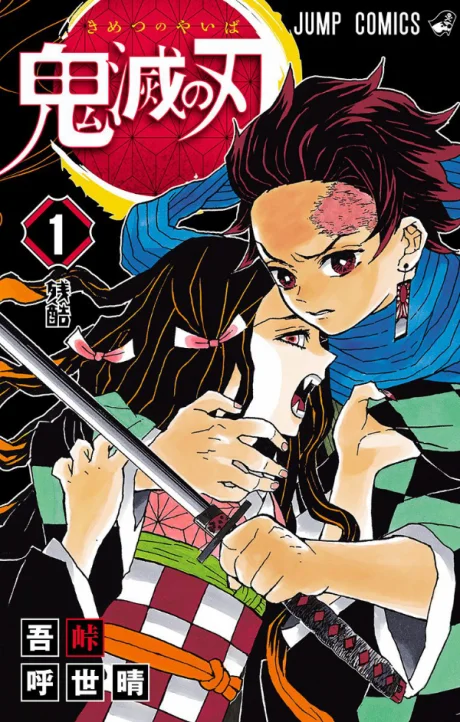
Attack on Titan, Jujutsu Kaisen, Chainsaw Man, Demon Slayer, One Piece. The manga IS the source. No light novel exists with “extra content.” Read the manga to continue past where the anime stopped.
Manhwa → Anime (growing trend)
Solo Leveling, Tower of God, The God of High School, Noblesse. The manhwa (webtoon) is the source. Read it for the full story. These adaptations often compress heavily — Solo Leveling’s anime covered roughly 110 chapters in 12 episodes.

Web Novel → Light Novel → Everything Else
Some series have a free web novel that predates the published light novel. The LN version is usually the “definitive” edit — better writing, sometimes different plot points. Mushoku Tensei’s web novel ending differs from the LN ending. Re:Zero’s web novel is significantly ahead of the published LN volumes.
Which Should You Read? (Honest Recommendations by Goal)
“The anime ended and I need more story RIGHT NOW”
If it’s an isekai/fantasy series → Read the light novel. The LN is almost certainly the original source and has the most content. Start from the beginning if you can — anime adaptations cut more than you think. At minimum, check which volume the anime ended at and start there.
If it’s a shonen/action series → Read the manga. One Piece chapter 1,000 to current is pure manga. Jujutsu Kaisen’s Culling Game arc is manga-only territory. The manga is the source — start where the anime left off.
If it’s a manhwa adaptation → Read the manhwa on Webtoon. Solo Leveling, Tower of God, etc. Full color, free to start, and hundreds of chapters ahead of any anime adaptation.
“I want deeper character development than the anime gave me”
Light novel, every time. This is where LNs dominate. Internal monologue, extended character interactions, worldbuilding details the anime skipped. If you watched Re:Zero Season 2 and thought “I wish I understood what Subaru was thinking,” the light novel is your answer.
“I want something fast and visual”
Manhwa for color and accessibility, manga for art quality. Manhwa’s vertical scroll format is designed for quick consumption. But if you want to appreciate artistic craft — panel composition, inking technique, the way a master artist uses negative space — manga is unmatched. Pick up any volume of Berserk, Vagabond, or Chainsaw Man and tell me manhwa’s full-color digital art hits the same way.
“I’ve never read any of these and want to start”
Start with what you already love:
- Liked Solo Leveling’s anime? Read the manhwa on Webtoon. Zero barrier to entry.
- Liked Mushoku Tensei or Re:Zero? The light novels will change how you think about these stories. J-Novel Club and Yen Press have affordable digital editions.
- Liked Jujutsu Kaisen or Demon Slayer? Read the manga. Viz’s Shonen Jump app is $3/month for their entire catalog.
“I want something the anime will never adapt”
All three formats have hidden gems:
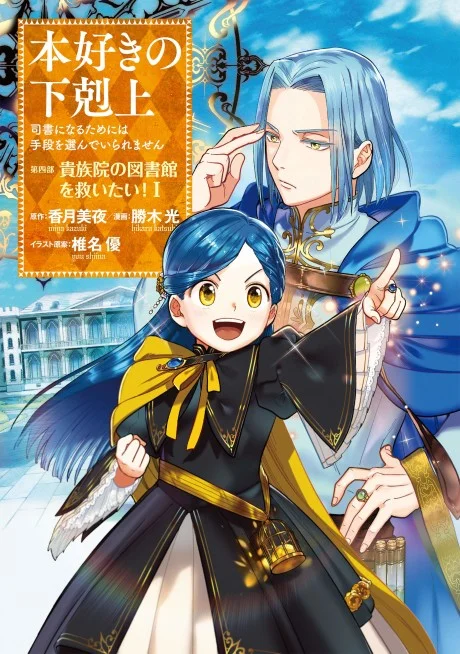
- Light novels: Ascendance of a Bookworm (33 volumes of the best worldbuilding in any medium), The Apothecary Diaries (mystery + slow-burn romance with a protagonist who doesn’t care about romance)
- Manga: Vagabond (Takehiko Inoue’s masterpiece, probably never getting an anime), Dungeon Meshi (got an anime but the manga has way more content)
- Manhwa: Omniscient Reader’s Viewpoint (meta-narrative that’s genuinely brilliant), Trash of the Count’s Family (regression isekai done right)

FAQ
Is manhwa the same as manga?
No. Manga is Japanese, black and white, read right to left. Manhwa is Korean, full color, read top to bottom (vertical scroll). They share DNA — both are sequential art telling stories through panels — but the reading experience is completely different. Calling manhwa “Korean manga” is like calling anime “Japanese cartoons.” Technically not wrong, but it misses what makes each format distinct.
Which comes first — the light novel or the manga?
It depends on the series. For most isekai and fantasy titles (Re:Zero, Mushoku Tensei, Overlord), the light novel came first and the manga is an adaptation. For action series (One Piece, Jujutsu Kaisen, Demon Slayer), the manga is the original work and no light novel exists. Check the series’ Wikipedia page if you’re unsure — look for “original work” or “source material.”
Do light novels have pictures?
Yes, but not many. A typical light novel volume has 4–8 full-page illustrations plus a frontispiece. These are actual drawings — character portraits, key scenes, dramatic moments — not manga panels. The rest is prose text. Some series have gorgeous art (Overlord‘s so-bin illustrations are incredible), while others have fairly generic character designs.
Where can I read manhwa for free?
Webtoon (webtoons.com) is the biggest legal platform — hundreds of series available free with ads. Tapas is similar. Kakao’s Kakaopage app has Korean originals with official English translations. For older or completed series, check if your local library has a Hoopla or Libby subscription — many carry digital manhwa.
Is manga better than manhwa?
Neither is inherently “better” — they excel at different things. Manga has a deeper catalog, higher artistic peaks (Berserk, Vagabond), and more genre variety. Manhwa has full color, mobile-first accessibility, and dominates specific niches like solo progression and Korean romance. Read both. They’re different enough that comparing them is like comparing novels to movies.
Why do some anime fans look down on manhwa?
Gatekeeping, mostly. There’s a segment of the anime/manga community that treats anything non-Japanese as inherently lesser. This was already fading before Solo Leveling’s anime dropped, and it’s basically gone now. Good storytelling doesn’t have a nationality requirement.
Looking for specific recommendations? Check out our ranked lists: Best Isekai Light Novels, Best Romance Light Novels, and The Apothecary Diaries: LN vs Manga.