

I want to make one argument in this article and I’m going to make it the whole way through, so buckle in: the Sasaki and Peeps anime isn’t bad, it’s translated. Translated out of the only language the series actually speaks, which is Sasaki’s internal cost-benefit monologue, and every difference between the show and the books — the pacing complaints, the “it’s kind of boring” reviews, the 6.84 on MAL against a much warmer LN readership — flows downstream from that single loss.
This is not a TanMoshi situation, let me say that upfront cause I’ve written that article and the two cases get lumped together now that both series have Fall 2026 seasons coming. Nobody rearranged the story. Nothing got the infamous-car-png treatment. SILVER LINK spent twelve entire episodes on volume 1 alone, which on paper is the most respectful adaptation ratio I can remember seeing. For comparison, I think the first Mahouka series was cramming two-plus volumes into every cour. One volume in twelve episodes! And the show still came out feeling thinner than the book. That’s the interesting failure, and it’s worth understanding before Season 2 gets here.
TL;DR
- The Season 1 anime (Winter 2024, SILVER LINK) adapted only volume 1 across 12 episodes — faithful in events, generous in pacing, and still weaker than the book because Sasaki’s internal narration doesn’t survive the medium jump. The LN’s driest jokes, its logic, and its whole personality live in prose the camera can’t see. Watch the anime as an appetizer; read from volume 1 or 2 for the actual series. Season 2 hits Fall 2026.
What Exactly Gets Lost?
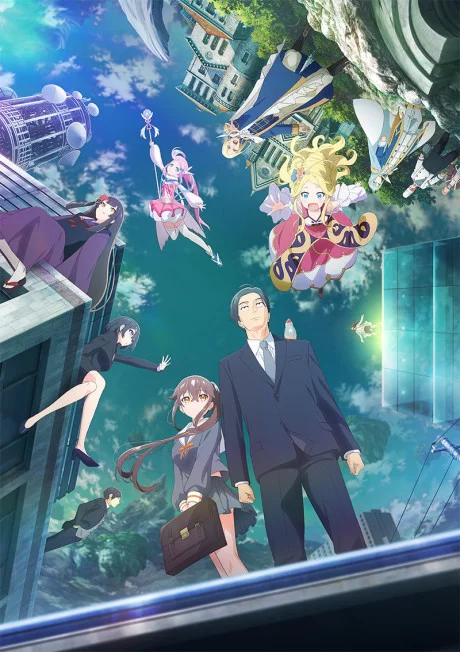
The books run on a very specific joke, and the joke is that nothing Sasaki experiences is allowed to be as dramatic as it objectively is. He gets recruited by a secret government psychic bureau and the narration treats it like an awkward job transfer with decent benefits. He learns world-crossing magic and immediately starts thinking about commodity spreads. The events are a fantasy series, the narration is a middle-aged man’s expense report, and the friction between those two layers is the entire personality of the series.
An anime can show you the events. It cannot easily show you the expense report. The show tried, to be fair. There’s voiceover, there are reaction cuts, Sasaki’s VA does a lot of quiet heavy lifting with tired little pauses. But voiceover can only carry so much when something like 60 or 70 percent of any given chapter is Sasaki processing, calculating, second-guessing, pricing things out. Cut that and the same scene still technically happens, it just happens without the layer that made it funny.
The death of a thousand small cuts is what it looks like in practice. In the book, when Sasaki first tests his magic, you get pages of him being methodical about it, worrying about his neighbors hearing, cataloguing what each spell might be worth to the bureau versus what revealing it would cost him. The anime gives you a nice-looking practice scene. Both versions convey “Sasaki learns magic.” Only one of them is a character study, and I remember the anime version mostly as pleasant screensaver footage while the book version is the point where I decided I liked this guy.
I read volume 1 right after finishing the season, which is the ideal experiment setup honestly, same story twice within a month in both mediums. What struck me most wasn’t any single missing scene, it was that I laughed maybe twice at the show and constantly at the book, at material the show had technically included. The joke was technically on screen the whole time, I just wasn’t laughing at it, and I’ve had trouble explaining exactly where it leaked out.
About That Pacing
It helped with faithfulness and hurt with momentum, and you could watch the weekly discussion threads shrink in real time. I stopped bothering to open them somewhere around episode seven, and when I went back to check, the finale thread was maybe a third the size of the premiere’s. A show this deliberate, minus the narration that justifies the deliberateness, reads as slow television. The book is slow too! But the book’s slowness is dense, procedural, always processing something, while the show mostly felt like a nice walk, and I finished a couple episodes genuinely unable to tell you what had happened in them. I watched it as my Friday wind-down show during that winter season and it was genuinely well cast for that exact slot, which is both a compliment and the problem.
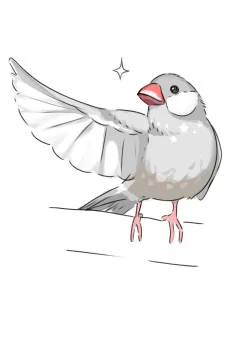
Where the anime honestly wins: Peeps as a physical presence. A distinguished sage waddling around as a tiny Java sparrow is inherently visual comedy and the show milks it well, the little head tilts, the hopping, all of it. Kantoku’s designs translated cleanly to animation too, and the magical girl fight scenes look better animated than they read on the page, I’ll give the show that without hesitation, action prose is not Buncololi’s strongest tool.
Notice, though, that the wins so far are all visual, Peeps waddling, the fight choreography. I can’t think of a single actual joke that made it across intact, and I dont think thats an accident.
The soundtrack deserves a mention too, I guess, in the sense that I could not hum you a single track from it and I watched all twelve episodes. That’s not a crime, plenty of good shows have wallpaper scores, but a series whose whole appeal is a specific ironic tone really could have used music that was in on the joke, and instead it got generic pleasant-fantasy strings. Whatever. The OP was fine.
What Should You Expect From Season 2?
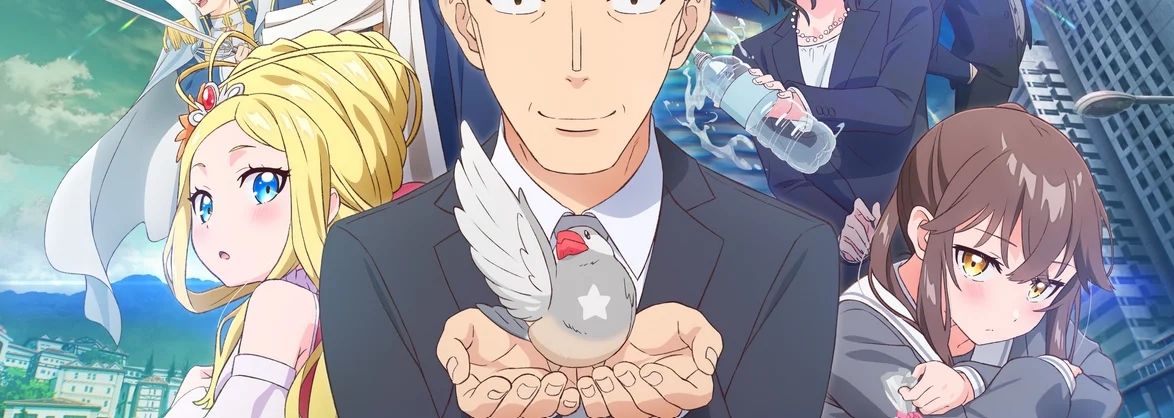
Here’s where my argument turns into a worry. Season 2 (Fall 2026, same studio) presumably starts at volume 2, and volume 2 is where the series opens the death game and the proper magical girl conflict on top of the existing threads. More factions, more incident, more of everything at once, and the book handles that escalation fine because Sasaki’s narration is the ballast, his unbothered accounting-brain perspective is what keeps four simultaneous storylines from feeling like noise.
The show doesn’t have the ballast. So the material getting more chaotic while the anchoring layer stays missing is, I would guess, going to produce a season that feels busier and messier than Season 1 rather than more exciting. I made a prediction like this once before, that Shield Hero‘s anime would fix the books’ mid-series pacing problems, and instead it inherited them and added new ones, so take my track record into account. But the structural logic seems harder to dodge this time, cause Season 2 needs more of exactly what Season 1 already struggled to carry, more factions and more plates spinning with still no narration holding any of it together.
I’d love to be wrong. The studio clearly cares about this property, twelve-episodes-per-volume is not a schedule you give a series you’re dumping, and maybe more voiceover is the patch. Whether a Fall 2026 season fighting TanMoshi S2 and RiaS S2 for attention gets the patience it needs from viewers, I really couldn’t tell you.
Just Read the Books
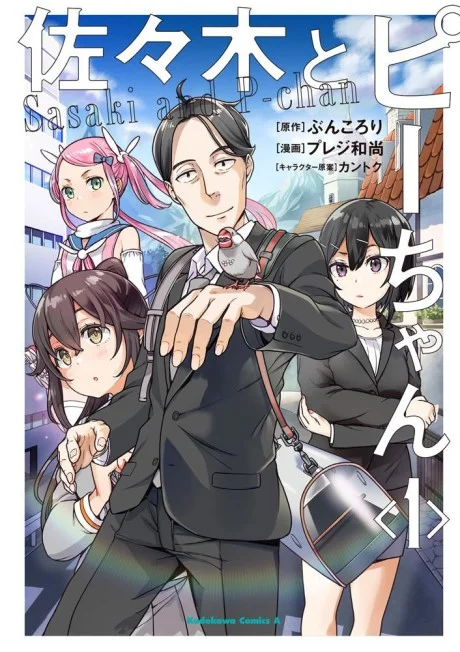
Read the books. That was always going to be the answer on this site, I know, but the reasoning matters here more than usual: with most adaptations I’d say the anime is a legitimate substitute and the LN is a richer version of the same experience. With Sasaki and Peeps the anime is closer to a well-produced synopsis. Everything that makes the series distinctive — the tone, the tired-adult logic, the humor — is a prose effect, and no adaptation choice short of wall-to-wall narration was going to carry it across.
If you’ve only watched: start reading at volume 1, not 2, even though you know the plot beats already. The plot was never really the thing I was there for anyway. If you’re strictly an anime-watcher, Season 1 remains a decent cozy watch and Season 2 will presumably tell you whether my worry up there was justified. I’ve already got the volume 2 reread penciled in for September, partly for this site and partly cause I want the death game arc fresh before October, and honestly that second reason is doing most of the work.